
4 months ago
An integral part of totalitarian control is the attack on critical and independent thought. The appeal to facts is substituted for the appeal to reason. No reason can sanction a regime that uses the greatest productive apparatus man has ever created in the interest of an increasing restriction on human satisfactions—no reason except the fact that the economic system can be retained in no other way. Just as the Fascist emphasis on action and change prevents the insight into necessity of rational courses of action and change, [[Giovanni Gentile|[Giovanni] Gentile]]’s deification of thinking prevents the liberation of thought from the shackles of ‘the given.’ P. 405
4 months ago
Some words shall herein be capitalised when used, not as vernacular, but as terms defined. Thus an "idea" is the substance of an actual unitary thought or fancy; but "Idea," nearer Plato's idea of ἰδέα, denotes anything whose Being consists in its mere capacity for getting fully represented, regardless of any person's faculty or impotence to represent it.
▼
Source
I
4 months ago
Thought is only a flash between two long nights, but this flash is everything.
▼
Source
Quoted in H. L. Mencken, A New Dictionary of Quotations (Alfred A. Knopf, Inc., 1942)
4 months ago
There are many people who reach their conclusions about life like schoolboys; they cheat their master by copying the answer out of a book without having worked out the sum for themselves.
▼
Source
[http://books.google.com/books?id=2iwmAQAAMAAJ&q=%22There+are+many+people+who+reach+their+conclusions+about+life+like+schoolboys+they+cheat+their+master+by+copying+the+answer+out+of+a+book+without+having+worked+out+the+sum+for+themselves%22&pg=PA53#v=onep

4 months ago
It is interesting to note that Newton was not impressed by Descartes' great argument for God's existence derived from the idea of a perfect Being, nor by other metaphysical arguments that we have mentioned; yet Newton's own arguments for God's existence from the uniformity and suitability of different parts of the universe would not have seemed like proofs to Descartes.
4 months ago
It takes brains to make money, but any dam fool can inherit. P.S.: I never inherited any money.
▼
Source
p. 10
4 months ago
Man today can do more than the culture heros and half-gods; he has solved many insoluble problems. But he has also betrayed the hope and destroyed the truth which were preserved in the sublimations of higher culture. To be sure, the higher culture was always in contradiction with social reality, and only a privileged minority enjoyed its blessings and represented its ideals. The two antagonistic spheres of society have always coexisted; the higher culture has always been accommodating, while the reality was rarely disturbed by its ideals and its truth. Today's novel feature is the flattening out of the antagonism between culture and social reality through the obliteration of the oppositional, alien, and transcendent elements in the higher culture by virtue of which it constituted another dimension of reality. This liquidation of two-dimensional culture takes place not through the denial and rejection of the “cultural values,” but through their wholesale incorporation into the established order, through their reproduction and display on a massive scale.
▼
Source
pp. 56-57
4 months ago
It may indeed be true that in order to act we need a certain amount of self-confidence and intellectual self-assurance. It may also be true that the very form of expression, in which we clothe our thoughts, tends to impose upon them an absolute tone.

4 months ago
The wish to talk to God is absurd. We cannot talk to one we cannot comprehend — and we cannot comprehend God; we can only believe in Him. The uses of prayer are thus only subjective.
▼
Source
A lecture at Königsberg (1775), as quoted in A New Dictionary of Quotations on Historical Principles from Ancient and Modern Sources (1946) by H. L. Mencken, p. 955
4 months ago
Professor Klein then speaks of "that artistic finish that we admire in Euclid's Elements," and mentions Allman's important historical work. I heartily concur in this estimate of Euclid, and desire to contrast it with the error of Charles S. Peirce, in the Nation, where he speaks of "Euclid's proof (Elements Bk. I., props. 16 and 17)" as "really quite fallacious, because it uses no premises not as true in the case of spherics." Our bright American seems to have forgotten Euclid's Postulate 6 (Axiom 12 in Gregory, Axiom 9 in Heiberg), "Two straight lines cannot enclose a space;" that is, two straights having crossed never recur.
▼
Source
George Bruce Halstead, "Klein's Evanston Lectures," [http://books.google.com/books?id=XAsPAAAAIAAJ&pg=PA101 Annals of Mathematics Vol.8] (1894)
4 months ago
Or... they observe an astronomic phenomenon... an eclipse of the moon, and... suppose... this... is perceived simultaneously from all points of the earth. That is not altogether true, since the propagation of light is not instantaneous; if absolute exactitude were desired, there would be a correction... according to a complicated rule.
4 months ago
The similarity between Christ and Socrates consists essentially in their dissimilarity. Just as philosophy begins with doubt, so also a life that may be called human begins with irony.

4 months ago
What is called "objectivity," scientific for instance (in which I firmly believe, in a given situation) imposes itself only within a context which is extremely vast, old, firmly established, or rooted in a network of conventions … and yet which still remains a context.
▼
Source
Limited Inc (1977)
4 months ago
There is no concept more familiar... than... spiritual energy, yet there is none... more opaque scientifically.
4 months ago
Your friend is the man who knows all about you, and still likes you.
▼
Source
p. 112
4 months ago
If the progressing rationality of advanced industrial society tends to liquidate, as an “irrational rest,” the disturbing elements of Time and Memory, it also tends to liquidate the disturbing rationality contained in this irrational rest. Recognition and relation to the past as present counteracts the functionalization of thought by and in the established reality. It militates against the closing of the universe of discourse and behavior it renders possible the development of concepts which destabilize and transcend the closed universe by comprehending it as historical universe. Confronted with the given society as object of its reflection, critical thought becomes historical consciousness as such, it is essentially judgment. Far from necessitating an indifferent relativism, it searches in the real history of man for the criteria of truth and falsehood, progress and regression. The mediation of the past with the present discovers the factors which made the facts, which determined the war of life, which established the masters and the servants; it projects the limits and the alternatives. When this critical consciousness speaks, it speaks “le langage de la connaissance” (Roland Barthes) which breaks open a closed universe of discourse and its petrified structure. The key terms of this language are not hypnotic nouns which evoke endlessly the same frozen predicates. They rather allow of an open development; they even unfold their content in contradictory predicates. The Communist Manifesto provides a classical example. Here the two key terms, Bourgeoisie and Proletariat, each “govern” contrary predicates. The “bourgeoisie” is the subject of technical progress, liberation, conquest of nature, creation of social wealth, and of the perversion and destruction of these achievements. Similarly, the "proletariat” carries the attributes of total oppression and of the total defeat of oppression. Such dialectical relation of opposites in and by the proposition is rendered possible by the recognition of the subject as an historical agent whose identity constitutes itself in and against its historical practice, in and against its social reality. The discourse develops and states the conflict between the thing and its function, and this conflict finds linguistic expression in sentences which join contradictory predicates in a logical unit—conceptual counterpart of the objective reality. In contrast to all Orwellian language, the contradiction is demonstrated, made explicit, explained, and denounced.
▼
Source
p. 99-100
4 months ago
The concept of space is not abstracted from external sensations.
4 months ago
Posito I assume and when I say posito, I have the right to assume the unlikely; therefore posito, I assume that Mr. A.A., whose promises supposedly have not weakened him, went to work and wrote the system. Posito, I assume, and when I say posito, I have the right to assume what is more unreasonable than the most unreasonable; therefore; posito, I assume that if Mr. A.A. did not write the system, then Mr. B.B. wrote it-then what? Let us linger for a moment on this thought, with which, of course, we have all been familiar for several years: the thought of the prospect for the hope of the system. Therefore, in order to be very brief, posito, I assume that the system appeared here in Copenhagen, then what? Then one would indeed have to read it, unless Mr. C.C. would instantly be kind and philanthropic enough to promise a summary of the system and also position us in the point of view; then we would again be saved by the promise. If this does not happen, then of course one would have to read it. How troublesome, and who would finally benefit from that?
▼
Source
Prefaces, Nichol, 1997 p. 39-40
4 months ago
The time is out of joint. The world is going badly. It is worn but its wear no longer counts. Old age or youth-one no longer counts in that way. The world has more than one age. We lack the measure of the measure. We no longer realize the wear, we no longer take account of it as of a single age in the progress of history. Neither maturation, nor crisis, nor even agony. Something else. What is happening is happening to age itself, it strikes a blow at the teleological order of history. What is coming, in which the untimely appears, is happening to time but it does not happen in time. Contretemps. The time is out of joint. Theatrical speech, Hamlet's speech before the theater of the world, of history, and of politics. The age is off its hinges. Everything, beginning with time, seems out of kilter, unjust, dis-adjusted. The world is going very badly, it wears as it grows, as the Painter also says at the beginning of Timon of Athens (which is Marx's play, is it not). For, this time, it is a painter's speech, as if he were speaking of a spectacle or before a tableau: "How goes the world?-It wears, sir, as it grows.
▼
Source
Wear and Tears (tableu of a ageless world)
4 months ago
In its most general form and from the point of view of physics, love is the internal, affectively apprehended, aspect of the affinity which links and draws together the elements of the world, centre to centre. This is how it has been understood by the great philosophers from Plato, the poet, to Nicolas of Cusa and other representatives of frigid scholasticism. Once this definition has been accepted, it gives rise to a series of important consequences. Love is power of producing inter-centric relationship. It is present, therefore (at least in a rudimentary state), in all the natural centres, living and pre-living, which make up the world; and it represents, too, the most profound, most direct, and most creative form of inter-action that it is possible to conceive between those centres. Love, in fact, is the expression and the agent of universal synthesis.
▼
Source
[https://archive.org/stream/ActivationOfEnergy/Activation_of_Energy#page/n65/mode/2up pp. 70–71]
4 months ago
On Dᴏᴠᴇ’s green brink the fair Tʀᴇᴍᴇʟʟᴀ stood,And view’d her playful image in the flood;To each rude rock, lone dell, and echoing groveSung the sweet sorrows of her 𝘴𝘦𝘤𝘳𝘦𝘵 love.‘Oh, stay!—return!’—along the sounding shoreCry’d the sad Naiads,——she return’d no more!—Now girt with clouds the sullen Evening frown’d,And withering Eurus swept along the ground;The misty moon withdrew her horned light,And sunk with Hesper in the skirt of night;No dim electric streams, (the northern dawn,)With meek effulgence quiver’d o’er the lawn;No star benignant shot one transient rayTo guide or light the wanderer on her way.Round the dark craggs the murmuring whirlwinds blow,Woods groan above, and waters roar below;As o’er the steeps with pausing foot she moves,The pitying Dryads shriek amid their groves;She flies,—she stops,—she pants—she looks behind,And hears a demon howl in every wind.—As the bleak blast unfurls her fluttering vest,Cold beats the snow upon her shuddering breast;Through her numb’d limbs the chill sensations dart,And the keen ice bolt trembles at her heart.‘I sink, I fall! oh, help me, help!’ she cries,Her stiffening tongue the unfinish’d sound denies;Tear after tear adown her cheek succeeds,And pearls of ice bestrew the glittering meads;Congealing snows her lingering feet surround,Arrest her flight, and root her to the ground;With suppliant arms she pours the silent prayer;Her suppliant arms hang crystal in the air;Pellucid films her shivering neck o’erspread,Seal her mute lips, and silver o’er her head,Veil her pale bosom, glaze her lifted hands,And shrined in ice the beauteous statue stands.—Dᴏᴠᴇ’s azure nymphs on each revolving yearFor fair Tʀᴇᴍᴇʟʟᴀ shed the tender tear;With rush-wove crowns in sad procession move,And sound the sorrowing shell to hapless love.
▼
Source
[Tremella], The Botanic Garden (1791), Part ii, Canto i, ll. 373-412.
4 months ago
The scientific abstraction from concreteness, the quantification of qualities which yield exactness as well as universal validity, involve a specific concrete experience of the Lebenswelt—a specific mode of “seeing” the world. And this “seeing,” in spite of its “pure,” disinterested character, is seeing within a purposive, practical context. It is anticipating (Voraussehen) and projecting (Vorhaben). Galilean science is the science of methodical, systematic anticipation and projection. But—and this is decisive—of a specific anticipation and projection—namely, that which experiences, comprehends, and shapes the world) in terms of calculable, predictable relationships among exactly identifiable units. In this project, universal quantifiability is a prerequisite for the domination of nature. Individual, non-quantifiable qualities stand in the way of an organization of men and things in accordance with the measurable power to be extracted from them. But this is a specific, socio-historical project, and the consciousness which undertakes this project is the hidden subject of Galilean science.
▼
Source
[describing the view of Husserl] p. 164
4 months ago
The means employed by Nature to bring about the development of all the capacities of men is their antagonism in society, so far as this is, in the end, the cause of a lawful order among men.
▼
Source
Fourth Thesis
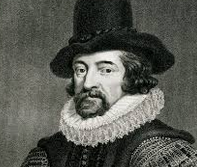
4 months ago
Libraries are as the shrine where all the relics of the ancient saints, full of true virtue, and that without delusion or imposture, are preserved and reposed.
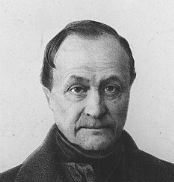
4 months ago
It was under Catholic Feudalism that they were first united; a union for which their incorporation into the Roman empire had prepared them, and which was finally organized by the incomparable genius of Charlemagne.
▼
Source
p. 88
4 months ago
Spontaneous love can reach the point of despair, shows that it is in despair, that even when it is happy it loves with the power of despair.
▼
Source
p. 40
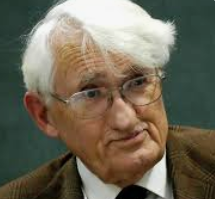
4 months ago
This investigation aims to analyze the type "bourgeois public sphere". Its particular approach is required, to begin with, by the difficulties specific to an object whose complexity precludes exclusive reliance on the specialized methods of a single discipline. Rather, the category. "public sphere" must be investigated within the broad field formerly reflected in the perspective of the traditional science of "politics."' When particular social-scientific discipline, this object disintegrates. The problems that result from fusing aspects of sociology and economics, of constitutional law and political science, and of social and intellectual history are obvious: given the present state of differentiation and specialization in the social sciences, scarcely anyone will be able to master several, let alone all, of these disciplines.
▼
Source
p.xvii

4 months ago
Why is it that we entertain the belief that for every purpose odd numbers are the most effectual?
▼
Source
Book XXVIII, sec. 23.

4 months ago
As for 'taking sides' — the choice, it seems to me, is no longer between two users of violence, two systems of dictatorship. Violence and dictatorship cannot produce peace and liberty; they can only produce the results of violence and dictatorship, results with which history has made us only too sickeningly familiar. The choice now is between militarism and pacifism. To me, the necessity of pacifism seems absolutely clear.
▼
Source
Authors Take Sides on the Spanish War (1937) edited by Nancy Cunard and published by the Left Review
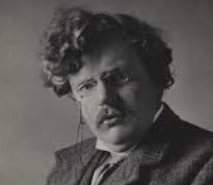
4 months ago
Earnest Freethinkers need not worry themselves so much about the persecutions of the past. Before the Liberal idea is dead or triumphant we shall see wars and persecutions the like of which the world has never seen.
▼
Source
In The Daily News (18 February 1905)
4 months ago
Thoughts without content are empty, intuitions without concepts are blind. The understanding can intuit nothing, the senses can think nothing. Only through their unison can knowledge arise.
▼
Source
A 51, B 75
4 months ago
The greatest error of all the rest is the mistaking or misplacing of the last or farthest end of knowledge: for men have entered into a desire of learning and knowledge, sometimes upon a natural curiosity and inquisitive appetite; sometimes to entertain their minds with variety and delight; sometimes for ornament and reputation; and sometimes to enable them to victory of wit and contradiction; and most times for lucre and profession; and seldom sincerely to give a true account of their gift of reason, to the benefit and use of men: as if there were sought in knowledge a couch whereupon to rest a searching and restless spirit; or a tarrasse, for a wandering and variable mind to walk up and down with a fair prospect; or a tower of state, for a proud mind to raise itself upon; or a fort or commanding ground, for strife and contention; or a shop, for profit or sale; and not a rich storehouse, for the glory of the Creator and the relief of man's estate.
▼
Source
Book I, v, 11
4 months ago
Let us then in the brief prescribed moments simply consider the tax collector. Throughout all the ages he has been presented as the prototype of an honest and God-fearing churchgoer. Yet is seems to me that he is even more closely related to going to Communion, he who said, “God, be merciful to me, a sinner.” Is it not as if he were now going to Communion, he of whom it is said, “He went home to his house justified” – is it not as if he now went home from Communion!
▼
Source
Three Discourses at Friday Communion November 14, 1849 Hong translation 1997 P. 128

4 months ago
Instead of supposing that a work of art must be something that all can behold—a poem, a painting, a book, a great building—consider making your own life a work of art. You have yourself to begin with, and a time of uncertain duration to work on it. You do not have to be what you are, and even though you may be quite content with who you are, it will not be hard for you to think of something much greater that you might become. It need not be something spectacular or even something that will attract notice from others. What it will be is a kind of excellence that you project for yourself, and then attain—something that you can take a look at, with honest self-appraisal, and be proud of.
▼
Source
p. 64
4 months ago
Jehovah, Allah, the Trinity, Jesus, Buddha, are names for a great variety of human virtues, human mystical experiences, human remorses, human compensatory fantasies, human terrors, human cruelties. If all men were alike, all the world would worship the same God.
▼
Source
“One and Many,” p. 3
4 months ago
I believe what really happens in history is this: the old man is always wrong; and the young people are always wrong about what is wrong with him. The practical form it takes is this: that, while the old man may stand by some stupid custom, the young man always attacks it with some theory that turns out to be equally stupid.
▼
Source
In The Illustrated London News (3 June 1922)
4 months ago
Almost anything that consoles us is a fake.
▼
Source
The Sovereignty of Good (1970) p. 59.
4 months ago
For instance, if you have by a lie hindered a man who is even now planning a murder, you are legally responsible for all the consequences. But if you have strictly adhered to the truth, public justice can find no fault with you, be the unforeseen consequence what it may. It is possible that whilst you have honestly answered Yes to the murderer’s question, whether his intended victim is in the house, the latter may have gone out unobserved, and so not have come in the way of the murderer, and the deed therefore have not been done; whereas, if you lied and said he was not in the house, and he had really gone out (though unknown to you) so that the murderer met him as he went, and executed his purpose on him, then you might with justice be accused as the cause of his death. For, if you had spoken the truth as well as you knew it, perhaps the murderer while seeking for his enemy in the house might have been caught by neighbours coming up and the deed been prevented.
4 months ago
Further, it will not be amiss to distinguish the three kinds and, as it were, grades of ambition in mankind. The first is of those who desire to extend their own power in their native country, a vulgar and degenerate kind. The second is of those who labor to extend the power and dominion of their country among men. This certainly has more dignity, though not less covetousness. But if a man endeavor to establish and extend the power and dominion of the human race itself over the universe, his ambition (if ambition it can be called) is without doubt both a more wholesome and a more noble thing than the other two. Now the empire of man over things depends wholly on the arts and sciences. For we cannot command nature except by obeying her.
▼
Source
Aphorism 129
4 months ago
Imagine a lover who has received a letter from his beloved – I assume that God's Word is just as precious to you as this letter is to the lover. I assume that you read and think you ought to read God's Word in the same way the lover reads this letter.
▼
Source
Soren Kierkegaard, For Self-Examination, Hong p. 26
4 months ago
Beyond a certain point, the whole universe becomes a continuous process of initiation.
▼
Source
The Widow's Son
4 months ago
Technological progress has merely provided us with more efficient means for going backwards.
▼
Source
Ch. 1, p. 9 [2012 reprint]. Also in "Tomorrow and Tomorrow and Tomorrow" in Adonis and the Alphabet (1956); later in Collected Essays (1959), p. 293
4 months ago
There is always in the healthy mind an obscure prompting that religion teaches us rather to dig than to climb; that if we could once understand the common clay of earth we should understand everything. Similarly, we have the sentiment that if we could destroy custom at a blow and see the stars as a child sees them, we should need no other apocalypse. This is the great truth which has always lain at the back of baby-worship, and which will support it to the end
▼
Source
"A Defence of Baby-Worship"
4 months ago
Suicide evokes revulsion with horror, because everything in nature seeks to preserve itself: a damaged tree, a living body, an animal; and in man, then, is freedom, which is the highest degree of life, and constitutes the worth of it, to become now a principium for self-destruction? This is the most horrifying thing imaginable. For anyone who has already got so far as to be master, at any time, over his own life, is also master over the life of anyone else; for him, the door stands open to every crime, and before he can be seized he is ready to spirit himself away out of the world. So suicide evokes horror, in that a man thereby puts himself below the beasts. We regard a suicide as a carcase, whereas we feel pity for one who meets his end through fate.
▼
Source
Part II, p. 146
4 months ago
Sir Amice Pawlet, when he saw too much haste made in any matter, was wont to say. "Stay a while, that we may make an end the sooner."
▼
Source
No. 76
4 months ago
I know of no other great writer in the whole nineteenth century, perhaps even in the whole of world literature, to whom I respond with less happiness and with a more profound sense that I am on trial and found wanting, unless it were Søren Kierkegaard.
4 months ago
Everyone has a belief system, B.S., the trick is to learn not to take anyone's B.S. too seriously, especially your own.
4 months ago
Progress and Nationalism—those were the two great ideas He put into their heads. Progress—the theory that you can get something for nothing; the theory that you can gain in one field without paying for your gain in another; the theory that you alone understand the meaning of history; the theory that you know what’s going to happen fifty years from now; the theory that, in the teeth of all experience, you can foresee all the consequences of your present actions; the theory that Utopia lies just ahead and that, since ideal ends justify the most abominable means, it is your privilege and duty to rob, swindle, torture, enslave and murder all those who, in your opinion (which is, by definition, infallible), obstruct the onward march to the earthly paradise. Remember that phrase of Karl Marx’s: ‘Force is the midwife of Progress.’ He might have added—but of course Belial didn’t want to let the cat out of the bag at that early stage of the proceedings—that Progress is the midwife of Force. Doubly the midwife, for the fact of technological progress provides people with the instruments of ever more indiscriminate destruction, while the myth of political and moral progress serves as the excuse for using those means to the very limit. I tell you, my dear sir, an undevout historian is mad. The longer you study modern history, the more evidence you find of Belial’s Guiding Hand.
▼
Source
Dr. Poole, p. 94 of Bantam 1958 edition [https://archive.org/details/apeessence00huxl/page/94/mode/2up?view=theater]
4 months ago
Dickens stands first as a defiant monument of what happens when a great literary genius has a literary taste akin to that of the community. For this kinship was deep and spiritual. Dickens was not like our ordinary demagogues and journalists. Dickens did not write what the people wanted. Dickens wanted what the people wanted.
▼
Source
Ch 5: "The Great Popularity"

4 months ago
Happiest are the people who give most happiness to others.
▼
Source
As quoted in Happyology by Harald W. Tietze, p. 28
CivilSimian.com created by AxiomaticPanic, CivilSimian, Kalokagathia