

4 months ago
For you and for me, the category of the subject is a primary ‘obviousness’ (obviousnesses are always primary): it is clear that you and I are subjects (free, ethical, etc.). Like all obviousnesses, including those that make a word ‘name a thing’ or ‘have a meaning’ (therefore including the obviousness of the ‘transparency’ of language), the ‘obviousness’ that you and I are subjects – and that that does not cause any problems – is an ideological effect, the elementary ideological effect. It is indeed a peculiarity of ideology that it imposes (without appearing to do so, since these are ‘obviousnesses’) obviousnesses as obviousnesses.
▼
Source
p. 116

4 months ago
Talents differ; all is well and wisely put; If I cannot carry forests on my back, Neither can you crack a nut.
▼
Source
Fable
4 months ago
All the world's not a stage.
▼
Source
E. Jephcott, trans. (1974), § 94

4 months ago
Never did any Soul do good, but it came readier to do the same again, with more Enjoyment. Never was Love, or Gratitude, or Bounty practis'd but with increasing Joy, which made the Practiser still more in love with the fair Act.
▼
Source
Vol. 2, p. 30; "The Moralists, a Philosophical Rhapsody".
4 months ago
The political entity presupposes the real existence of an enemy and therefore coexistence with another political entity. As long as a state exists, there will thus always be in the world more than just one state. A world state which embraces the entire globe and all of humanity cannot exist.
4 months ago
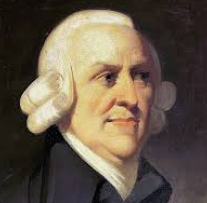
It is worth remembering that Adam Smith, the founder of classical economics, was first and foremost a philosopher. He strove to be a moralist and in doing so, became an economist. When he published The Theory of Moral Sentiments in 1759, modern capitalism was just getting under way. Smith was entranced by the sweeping changes wrought by this new force, but it wasn’t just the numbers that interested him. It was the human effect, the fact that economic forces were vastly changing the way a person thought and behaved in a given situation. What might lead one person to cheat or steal while another didn’t? How would one person’s seemingly innocuous choice, good or bad, affect a great number of people down the line? In Smith’s era, cause and effect had begun to wildly accelerate; incentives were magnified tenfold. The gravity and shock of these changes were as overwhelming to the citizens of his time as the gravity and shock of modern life may seem to us today.
▼
Source
Steven D. Levitt and Stephen J. Dubner, [https://www.google.com/books/edition/Freakonomics/mXQVbIRkHegC?hl=en&gbpv=1&printsec=frontcover Freakanomics], Introduction: The Hidden Side of Everything

4 months ago
After Plotinus, says Schassler, fifteen centuries passed without the slightest scientific interest for the world of beauty and art. ...In reality, nothing of the kind happened. The science of aesthetics ... neither did nor could vanish, because it never existed. ... the Greeks were so little developed that goodness and beauty seemed to coincide. On that obsolete Greek view of life the science of aesthetics was invented by men of the eighteenth century, and especially shaped and mounted in Baumgarten's theory. The Greeks (as anyone may read in Bénard's book on Aristotle and Walter's work on Plato) never had a science of aesthetics.

4 months ago
Through all time, so far as history informs us, wherever mankind have attempted to live in peace with each other, both the natural instincts, and the collective wisdom of the human race, have acknowledged and prescribed, as an indispensable condition, obedience to this one only universal obligation: viz., that each should live honestly towards every other. The ancient maxim makes the sum of a man’s legal duty to his fellow men to be simply this: " To live honestly, to hurt no one, to give to every one his due." This entire maxim is really expressed in the single words, to live honestly; since to live honestly is to hurt no one, and give to every one his due.
▼
Source
Section I, p. 6
4 months ago
Thought is the property of him who can entertain it, and of him who can adequately place it.
▼
Source
Shakespeare; or, The Poet

4 months ago
Do not praise an undeserving man because of his riches.
4 months ago
All Joachimism was an active struggle against the social principles of a Christianity which from St. Paul on would ally itself with the class society in a thousand compromises, a Christianity whose earthly salvation practice is itself a single catalog of sins, down—or up—to the last link: the understanding which Fascism was shown by the Vatican.
▼
Source
p. 138
4 months ago
Economic liberalism
4 months ago
Fate and temperament are the names of a concept.
▼
Source
As quoted in Demian (1972) by Hermann Hesse, trans. W.J. Strachan
4 months ago
People continued — regardless of all that leads man forward — to try to unite the incompatibles : the virtue of love, and what is opposed to love, namely, the restraining of evil by violence. And such a teaching, despite its inner contradiction, was so firmly established that the very people who recognize love as a virtue accept as lawful at the same time an order of life based on violence and allowing men not merely to torture but even to kill one another.
▼
Source
III

4 months ago
For how long is it a duty to study the Law? To the day of death.
▼
Source
Treatise 3: “The Study of the Torah,” Chapter 1, Section 9, H. Russell, trans. (1983), p. 52
4 months ago
The measure of a master is his success in bringing all men round to his opinion twenty years later.
▼
Source
Culture
4 months ago
Don't fight forces, use them.
▼
Source
In Shelter (May 1932), 2 No. 4, 36, and (Nov 1932) No. 5, 108. Cited in Richard Buckminster Fuller, Joachim Krausse (ed.) and Claude Lichtenstein (ed.), Your Private Sky: Discourse (2001), 17; sometimes quoted or paraphrased as "Don't oppose forces, use t
4 months ago
The seat of the soul is where the inner world and the outer world meet. Where they overlap, it is in every point of the overlap.
4 months ago
The most momentous thing in human life is the art of winning the soul to good or to evil.
▼
Source
As quoted in Lives and Opinions of Eminent Philosophers, as translated by Robert Drew Hicks (1925) | Variant translation: The most momentous thing in human life is the art of winning the soul to good or evil. | As quoted in Ionia, a Quest (1954) by Freya
4 months ago
There is nothing to life that has value, except the degree of power—assuming that life itself is the will to power.
▼
Source
[http://nietzsche.holtof.com/Nietzsche_the_will_to_power/the_will_to_power_book_I.htm Book 1, sec. 55 (10 June 1887)]
4 months ago
An arrogant person considers himself perfect. This is the chief harm of arrogance. It interferes with a person's main task in life—becoming a better person.
▼
Source
p. 110
4 months ago
He Ezekiel further says, "As the appearance of the bow that is in the cloud in the day of the rain, so was the appearance of the brightness round about. This was the appearance of the likeness of the glory," (i. 28). The substance and the true essence of the bow described here is well known. The simile and comparison is in this case very extraordinary, and is undoubtedly part of the prophecy; and note it well.
▼
Source
Ch.7
4 months ago
None shall rule but the humble, And none but Toil shall have.
▼
Source
Boston Hymn
4 months ago
The Things to do are: the things that need doing, that you see need to be done, and that no one else seems to see need to be done. Then you will conceive your own way of doing that which needs to be done — that no one else has told you to do or how to do it. This will bring out the real you that often gets buried inside a character that has acquired a superficial array of behaviors induced or imposed by others on the individual.
▼
Source
Letter to "Micheal" (16 February 1970), Micheal was a 10 year old boy who had inquired in a letter as to whether Fuller was a "doer" or a "thinker".
4 months ago
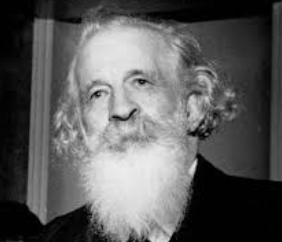
The subconscious is ceaselessly murmuring, and it is by listening to these murmurs that one hears the truth.
▼
Source
Ch. 2, sect. 2
4 months ago
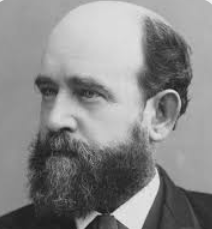
I am firmly convinced, as I have already said, that to effect any great social improvement, it is sympathy rather than self-interest, the sense of duty rather than the desire for self-advancement, that must be appealed to. Envy is akin to admiration, and it is the admiration that the rich and powerful excite which secures the perpetuation of aristocracies.
▼
Source
Ch. 21 : Conclusion
4 months ago
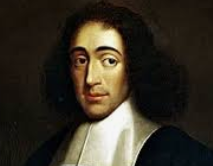
I will never forget that, in the hurricane of my adolescence, I found refuge in the deep nest of the Ethics.
▼
Source
Romain Rolland, in his autobiography
4 months ago
Man consists in Truth. If he exposes Truth, he exposes himself. If he betrays Truth, he betrays himself. We speak not here of lies, but of acting against Conviction.
4 months ago
Step not beyond the beam of the balance.
▼
Source
Symbol 14
4 months ago
On the heights it is warmer than people in the valleys suppose, especially in winter. The thinker recognizes the full import of this simile.
4 months ago
He was a revolutionary in his thinking and later in life he was an activist and reformer; he was best known as Russia's greatest moral authority, and his teachings on civil disobedience have inspired Gandhi, Martin Luther King, Jr. and countless others. He was, and still is, an author to be reckoned with.
▼
Source
[http://www.oprah.com/article/oprahsbookclub/annkarenina/anna_author_bio Brief biography] at Oprah's Book Club
4 months ago
The soul, when accustomed to superfluous things, acquires a strong habit of desiring things which are neither necessary for the preservation of the individual nor for that of the species. This desire is without limit, whilst those which are necessary are few in number and restricted within certain limits; but what is superfluous is without end...
▼
Source
Ch.12
4 months ago
We boil at different degrees.
▼
Source
Eloquence
4 months ago
The eternal is omniembracing and permeative; and the temporal is linear. This opens up a very high order of generalizations of generalizations. The truth could not be more omni-important, although it is often manifestly operative only as a linear identification of a special-case experience on a specialized subject.
▼
Source
[http://www.rwgrayprojects.com/synergetics/s10/p0520.html#1005.50 1005.52]
4 months ago
Order thyself so, that thy Soul may always be in good estate; whatsoever become of thy body.
4 months ago
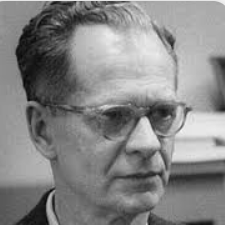
A person who has been punished is not thereby simply less inclined to behave in a given way; at best, he learns how to avoid punishment.
▼
Source
Beyond Freedom and Dignity (1971)

4 months ago
It is one of the chief skills of the philosopher not to occupy himself with questions which do not concern him.
▼
Source
Journal entry (1 May 1915)
4 months ago
Divine Providence is connected with Divine intellectual influence, and the same beings which are benefited by the latter so as to become intellectual, and to comprehend things comprehensible to rational beings, are also under the control of Divine Providence, which examines all their deeds with a view of rewarding or punishing them. ...the method of which our mind is incapable of understanding.
▼
Source
Ch.17
4 months ago
Don't say things. What you are stands over you the while, and thunders so that I cannot hear what you say to the contrary.
▼
Source
Social Aims; sometimes condensed to "What you do speaks so loud that I cannot hear what you say."
4 months ago
Humans have always unknowingly affected all Universe by every act and thought they articulate or even consider. . . . Realistic, comprehensively responsible, omni-system-considerate, unselfish thinking on the part of humans does absolutely affect human destiny.
4 months ago
When you close your doors, and make darkness within, remember never to say that you are alone, for you are not alone; nay, God is within, and your genius is within. And what need have they of light to see what you are doing?
▼
Source
Book I, ch. 14, § 13–14.
4 months ago
Evil destroyeth itself.
4 months ago
Death is not an event in life: we do not live to experience death. If we take eternity to mean not infinite temporal duration but timelessness, then eternal life belongs to those who live in the present. Our life has no end in just the way in which our visual field has no limits. (6.4311)
▼
Source
Der Tod ist kein Ereignis des Lebens. Den Tod erlebt man nicht. Wenn man unter Ewigkeit nicht unendliche Zeitdauer, sondern Unzeitlichkeit versteht, dann lebt der ewig, der in der Gegenwart lebt. Unser Leben ist ebenso endlos, wie unser Gesichtsfeld grenz
4 months ago
In accordance with the Sabean theories images were erected to the stars, golden images to the sun, images of silver to the moon, and they attributed the metals and the climates to the influence of the planets, saying that a certain planet is the god of a certain zone. They built temples, placed in them images, and assumed that the stars sent forth their influence upon these images, which are thereby enabled (to speak) to understand, to comprehend, to inspire human beings, and to tell them what is useful to them. They apply the same to trees which fall to the lot of these stars.
▼
Source
Ch.29
4 months ago
What strength belongs to every plant and animal in nature. The tree or the brook has no duplicity, no pretentiousness, no show. It is, with all its might and main, what it is, and makes one and the same impression and effect at all times. All the thoughts of a turtle are turtles, and of a rabbit, rabbits. But a man is broken and dissipated by the giddiness of his will; he does not throw himself into his judgments; his genius leads him one way but 't is likely his trade or politics in quite another.
▼
Source
"The Natural History of Intellect", p. 46
4 months ago
I find the audiences very excited. But then they come and say to me, "Your optimism has brushed off on me. I didn't know we had an option. I feel so much better." They say, "Your optimism." And I am not optimistic or pessimistic. I feel that optimism and pessimism are very unbalanced. I am a very hard engineer. I am a mechanic. I am a sailor. I am an air pilot. I don't tell people I can get you across the ocean with my ship unless I know what I'm talking about.
4 months ago
It is necessary that every man be surpassingly temperate. That person would most of all be a man of this sort if he were superior to money, which is what corrupts all men, and if, without caring about his life, he bestowed his pains on things that are just and pursued virtue.
▼
Source
p. 149
4 months ago
Whatever you would make habitual, practice it; and if you would not make a thing habitual, do not practice it, but accustom yourself to something else.
▼
Source
Book II, ch. 18, § 4.
4 months ago
Pythagoras is the founder of European culture in the Western Mediterranean sphere.
▼
Source
Benjamin Farrington, Greek Science: Its Meaning for Us (1953)
4 months ago
IT is but too true, that for five and twenty centuries since the political and moral sciences have been cultivated, they have done nothing for the happiness of mankind. They have tended only to increase human perversity, to perpetuate indigence, and to reproduce the same evils under different forms. After all their fruitless attempts to ameliorate the social order, there remains to the authors of these sciences only the conviction their utter incompetency. The problem of human happiness is one which they have been wholly unable to solve. Meanwhile a universal restlessness attests that mankind has not attained to the destiny to which nature would lead it, and this restlessness would seem to presage some great event m which shall radically change its social condition. The nations of the earth harassed by misfortune, and so deceived by political empirics, still hope for a better future, and resemble the invalid who looks for a miraculous cure. Nature whispers in the ear of the human race, that for it is reserved a happiness, the means of attaining which are now unknown, and that some marvelous discovery will be made, which will suddenly dispel the darkness that now enshrouds the social world.
CivilSimian.com created by AxiomaticPanic, CivilSimian, Kalokagathia