
4 months ago
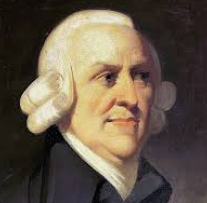
Lands for the purposes of pleasure and magnificence, parks, gardens, public walks, &c. possessions which are every where considered as causes of expence, not as sources of revenue, seem to be the only lands which, in a great and civilized monarchy, ought to belong the crown.
▼
Source
Chapter II, Part I, p. 891.
4 months ago
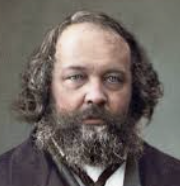
The people should never be deceived, under any pretext or for any purpose. It would not only be criminal but detrimental to the revolutionary cause, for deception of any kind, by its very nature, is shortsighted, petty, narrow, always sewn with rotten threads, so that it inevitably tears and is exposed.
▼
Source
"Appendix A"
4 months ago
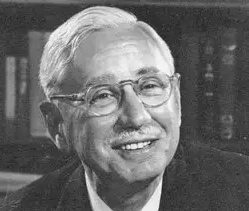
Time, subjectively, is the conscious sequence of perceptions.
▼
Source
Ch. 6 : Our Souls

4 months ago
Prostitution in towns is like the sewer in a palace; take away the sewers and the palace becomes an impure and stinking place.
▼
Source
This quote, frequently attributed to Aquinas, is actually a paraphrase of a passage (itself an elaborate paraphrase of Augustine) by Ptolemy of Lucca in his continuation of an unfinished work by Aquinas. The passage from Ptolemy reads: "Thus, Augustine sa
4 months ago
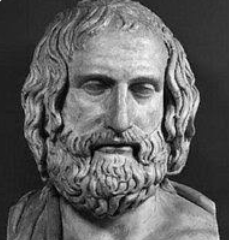
You, Socrates, began by saying that virtue can't be taught, and now you are insisting on the opposite, trying to show that all things are knowledge, justice, soundness of mind, even courage, from which it would follow that virtue most certainly can be taught.
▼
Source
Quoted in Plato, Protagoras, sec. 361a–b. Translated by C. C. W. Taylor, Plato: 'Protagoras (Oxford, 1976) p. 56
4 months ago
From each as they choose, to each as they are chosen.
▼
Source
Ch. 7 : Distributive Justice, Section I, Patterning, p. 160

4 months ago
The civilized pagan recognizes life not in himself alone, but in societies of men—in the tribe, the clan, the family, the kingdom —and sacrifices his personal good for these societies. The motive power of his life is glory. His religion consists in the exaltation of the glory of those who are allied to him—the founders of his family, his ancestors, his rulers—and in worshiping gods who are exclusively protectors of his clan, his family, his nation, his government
▼
Source
Chapter IV, Christianity Misunderstood by Men of Science

4 months ago
There is nothing difficult about becoming a sage, and nothing false about transcending the world of appearances.
▼
Source
and a Book to Keep (Hidden): Selected Writings |date=2016 |publisher= |isbn=0231541538 |url=https://books.google.com/books?id=4Xm0CwAAQBAJ |chapter=Prefaces|page=4}}

4 months ago
I call upon you, young men, to obey your heart, and be the nobility of this land. In every age of the world, there has been a leading nation, one of a more generous sentiment, whose eminent citizens were willing to stand for the interests of general justice and humanity, at the risk of being called, by the men of the moment, chimerical and fantastic. Which should be that nation but these States? Which should lead that movement, if not New England? Who should lead the leaders, but the Young American?
4 months ago
We are really no longer ourselves a part of nature at the moment when we notice, when we recognize, that we are a part of nature.
▼
Source
Probleme der Moralphilosophie (Frankfurt: Suhrkamp, 1996), p. 154; as quoted in Andrew Bowie, Adorno and the Ends of Philosophy (Cambridge: Polity, 2013), p. 94

4 months ago
Today's mic-hogging, fast-talking, contentious young (and old) lefties continue to hawk little books and pamphlets on revolution, always with choice words or documents from Marx, Mao, even Malcolm. But I've never seen a broadside with "A Black Feminist Statement or even the writings of Angela Davis or June Jordan or Barbara Omolade or Flo Kennedy or Audre Lorde or bell hooks or Michelle Wallace, at least not from the groups who call themselves leftist. These women's collective wisdom has provided the richest insights into American radicalism's most fundamental questions: How can we build a multiracial movement? Who are the working class and what do they desire? How do we resolve the Negro Question and the Woman Question? What is freedom?
▼
Source
Robin Kelley Freedom Dreams (2002)
4 months ago
The equation state = politics becomes erroneous and deceptive at exactly the moment when state and society penetrate each other.
4 months ago
An idea is always older than its name. The idea of cybernetics was used implicitly by the French physiologist, Claude Bernard, in 1878. The scottish physicist, Clerk Maxwell, also used it in 1868 in developing the theory of the steam-engine governor. But long before both of them Adam Smith had just as clearly used the idea in his The Wealth of Nations (1776). The "invisible hand" that regulates prices to a nicety is clearly this idea. In a free market, says Smith in effect, prices are regulated by negative feedback.
▼
Source
Garrett Hardin, Nature and Man’s Fate (1961), p. 54.
4 months ago
There is thus a certain plausibility to Nietzsche's doctrine, though it is dynamite. He maintains in effect that the gulf separating Plato from the average man is greater than the cleft between the average man and a chimpanzee.
▼
Source
p. 151
4 months ago
To evoke in oneself a feeling one has once experienced, and having evoked it in oneself, then by means of movements, lines, colors, sounds, or forms expressed through words, so to convey this so that others may experience the same feeling — this is the activity of art.

4 months ago
The principle that the majority have a right to rule the minority, practically resolves all government into a mere contest between two bodies of men, as to which of them shall be masters, and which of them slaves; a contest, that—however bloody—can, in the nature of things, never be finally closed, so long as man refuses to be a slave.
▼
Source
p. 9
4 months ago
Not from a vain or shallow thought His awful Jove young Phidias brought.
▼
Source
The Problem, st. 2
4 months ago
Underlying the concept of positivity is the conviction that the positive is intrinsically positive in itself, without anyone pausing to ask what is to be regarded as positive. ... It is significant and really quite interesting that the term 'positive' actually contains this ambivalence. On the one hand, 'positive' means what is given, is postulated, is there—as when we speak of positivism as the philosophy that sticks to the facts. But, equally, 'positive' also refers to the good, the approvable, in a certain sense, the ideal. And I imagine that this semantic constellation expresses with precision what countless people actually feel to be the case.
▼
Source
p. 18

4 months ago
In my judgment excellence and wealth are direct opposites.
▼
Source
Epp. Apoll. 35
4 months ago
Everything that psychology has learned about the processes of human choice is consistent with the view expressed by Adam Smith. People do have reasons for what they do, but these reasons depend very much on how people frame or represent the situations in which they find themselves, and upon the information they have or obtain about the variables that they take into account. Their rationality is a procedural rationality; there is no claim that they grasp the encironment accurately or comprehensively. To predict their behavior in specific instances, we must ourselves know what they are attending to, and what information they have.
▼
Source
Herbert Simon, An Empirically-Based Microeconomics (1997), pp. 8-9
4 months ago
"That is the principal thing," thought Nekhludoff. "We all live in the silly belief that we ourselves are the lords of our world, that this world has been given us for our enjoyment. But this is evidently untrue. Somebody must have sent us here for some reason. And for this reason it is plain that we will suffer like those laborers suffer who do not fulfill the wishes of their Master. The will of the Lord is expressed in the teachings of Christ. Let man obey Him, and the Kingdom of the Lord will come on earth, and man will derive the greatest possible good."Seek the truth and the Kingdom of God, and the rest will come of itself. We seek that which is to come, and do not find it, and not only do we not build the Kingdom of God, but we destroy it."So this will henceforth be the task of my life!"And indeed, from that night a new life began for Nekhludoff; not so much because he had risen into a new stage of existence, but because all that had happened to him till then assumed for him an altogether new meaning.
▼
Source
Ch. 92

4 months ago
One who is in a dying condition is regarded as a living person in all respects. It is not permitted to bind his jaws, to stop up the organs of the lower extremities, or to place metallic or cooling vessels upon his navel in order to prevent swelling. He is not to be rubbed or washed, nor is sand or salt to be put upon him until he expires. He who touches him is guilty of shedding blood. To what may he be compared? To a flickering flame, which is extinguished as soon as one touches it. Whoever closes the eyes of the dying while the soul is about to depart is shedding blood. One should wait a while; perhaps he is only in a swoon.
▼
Source
[http://www.myjewishlearning.com/ideas_belief/bioethics/Bioethics_Euthanasia_TO/Bioethics_EuthanMedi_Rosner.htm Biomedical Ethics and Jewish Law], published by [http://www.ktav.com/ KTAV]
4 months ago
All the great speakers were bad speakers at first.
▼
Source
Power

4 months ago
The Princeton graduate students pride themselves in never reading “anyone who takes philosophy personally or confuses philosophy with things that matter in their little lives.” But being ignorant, apparently, of how they (and their professors, presumably) have come to hold such a view, they have no idea of how it might be criticized, or who they are who hold it.
▼
Source
p. 5
4 months ago
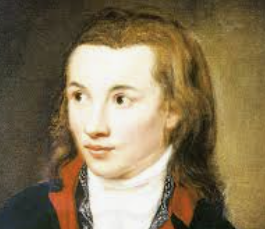
The best thing about the sciences is their philosophical ingredient, like life for an organic body. If one dephilosophizes the sciences, what remains left? Earth, air, and water.
▼
Source
Fragment No. 62

4 months ago
Human nature is evil; its goodness derives from conscious activity. Now it is human nature to be born with a fondness for profit. Indulging this leads to contention and strife, and the sense of modesty and yielding with which one was born disappears. One is born with feelings of envy and hate, and, by indulging these, one is led into banditry and theft, so that the sense of loyalty and good faith with which he was born disappears. One is born with the desires of the ears and eyes and with a fondness for beautiful sights and sounds, and, by indulging these, one is led to licentiousness and chaos, so that the sense of ritual, rightness, refinement, and principle with which one was born is lost. Hence, following human nature and indulging human emotions will inevitably lead to contention and strife, causing one to rebel against one’s proper duty, reduce principle to chaos, and revert to violence. Therefore one must be transformed by the example of a teacher and guided by the way of ritual and rightness before one will attain modesty and yielding, accord with refinement and ritual, and return to order.
▼
Source
Sources of Chinese Tradition (1999), vol. 1, pp. 179-180
4 months ago
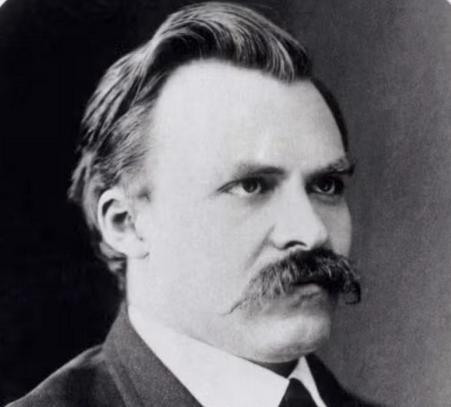
An art that spoke the truth [...] banished the muses of the arts of seeming; [...] the individuum — with its limits and measure — went under. A twilight of the gods stood near at hand. [...] A new and higher mechanick of existence had come into play.
▼
Source
page 43
4 months ago
All our problems are caused by forgetting what lives within us, and we sell our souls for the "bowl of stew" of bodily satisfactions.
▼
Source
p. 17
4 months ago
Far from it be the notion that the Supreme Being is corporeal, having a material form.
4 months ago
Whatever games are played with us, we must play no games with ourselves, but deal in our privacy with the last honesty and truth.
▼
Source
Illusions
4 months ago
I seek through comprehensive anticipatory design science and its reductions to physical practices to reform the environment instead of trying to reform men being intent thereby to accomplish proto-typed capabilities of doing more with less whereby in turn the wealth augmenting prospects of such design science regenerations will induce their spontaneous and economically successful industrial proliferation by world around services’ managements all of which chain reaction provoking events permit and induce all humanity to realize full lasting economic and physical success plus enjoyment of all the Earth without one individual interfering with or being advantaged at the expense of another.
4 months ago
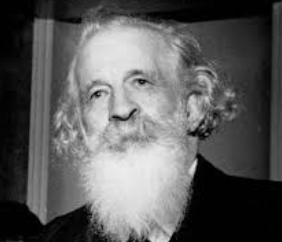
Man is a creation of desire, not a creation of need.
▼
Source
The Psychoanalysis of Fire, ch. 2, "Fire and Reverie" (1938)
4 months ago
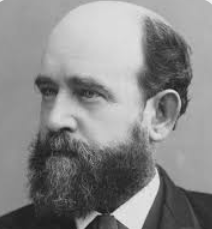
I am no sentimental admirer of the savage state. I do not get my ideas of the untutored children of nature from Rousseau, or Chateaubriand, or Cooper. I am conscious of its material and mental poverty, and its low and narrow range. I believe that civilization is not only the natural destiny of man, but the enfranchisement, elevation, and refinement of all his powers, and think that it is only in such moods as may lead him to envy the cud — chewing cattle, that a man who is free to the advantages of civilization could look with regret upon the savage state. But, nevertheless, I think no one who will open his eyes to the facts can resist the conclusion that there are in the heart of our civilization large classes with whom the veriest savage could not afford to exchange. It is my deliberate opinion that if, standing on the threshold of being, one were given the choice of entering life as a Tierra del Fuegan, a black fellow of Australia, an Esquimau in the Arctic Circle, or among the lowest classes in such a highly civilized country as Great Britain, he would make infinitely the better choice in selecting the lot of the savage. For those classes who in the midst of wealth are condemned to want, suffer all the privations of the savage, without his sense of personal freedom; they are condemned to more than his narrowness and littleness, without opportunity for the growth of his rude virtues; if their horizon is wider, it is but to reveal blessings that they cannot enjoy. There are some to whom this may seem like exaggeration, but it is only because they have never suffered themselves to realize the true condition of those classes upon whom the iron heel of modern civilization presses with full force. As De Tocqueville observes, in one of his letters to Mme. Swetchine, "we so soon become used to the thought of want that we do not feel that an evil which grows greater to the sufferer the longer it lasts becomes less to the observer by the very fact of its duration"; and perhaps the best proof of the justice of this observation is that in cities where there exists a pauper class and a criminal class, where young girls shiver as they sew for bread, and tattered and barefooted children make a home in the streets, money is regularly raised to send missionaries to the heathen! Send missionaries to the heathen! It would be laughable if it were not so sad. Baal no longer stretches forth his hideous, sloping arms; but in Christian lands mothers slay their infants for a burial fee! And I challenge the production from any authentic accounts of savage life of such descriptions of degradation as are to be found in official documents of highly civilized countries — in reports of sanitary commissioners and of inquiries into the condition of the laboring poor.
4 months ago
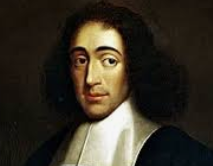
By Natura naturans we must understand what is in itself and is conceived through itself, or such attributes of substance as express an eternal and infinite essence, that is … God, insofar as he is considered as a free cause. But by Natura naturata I understand whatever follows from the necessity of God's nature, or from God's attributes, that is, all the modes of God's attributes insofar as they are considered as things which are in God, and can neither be nor be conceived without God.
▼
Source
Part I, Prop. XXIX, Scholium (trans: Edwin Curley, London: Penguin, 1996)
4 months ago
To become properly acquainted with a truth, we must first have disbelieved it, and disputed against it.
4 months ago
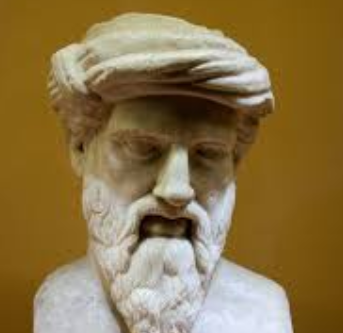
Most men and women, by birth or nature, lack the means to advance in wealth and power, but all have the ability to advance in knowledge.
▼
Source
As quoted in The Golden Ratio (2002) by Mario Livio
4 months ago
The only thing of interest in a refuted system is the personal element. It alone is what is forever irrefutable.
▼
Source
p. 25
4 months ago
Tolstoy regarded war as unavoidable, but challenged the dominant view that it, and its outcome, resulted from the decisions of a few “great men” such as Napoleon. He believed that war was the result of many unpredictable factors, and that the behavior of tens of thousands of men, from local commanders to simple soldiers, determined its outcome more than the decisions taken by a few great generals. …Tolstoy would not disagree with us if we would say that for him peace is not primarily a political achievement, but comes from [the moral compass of] conscience.
▼
Source
Massimo Introvigne, [https://bitterwinter.org/war-and-peace-and-the-tai-ji-men-case/ “War and Peace” and the Tai Ji Men Case], Bitter Winter (May 2023)
4 months ago
If men possessed wisdom, which stands in the same relation to the form of man as the sight to the eye, they would not cause any injury to themselves or to others, for the knowledge of the truth removes hatred and quarrels, and prevents mutual injuries.
▼
Source
Ch.11
4 months ago
Far or forgot to me is near; Shadow and sunlight are the same; The vanished gods to me appear; And one to me are shame and fame.
▼
Source
Brahma, st. 2
4 months ago
The wellspring of reality is the family of weightless generalized principles.
4 months ago
In any country, however new and vast, it would be possible to change "scarcity of labor" into "scarcity of employment" by increasing the price put on the use of land. If three families settled a virgin continent, one family could command the services of the others as laborers for hire just as fully as though they were its chattel slaves, if it was accorded the ownership of the land and could put its own price on its use. Wakefield proposed only that land should be held at what he called "a sufficient price "— that is, a price high enough to keep wages in new colonies only a little higher than wages in the mother-country, and to produce not actual inability to get employment on the part of laborers, but only such difficulty as would keep them tractable, and ready to accept what from his standpoint were reasonable wages. Yet it is evident that it would only require a somewhat greater increase in the price of land to go beyond this point and to bring about in the midst of abundant natural opportunities for the employment of labor, the phenomena of laborers vainly seeking employment. Now, in the United States we have not attempted to create "scarcity of employment" by Wakefield's plan. But we have made haste by sale and gift to put the public domain in the hands of private owners, and thus allowed speculation to bring about more quickly and effectually than he could have anticipated, more than Wakefield aimed at. The public domain is now practically gone; land is rising to European prices, and we are at last face to face with social difficulties which in the youth of men of my time we were wont to associate with "the effete monarchies of the Old World."
▼
Source
p. 182
4 months ago
It is requisite to choose the most excellent life; for custom will make it pleasant. Wealth is an infirm anchor, glory is still more infirm; and in a similar manner, the body, dominion, and honour. For all these are imbecile and powerless. What then are powerful anchors. Prudence, magnanimity, fortitude. These no tempest can shake. This is the Law of God, that virtue is the only thing that is strong; and that every thing else is a trifle.
▼
Source
"Pythagorean Ethical Sentences From Stobæus" (1904)
4 months ago
God is dead
4 months ago
There are four different theories concerning Divine Providence; they are all ancient, known from the time of the Prophets, when the true law was revealed to enlighten these dark regions.
▼
Source
Ch.17
4 months ago
A masterpiece of art has in the mind a fixed place in the chain of being, as much as a plant or a crystal.
▼
Source
Art
4 months ago
What humans have spontaneously identified as good and bad — or as positive and negative — are evolutionary complementations in need of more accurate identifications.

4 months ago
Almost immediately after the delivery of his lecture he collapsed, struck down by an illness which nearly proved fatal, and for weeks his life hung on a thread. He had been in a low feverish condition for some time previously, and a great dread had fallen upon him that he should die before he had completed his discoveries. It was in this condition of body and mind that he had applied himself to the task of putting together an account of his results.
4 months ago
Reason not with him, that will deny the principal truths!

4 months ago
The thought is the significant proposition. (4)
▼
Source
Original German: Der Gedanke ist der sinnvolle Satz.
CivilSimian.com created by AxiomaticPanic, CivilSimian, Kalokagathia