

5 months 1 week ago
No form remains permanently in a substance; a constant change takes place, one form is taken off and another is put on.
▼
Source
Ch.8

5 months 1 week ago
Wealth begins in a tight roof that keeps the rain and wind out; in a good pump that yields you plenty of sweet water; in two suits of clothes, so to change your dress when you are wet; in dry sticks to burn; in a good double-wick lamp; and three meals; in a horse, or a locomotive, to cross the land; in a boat to cross the sea; in tools to work with; in books to read; and so, in giving, on all sides, by tolls and auxiliaries, the greatest possible extension to our powers, as if it added feet, and hands, and eyes, and blood, length to the day, and knowledge, and good-will.Wealth begins with these articles of necessity.
▼
Source
Wealth
5 months 1 week ago
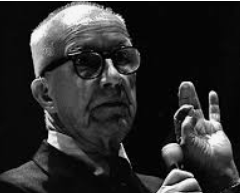
I am convinced all of humanity is born with more gifts than we know. Most are born geniuses and just get de-geniused rapidly.
▼
Source
Statement made in 1974, quoted in People magazine. In Thomas T. K. Zung, "Buckminster Fuller: Anthology for the New Millenium" (2002), 174.
5 months 1 week ago
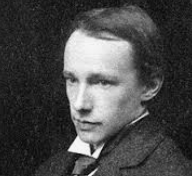
The study of Ethics would, no doubt, be far more simple, and its results far more "systematic," if, for instance, pain were an evil of exactly the same magnitude as pleasure is a good; but we have no reason whatever to assume that the Universe is such that ethical truths must display this kind of symmetry ... .
▼
Source
Principia Ethica (1903), ch. VI.
5 months 1 week ago
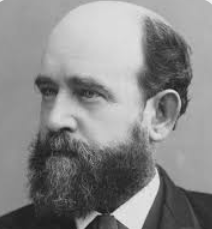
Many there are, too depressed, too embruted with hard toil and the struggle for animal existence, to think for themselves. Therefore the obligation devolves with all the more force on those who can. If thinking men are few, they are for that reason all the more powerful. Let no man imagine that he has no influence. Whoever he may be, and wherever he may be placed, the man who thinks becomes a light and a power. That for every idle word men may speak they shall give an account at the day of judgment, seems a hard saying. But what more clear than that the theory of the persistence of force, which teaches us that every movement continues to act and react, must apply as well to the universe of mind as to that of matter? Whoever becomes imbued with a noble idea kindles a flame from which other torches are lit, and influences those with whom he comes in contact, be they few or many. How far that influence, thus perpetuated, may extend, it is not given to him here to see. But it may be that the Lord of the Vineyard will know.
▼
Source
Ch. 21 : Conclusion
5 months 1 week ago
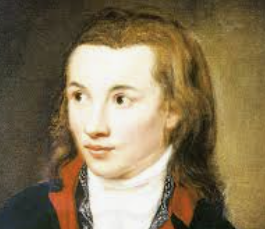
Tools arm the man. One can well say that man is capable of bringing forth a world; he lacks only the necessary apparatus, the corresponding armature of his sensory tools. The beginning is there. Thus the principle of a warship lies in the idea of the shipbuilder, who is able to incorporate this thought by making himself into a gigantic machine, as it were, through a mass of men and appropriate tools and materials. Thus the idea of a moment often required monstrous organs, monstrous masses of materials, and man is therefore a potential, if not an actual creator.
▼
Source
Fragment No. 88

5 months 1 week ago
A person who is shallow aspires to depth; one who is ugly aspires to beauty; one who is narrow aspires to breadth; one who is poor aspires to wealth; one who is humble aspires to esteem. Whatever one lacks in oneself he must seek outside.
▼
Source
Sources of Chinese Tradition (1999), vol. 1, p. 181
5 months 1 week ago
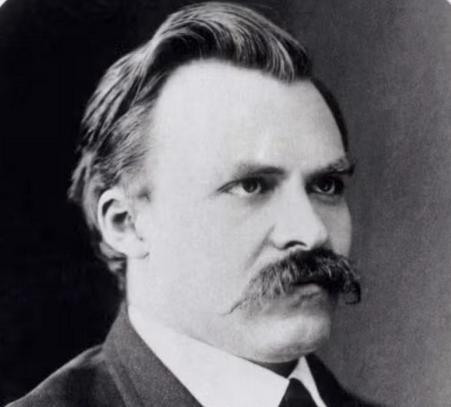
Never, however, was the struggle between truth and beauty greater than with the invasion of the Dionysian ritual; in this ritual, nature disclosed itself and spoke of its secret with terrible clarity, with that tone against which seductive seeming [...] A great revolution began in all forms of life
▼
Source
page 40

5 months 1 week ago
No one has yet added up all the heavy, stress-filled workdays as well as the hundreds, perhaps thousands, of lives that are wasted to produce the world's amusements. It is for this reason that "amusements" are not so amusing.
▼
Source
p. 81
5 months 1 week ago
The more we desire for that which is superfluous, the more we meet with difficulties; our strength and possessions are spent in unnecessary things, and are wanting when required for that which is necessary.
▼
Source
Ch.12
5 months 1 week ago
Fine manners need the support of fine manners in others, and this is a gift interred only by the self.
▼
Source
Behavior
5 months 1 week ago
We evolute toward ever lesser brain comprehension lags — ergo, toward ever diminishing error; ergo, ever diminishing misunderstandings; ergo, ever diminishing fear, and its brain-lagging painful errors of objectivity; wherefore we approach eternal instantaneity of absolute and total comprehension. The eternal instantaneity of no lag at all. However, we have now learned from our generalizations of the great complexity of the interactions of principles as we are disembarrassed of our local, exclusively physical chemistry of information-sensing devices — that what is approached is eternal and instant awareness of absolute reality of all that ever existed. All the great metaphysical integrity of all the individuals, which is potential and inherent in the complex interactions of generalized principles, will always and only coexist eternally.
5 months 1 week ago
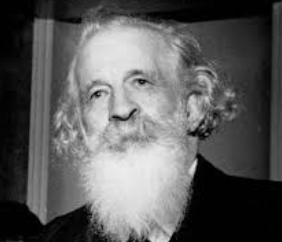
True poetry is a function of awakening. It awakens us, but it must retain the memory of previous dreams.
▼
Source
Introduction

5 months 1 week ago
A small piece of pure ... was placed upon an insulated disk of platina, connected with the negative side of the battery... and a platina wire communicating with the positive side, was brought into contact with the... surface of the alkali. ...The potash began to fuse at both its points of electrization. There was a violent effervescence at the upper surface; at the lower, or negative, surface, there was no liberation of elastic fluid; but small globules, having a high metallic lustre, and being precisely similar in visible characters to quicksilver, appeared, some of which burnt with explosion and bright flame, as soon as they were formed, and others remained, and were merely tarnished, and finally covered with a white film which formed on their surfaces.
▼
Source
"The Bakerian Lecture, on some new Phenomena of chemical Changes produced by Electricity, particularly the Decomposition of the fixed Alkalis, and on the Exhibition of the new substances which constitute their bases; and on the general Nature of alkaline
5 months 1 week ago
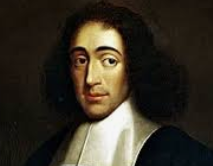
Man can, indeed, act contrarily to the decrees of God, as far as they have been written like laws in the minds of ourselves or the prophets, but against that eternal decree of God, which is written in universal nature, and has regard to the course of nature as a whole, he can do nothing.
▼
Source
Ch. 2, Of Natural Right
5 months 1 week ago
What is Nature? An encyclopedical, systematic Index or Plan of our Spirit. Why will we content us with the mere catalogue of our Treasures? Let us contemplate them ourselves, and in all ways elaborate and use them.
5 months 1 week ago
Write in the sand the flaws of your friend.
▼
Source
As quoted in Geary's Guide to the World's Great Aphorists (2007) by James Geary
5 months 1 week ago
The very reason the Greeks got so far is that they knew how to pick up the spear and throw it onward from the point where others had left it. Their skill in the art of fruitful learning was admirable. We ought to be learning from our neighbors precisely as the Greeks learned from theirs, not for the sake of learned pedantry but rather using everything we learn as a foothold which will take us up as high, and higher, than our neighbor.
▼
Source
p. 30
5 months 1 week ago
Tolstoy, himself a nobleman and the owner of a thousand serfs, conceived of dramas on a scale commensurate with his lands and estates.
▼
Source
Lewis H. Lapham, Money and Class in America, Chapter 3, The Golden Horde, p. 61
5 months 1 week ago
God's knowledge extends to things not in existence, and includes also the infinite.
▼
Source
Ch.20
5 months 1 week ago
Ever from one who comes to-morrow Men wait their good and truth to borrow.
▼
Source
Merlin's Song, II
5 months 1 week ago
The effective decisions can only be made by the independently thinking and adequately informed human individuals and their telepathically intercommunicated wisdom--the wisdom of the majority of all such human individuals -- qualifying for continuance in Universe as local cosmic problem-solvers -- in love with the truth and in individually spontaneous self-commitment to absolute faith in the wisdom, integrity, and love of God, who seems to wish Earthian humans to survive.
5 months 1 week ago
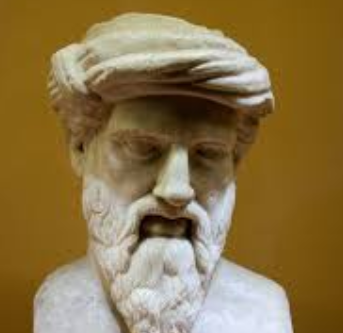
When the wise man opens his mouth, the beauties of his soul present themselves to the view, like the statues in a temple
▼
Source
"Pythagorean Ethical Sentences From Stobæus" (1904)
5 months 1 week ago
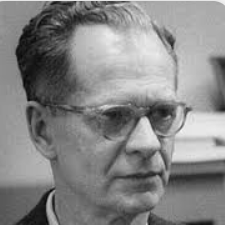
Society attacks early, when the individual is helpless.
▼
Source
Walden Two (1948), p. 95
5 months 1 week ago
According to the theory of those weak minded persons, man is more perfect than his Creator. For what man says or does has a certain object, whilst the actions of God are different; He commands us to do what is of no use to us, and forbids us to do what is harmless. Far be this! On the contrary, the sole object of the Law is to benefit us.
▼
Source
Ch.31
5 months 1 week ago
Nothing can be preserved that is not good.
▼
Source
Books
5 months 1 week ago
I have to say, I think that we are in some kind of final examination as to whether human beings now, with this capability to acquire information and to communicate, whether we're really qualified to take on the responsibility we're designed to be entrusted with. And this is not a matter of an examination of the types of governments, nothing to do with politics, nothing to do with economic systems. It has to do with the individual. Does the individual have the courage to really go along with the truth?

5 months 1 week ago
Iamblichus set out to give a systematic and decisive character to Plotinus' dialectic at its most sublime but also most obscure moment, that of absolute unity and its forms, already dealt with by Amelius and Porphyry; that is, around the way of reconciling and harmonising the mystical theory of the One with the variety of unitary principles that are expected to preside over the various aspects of life: that is, the transcendent One and the immanent One, the unity of thought and being, thinking thought and thought thought, and finally thought as an intelligible world.
▼
Source
(La Scuola di giamblico, “'School of Iamblichus”', XXX, p. 187)
5 months 1 week ago
Without Justice, no realm may prosper.

5 months 1 week ago
A tautology's truth is certain, a proposition's possible, a contradiction's impossible. (Certain, possible, impossible: here we have the first indication of the scale that we need in the theory of probability.) (4.464)
▼
Source
Original German: Die Wahrheit der Tautologie ist gewiss, des Satzes möglich, der Kontradiktion unmöglich

5 months 1 week ago
By a pardonable abridgment of history, the Rationalist character may be seen springing from the exaggeration of Bacon's hopes and the neglect of the scepticism of Descartes; modern Rationalism is what commonplace minds made out of the inspiration of men of discrimination and genius.
5 months 1 week ago
Language is a city to the building of which every human being brought a stone; yet he is no more to be credited with the grand result than the acaleph which adds a cell to the coral reef which is the basis of the continent.
▼
Source
Quotation and Originality
5 months 1 week ago
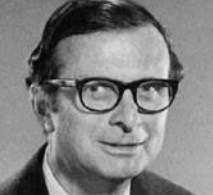
One cannot help but be struck by the diversity that characterizes efforts to study the management process. If it is true that psychologists like to study personality traits in terms of a person's reactions to objects and events, they could not choose a better stimulus than management science. Some feel it is a technique, some feel it is a branch of mathematics, or of mathematical economics, or of the "behavioral sciences," or of consultation services, or just so much nonsense. Some feel it is for management (vs. labor), some feel it ought to be for the good of mankind — or for the good of underpaid professors.
5 months 1 week ago
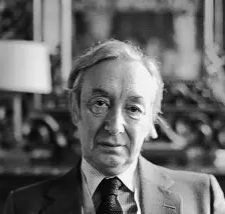
He was the antithesis of the philosopher of mystery and intimation, and he was not tempted to technicality. He lived assertively and was vain and cocksure — at some cost to his philosophical reputation, since other philosophers were as human in their judgements on him. He was also honest, humane, and more or less on the Left in politics. He liked society, was a man of many women, came to be self-judging, and after some sadness died bravely, on 27 June 1989.
▼
Source
Ted Honderich, in [http://www.ucl.ac.uk/~uctytho/AyerbyTH.html "A. J. Ayer's Philosophy and its Greatness"], his introduction to A. J. Ayer : Writings on Philosophy (2004).
5 months 1 week ago
Materials are indifferent, but the use which we make of them is not a matter of indifference.
▼
Source
Book II, ch. 5, § 1
5 months 1 week ago
I have often admired the mystical way of Pythagoras, and the secret Magic of numbers.
▼
Source
Thomas Browne, in Religio Medici (1642), Section 12
5 months 1 week ago
The seeds of heavenly bodies are deposited and cared for in the Milky Way, from which they emanate in swarms of comets that travel a ;long time and ordinarily gravitate towards various suns before becoming fixed in orbit.
▼
Source
L'attraction passioneé
5 months 1 week ago
Frazer is much more savage than most of his savages, for they are not as far removed from the understanding of spiritual matter as a twentieth-century Englishman. His explanations of primitive practices are much cruder than the meaning of these practices themselves.
▼
Source
Ch. 7 : Remarks on Frazer's Golden Bough, p. 131

5 months 1 week ago
As soon as you concern yourself with the "good" and "bad" of your fellows, you create an opening in your heart for maliciousness to enter. Testing, competing with, and criticizing others weakens and defeats you.
5 months 1 week ago
Heroism feels and never reasons and therefore is always right.
▼
Source
Heroism
5 months 1 week ago
The systems approach goes on to discovering that every world-view is terribly restricted.
▼
Source
C. West Churchman, (1970) cited in: Michael C. Jackson ( 1992) Systems Methodology for the Management Sciences. p. 137
5 months 1 week ago
Most men's conscience, habits, and opinions are borrowed from convention and gather continual comforting assurances from the same social consensus that originally suggested them.
▼
Source
Ch. VIII: Ideal Society
5 months 1 week ago
Next to the ridicule of denying an evident truth, is that of taking much pains to defend it; and no truth appears to me more evident, than that beasts are endow'd with thought and reason as well as men. The arguments are in this case so obvious, that they never escape the most stupid and ignorant.
▼
Source
Part 3, Section 16
5 months 1 week ago
It is the act of an ill-instructed man to blame others for his own bad condition; it is the act of one who has begun to be instructed, to lay the blame on himself; and of one whose instruction is completed, neither to blame another, nor himself. (5) [tr. George Long (1888)].
5 months 1 week ago
According to the account of Proclus (Book II. c. 4 ), Pythagoras was the first who gave to Geometry the form of a deductive science, by shewing the connexion of the geometrical truths then known, and their dependence on certain first principles. ...The traditionary account, that Pythagoras was the founder of scientific mathematics, is in some degree, supported by the statement of Diogenes Laertius, that he was chiefly occupied with the consideration of the properties of number, weight, and extension, besides music and astronomy. The passage of Cicero (De Nat. Deor. III. 36) may be referred to as evidence that later writers were unable to give any precise account of the mathematical discoveries of Pythagoras. To Pythagoras, however, is attributed the discovery of some of the most important elementary properties contained in the first book of Euclid's Elements. The very important truth contained in Prop. 47, Book I. is also ascribed to Pythagoras. ...Proclus attributes to him the discovery of that right-angled triangle, the three sides of which are respectively 3, 4, and 5 units. To Pythagoras also belongs the discovery, that there are only three kinds of regular polygons which can be placed so as to fill up the space round a point; namely, six equilateral triangles, four squares, and three regular hexagons. Proclus attributes to him the doctrine of incommensurables, and the discovery of the five regular solids, which, if not due to Pythagoras, originated in his school. In Astronomy he is reputed to have held, that the Sun is the centre of the system, and that the planets revolve round it. This has been called, from his name, the Pythagorean System, which was revived by Copernicus, A.D.1541, and proved by Newton.
▼
Source
Robert Potts, [https://books.google.com/books?id=GLZjAAAAcAAJ&pg=PR3 Euclid's Elements of Geometry] (1845) Introduction pp. iii-iv
5 months 1 week ago
If I have exhausted the justifications, I have reached bedrock and my spade is turned. Then I am inclined to say: "This is simply what I do."
▼
Source
§ 217
5 months 1 week ago
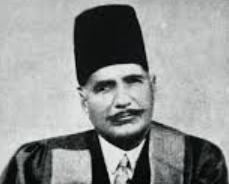
It cannot be denied that Islam, regarded as an ethical ideal plus a certain kind of polity – by which expression I mean a social structure regulated by a legal system and animated by a specific ethical ideal – has been the chief formative factor in the life-history of the Muslims of India. It has furnished those basic emotions and loyalties which gradually unify scattered individuals and groups, and finally transform them into a well-defined people, possessing a moral consciousness of their own.
▼
Source
Sir Muhammad Iqbal’s 1930 Presidential Address to the 25th Session of the All-India Muslim League, Allahabad, 29 December 1930 (from [http://www.columbia.edu/itc/mealac/pritchett/00islamlinks/txt_iqbal_1930.html University of Columbia website])
5 months 1 week ago
In order to learn the important lessons in life, one must each day surmount to fear.
▼
Source
There are ongoing disputes on who should receive credit for this quote. The earliest match that could be found was in an article published by Los Angeles Times in 1936, which attributed the quote to Elbert Hubbard, but the evidence was weak as he died in
5 months 1 week ago
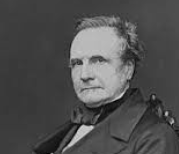
Mr. Herschel ... brought with him the calculations of the computers, and we commenced the tedious process of verification. After a time many discrepancies occurred, and at one point these discordances were so numerous that I exclaimed, "I wish to God these calculations had been executed by steam," to which Herschel replied, "It is quite possible."
▼
Source
Babbage in November 1839, recalling events in 1821; quoted in Harry Wilmot Buxton and Anthony Hyman (1988), Memoir of the Life and Labours of the Late Charles Babbage. "Computers" here refers to people calculating by hand.
5 months 1 week ago
There is no cure for birth and death save to enjoy the interval.
▼
Source
"War Shrines"
CivilSimian.com created by AxiomaticPanic, CivilSimian, Kalokagathia