

4 months ago
"I Authorize and give up my Right of Governing my selfe, to this Man, or to his Assembly of men, on this condition, that thou that give up thy Right to him, and Authorise all his Actionsin like manner." This done, the Multitude so united in one Person, is called a COMMON-WEALTH, in latine CIVITAS. This is the Generation of that LEVIATHAN, or rather (to speake more reverently) of that Mortall God, to which we owe under the Immortal God, our peace and defence.
▼
Source
The Second Part, Chapter 17, p. 87 (See also: Ten Commandments)

4 months ago
But oppression by your Mock-Superiors well shaken off, the grand problem yet remains to solve: That of finding government by your Real-Superiors! Alas, how shall we ever learn the solution of that, benighted, bewildered, sniffing, sneering, godforgetting unfortunates as we are? It is a work for centuries; to be taught us by tribulations, confusions, insurrections, obstructions; who knows if not by conflagration and despair! It is a lesson inclusive of all other lessons; the hardest of all lessons to learn.

4 months ago
A life without a holiday is like a long journey without an inn to rest at.

4 months ago
By far my greatest dread in life […] is that (some variant of) the Everett interpretation of Quantum Mechanics is true.
▼
Source
[https://www.hedweb.com/davdiary.htm Dave's Diary], BLTC Research, May 1996

4 months ago
We do not ask ourselves what the ultimate ideas behind our civilization are that have brought us into this danger; we do not search for the human face behind the bewildering array of instruments that man has forged; in a word, we do not dare to be philosophical.
▼
Source
Chapter One, The Advent of Existentialism, p. 3
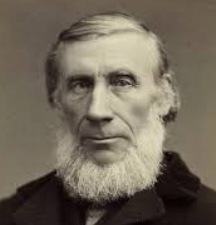
4 months ago
The Apocrypha... ought to be bound up with all your Bibles; it contains much that is beautiful and wise, and there is in history nothing finer than the description of Eleazar's end.
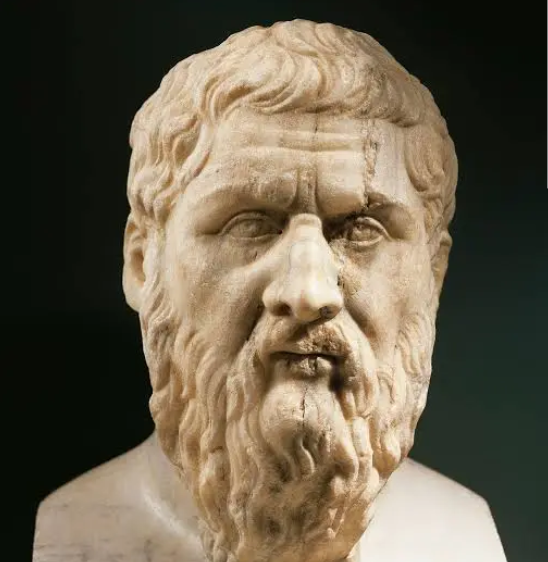
4 months ago
The beginning in every task is the chief thing.
▼
Source
variant: The beginning is the most important part of any work. (Jowett translation) | 377a
4 months ago
As for the Mystical Writers scrupling to Communicate their Knowledge, they might less to their own Disparagement, and to the trouble of their Readers, have conceal'd it by writing no Books, then by Writing bad ones. If Themistius were here, he would not stick to say that Chymists write thus darkly, not because they think their Notions too precious to be explain'd, but because they fear that if they were explain'd, men would discern, that they are farr from being precious.

4 months ago
One hardly saves a world without ruling it.
4 months ago
The study of politics is a form of natural history. Thomas Hobbes loathed Aristotle’s politics, and in Leviathan followed Plato in modeling politics on geometry; but he admired Aristotle’s biology. One consequence of that “biological” style is important, not only because it was at odds with Hobbes’s—and Plato’s—hankering after political geometry. Aristotle claimed that political analysis should aim only “at as much precision as the subject matter permits.” Political wisdom cannot aspire to the precision of geometry, and must not pretend to. Aboriculture suggests an analogy: most trees grow best in firm soil with a moderate water supply; a few thrive with their roots in mud and water.
▼
Source
Alan Ryan, On Politics: A History of Political Thought: From Herodotus to the Present (2012), Ch. 3 : Aristotle: Politics Is Not Philosophy
4 months ago
Of America it would ill beseem any Englishman, and me perhaps as little as another, to speak unkindly, to speak unpatriotically, if any of us even felt so. Sure enough, America is a great, and in many respects a blessed and hopeful phenomenon. Sure enough, these hardy millions of Anglosaxon men prove themselves worthy of their genealogy... But as to a Model Republic, or a model anything, the wise among themselves know too well that there is nothing to be said... Their Constitution, such as it may be, was made here, not there... Cease to brag to me of America, and its model institutions and constitutions.
▼
Source
[http://www.ecn.bris.ac.uk/het/carlyle/latter.htm Latter Day Pamphlets], No. 1., p. 23, 24.
4 months ago
Humans already massively intervene in Nature, whether through habitat destruction, captive breeding programs for big cats, "rewilding", etc. So the question is not whether humans should "interfere", but rather what ethical principles should govern our interventions.
▼
Source
"[https://ieet.org/index.php/IEET2/more/pearce20130726 The Antispeciesist Revolution]", Institute for Ethics and Emerging Technologies, 26 Jul. 2013

4 months ago
If the relationship between man and God were supposed to consist of man’s acceptance of a paragraph of propositions that “raises among ourselves no other questions,” there would be no sense at all in God’s promising that if man inquires and seeks, he will be told “great things” that had until now been hidden.
4 months ago
A genuine awareness of tradition makes us free and independent from the conservatism of those who claim to be its guardians.
4 months ago
We can easily forgive a child who is afraid of the dark; the real tragedy of life is when men are afraid of the light.
▼
Source
This quotation, often attributed on the Internet to Plato, cannot be found in any of Plato's writings, nor can it be found in any published work anywhere until recent years. If it really were a quotation by Plato, then some author in the recorded literatu
4 months ago
He was one of the earliest to insist on the necessity of studying the forms of crystals. He saw in their formation proof that the internal motions, configuration, and position of the integral parts are all that is necessary to account for alterations and diversities in outward character.
4 months ago
There is only this swarm of dying creatures stricken with longevity, all the more hateful in that they are so good at organizing their agony.
▼
Source
p. 120, first American edition (1970)
4 months ago
Constitution,—the apex of all its intelligences and mighty instincts and dumb longings: it is I? William Conqueror's big gifts, and Edward's and Elizabeth's; Oliver's lightning soul, noble as Sinai and the thunders of the Lord: these are mine, I begin to perceive,—to a certain extent. These heroisms have I,—though rather shy of exhibiting them. These; and something withal of the huge beaver-faculty of our Arkwrights, Brindleys; touches too of the phoenix-melodies and sunny heroisms of our Shakspeares, of our Singers, Sages and inspired Thinkers all this is in me, I will hope,—though rather shy of exhibiting it on common occasions.
4 months ago
Much more seriously, in those traditional eco-systems that we chose to retain, millions of non-human animals will continue periodically to starve, die horribly of thirst and disease, or even get eaten alive. This is commonly viewed as "natural" and hence basically OK. It would indeed be comforting to think that in some sense this ongoing animal holocaust doesn't matter too much. We often find it convenient to act as though the capacity to suffer were somehow inseparably bound up with linguistic ability or ratiocinative prowess. Yet there is absolutely no evidence that this is the case, and a great deal that it isn't.
▼
Source
1.9 [https://www.hedweb.com/hedethic/hedon1.htm#taste The Taste of Depravity]

4 months ago
Pascal suggests that people avoid looking inwards and keep running in the vain hope of escaping a face-to-face encounter with their predicament, which is to face up to their utter insignificance whenever they recall the infinity of the universe. And he censures them and castigates them for doing so. It is, he says, that morbid inclination to hassle around rather than stay put which ought to be blamed for all unhappiness. One could, however, object that Pascal, even if only implicitly, does not present us with the choice between a happy and an unhappy life, but between two kinds of unhappiness: whether we choose to run or stay put, we are doomed to be unhappy. The only (putative and misleading!) advantage of being on the move (as long as we keep moving) is that we postpone for a while the moment of that truth. This is, many would agree, a genuine advantage of running out of rather than staying in our rooms—and most certainly it is a temptation difficult to resist. And they will choose to surrender to that temptation, allow themselves to be allured and seduced—if only because as long as they remain seduced they will manage to stave off the danger of discovering the compulsion and addiction that prompts them to run, screened by what is called “freedom of choice” or “self-assertion.” But, inevitably, they will end up longing for the virtues they once possessed but have now abandoned for the sake of getting rid of the agony which practicing them, and taking responsibility for that practice, might have caused.
▼
Source
p. 37.
4 months ago
Our English careers to born genius are twofold. There is the silent or unlearned career of the Industrialisms, which are very many among us; and there is the articulate or learned career of the three professions, Medicine, Law (under which we may include Politics), and the Church. Your born genius, therefore, will first have to ask himself, Whether he can hold his tongue or cannot? True, all human talent, especially all deep talent, is a talent to do, and is intrinsically of silent nature; inaudible, like the Sphere Harmonies and Eternal Melodies, of which it is an incarnated fraction.
4 months ago
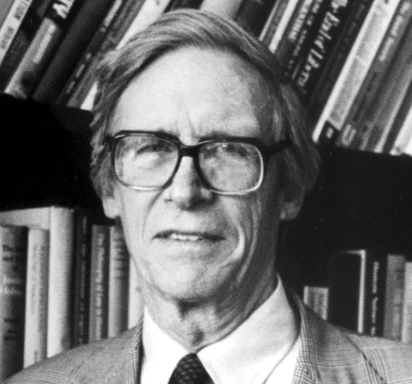
It may be expedient but it is not just that some should have less in order that others may prosper.
▼
Source
Chapter I, Section 3, pg. 15
4 months ago
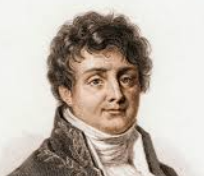
I am sorry not to have known the mathematician who first made use of this method because I would have cited him. Regarding the researches of d'Alembert and Euler could one not add that if they knew this expansion they made but a very imperfect use of it. They were both persuaded that an arbitrary and discontinuous function could never be resolved in series of this kind, and it does not seem that anyone had developed a constant in cosines of multiple arcs, the first problem which I had to solve in the theory of heat.
4 months ago
When we are young, we take a certain pleasure in our infirmities. They seem so new, so rich! With age, they no longer surprise us, we know them too well. Now, without anything unexpected in them, they do not deserve to be endured.
4 months ago
The more I reflect on it, the more I must admire how completely nature had taught him; how completely he was devoted to his work, to the task of his life, and content to let all pass by unheeded that had not relation to this. It is a singular fact, for example, that though a man of such openness and clearness, he had never, I believe, read three pages of Burns's poems. Not even when all about him became noisy and enthusiastic, I the loudest, on that matter, did he feel it worth while to renew his investigation of it, or once turn his face towards it. The poetry he liked (he did not call it poetry) was truth, and the wisdom of reality. Burns, indeed, could have done nothing for him. As high a greatness hung over his world as over that of Burns — the ever-present greatness of the Infinite itself. Neither was he, like Burns, called to rebel against the world, but to labor patiently at his task there, uniting the possible with the necessary to bring out the real, wherein also lay an ideal.
4 months ago
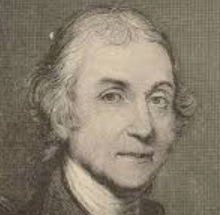
Clearly when the liberties are left unrestricted they collide with one another.
▼
Source
Chapter IV, Section 32, p. 203
4 months ago
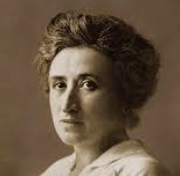
Great conquerors, we read, have been both animated, and also, in a great measure, formed by reading the exploits of former conquerors. Why may not the same effect be expected from the history of philosophy to philosophers? May not even more be expected in this case? The wars of many of those conquerors, who received this advantage from history, had no proper connection with former wars: they were only analogous to them. Whereas the whole business of philosophy, diversified as it is, is but one; it being one and the same great scheme, that all philosophers, of all ages and nations, have been conducting, from the beginning of the world; so that the work being the same, the labours of one are not only analogous to those of another, but in an immediate manner subservient to them; and one philosopher succeeds another in the same field; as one Roman proconsul succeeded another in carrying on the same war, and pursuing the same conquests, in the same country. In this case, an intimate knowledge of what has been done before us cannot but greatly facilitate our future progress, if it be not absolutely necessary to it.
▼
Source
Preface, pp. vi-vii.
4 months ago
As the entire middle class, the bourgeois and petty bourgeois intelligentsia, boycotted the Soviet government for months after the October Revolution and crippled the railroad, post and telegraph, and educational and administrative apparatus, and, in this fashion, opposed the workers government, naturally all measures of pressure were exerted against it. These included the deprivation of political rights, of economic means of existence, etc., in order to break their resistance with an iron fist. It was precisely in this way that the socialist dictatorship expressed itself, for it cannot shrink from any use of force to secure or prevent certain measures involving the interests of the whole.

4 months ago
Correct and accurate conclusions may be arrived at if we carefully observe the relation of the spheres of concepts, and only conclude that one sphere is contained in a third sphere, when we have clearly seen that this first sphere is contained in a second, which in its turn is contained in the third. On the other hand, the art of sophistry lies in casting only a superficial glance at the relations of the spheres of the concepts, and then manipulating these relations to suit our purposes, generally in the following way: — When the sphere of an observed concept lies partly within that of another concept, and partly within a third altogether different sphere, we treat it as if it lay entirely within the one or the other, as may suit our purpose.
▼
Source
Vol. I, Ch. 10, as translated by R. B. Haldane
4 months ago
Once we reject lyricism, to blacken a page becomes an ordeal: what's the use of writing in order to say exactly what we had to say?
4 months ago
As a literary artist he has great merits, beginning with the main one that he never wrote one dull line. How well-read, how adroit, what thousand arts in his one art of writing.
▼
Source
Ralph Waldo Emerson, in the introduction to Past and Present (1843).
4 months ago
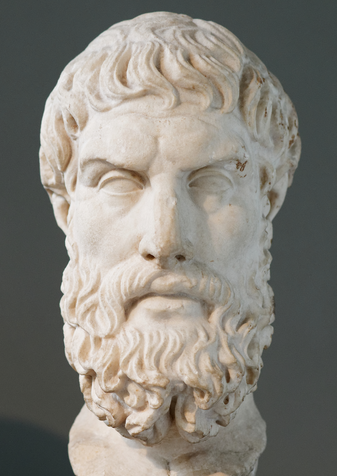
No pleasure is in itself evil, but the things which produce certain pleasures entail annoyances many times greater than the pleasures themselves. (8)
▼
Source
Variant translation: No pleasure is itself a bad thing, but the things that produce some kinds of pleasure, bring along with them unpleasantness that is much greater than the pleasure itself.
4 months ago
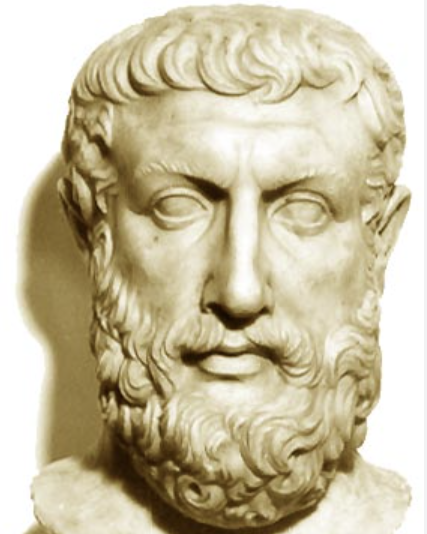
What-is was not generated from what-is-not, because what-is-not cannot give rise to anything in addition to itself. This is the first enunciation of the principle "out of nothing, nothing comes to be,"? which was implicit in earlier Greek thought even as far back as Hesiod and which afterwards, because of Parmenides, became a touchstone for subsequent Greek cosmogonies.These arguments show that coming to be from what-is-not is impossible, which is... relevant in the first stage of a cosmogony. The arguments say nothing of more familiar cases of coming to be, which can be described in terms of changes among already existing things.
▼
Source
, Philosophy Before Socrates: An Introduction with Texts and Commentary Ch. 11. Parmenides of Elea, 11.8 LINES 12—13: ARGUMENT 3, p. 160. Footnote: This principle is frequently given in its Latin form, ex nihilo nihil fit.
4 months ago
The friends of genuine, and I will add of rational Christianity, have not, however, on the whole, much reason to regret that their enemies have not made these distinctions; since by this means, we have been taught to make them ourselves; so that Christianity is perhaps as much indebted to its enemies, as to its friends, for this important service. In their indiscriminate attacks, whatever has been found to be untenable has been gradually abandoned, and I hope the attack will be continued till nothing of the wretched outworks be left; and then, I doubt not, a safe and impregnable fortress, will be sound in the center, a fortress built upon a rock, against which the gates of death will not prevail.
▼
Source
General Conclusions, Part I : Containing Considerations addressed to Unbelievers and especially to Mr. Gibbon

4 months ago
Sometimes you may find a man skillful in his trade, perfect in sagacity and in the use of arguments, but when he comes to religion he is found obstinate, so does he follow in the old groove. Piety is implanted into human nature; it is deemed a sure refuge. To the growing child, that which falls from his mother's lips is a lesson that abides with him all his life. Monks in their cloisters and devotees in their mosques accept their creed just as a story is handed down from him who tells it, without distinguishing between a true interpreter and a false. If one of these had found his kin among the Magians, or among the Sabians, he would have become nearly or quite like them.
▼
Source
Risalat al-Ghufran (The Epistle of Forgiveness)
4 months ago
A man’s body and the needs of his body are now everywhere treated with a tender indulgence. Is the thinking mind then, to be the only thing that is never to obtain the slightest measure of consideration or protection, to say nothing of respect?
▼
Source
“On Noise”
4 months ago
Fear is the antidote to boredom: the remedy must be stronger than the disease.
4 months ago
The translation of "Wilhelm Meister," in 1824,[A] was the first real introduction of Goethe to the reading world of Great Britain. It appeared without the name of the translator, but its merits were too palpable to be overlooked, though some critics objected to the strong infusion of German phraseology which had been imported into the English version. This acquired idiom never left our author, even in his original works, although the "Life of Schiller," written but a few months before, is almost entirely free from the peculiarity.
▼
Source
With White, Andrew Dickson. [https://ia600302.us.archive.org/33/items/cu31924029541640/cu31924029541640.pdf On the Choice of Books: The Inaugural Address of Thomas Carlyle, Lord Rector of the University of Edinburgh, Reprinted From the Times, With Additio
4 months ago
Justice respects man as living in society, and is the common bond without which no society can subsist.
4 months ago
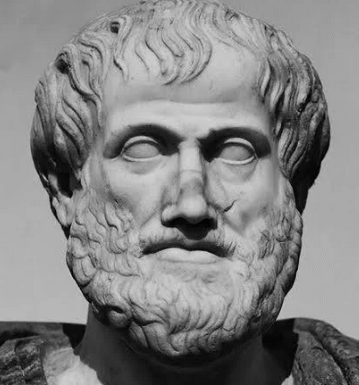
This opinion... appears to be ancient... that the one, excess and defect, are the principles of things... It is not... probable that there are more than three principles... [E]ssence is one certain genus of being: so that principles will differ from each other in prior and posterior alone, but not in genus, for in one genus there is always one contrariety, and all contrarieties appear to be referred to one. That there is neither one element, therefore, nor more than two or three, is evident.
▼
Source
Book I, Ch. VII, pp. 62-63.
4 months ago
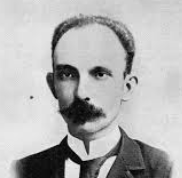
To govern well, one must see things as they are.

4 months ago
If there exists one unique great imperial power which is always convinced that its most brutal interests coincide with the Good; if it is true that every year the USA spends more on their military budget than Russia, China, France, England and Germany put together; and if that Nation-State, devoted to military excess, has no public idol other than wealth, no allies other than servants, and no view of other peoples apart from an indifferent, commercial and cynical one; then the basic freedom of States, peoples and individuals consists in doing everything and thinking everything in order to escape, as much as possible, from the commandments, interventions and interference of that imperial power.
▼
Source
From Philosophy and the 'war against terrorism in Infinite Thought: truth and the return of philosophy. London: Continuum, 2003. .
4 months ago
The discovery of truth is prevented more effectively, not by the false appearance things present and which mislead into error, not directly by weakness of the reasoning powers, but by preconceived opinion, by prejudice.
▼
Source
Vol. 2, Ch. 1, § 17
4 months ago
God is what survives the evidence that nothing deserves to be thought.
4 months ago
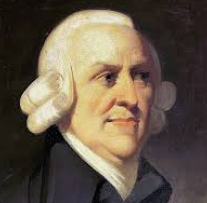
In every part of the universe we observe means adjusted with the nicest artifice to the ends which they are intended to produce; and in the mechanism of a plant, or animal body, admire how every thing is contrived for advancing the two great purposes of nature, the support of the individual, and the propagation of the species.
▼
Source
Section II, [https://knarf.english.upenn.edu/Smith/tms223.html Chap. III].

4 months ago
The rights and duties of man thus simplified, it seems almost impertinent to attempt to illustrate truths that appear so incontrovertible: yet such deeply rooted prejudices have clouded reason, and such spurious qualities have assumed the name of virtues, that it is necessary to pursue the course of reason as it has been perplexed and involved in error, by various adventitious circumstances, comparing the simple axiom with casual deviations.Men, in general, seem to employ their reason to justify prejudices, which they have imbibed, they cannot trace how, rather than to root them out. The mind must be strong that resolutely forms its own principles; for a kind of intellectual cowardice prevails which makes many men shrink from the task, or only do it by halves. Yet the imperfect conclusions thus drawn, are frequently very plausible, because they are built on partial experience, on just, though narrow, views.
▼
Source
Ch. 1
4 months ago
Somehow, the practice of astronomy, physics, chemistry or biology normally fails to evoke the controversies over fundamentals that today seem endemic among, say, psychologists or sociologists. Attempting to discover the source of that difference led me to recognize the role in scientific research of what I have since called “paradigms.” These I take to be universally recognized scientific achievements that for a time provide model problems and solutions for a community of practitioners.
▼
Source
p. xiii (2012 ed.)

4 months ago
To affirm that humans thrive in many different ways is not to deny that there are universal human values. Nor is it to reject the claim that there should be universal human rights. It is to deny that universal values can only be fully realized in a universal regime. Human rights can be respected in a variety of regimes, liberal and otherwise. Universal human rights are not an ideal constitution for a single regime throughout the world, but a set of minimum standards for peaceful coexistence among regimes that will always remain different.
▼
Source
Two Faces of Liberalism (New Press, 2000, . 168 pages), ch. 1: Liberal Toleration (p. 21)
4 months ago
All men by nature desire to know. An indication of this is the delight we take in our senses; for even apart from their usefulness they are loved for themselves; and above all others the sense of sight. For not only with a view to action, but even when we are not going to do anything, we prefer sight to almost everything else. The reason is that this, most of all the senses, makes us know and brings to light many differences between things.
▼
Source
Metaphysics Book I, 980a.21: Opening paragraph of Metaphysics | Variant: All men by nature desire knowledge. | The first sentence is in the Oxford Dictionary of Scientific Quotations (2005), 21:10
4 months ago
We are free, but not to be evil, not to be indifferent to human suffering, not to profit from the people, from the work created and sustained through their spirit of political association, while refusing to contribute to the political state that we profit from. We must say no once more. Man is not free to watch impassively the enslavement and dishonor of men, nor their struggles for liberty and honor.
CivilSimian.com created by AxiomaticPanic, CivilSimian, Kalokagathia