

4 months ago
For such is the nature of men, that howsoever they may acknowledge many others to be more witty, or more eloquent, or more learned; Yet they will hardly believe there be many so wise as themselves: For they see their own wit at hand, and other men's at a distance.
▼
Source
The First Part, Chapter 13, p. 61

4 months ago
Not a May-game is this man's life; but a battle and a march, a warfare with principalities and powers. No idle promenade through fragrant orange-groves and green flowery spaces, waited on by the choral Muses and the rosy Hours: it is a stern pilgrimage through burning sandy solitudes, through regions of thick-ribbed ice. He walks among men; loves men, with inexpressible soft pity,—as they cannot love him: but his soul dwells in solitude, in the uttermost parts of Creation. In green oases by the palm-tree wells, he rests a space; but anon he has to journey forward, escorted by the Terrors and the Splendours, the Archdemons and Archangels. All Heaven, all Pandemonium are his escort. The stars keen-glancing, from the Immensities, send tidings to him; the graves, silent with their dead, from the Eternities. Deep calls for him unto Deep.

4 months ago
The enmity of one's kindred is far more bitter than the enmity of strangers.

4 months ago
The good tidings which the historian of the past brings with throbbing heart may be lost in a void the very moment he opens his mouth.
▼
Source
V
4 months ago
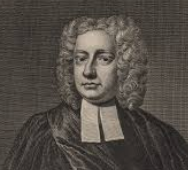
But to return to the Newtonian Philosophy: Tho' its Truth is supported by Mathematicks, yet its Physical Discoveries may be communicated without. The great Mr. Locke was the first who became a Newtonian Philosopher without the help of Geometry; for having asked Mr. Huygens, whether all the mathematical Propositions in Sir Isaac's Principia were true, and being told he might depend upon their Certainty; he took them for granted, and carefully examined the Reasonings and Corollaries drawn from them, became Master of all the Physics, and was fully convinc'd of the great Discoveries contained in that Book.
▼
Source
p. viii: Preface; Cited in Joseph Schwartz (1992), The creative moment: how science made itself alien to modern culture, p. 20
4 months ago
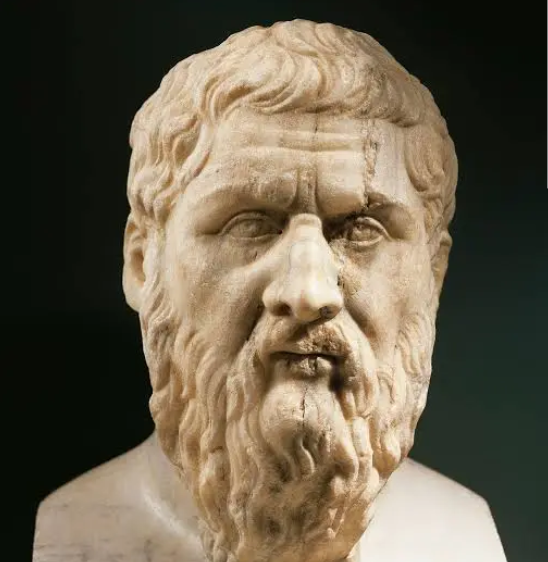
By such reflections and by the continuance in them of a divine nature, the qualities which we have described grew and increased among them; but when the divine portion began to fade away, and became diluted too often and too much with the mortal admixture, and the human nature got the upper hand, they then, being unable to bear their fortune, behaved unseemly, and to him who had an eye to see grew visibly debased, for they were losing the fairest of their precious gifts; but to those who had no eye to see the true happiness, they appeared glorious and blessed at the very time when they were full of avarice and unrighteous power.
4 months ago
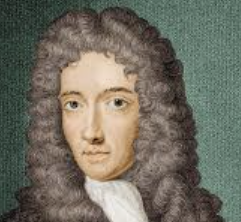
That then, that I wish for, as to systems, is this, that men, in the first place, would forbear to establish any theory, till they have consulted with (though not a fully competent number of experiments, such as may afford them all the phænomena to be explicated by that theory, yet) a considerable number of experiments, in proportion to the comprehensiveness of the theory to be erected on them. And, in the next place, I would have such kind of supestructures looked upon only as temporary ones; which though they may be preferred before any others, as being the least imperfect, or, if you please, the best in their kind that we yet have, yet are they not entirely to be acquiesced in, as absolutely perfect, or uncapable of improving alterations.

4 months ago
Glory — once achieved, what is it worth?
4 months ago
And hereby it comes to passe, that Intemperance, is naturally punished with Diseases; Rashness, with Mischance; Injustice; with Violence of Enemies; Pride, with Ruine; Cowardice, with Oppression; Negligent government of Princes, with Rebellion; and Rebellion with Slaughter.
▼
Source
The Second Part, Chapter 31, p. 194
4 months ago
Thus Mr. Sale informs me, the old Arab Tribes would gather in liveliest gaudeamus, and sing, and kindle bonfires, and wreathe crowns of honour, and solemnly thank the gods that, in their Tribe too, a Poet had shewn himself. As indeed they well might; for what usefuller, I say not nobler and heavenlier thing could the gods, doing their very kindest, send to any Tribe or Nation, in any time or circumstances?
4 months ago
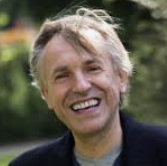
Given our anthropocentric bias, thinking of non-human vertebrates not just as equivalent in moral status to toddlers or infants, but as though they were toddlers or infants, is a useful exercise. Such reconceptualisation helps correct our lack of empathy for sentient beings whose physical appearance is different from "us". Ethically, the practice of intelligent "anthropomorphism" shouldn't be shunned as unscientific, but embraced insofar as it augments our stunted capacity for empathy. Such anthropomorphism can be a valuable corrective to our cognitive and moral limitations. This is not a plea to be sentimental, simply for impartial benevolence.
▼
Source
"[https://www.hedweb.com/abolitionist-project/reprogramming-predators.html Reprogramming Predators]", BLTC Research, 2009

4 months ago
One does wish that Sartre would pause for a while to regroup his forces. The man really does write too much.
▼
Source
Chapter Ten, Sartre, p. 224
4 months ago
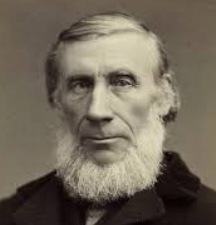
Of the future form of religion little can be predicted. Its main concern may possibly be to purify, elevate, and brighten the life that now is, instead of treating it as the more or less dismal vestibule of a life that is to come.
4 months ago
I will tell you, in order that you may not share the impiety of the multitude: for there cannot conceivably be anything more impious or more to be guarded against than being mistaken in word and deed with regard to the gods, and after them, with regard to divine men; you must take very great precaution, whenever you are about to blame or praise a man, so as not to speak incorrectly. For this reason you must learn to distinguish honest and dishonest men: for God feels resentment when one blames a man who is like himself, or praises a man who is the opposite; and the former is the good man. For you must not suppose that while stocks and stones and birds and snakes are sacred, men are not; nay, the good man is the most sacred of all these things, and the wicked man is the most defiled.
▼
Source
318e-319a
4 months ago
His works on natural and experimental philosophy, particularly on hydrostatics and pneumatics, and his own improvements of the air pump, have placed his name in a rank second only to that of Newton: as a chemist, he takes the lead of all his contemporaries; and in his theological writings, he has so blended philosophy with religion as to exhibit to the world the true value of scientific pursuits.
▼
Source
James Henry Monk, The Life of Richard Bentley, D.D.: Master of Trinity College (1833) [http://books.google.com/books?id=0UoJAAAAQAAJ Vol.1]
4 months ago
Doutbless, revenge is not always sweet, once it is consummated we feel inferior to our victim, or else we are tangled in the subtleties of remorse; so vengeance too has its venom, though it comes closer to what we are, to what we feel, to the very law of the self; it is also healthier than magnanimity. The Furies were held to antedate the gods, Zeus included. Vengeance before Divinity! This is the Major intuition of ancient mythology.
▼
Source
[https://books.google.com/books?id=5DuCDwAAQBAJ&pg=PT70 p. 70.]
4 months ago
[N]ow there is the select small minority, in whom some sentiment of public spirit and human pity still survives, among whom, or not anywhere, the Good Cause may expect to find soldiers and servants: their method of proceeding, in these times, is also very strange. They embark in the "philanthropic movement;" they calculate that the miseries of the world can be cured by bringing the philanthropic movement to bear on them. To universal public misery, and universal neglect of the clearest public duties, let private charity superadd itself: there will thus be some balance restored, and maintained again; thus,—or by what conceivable method? On these terms they, for their part, embark in the sacred cause; resolute to cure a world's woes by rose-water; desperately bent on trying to the uttermost that mild method. It seems not to have struck these good men that no world, or thing here below, ever fell into misery, without having first fallen into folly, into sin against the Supreme Ruler of it, by adopting as a law of conduct what was not a law, but the reverse of one; and that, till its folly, till its sin be cast out of it, there is not the smallest hope of its misery going,—that not for all the charity and rose-water in the world will its misery try to go till then!
4 months ago
Genes and culture have co-evolved. But crudely, natural selection "designed" male human primates to hunt nonhumans and build coalitions of other male human primates in order to wage territorial wars of aggression. Nature didn't design us to become a scientific community and collaborate to overcome aging. It's difficult to imagine that any human enemy could inflict such gruesome damage on the victims as growing old. The ravages of aging strike down combatants and civilians alike. So the trillions of dollars that humans currently spend on ways to harm and kill each other ("defence") would be more fruitfully spent on defeating our common enemy. We should work together to build a "Triple S" civilisation of superlongevity, superhappiness and superintelligence.
▼
Source
"[https://www.hedweb.com/transhumanism/interview-2017.html Transhumanism 2017: Towards a 'Triple S' civilisation of Superlongevity, Superintelligence and Superhappiness]", Timeship Buddha (Feb. 2017)

4 months ago
A good society is a society which believes that it is not good enough; that it is the task of the collectivity to insure individuals against individually suffered misfortune; and that the quality of society is measured by the quality of life of its weakest, just like the carrying power of a bridge is measured by its weakest pillar.
▼
Source
Quoted in [https://newhumanist.org.uk/articles/703/ziggy-stardust "Ziggy Stardust"], New Humanist (2004, posted 31 May 2007)
4 months ago
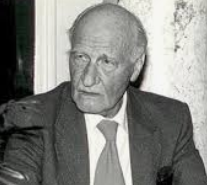
It pertains to the very nature of a philosophical question that its answer will not be a "perfectly rounded truth" (as Parmenides said it), grasped in the hand like an apple plucked from a tree.
▼
Source
P. 63
4 months ago
Socrates had only one worthy successor, his old friend Antisthenes, the last of the Great Generation. Plato, his most gifted disciple, was soon to prove the least faithful. He betrayed Socrates, just as his uncles had done. These, besides betraying Socrates, had also tried to implicate him in their terrorist acts, but they did not succeed, since he resisted. Plato tried to implicate Socrates in his grandiose attempt to construct the theory of the arrested society ; and he had no difficulty in succeeding, for Socrates was dead.I know of course that this judgement will seem outrageously harsh, even to those who arc critical of Plato . But if we look upon the Apology and the Crito as Socrates' last will, and if we compare these testaments of his old age with Plato's testament, the Laws, then it is difficult to judge otherwise. Socrates had been condemned, but his death was not intended by the initiators of the trial. Plato's Laws remedy this lack of intention. Here he elaborates coolly and carefully the theory of inquisition. Free thought, criticism of political institutions, teaching new ideas to the young, attempts to introduce new religious practices or even opinions, are all pronounced capital crimes. In Plato's state, Socrates might have never been given the opportunity of defending himself publicly ; he would have been handed over to the secret Nocturnal Council for the purpose of 'attending' to his diseased soul, and finally for punishing it.I cannot doubt the fact of Plato's betrayal, nor that his use of Socrates as the main speaker of the Republic was the most successful attempt to implicate him. But it is another question whether this attempt was conscious.
▼
Source
Karl Popper (1947, 2011), The Open Society And Its Enemies. Vol I: The Spell of Plato, [http://books.google.com/books?id=cXOawaxWPvQC&lpg=PP1&pg=PA184#v=onepage&q&f=false p. 184]
4 months ago
"None of the gods philosophizes," Plato has Diotima say in the Symposium: "nor do fools; for that is what is so bad about ignorance — that you think you know enough." "Who, then, O Diotima, I asked, are the philosophers, since they are neither those who know nor those who don't know?" Then she answered me: "It's so obvious, Socrates, that a child could understand: the philosophers are the ones in between." This "in-between" is the realm of the truly human. It is truly human, on the one hand, not to understand (as God), and on the other hand, not to become hardened; not to include oneself in the supposedly completely illuminated world of day-to-day life.
▼
Source
p. 109
4 months ago
To suffer is to produce knowledge.
4 months ago
I began gradually to perceive this immense fact, which I really advise every one of you who read history to look out for and read for—if he has not found it—it was that the kings of England all the way from the Norman Conquest down to the times of Charles I. had appointed, so far as they knew, those who deserved to be appointed, peers. They were all Royal men, with minds full of justice and valour and humanity, and all kinds of qualities that are good for men to have who ought to rule over others. Then their genealogy was remarkable—and there is a great deal more in genealogies than is generally believed at present. I never heard tell of any clever man that came out of entirely stupid people. If you look around the families of your acquaintance, you will see such cases in all directions. I know that it has been the case in mine. I can trace the father, and the son, and the grandson, and the family stamp is quite distinctly legible upon each of them, so that it goes for a great deal—the hereditary principle in Government as in other things; and it must be recognised so soon as there is any fixity in things.
4 months ago
To understand how indirect communication is possible we must grasp what it is about ordinary communication that is being changed.
▼
Source
Chapter 6, Indirect Communication, p. 110
4 months ago
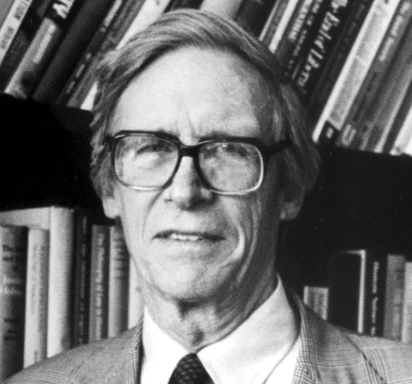
There are infinitely many variations of the initial situation and therefore no doubt indefinitely many theorems of moral geometry.
▼
Source
Chapter III, Section 21, pg. 126
4 months ago
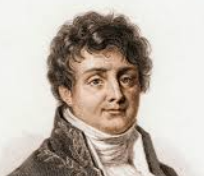
If all the strata of air of... the atmosphere... preserved their density with their transparency, and lost only the mobility... peculiar to them, this mass of air, thus become solid, on being exposed to the rays of the sun, would produce an effect the same in kind... as just described.
4 months ago
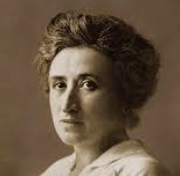
Every legal constitution is the product of a revolution. In the history of classes, revolution is the act of political creation, while legislation is the political expression of the life of a society that has already come into being. Work for reform does not contain its own force independent from revolution. During every historic period, work for reforms is carried on only in the direction given to it by the impetus of the last revolution and continues as long as the impulsion from the last revolution continues to make itself felt. Or, to put it more concretely, in each historic period work for reforms is carried on only in the framework of the social form created by the last revolution. Here is the kernel of the problem.
▼
Source
Ch. 8

4 months ago
How every line is of such strong, determined, and consistent meaning! And on every page we encounter deep, original, lofty thoughts, while the whole world is suffused with a high and holy seriousness.
▼
Source
About Indian sacred scriptures. quoted in Londhe, S. (2008). A tribute to Hinduism: Thoughts and wisdom spanning continents and time about India and her culture. New Delhi: Pragun Publication.
4 months ago
At this very moment, I am suffering — as we say in French, j'ai mal. This event, crucial for me, is nonexistent, even inconceivable for anyone else, for everyone else. Except for God, if that word can have a meaning.
4 months ago
A great man shows his greatness by the way he treats little men.
4 months ago
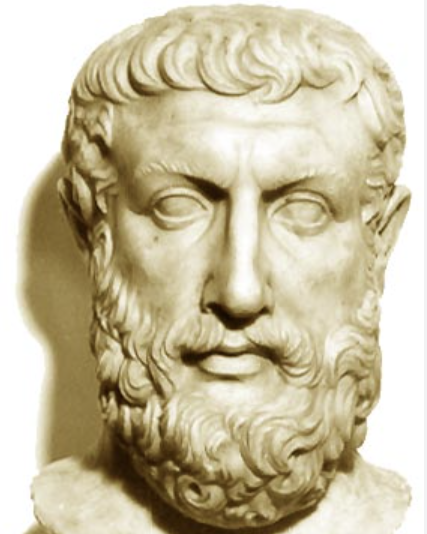
Never will this prevail, that the things that are not are — bar your thought from this road of inquiry.
▼
Source
Frag. B 7.1-2, quoted by Plato, Sophist, 237a
4 months ago
At best the principles that economists have supposed the choices of rational individuals to satisfy can be presented as guidelines for us to consider when we make our decisions.
▼
Source
Chapter IX, Section 84, p. 558
4 months ago
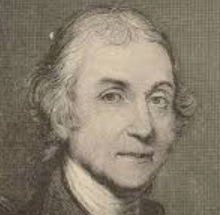
As the greatest things often take their rise from the smallest beginnings, so the worst things sometimes proceed from good intentions. This was certainly the case with respect to the origin of Christian Idolatry. All the early heresies arose from men who wished well to the gospel, and who meant to recommend it to the Heathens, and especially to philosophers among them, whose prejudices they found great difficulty in conquering. Now we learn from the writings of the apostles themselves, as well as from the testimony of later writers, that the circumstance at which mankind in general, and especially the more philosophical part of them, stumbled the most, was the doctrine of a crucified Saviour. They could not submit to become the disciples of a man who had been exposed upon a cross, like the vilest malefactor. Of this objection to Christianity we find traces in all the early writers, who wrote in defence of the gospel against the unbelievers of their age, to the time of Lactantius; and probably it may be found much later. He says, "I know that many fly from the truth out of their abhorrence of the cross." We, who only learn from history that crucifixion was a kind of death to which slaves and the vilest of malefactors were exposed, can but very imperfectly enter into their prejudices, so as to feel what they must have done with respect to it. … Though this circumstance was "unto the Jews a stumbling-block, and unto the Greeks foolishness," it was to others "the power of God and the wisdom of God." 1 Cor. i. 23, 24. For this circumstance at which they cavilled, was that in which the wisdom of God was most conspicuous; the death and resurrection of a man, in all respects like themselves, being better calculated to give other men an assurance of their own resurrection, than that of any super-angelic being, the laws of whose nature they might think to be very different from those of their own. But, "since by man came death, so by man came also the resurrection of the dead." Later Christians, however, and especially those who were themselves attached to the principles of either the Oriental or the Greek philosophy, unhappily took another method of removing this obstacle; and instead of explaining the wisdom of the divine dispensations in the appointment of a man, a person in all respects like unto his brethren, for the redemption of men, and of his dying in the most public and indisputable manner, as a foundation for the clearest proof of a real resurrection, and also of a painful and ignominious death, as an example to his followers who might be exposed to the same … they began to raise the dignity of the person of Christ, that it might appear less disgraceful to be ranked amongst his disciples.
▼
Source
Part I : The History of Opinions Relating to Jesus Christ,
4 months ago
Historically, the errors committed by a truly revolutionary movement are infinitely more fruitful than the infallibility of the cleverest Central Committee.
4 months ago
It is asserted that beasts have no rights; the illusion is harboured that our conduct, so far as they are concerned, has no moral significance, or, as it is put in the language of these codes, that "there are no duties to be fulfilled towards animals." Such a view is one of revolting coarseness, a barbarism of the West, whose source is Judaism. In philosophy, however, it rests on the assumption, despite all evidence to the contrary, of the radical difference between man and beast,—a doctrine which, as is well known, was proclaimed with more trenchant emphasis by Descartes than by any one else: it was indeed the necessary consequence of his mistakes.
▼
Source
Part III, Ch. VIII, 7, [https://archive.org/stream/basisofmorality00schoiala#page/218/mode/2up p. 218]
4 months ago
The farther men get from God, the farther they advance into the knowledge of religions.
4 months ago
In the mid-nineteenth century and after, the fear of social disintegration was mostly a conservative concern. After the turbulent 1840s in England, the Victorian polemicist Thomas Carlyle worried about what force would discipline “the masses, full of beer and nonsense” as more and more of them received the right to vote. Carlyle’s remedy was a militarized welfare dictatorship, administered not by the existing ruling class but by a new elite composed of selfless captains of industry and other natural heroes of the order of Oliver Cromwell and Frederick the Great. The Nazis later claimed Carlyle as a forerunner.
▼
Source
Robert Paxton, The Anatomy of Fascism (2004), p. 35
4 months ago
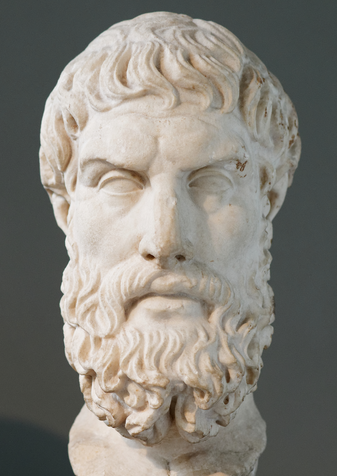
There are two kinds of pleasure: one consisting in a state of rest, in which both body and mind are undisturbed by any kind of pain; the other arising from an agreeable agitation of the senses, producing a correspondent emotion in the soul. It is upon the former of these that the enjoyment of life chiefly depends. Happiness may therefore be said to consist in bodily ease, and mental tranquility.
4 months ago
The theory of Parmenides is the inevitable outcome of a corporeal monism, and his bold declaration of it ought to have destroyed that theory... If he had lacked courage to work out the prevailing views... to their logical conclusion... men might have gone on in the endless circle of opposition, rarefaction and condensation, one and many, for ever. ...[T]he thoroughgoing dialectic of Parmenides ...made progress possible. Philosophy must now cease [either] to be monistic or... corporealist. It could not cease to be corporealist; for the incorporeal was still unknown. It therefore ceased to be monistic, and arrived at the atomic theory... matter in motion.
4 months ago
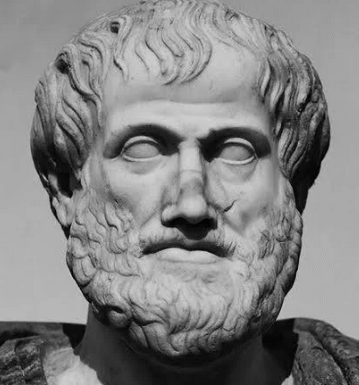
Philosophy is the science of truth.
4 months ago
The spirit of a government must be that of the country. The form of a government must come from the makeup of the country. Government is nothing but the balance of the natural elements of a country.
▼
Source
Our America (1891)

4 months ago
This book founds a doctrine which is effectively post-Cartesian, or even post-Lacanian, a doctrine of what, for thought, both un-binds the Heidegerean connection between being and truth and institutes the subject, not as support or origin, but as fragment of the process of a truth.
▼
Source
Introduction
4 months ago
From the fundamental nature of the Philistine, it follows that, in regard to others, as he has no intellectual but only physical needs, he will seek those who are capable of satisfying the latter not the former. And so of all the demands he makes of others the very smallest will be that of any outstanding intellectual abilities. On the contrary, when he comes across these they will excite his antipathy and even hatred. For here he has a hateful feeling of inferiority and also a dull secret envy which he most carefully attempts to conceal even from himself; but in this way it grows sometimes into a feeling of secret rage and rancour. Therefore it will never occur to him to assess his own esteem and respect in accordance with such qualities, but they will remain exclusively reserved for rank and wealth, power and influence, as being in his eyes the only real advantages to excel in which is also his desire.
▼
Source
E. Payne, trans. (1974) Vol. 1, pp. 344–345
4 months ago
The poor, by thinking unceasingly of money, reach the point of losing the spiritual advantages of non-possession, thereby sinking as low as the rich.
4 months ago
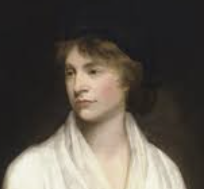
You know I am not born to tread in the beaten track — the peculiar bent of my nature pushes me on.
▼
Source
Letter to Everina Wollstonecraft (7 November 1787)
4 months ago
The bodies of which the world is composed are solids, and therefore have three dimensions. Now, three is the most perfect number,—it is the first of numbers, for of one we do not speak as a number, of two we say both, but three is the first number of which we say all. Moreover, it has a beginning, a middle, and an end.
▼
Source
I. 1. as translated by William Whewell and as quoted by Florian Cajori, A History of Physics in its Elementary Branches (1899) as Aristotle's proof that the world is perfect.
4 months ago
It is not the form of things that must be attended to but their spirit. The real is what matters, not the apparent. In politics, reality is that which is unseen. Politics is the art of combining a nation’s diverse or opposing factors to the benefit of its domestic well-being, and of saving the country from the open enmity or covetous friendship of other nations.

4 months ago
Together with the histories of Polybius and Livy, Cicero’s polemical speeches and writings, and his personal correspondence, form some of the most important historical resources for understanding the Roman legal and political system. Here we focus only on his political theory narrowly construed, part of his program to adapt Greek philosophy to Roman social and political purposes, bypassing even the extended defense of the role of oratory in political life that became something like a handbook for the study of rhetoric.
4 months ago
That the outer man is a picture of the inner, and the face an expression and revelation of the whole character, is a presumption likely enough in itself, and therefore a safe one to go on; borne out as it is by the fact that people are always anxious to see anyone who has made himself famous .... Photography … offers the most complete satisfaction of our curiosity.
▼
Source
Vol. 2, Ch. 29, § 377
CivilSimian.com created by AxiomaticPanic, CivilSimian, Kalokagathia