

4 months ago
There is no one whose death I have not longed for, at one moment or another.
4 months ago
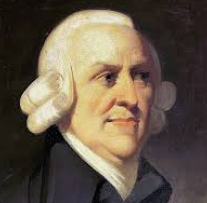
The annual labour of every nation is the fund which originally supplies it with all the necessaries and conveniences of life which it annually consumes.
▼
Source
Introduction and Plan of the Work, p. 1.
4 months ago
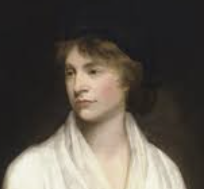
It is justice, not charity, that is wanting in the world.
▼
Source
Ch. 9
4 months ago
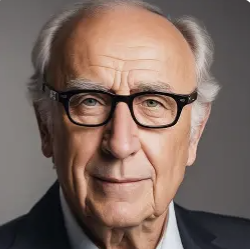
A scientific theory is usually felt to be better than its predecessors not only in the sense that it is a better instrument for discovering and solving puzzles but also because it is somehow a better representation of what nature is really like. One often hears that successive theories grow ever closer to, or approximate more and more closely to, the truth. Apparently generalizations like that refer not to the puzzle-solutions and the concrete predictions derived from a theory but rather to its ontology, to the match, that is, between the entities with which the theory populates nature and what is “really there.”Perhaps there is some other way of salvaging the notion of ‘truth’ for application to whole theories, but this one will not do. There is, I think, no theory-independent way to reconstruct phrases like ‘really there’; the notion of a match between the ontology of a theory and its “real” counterpart in nature now seems to me illusive in principle. Besides, as a historian, I am impressed with the implausability of the view. I do not doubt, for example, that Newton’s mechanics improves on Aristotle’s and that Einstein’s improves on Newton’s as instruments for puzzle-solving. But I can see in their succession no coherent direction of ontological development. On the contrary, in some important respects, though by no means in all, Einstein’s general theory of relativity is closer to Aristotle’s than either of them is to Newton’s.
4 months ago
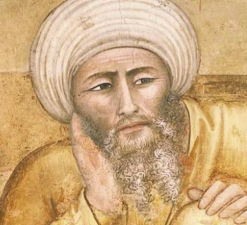
There is no city that is truly one other than this city that we [anahnti] are involved in bringing forth.
▼
Source
Averroes, Ralph Lerner (1974) Averroes On Plato's Republic. p. xxiv

4 months ago
In thinking of history in this [progressive & eschatological] way Islam shares common ground with Christianity and with the secular creeds of the modern West. It is misleading to represent Islam and ‘the West’ as forming civilisations that have nothing in common. Christianity and Islam are integral parts of western monotheism, and as such they share a view of history that marks them off from the rest of the world. Both are militant faiths that seek to convert all humankind. Other religions have been implicated in twentieth-century violence—the state cult of Shintō in Japan during the militarist period and Hindu nationalism in contemporary India, for example. But only Christianity and Islam have engendered movements that are committed to the systematic use of force to achieve universal goals.
▼
Source
Enlightenment and Terror in the Twentieth Century: Terror and the Western Tradition
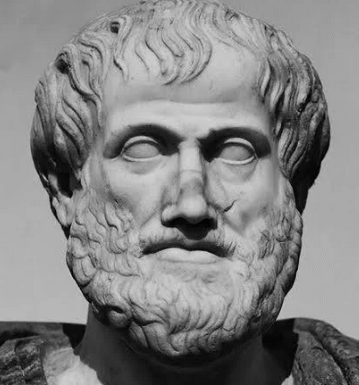
4 months ago
As for the life of money-making, it is one of constraint, and wealth is manifestly not the good of which we are in search, for it is only useful as a means to something else, and for this reason there is less to be said for it than for the ends mentioned before, which are, at any rate, desired for their own sakes.
▼
Source
(Bk. 1, Chapter III)

4 months ago
Whenever a theory appears to you as the only possible one, take this as a sign that you have neither understood the theory nor the problem which it was intended to solve.
▼
Source
Objective Knowledge: An Evolutionary Approach (1972)

4 months ago
If people would but understand that they are not the sons of some fatherland or other, nor of Governments, but are sons of God, and can therefore neither be slaves nor enemies one to another - those insane, unnecessary, worn-out, pernicious organizations called Governments, and all the sufferings, violations, humiliations and crimes which they occasion, would cease.
▼
Source
Patriotism and Government
4 months ago
A genuine man goes to the roots. To be a radical is no more than that: to go to the roots. He who does not see things in their depth should not call himself a radical.

4 months ago
Religion always poses a problem for capitalism because, by saying that some things are sacred, it insists that not everything is saleable.
▼
Source
p. 85

4 months ago
Intellect is invisible to the man who has none.
▼
Source
Our Relation to Others, § 23
4 months ago
Hope is the normal form of delirium.
4 months ago
The establishment of any new manufacture, of any new branch of commerce, or any new practice in agriculture, is always a speculation, from which the projector promises himself extraordinary profits. These profits sometimes are very great, and sometimes, more frequently, perhaps, they are quite otherwise; but in general they bear no regular proportion to those of other older trades in the neighbourhood. If the project succeeds, they are commonly at first very high. When the trade or practice becomes thoroughly established and well known, the competition reduces them to the level of other trades.
▼
Source
Chapter X, Part I, p. 136 (tendency of the rate of profit to fall).
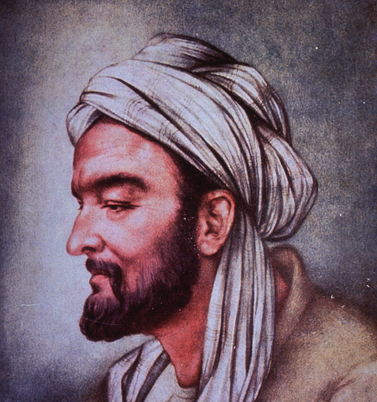
4 months ago
Medicine considers the human body as to the means by which it is cured and by which it is driven away from health.
▼
Source
As quoted in [http://books.google.com.bh/books?id=KTWDxDEY-Q0C&lpg=PA75&dq=Medicine%20considers%20the%20human%20body%20as%20to%20the%20means%20by%20which%20it%20is%20cured%20and%20by%20which%20it%20is%20driven%20away%20from%20health.&pg=PA75#v=onepage&q=M
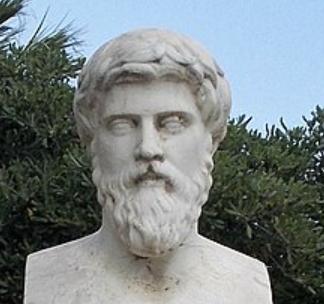
4 months ago
Lycurgus the Lacedæmonian brought long hair into fashion among his countrymen, saying that it rendered those that were handsome more beautiful, and those that were deformed more terrible. To one that advised him to set up a democracy in Sparta, "Pray," said Lycurgus, "do you first set up a democracy in your own house."
▼
Source
57 Lycurgus
4 months ago
The basis of science is the empirical method, which uses the senses to build up a picture of the world; but science tells us that our senses have evolved to help us get by, not to show us the world as it is. Science is only a systematic examination of our impressions, and in the end all each of us has left are our own sensations ... The end-result of the empirical method, then, is that each individual is left alone with their own experiences. We can escape this solitude, Balfour suggested, only if we accept that there is a divine mind.
▼
Source
Cross-correspondences (p. 69-70)
4 months ago
Thus every action must be due to one or other of seven causes: chance, nature, compulsion, habit, reasoning, anger, or appetite.
▼
Source
Book I, 1369a.5 | Variant: All human actions have one or more of these seven causes: chance, nature, compulsions, habit, reason, passion and desire.
4 months ago
We must plan for freedom, and not only for security, if for no other reason than that only freedom can make security secure.
▼
Source
Vol. 2, Ch. 21 "An Evaluation of the Prophecy"
4 months ago
The whole plan of our order should be based on the idea of preparing men of firmness and virtue bound together by unity of conviction—aiming at the punishment of vice and folly, and patronizing talent and virtue: raising worthy men from the dust and attaching them to our Brotherhood. Only then will our order have the power unobtrusively to bind the hands of the protectors of disorder and to control them without their being aware of it. In a word, we must found a form of government holding universal sway, which should be diffused over the whole world without destroying the bonds of citizenship, and beside which all other governments can continue in their customary course and do everything except what impedes the great aim of our order, which is to obtain for virtue the victory over vice
▼
Source
Book VI, Chapter VII

4 months ago
A person's brain and body do not have to be in the same place.
▼
Source
talking about the use of neural implants in Kevin Warwick "Human Enhancement - The Way Ahead", ACM Ubiquity, October 2014.

4 months ago
The Religion that is afraid of science dishonours God and commits suicide. It acknowledges that it is not equal to the whole of truth, that it legislates, tyrannizes over a village of God's empires but is not the immutable universal law. Every influx of atheism, of skepticism is thus made useful as a mercury pill assaulting and removing a diseased religion and making way for truth.
▼
Source
March 4, 1831

4 months ago
The colonization of the Southern economy by capitalists from the North gave lynching its most vigorous impulse. If Black people, by means of terror and violence, could remain the most brutally exploited group within the swelling ranks of the working class, the capitalists could enjoy a double advantage. Extra profits would result from the superexploitation of Black labor, and white workers’ hostilities toward their employers would be defused. White workers who assented to lynching necessarily assumed a posture of racial solidarity with the white men who were really their oppressors. This was a critical moment in the popularization of racist ideology.
4 months ago
I'd rather offer my life as a sacrifice than be necessary to anything.
4 months ago
It would be too ridiculous to go about seriously to prove that wealth does not consist in money, or in gold and silver; but in what money purchases, and is valuable only for purchasing. Money no doubt, makes always a part of the national capital; but it has already been shown that it generally makes but a small part, and always the most unprofitable part of it.
▼
Source
Chapter I, p. 470.
4 months ago
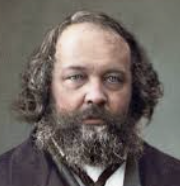
FREEDOM, the realization of freedom: who can deny that this is what today heads the agenda of history? … Revolutionary propaganda is in its deepest sense the negation of the existing conditions of the State, for, with respect to its innermost nature, it has no other program than the destruction of whatever order prevails at the time.... We must not only act politically, but in our politics act religiously, religiously in the sense of freedom, of which the one true expression is justice and love. Indeed, for us alone, who are called the enemies of the Christian religion, for us alone it is reserved, and even made the highest duty … really to exercise love, this highest commandment of Christ and this only way to true Christianity.
▼
Source
[http://www.marxists.org/reference/archive/bakunin/works/1842/reaction-germany.htm "The Reaction in Germany" (1842)], Bakunin's first political writings, under the pseudonym "Jules Elysard"; it was not until 1860 that he began to publicly assert a stance
4 months ago
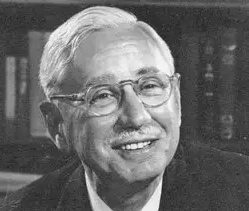
Civilization exists by geological consent, subject to change without notice.
▼
Source
"What is Civilization?" Ladies' Home Journal, LXIII (January, 1946)
4 months ago
[Plutarch's works contains] the sum of Greek and Latin history made up of great maxims and greater instances, noble precepts and nobler examples, set off with...vigorous eloquence.
▼
Source
David Lloyd, The Worthies of the World (London, 1665), quoted in Peter Burke, 'A Survey of the Popularity of Ancient Historians, 1450–1700', History and Theory, Vol. 5, No. 2 (1966), pp. 142-143
4 months ago
For Leopardi evil is integral to the way the world works; but when he talks of evil he does not mean any kind of malign agency of the sort that Gnostics imagined. Evil is the suffering that is built into the scheme of things. ‘What hope is there when evil is ordinary?’ he asks. ‘I mean, in an order where evil is necessary?’ These rhetorical questions show why Leopardi had no interest in projects of revolution and reform. No type of human action – least of all the harlequinade of politics – could fundamentally alter a world in which evil was ordinary.
▼
Source
The Faith of Puppets: Leopardi and the Souls of Machines (p.35-6)
4 months ago
The first clear expression of the idea of an element occurs in the teachings of the Greek philosophers. ... Aristotle ... who summarized the theories of earlier thinkers, developed the view that all substances were made of a primary matter... On this, different forms could be impressed... so the idea of the transmutation of the elements arose. Aristotle's elements are really fundamental properties of matter.... hotness, coldness, moistness, and dryness. By combining these in pairs, he obtained what are called the four elements, fire, air, earth and water... a fifth, immaterial, one was added, which appears in later writings as the quintessence. This corresponds with the ether. The elements were supposed to settle out naturally into the earth (below), water (the oceans), air (the atmosphere), fire and ether (the sky and heavenly bodies).
▼
Source
J. R. Partington, A Short History of Chemistry (1937)
4 months ago
[S]ubject matters in general do not exist. There are no subject matters; no branches of learning—or, rather, of inquiry: there are only problems, and the urge to solve them.
4 months ago
There is one evident, indubitable manifestation of the Divinity, and that is the laws of right which are made known to the world through Revelation.
▼
Source
Pt. VIII, ch. 19

4 months ago
The character, or tone, of a society depends on what the society regards as the most respectable or most worthy of admiration. But by regarding certain habits or attitudes as most respectable, a society admits the superiority, the superior dignity, of those human beings who most perfectly embody the habits or attitudes in question. That is to say, every society regards a specific human type (or a specific mixture of human types) as authoritative. When the authoritative type is the common man, everything has to justify itself before the tribunal of the common man; everything which cannot be justified before that tribunal becomes, at best, merely tolerated, if not despised or suspect. And even those who do not recognize that tribunal are, willy-nilly, molded by its verdicts.
▼
Source
p. 137
4 months ago
I have been writing & speaking what were once called novelties, for twenty five or thirty years, & have not now one disciple. Why? Not that what I said was not true; not that it has not found intelligent receivers but because it did not go from any wish in me to bring men to me, but to themselves. I delight in driving them from me. What could I do, if they came to me? — they would interrupt and encumber me. This is my boast that I have no school & no follower. I should account it a measure of the impurity of insight, if it did not create independence.
▼
Source
April 1859
4 months ago
Private prisons are direct sources of profit for the companies that run them, but public prisons have become so thoroughly saturated with the profit-producing products and services of private corporations that the distinction is not as meaningful as one might suspect.
▼
Source
Chapter Five
4 months ago
A person who wakes up after a night of unbroken sleep has the illusion of beginning something new. When one instead remains awake the whole night long, nothing new begins.
4 months ago
Monopoly of one kind or another, indeed, seems to be the sole engine of the mercantile system.
▼
Source
Chapter VII, Part Third, p. 684.
4 months ago
My dignity as a man, my human right which consists of refusing to obey any other man, and to determine my own acts in conformity with my convictions is reflected by the equally free conscience of all and confirmed by the consent of all humanity. My personal freedom, confirmed by the liberty of all, extends to infinity. The materialistic conception of freedom is therefore a very positive, very complex thing, and above all, eminently social, because it can be realized only in society and by the strictest equality and solidarity among all men.
4 months ago
Power dements even more than it corrupts, lowering the guard of foresight and raising the haste of action.
▼
Source
Ch. IV : The Convention: September 21, 1792 - October 26, 1795, Part V : The Reign of Terror: September 17, 1793 - July 28, 1794, § 4 : The Revolution Eats Its Children
4 months ago
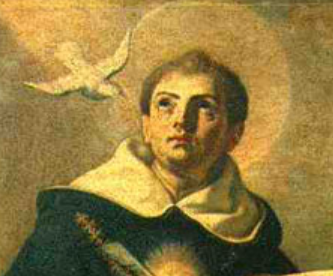
One who liberates his country by killing a tyrant is to be praised and rewarded.
▼
Source
Trans. J.G. Dawson (Oxford, 1959), 44, 2 in O’Donovan, pp. 329-30

4 months ago
In the writings of such "pagan" philosophers as Plutarch and Porphyry we find a humanitarian ethic of the most exalted kind, which, after undergoing a long repression during medieval churchdom, reappeared, albeit but weakly and fitfully at first, in the literature of the Renaissance, to be traced more definitely in the eighteenth century school of "sensibility."
▼
Source
Henry S. Salt, [http://www.animal-rights-library.com/texts-c/salt03.htm The Humanities of Diet]
4 months ago
I learned from Popper what for me is the essence of scientific investigation—how to be speculative and imaginative in the creation of hypotheses, and then to challenge them with the utmost rigor, both by utilizing all existing knowledge and by mounting the most searching experimental attacks. In fact, I learned from him even to rejoice in the refutation of a cherished hypothesis, because that, too, is a scientific achievement and because much has been learned by the refutation.
▼
Source
John Eccles, "Under the spell of the synapse," The Neurosciences: Paths of Discovery ed. F. G. Worden, J. P. Swazey, G. Adelman (1976)
4 months ago
The slaves of our times are not all those factory and workshop hands only who must sell themselves completely into the power of the factory and foundry-owners in order to exist, but nearly all the agricultural laborers are slaves, working, as they do, unceasingly to grow another's corn on another's field, and gathering it into another's barn; or tilling their own fields only in order to pay to bankers the interest on debts they cannot get rid of. And slaves also are all the innumerable footmen, cooks, porters, housemaids, coachmen, bathmen, waiters, etc., who all their life long perform duties most unnatural to a human being, and which they themselves dislike.
▼
Source
Chapter 8: Slavery Exists Among Us
4 months ago
It is safer to try to understand the low in the light of the high than the high in the light of the low. In doing the latter one necessarily distorts the high, whereas in doing the former one does not deprive the low of the freedom to reveal itself as fully as what it is.
▼
Source
p. 225
4 months ago
The man who renounces himself, comes to himself.
▼
Source
p. 6
4 months ago
I’m not going to actually support either of the major candidates. But I do think we have to participate in the election... in our electoral system as it exists, neither party represents the future that we need in this country. Both parties remain connected to corporate capitalism. But the election will not so much be about who gets to lead the country to a better future, but rather how we can support ourselves and our own ability to continue to organize and place pressure on those in power. And I don’t think there’s a question about which candidate would allow that process to unfold... If we want to continue this work, we certainly need a person in office who will be more amenable to our mass pressure. And to me, that is the only thing that someone like a Joe Biden represents. But we have to persuade people to go out and vote to guarantee that the current occupant of the White House is forever ousted.
4 months ago
If a workman can conveniently spare those three halfpence, he buys a pot of porter. If he cannot, he contents himself with a pint, and, as a penny saved is a penny got, he thus gains a farthing by his temperance.
▼
Source
Chapter II, Part II, Article IV, p. 951.
4 months ago
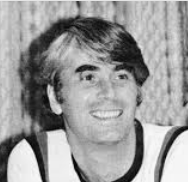
In a free system any large, popular, revolutionary movement should be able to bring about its ends by such a voluntary process. As more and more people see how it works more and more will wish to participate in or support it. And so it will grow, without being necessary to force everyone or a majority or anyone into the pattern.
▼
Source
Ch. 10 : A Framework for Utopia; Utopian Means and Ends, p. 327
4 months ago
The revolutionaries say: "The government organization is bad in this and that respect; it must be destroyed and replaced by this and that." But a Christian says: "I know nothing about the governmental organization, or in how far it is good or bad, and for the same reason I do not want to support it."
▼
Source
Chapter IX, The Acceptance of the Christian Conception of Life will Emancipate Men from the Miseries of our Pagan Life

4 months ago
But someone is bound to question ... by what right I regard as Ideological State Apparatuses, institutions which for the most part do not possess public status, but are quite simply private institutions. As a conscious Marxist, Gramsci already forestalled this objection in one sentence. The distinction between the public and the private is a distinction internal to bourgeois law, and valid in the (subordinate) domains in which bourgeois law exercises its ‘authority’. The domain of the State escapes it because the latter is ‘above the law’: the State, which is the State of the ruling class, is neither public nor private; on the contrary, it is the precondition for any distinction between public and private. The same thing can be said from the starting-point of our State Ideological Apparatuses. It is unimportant whether the institutions in which they are realized are ‘public’ or ‘private’. What matters is how they function.
▼
Source
p. 97
CivilSimian.com created by AxiomaticPanic, CivilSimian, Kalokagathia