

4 months ago
It is often asserted that discussion is only possible between people who have a common language and accept common basic assumptions. I think that this is a mistake. All that is needed is a readiness to learn from one's partner in the discussion, which includes a genuine wish to understand what he intends to say. If this readiness is there, the discussion will be the more fruitful the more the partner's backgrounds differ.
▼
Source
p. 352
4 months ago
Vengeance is mine; I will repay.
▼
Source
Epigraph

4 months ago
Even by proving that a certain view is indispensable for living well, one proves merely that the view in question is a salutary myth: one does not prove it to be true.
▼
Source
p. 6

4 months ago
Do not be too timid and squeamish about your actions. All life is an experiment. The more experiments you make the better.
▼
Source
November 11, 1842

4 months ago
Because we are so accustomed to talking about race in terms of black and white, we often fail to recognize and contest expressions of racism that target people of color who are not black.
▼
Source
Chapter Two

4 months ago
Dead of night. No one, nothing but the society of the moments. Each pretends to keep us company, then escapes — desertion after desertion.
4 months ago
To expect, indeed, that the freedom of trade should ever be entirely restored in Great Britain, is as absurd as to expect that an Oceana or Utopia should never be established in it.
▼
Source
Chapter II, p. 505.
4 months ago
By striving to do the impossible, man has always achieved what is possible. Those who have cautiously done no more than they believed possible have never taken a single step forward.
▼
Source
As quoted in The Explorers (1996) by Paolo Novaresio
4 months ago
It might have been supposed that the building of 30,000 miles of railways would have brought a measure of prosperity to India. But these railways were built not for India but for England; not for the benefit of the Hindu, but for the purposes of the British army and British trade... The railroads are entirely in European hands, and the Government refuse to appoint even one Hindu to the Railway Board. The railways lose money year after year, and are helped by the Government out of the revenues of the people. All the loses are borne by the people, all the gains are gathered by the trader.
4 months ago
Down in adoration falling,Lo! the sacred Host we hail;Lo! o'er ancient forms departing,Newer rites of grace prevail;Faith for all defects supplying,Where the feeble senses fail.
▼
Source
Pange, Lingua, stanza 5 (Tantum Ergo)

4 months ago
Things essentially incorporeal, because they are more excellent than all body and place, are every where, not with interval, but impartibly. Things essentially incorporeal are not locally present with bodies but are present with them when they please; by verging towards them so far as they are naturally adapted so to verge. They are not, however, present with them locally, but through habitude, proximity, and alliance. Things essentially incorporeal, are not present with bodies, by hypostasis and essence; for they are not mingled with bodies. But they impart a certain power which is proximate to bodies, through verging towards them. For tendency constitutes a certain secondary power proximate to bodies.
▼
Source
2 - 4
4 months ago
All things living are in search of a better world.
▼
Source
Preface
4 months ago
When I started life Hegelianism was the basis of everything: it was in the air, found expression in magazine and newspaper articles, in novels and essays, in art, in histories, in sermons, and in conversation. A man unacquainted with Hegel had no right to speak: he who wished to know the truth studied Hegel. Everything rested on him; and suddenly forty years have gone by and there is nothing left of him, he is not even mentioned — as though he had never existed. And what is most remarkable is that, like pseudo-Christianity, Hegelianism fell not because anyone refuted it, but because it suddenly became evident that neither the one nor the other was needed by our learned, educated world.
▼
Source
Chapter XXIX
4 months ago
It was once said that democracy is the regime that stands or falls by virtue: a democracy is a regime in which all or most adults are men of virtue, and since virtue seems to require wisdom, a regime in which all or most adults are virtuous and wise, or the society in which all or most adults have developed their reason to a high degree, or the rational society. Democracy, in a word, is meant to be an aristocracy which has broadened into a universal aristocracy. … There exists a whole science—the science which I among thousands of others profess to teach, political science—which so to speak has no other theme than the contrast between the original conception of democracy, or what one may call the ideal of democracy, and democracy as it is. … Liberal education is the ladder by which we try to ascend from mass democracy to democracy as originally meant.
▼
Source
“What is liberal education,” pp. 4-5
4 months ago
The soul active sees absolute truth; and utters truth, or creates.
▼
Source
par. 17
4 months ago
The Klu Klux Klan and the racial segregation that was so dramatically challenged during the mid-twentieth century freedom movement was produced not during slavery but rather in an attempt to manage free black people who would have been far more successful in pushing forward democracy for all.
4 months ago
Ecclesiastes
4 months ago
It is unjust that the whole of society should contribute towards an expence of which the benefit is confined to a part of the society.
▼
Source
Chapter I, Part IV, Conclusion, p. 881.
4 months ago
This means that no state, howsoever democratic its forms, not even the reddest political republic — a people's republic only in the sense of the lie known as popular representation — is capable of giving the people what they need: the free organization of their own interests from below upward, without any interference, tutelage, or coercion from above. That is because no state, not even the most republican and democratic, not even the pseudo-popular state contemplated by Marx, in essence represents anything but government of the masses from above downward, by an educated and thereby privileged minority which supposedly understands the real interests of the people better than the people themselves.
4 months ago
Space, subjectively, is the coexistence of perceptions — perceiving two objects at once.
▼
Source
Ch. 6 : Our Souls
4 months ago
Now, as the Word of God is the Son of God, so the love of God is the Holy Spirit.
▼
Source
Art. 8
4 months ago
When they [the Athenians] meet for a consultation on civic art, where they should be guided throughout by justice and good sense, they naturally allow advice from everybody, since it is held that everyone should partake of this excellence, or else that states cannot be.
▼
Source
Quoted in Plato, Protagoras, sec. 322d–e. Translated by W. R. M. Lamb, Plato, vol. 4 (1924) p. 135
4 months ago
Whoever makes something having bought or contracted for all other held resources used in the process (transferring some of his holdings for these cooperating factors), is entitled to it. The situation is not one of something’s getting made, and there being an open question of who is to get it. Things come into the world already attached to people having entitlements over them.
▼
Source
Ch. 7 : Distributive Justice, Section I, Patterning, p. 160
4 months ago
The savage recognizes life only in himself and his personal desires. His interest in life is concentrated on himself alone. The highest happiness for him is the fullest satisfaction of his desires. The motive power of his life is personal enjoyment. His religion consists in propitiating his deity and in worshiping his gods, whom he imagines as persons living only for their personal aims.
▼
Source
Chapter IV, Christianity Misunderstood by Men of Science
4 months ago
Nor did equality fare well as an ideal in the aftermath of the French Revolution. One twentieth-century writer, the Israeli historian Jacob Talmon, blamed the egalitarian thrust of the Revolution, and especially the ideas of Rousseau, for the totalitarian dictatorships of his time, while other thinkers who experienced those dictatorships at first hand, including Leo Strauss and the right-wing German philosopher Carl Schmitt, found it easier to defend secrecy, elitism, and dictatorship than to endorse anything resembling egalitarian principles.
▼
Source
Alan Wolfe, The Future of Liberalism, Chapter 3. Equality’s Inevitability
4 months ago
We must have kings, and we must have nobles. Nature provides such in every society, — only let us have the real instead of the titular. Let us have our leading and our inspiration from the best. In every society some men are born to rule, and some to advise. Let the powers be well directed, directed by love, and they would everywhere be greeted with joy and honor.
4 months ago
In America I was liberated from a certain naïve belief in culture and attained the capacity to see culture from the outside. To clarify the point: in spite of all social criticism and all consciousness of the primacy of economic factors, the fundamental importance of the mind—“Geist”—was quasi a dogma self-evident to me from the very beginning. The fact that this was not a foregone conclusion, I learned in America, where no reverential silence in the presence of everything intellectual prevailed.
▼
Source
as quoted in The Origin of Negative Dialectics (Free Press: 1977), p. 187
4 months ago
Angela Davis says this perfectly; she's like, knowledge is built through struggle. It isn't just built through somebody theorizing an idea. But through struggle, together, we come up with new concepts and ideas: that's the best thinking.
▼
Source
Mariame Kaba, We Do This Til We Free Us (2021)
4 months ago
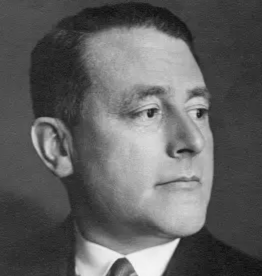
The concept of the state presupposes the concept of the political.
4 months ago
Smith's claim that the selfish human urge to increase private profits is the basis for collective wealth is one of the most revolutionary ideas in human history - revolutionary not just from an economic perspective, but even more so from a moral and political perspective. What Smith says is, in fact, that greed is good, and that by becoming richer I benefit everybody, not just myself. Egoism is altruism.
▼
Source
Yuval Noah Harari, Sapiens: A Brief History of Humankind (2011), Chapter 16: "The Capitalist Creed"
4 months ago
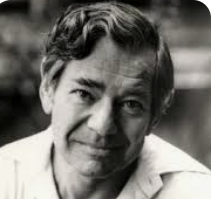
Of course, not everything old is beautiful, any more than everything black, or everything white, or everything young. But the notion that old means ugly is every bit as harmful as the prejudice that black is ugly. In one way it is even more pernicious. The notion that only what is new and young is beautiful poisons our relationship to the past and to our own future. It keeps us from understanding our roots and the greatest works of our culture and other cultures. It also makes us dread what lies ahead of us and leads many to shirk reality.
▼
Source
Time is an Artist (1978) [http://taimur.sarangi.info/text/kaufmann_time.htm Epilogue : Old is Beautiful]
4 months ago
By words one transmits thoughts to another, by means of art, one transmits feelings.

4 months ago
Majorities and minorities cannot rightfully be taken at all into account in deciding questions of justice. And all talk about them, in matters of government, is mere absurdity.
▼
Source
p. 8
4 months ago
I like a church, I like a cowl, I love a prophet of the soul, And on my heart monastic aisles Fall like sweet strains or pensive smiles; Yet not for all his faith can see, Would I that cowled churchman be. Why should the vest on him allure, Which I could not on me endure?
▼
Source
The Problem, st. 1
4 months ago
Hegel ... destroyed the illusion of the subject's being-in-itself and showed that the subject is itself an aspect of social objectivity. ... However, ... we must ask this question: is this objectivity which we have shown to be a necessary condition and which subsumes abstract subjectivity in fact the higher factor? Does it not rather remain precisely what Hegel reproached it with being in his youth, namely pure externality, the coercive collective? Does not the retreat to this supposedly higher authority signify the regression of the subject, which had earlier won its freedom only with the greatest efforts, with infinite pains?
▼
Source
p. 16

4 months ago
Make yourself known as a philosopher, that is a free man.
▼
Source
Epp. Apoll. 28
4 months ago
I owe to a journey I made with Mr Smith from Edinburgh to London, the difference between light and darkness through the best part of my life. The novelty of his principles, added to my youth and prejudices, made me unable to comprehend them at the time, but he urged them with so much benevolence, as well as eloquence, that they took a certain hold, which, though it did not develop itself so as to arrive at full conviction for some few years after, I can fairly say, has constituted, ever since, the happiness of my life, as well as any little consideration I may have enjoyed in it.
▼
Source
Lord Shelburne to Dugald Stewart (1795), quoted in Ian S. Ross (ed.), On The Wealth of Nations: Contemporary Responses to Adam Smith (1998), p. 147
4 months ago
Simonson, in rubber jacket and similar galoshes, bound with whip-cord over woolen socks (he was a vegetarian and did not use the skin of animals), was also awaiting the departure of the party. He stood near the entrance of the house, writing down in a note-book a thought that occurred to him. "If," he wrote, "a bacterium were to observe and analyze the nail of a man, it would declare him an inorganic being. Similarly, from an observation of the earth's surface, we declare it to be inorganic. That is wrong."
▼
Source
Ch. 83

4 months ago
We are obligated to be more scrupulous in fulfilling the commandment of charity than any other positive commandment because charity is the sign of a righteous man.
▼
Source
As quoted in A Maimonides Reader (1972) by Isadore Twersky, p. 135. A footnote on this page states : tzedekah is translated as both "righteousness" and "charity".
4 months ago
That what we seek we shall find; what we flee from flees from us.
▼
Source
Fate

4 months ago
According to John Locke the enlightened philosopher is to accept a subordinate position: he must be, says Locke, an “underlaborer” to the empirical scientist.
▼
Source
p. 4
4 months ago
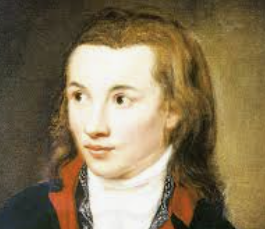
Every beloved object is the center point of a paradise.
▼
Source
Fragment No. 51; Jeder geliebte Gegenstand ist der Mittelpunkt eines Paradieses. | Variant translations:
4 months ago
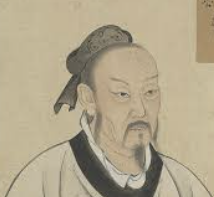
If an action ... involves little profit but much righteousness, do it.
▼
Source
Readings in Classical Chinese Philosophy (2001), p. 263
4 months ago
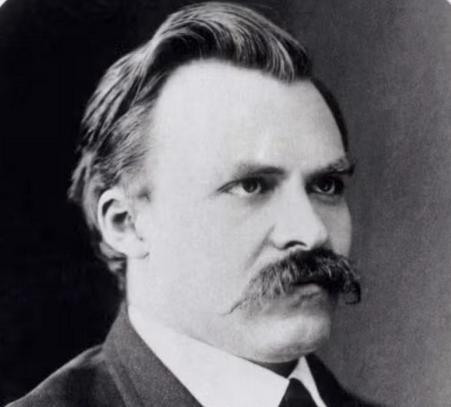
Here we arrive at the most dangerous limit that the Hellenic Will, with its Apollonian-optimistic founding principle, could tolerate. Here, the Hellenic Will set to work immediately with its natural healing power, reversing that negating disposition; its means are the tragic work of art and the tragic idea. Its intent absolutely could not be to weaken, still less to suppress, the Dionysian state; direct coercion was impossible and, if it was possible, far too dangerous — for, if detained in its outpouring, the element would then break for itself some other course and infuse all the veins of life.
▼
Source
page 44
4 months ago
Saying that what we call our "selves" consist only of our bodies and that reason, soul, and love arise only from the body, is like saying that what we call our body is equivalent to the food that feeds the body. It is true that my body is only made up of digested food and that my body would not exist without food, but my body is not the same as food. Food is what the body needs for life, but it is not the body itself. The same thing is true of my soul. It is true that without my body there would not be that which I call my soul, but my soul is not my body. The soul may need the body, but the body is not the soul.
▼
Source
p. 12
4 months ago
Having concluded these introductory remarks I proceed to examine those expressions, to the true meaning of which, as apparent from the context, it is necessary to direct your attention. This book will then be a key admitting to places the gates of which would otherwise be closed. When the gates are opened and men enter, their souls will enjoy repose, their eyes will be gratified, and even their bodies, after all toil and labour, will be refreshed.
4 months ago
All is riddle, and the key to a riddle is another riddle.
▼
Source
Illusions
4 months ago
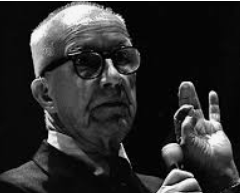
Acutely aware of our beings’ limitations and acknowledging the infinite mystery of the a priori universe into which we are born but nevertheless searching for a conscious means of hopefuily competent participation by humanity in its own evolutionary trending while employing only the unique advantages inhering exclusively to. the individual who takes and maintains the economic initiative in the face of the formidable physical capital and credit advantages of the massive corporations and political states and deliberately avoiding political ties and tactics while endeavoring by experiments and explorations to excite individuals’ awareness and realization of humanity’s higher potentials.
4 months ago
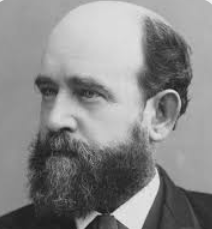
It is impossible to read the works of the economists who since the time of Smith have endeavored to build up and elucidate the science of political economy without seeing how, over and over again, they stumble over the law of wages without once recognizing it. Yet, "if it were a dog it would bite them!" Indeed, it is difficult to resist the impression that some of them really saw this law of wages, but, fearful of the practical conclusions to which it would lead, preferred to ignore and cover it up, rather than use it as the key to problems which without it are so perplexing. A great truth to an age which has rejected and trampled on it, is not a word of peace, but a sword!
4 months ago
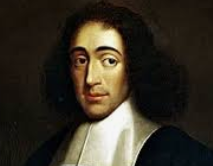
The perfection of a thing does not annul its existence, but, on the contrary, asserts it. Imperfection, on the other hand, does annul it ; therefore we cannot be more certain of the existence of anything, than of the existence of a being absolutely infinite or perfect—that is, of God. For inasmuch as his essence excludes all imperfection, and involves absolute perfection, all cause for doubt concerning his existence is done away, and the utmost certainty on the question is given. This, I think, will be evident to every moderately attentive reader.
▼
Source
Part I, Prop. XI
CivilSimian.com created by AxiomaticPanic, CivilSimian, Kalokagathia