
4 months ago
One must always maintain one’s connection to the past and yet ceaselessly pull away from it. To remain in touch with the past requires a love of memory. To remain in touch with the past requires a constant imaginative effort.
▼
Source
A Retrospective Glance at the Lifework of a Master of Books
4 months ago
Men must have rights before they can have equal rights. Each man has a right to use the world because he is here and wants to use the world. The equality of this right is merely a limitation arising from the presence of others with like rights. Society, in other words, does not grant, and cannot equitably withhold from any individual, the right to the use of land. That right exists before society and independently of society, belonging at birth to each individual, and ceasing only with his death. Society itself has no original right to the use of land. What right it has with regard to the use of land is simply that which is derived from and is necessary to the determination of the rights of the individuals who compose it. That is to say, the function of society with regard to the use of land only begins where individual rights clash, and is to secure equality between these clashing rights of individuals.
▼
Source
Part I : Declaration, Ch. IV : Mr. Spencer's Confusion as to Rights
4 months ago
Let not sleep fall upon thy eyes till thou has thrice reviewed the transactions of the past day. Where have I turned aside from rectitude? What have I been doing? What have I left undone, which I ought to have done? Begin thus from the first act, and proceed; and, in conclusion, at the ill which thou hast done, be troubled, and rejoice for the good.
▼
Source
As translated in [http://etext.lib.virginia.edu/etcbin/toccer-new2?id=Joh1Ram.sgm&images=images/modeng&data=/texts/english/modeng/parsed&tag=public&part=8&division=div1 The Rambler No. 8] (14 April 1750) by Samuel Johnson | Let not sleep e'er close thy ey
4 months ago
Meaning and morality of one's life come from within oneself. Healthy, strong individuals seek self-expansion by experimenting and by living dangerously. Life consists of an infinite number of possibilities, and the healthy person explores as many of them as possible. Religions that teach pity, self-contempt, humility, self-restraint and guilt are incorrect. The good life is ever-changing, challenging, devoid of regret, intense, creative, and risky.
▼
Source
Attributed to Nietzsche on quotes sites and on social media, the original quotation is from An Introduction to the History of Psychology by B. R. Hergenhahn (2008, page 226) and is the author's summary of Nietzsche's ideas: "The meaning and morality of on

4 months ago
The question, "What is the purpose thereof?" cannot be asked about anything which is not the product of an agent; therefore we cannot ask what is the purpose of the existence of God.
▼
Source
Ch.13

4 months ago
We do not count a man's years until he has nothing else to count.
▼
Source
Old Age
4 months ago
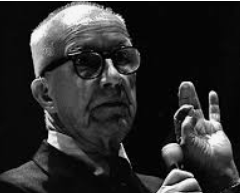
This is not a visible revolution and it is not political. You're dealing with the invisible world of technology....Politics is absolutely hopeless. That's why everything has gone wrong. You have ninety-nine percent of the people thinking "politics," and hollering and yelling. And that won't get you anywhere. Hollering and yelling won't get you across the English Channel. It won't reach from continent to continent; you need electronics for that, and you have to know what you're doing. Evolution has been at work doing all these things so it is now possible. Nobody has consciously been doing it. The universe is a lot bigger than you and me. We didn't invent it. If you take all the machinery in the world and dump it in the ocean, within months more than half of all humanity will die and within another six months they'd almost all be gone; if you took all the politicians in the world, put them in a rocket, and sent them to the moon, everyone would get along fine.

4 months ago
Nothing is so fatal to the progress of the human mind as to suppose that our views of science are ultimate; that there are no mysteries in nature; that our triumphs are complete, and that there are no new worlds to conquer.
▼
Source
In David Knight, Humphry Davy: Science & Power (1998) p. 87
4 months ago
Rejoice not in another man's misfortune!
4 months ago
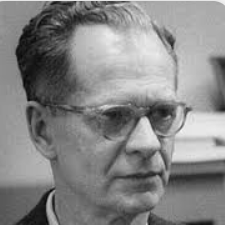
I was lucky in the ‘60s to also be taking a class in Classical Ethology by a professor named Tom Evans, where I learned that operant conditioning does not explain all animal behavior. He explained how fixed action patterns and hardwired instinctual behavior works. And I remember going on a visit to Dr. Skinner and I felt like I was visiting, you know, the grand temple of psychology. And I went up to his office and, you know, he seemed, I'm like, "oh, you mean he's actually an ordinary person?" And we got to talking and of course back then I wore a dress you know ‘cause, you know, ladies had to be, like, dressed up, and I had a very conservative dress on, and B.F. Skinner touched my legs. And I said "You may look at them, but you may not touch them" and that ended that. And that is as he was showing me around the rat lab, I said "Dr. Skinner if we can just learn about the brain then we really would know some things". And Dr. Skinner says to me "We don't need to know anything about the brain, we have operant conditioning". And I just never really could accept that. You know, especially after taking Tom Evans' class at the same time.
▼
Source
Temple Grandin [https://www.npr.org/2006/01/20/5165123/a-conversation-with-temple-grandin Interview] with NPR (2006)

4 months ago
Don’t get involved in partial problems, but always take flight to where there is a free view over the whole single great problem.
4 months ago
The difference between that which is ascribed to God and that which is ascribed to man is expressed in the words... "And your ways are not my ways."
▼
Source
Ch.20, (Is. lv. 8-9)
4 months ago
In the highest civilization, the book is still the highest delight. He who has once known its satisfactions is provided with a resource against calamity.
▼
Source
Quotation and Originality
4 months ago
Up to now, the world of politics doesn't know that. That's why all nations are dependent on armaments, why we have the arms race.
4 months ago
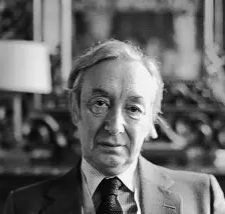
The traditional disputes of philosophers are, for the most part, as unwarranted as they are unfruitful. The surest way to end them is to establish beyond question what should be the purpose and method of a philosophical enquiry. And this is by no means so difficult a task as the history of philosophy would lead one to suppose. For if there are any questions which science leaves it to philosophy to answer, a straightforward process of elimination must lead to their discovery.
▼
Source
Ch. 1, first lines.

4 months ago
If we are not stupid or insincere when we say that the good or ill of man lies within his own will, and that all beside is nothing to us, why are we still troubled?
▼
Source
Book I, ch. 25, § 1.
4 months ago
Pythagoras, it seems, did not only call the supreme Deity a monad, but also a tetrad, or tetractys... It is, in the golden verses, said to be the fountain of the eternal nature; and by Hierocles, the maker of all things, the intelligent god, the cause of the heavenly and sensible god, that is, of the animated world or heaven. The later Pythogoreans endeavour to give reasons why God should be called Tetractys, from certain mysteries in the number four; but... much more probable... this name was really nothing else but the tetragrammaton, or that proper name of the supreme God amongst the Hebrews, consisting of four letters; nor is it strange Pythagoras should be so well acquainted with the name Jehovah, since, besides travelling into other parts of the East, he is by Josephus, Porphyry, and others, to have conversed with the Hebrews also.
▼
Source
Anonymous, [https://books.google.com/books?id=1yldAAAAcAAJ&pg=PA10 The Ancient History of the Jews, and of the Minor Nations of Antiquity] (1834) p.10
4 months ago
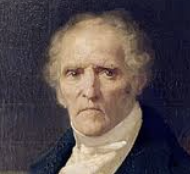
Ignorant as regards the unity of man with himself, the world is still more ignorant in respect to the two other unities - unity of man with God and the universe.
4 months ago
What should we gain by a definition, as it can only lead us to other undefined terms?
▼
Source
p. 26
4 months ago
By following entirely the guidance of lust, in the manner of fools, man loses his intellectual energy, injures his body, and perishes before his natural time; sighs and cares multiply; there is an increase of envy, hatred, and warfare, for the purpose of taking what another possesses. The cause of all this is the circumstance that the ignorant considers physical enjoyment as an object to be sought for its own sake. God in His wisdom has therefore given us such commandments as would counteract that object, and prevent us altogether from directing our attention to it, and has debarred us from everything that leads only to excessive desire and to lust. This is an important thing included in the objects of our Law.
▼
Source
Ch.33
4 months ago
The Indian teaching, through its clouds of legends, has yet a simple and grand religion, like a queenly countenance seen through a rich veil. It teaches to speak truth, love others, and to dispose trifles. The East is grand - and makes Europe appear the land of trifles .... all is soul and the soul is Vishnu ... cheerful and noble is the genius of this cosmogony. Hari is always gentle and serene - he translates to heaven the hunter who has accidentally shot him in his human form, he pursues his sport with boors and milkmaids at the cow pens; all his games are benevolent and he enters into flesh to relieve the burdens of the world.
▼
Source
Quoted in S. Londhe, A Tribute to Hinduism (New Delhi: Pragun Publication, 2008)
4 months ago
Every child has an enormous drive to demonstrate competence. If humans are not required to earn a living to be provided survival needs, many are going to want very much to be productive, but not at those tasks they did not choose to do but were forced to accept in order to earn money. Instead, humans will spontaneously take upon themselves those tasks that world society really needs to have done.
4 months ago
Fanaticism consists in redoubling your efforts when you have forgotten your aim.
4 months ago
If people differ in an absolutely general way in their estimations of epistemic relevance, and if we follow the holism of meaning and individuate intentional states by way of the totality of their epistemic bonds, the consequence will be that two people (or, for that matter, two temporal sections of the same person) will never be in the same intentional state. Therefore, two people can never be subsumed under the same intentional generalizations. And, therefore, intentional generalization can never be successful. And, therefore again, there is no hope for an intentional psychology.
▼
Source
Fodor & E. Lepore (1992) Holism: A Shopper's Guide, Blackwell.
4 months ago
The life of man is of no greater importance to the universe than that of an oyster.
▼
Source
On Suicide
4 months ago
Do you suppose that you can do the things you do now, and yet be a philosopher? Do you suppose that you can eat in the same fashion, drink in the same fashion, give way to anger and to irritation, just as you do now?
▼
Source
Book III, ch. 15, § 10 (= Enchiridion 29 § 10).
4 months ago
Nicomachus concludes his first book with a theorem that indicates that mathematics was not yet free from ethical and æsthetic mixture. From Pythagoras onward two ideas were widespread in Greek, especially Platonic, philosophy. These are that the beautiful and the definite are prior to the ugly and the indefinite, and that from them are formed all the parts and classes of the infinite and indefinite. Nicomachus aims to show that in mathematics the same principle holds good in that from equality may be derived all the species of inequality.
▼
Source
George Johnson, [https://books.google.com/books?id=FIpNAAAAMAAJ The Arithmetical Philosophy of Nicomachus of Gersa] (1916)
4 months ago
Our language can be seen as an ancient city: a maze of little streets and squares, of old and new houses, and of houses with additions from various periods; and this surrounded by a multitude of new boroughs with straight regular streets and uniform houses.
▼
Source
§ 18

4 months ago
A philosophical essay leaves much to the reader, often saying too little for fear of saying too much; its attention is concentrated, but it does not stay to cross all the ts of the argument; its mood is cautious without being defensive; it is personal but never merely 'subjective'; it does not dissemble the conditionality of the conclusions it throws up and although it may enlighten it does not instruct. It is, in short, a well-considered intellectual adventure recollected in tranquility.
▼
Source
Preface
4 months ago
Natural religion supplies still all the facts which are disguised under the dogma of popular creeds. The progress of religion is steadily to its identity with morals.
▼
Source
p. 223
4 months ago
The systems approach to problems does not mean that the most generally formulated problem must be solved in one research project. However desirable this may be, it is seldom possible to realize it in practice. In practice, parts of the total problem are usually solved in sequence. In many cases the total problem cannot be formulated in advance but the solution of one phase of it helps define the next phase. For example, a production control project may require determination of the most economic production quantities of different items. Once these are found it may turn out that these quantities cannot be produced on the available equipment in the available time. This, then, gives rise to a new problem whose solution will affect the solution obtained in the first phase.
▼
Source
p. 7
4 months ago
Eternal vigilance is the price of knowledge.
▼
Source
p. 58
4 months ago
Actions may be laudable or blameable; but they cannot be reasonable: Laudable or blameable, therefore, are not the same with reasonable or unreasonable. The merit and demerit of actions frequently contradict, and sometimes controul our natural propensities. But reason has no such influence. Moral distinctions, therefore, are not the offspring of reason. Reason is wholly inactive, and can never be the source of so active a principle as conscience, or a sense of morals.
▼
Source
Part 1, Section 1
4 months ago
Tentative efforts lead to tentative outcomes. Therefore, give yourself fully to your endeavors. Decide to construct your character through excellent actions, and determine to pay the price for a worthy goal. The trials you encounter will introduce you to your strengths. Remain steadfast... and one day you will build something that endures, something worthy of your potential.
▼
Source
Has been ascribed to Epictetus since the late 1990s, (e.g. [https://books.google.com/books?id=7SBbAAAAYAAJ&q=%22Therefore,+give+yourself+fully+to+your+endeavors%22 The Nassau Herald (1999), page 220]). The first sentence ("Tentative efforts lead to tentat
4 months ago
When in the end Pythagoras thought himself fully qualified for the task he had all along had in view, he was no less strict in prescribing ample preliminaries to his own scholars. At the time that a pupil was proposed to him, the master, we are told, examined him with multiplied questions as to his principles, his habits and intentions, observed minutely his voice and manner of speaking, his walk and his gestures, the lines of his countenance, and the expression and management of his eye, and, when he was satisfied with these, then and not till then admitted him as a probationer. It is to be supposed that all this must have been personal. As soon however as this was over, the master was withdrawn from the sight of the pupil; and a noviciate of three and five, in all eight years, was prescribed to the scholar, during which time he was only to hear his instructor from behind a curtain, and the strictest silence was enjoined him through the whole period. As the instructions Pythagoras received in Egypt and the East admitted of no dispute, so in his turn he required an unreserved submission from those who heard him: autos iphae "the master has said it," was deemed a sufficient solution to all doubt and uncertainty.

4 months ago
Thus, the Semitic race is recognizable almost solely through negative characteristics: it has neither mythology, nor epic, nor science, nor philosophy, nor fiction, nor plastic arts, nor civil life; in sum an absence of complexity, of nuance, an exclusive sentiment of unity.
▼
Source
quoted in Arvidsson, Stefan (2006), Aryan Idols: Indo-European Mythology as Ideology and Science, translated by Sonia Wichmann, Chicago and London: The University of Chicago Press.96
4 months ago
253. At the core of all well-founded belief, lies belief that is unfounded.

4 months ago
Your spirit is the true shield.
4 months ago
[A] great original thinker, who had his earthly abode at the opposite extremity of our village. ... People that had lighted on a new thought or a thought that they fancied new, came to Emerson, as the finder of a glittering gem hastens to a lapidary.
▼
Source
Nathaniel Hawthorne, [http://www.gutenberg.org/files/9221/9221-h/9221-h.htm Mosses from an Old Manse] (1846)
4 months ago
Design, properly viewed, is an enormous liberation of the intellectual spirit, for it challenges this spirit to an unbounded speculation about possibilities.
▼
Source
p. 13; cited in Jong S. Jun, Frank P. Sherwood (2007) The Social Construction of Public Administration. p. 76
4 months ago
At midday the daily food of all Spaniards was the puchero or cocido, as the dish is really called which the foreigners call pot-pourri or olla podrida. This contains principally yellow chick-peas, with a little bacon, some potatoes or other vegetables and normally also small pieces of beef or sausage, all boiled in one pot at a very slow fire; the liquid of the same makes the substantial broth that is served first.
▼
Source
p. 14
4 months ago
We may observe, that, notwithstanding the dogmatical, imperious style of all superstition, the conviction of the religionists, in all ages, is more affected than real, and scarcely ever approaches, in any degree, to that solid belief and persuasion, which governs us in the common affairs of life. Men dare not avow, even to their own hearts, the doubts which they entertain on such subjects: They make a merit of implicit faith; and disguise to themselves their real infidelity, by the strongest asseverations and most positive bigotry. But nature is too hard for all their endeavours, and suffers not the obscure, glimmering light, afforded in those shadowy regions, to equal the strong impressions, made by common sense and by experience. The usual course of men's conduct belies their words, and shows, that their assent in these matters is some unaccountable operation of the mind between disbelief and conviction, but approaching much nearer to the former than to the latter.
▼
Source
Part XII - With regard to doubt or conviction
4 months ago
As a moral philosopher, many of his precepts relating to the conduct of life will be found in the verses which bear the name of the Golden Verses of Pythagoras. It is probable they were composed by some one of his school, and contain the substance of his moral teaching. The speculations of the early philosophers did not end in the investigation of the properties of number and space. The Pythagoreans attempted to find, and dreamed they had found, in the forms of geometrical figures and in certain numbers, the principles of all science and knowledge, whether physical or moral. The figures of Geometry were regarded as having reference to other truths besides the mere abstract properties of space. They regarded the unit, as the point; the duad, as the line; the triad, as the surface; and the tetractys, as the geometrical volume. They assumed the pentad as the physical body with its physical qualities. They seem to have been the first who reckoned the elements to be five in number, on the supposition of their derivation from the five regular solids. They made the cube, earth; the pyramid, fire; the octohedron, air; the icosahedron, water; and the dodecahedron, aether. The analogy of the five senses and the five elements was another favourite notion of the Pythagoreans.
▼
Source
Robert Potts, [https://books.google.com/books?id=GLZjAAAAcAAJ&pg=PR3 Euclid's Elements of Geometry] (1845) Introduction pp. iii-iv
4 months ago
You can't be reluctant to give up your lie and still tell the truth.
▼
Source
p. 44e
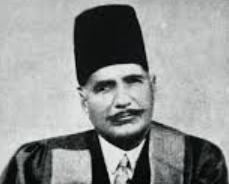
4 months ago
Democracy is a system where people are counted but not weighed.
▼
Source
Zarb-i-Kalim (The Rod of Moses) (1935) | This specific wording as quoted in Voices of Resurgent Islam (1983), Oxford University Press, John Esposito, p. 180 | Variant rendering: "Democracy is a system in which heads are counted but not weighed." As quoted
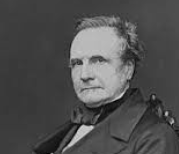
4 months ago
It appears to me, that any explanation of the cheapness of manufactured articles, as consequent upon the division of labour, would be incomplete if the following principle were omitted to be stated.
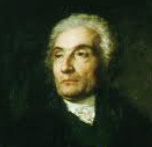
4 months ago
Government is a true religion: it has its dogmas, its mysteries, and its ministers. To annihilate it or submit it to the discussion of each individual is the same thing; it lives only through national reason, that is to say through political faith, which is a creed.
▼
Source
p. 87
4 months ago
It is natural for us to seek a Standard of Taste; a rule, by which the various sentiments of men may be reconciled; at least, a decision, afforded, confirming one sentiment, and condemning another.
4 months ago
Philosophy is like trying to open a safe with a combination lock: each little adjustment of the dials seems to achieve nothing, only when everything is in place does the door open.
▼
Source
Conversation of 1930 | Similar to Wittgenstein's written notes of the "Big Typescript" published in Philosophical Occasions 1912-1951 (1993) edited by James Carl Klagge and Alfred Nordmann, p. 175: Philosophical problems can be compared to locks on safes,

4 months ago
At first the Vienna Circle analysed ‘physics’ in a narrower sense almost exclusively; now psychology, biology,sociology. The task of this movement is unified science and nothing less.
▼
Source
p. 52
CivilSimian.com created by AxiomaticPanic, CivilSimian, Kalokagathia