

4 months ago
The difference between him as he was then and as he was now was great ... Then he was a courageous, free man, before whom opened endless possibilities; now he felt himself caught in the tenets of a stupid, idle, aimless, miserable life, from which there was no escape; aye, from which, for the most part, he would not escape. He remembered how he once had prided himself upon his rectitude; how he always made it a rule to tell the truth, and was in reality truthful, and how he was now steeped in falsehood—falsehood which was recognized as truth by all those around him.
▼
Source
Ch. 28

4 months ago
Desistance from sin makes one entirely happy.
▼
Source
As quoted in Religion and culture of the Jains (1975) by Jyotiprasāda Jaina, p. 187.

4 months ago
A creative economy is the fuel of magnificence.
▼
Source
Aristocracy

4 months ago
Once, Socrates was a sort of patron saint of philosophers. It was understood that philosophy was a way of questioning, musing, ruminating, living—a way of being a person.
▼
Source
p. xi
4 months ago
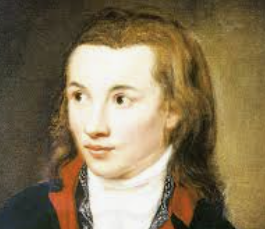
The poem of the understanding is philosophy.
▼
Source
“Logological Fragments,” Philosophical Writings, M. Stolijar, trans. (Albany: 1997) #24

4 months ago
In order to properly understand the big picture, everyone should fear becoming mentally clouded and obsessed with one small section of truth.
▼
Source
Quoted in: Joan Klostermann-Ketels (2011) HumaniTrees, p. 96
4 months ago
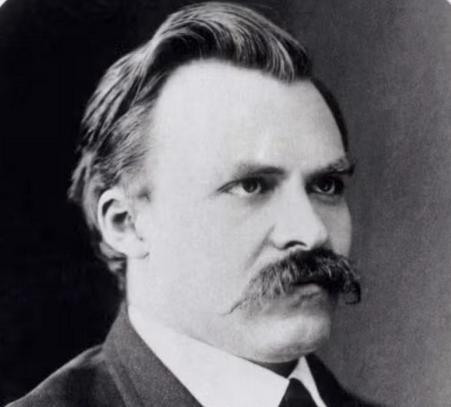
Sobald es aber möglich wäre, durch einen starken Willen die ganze Weltvergangenheit umzustürzen, sofort träten wir in die Reihe der unabhängigen Götter, und Weltgeschichte hieße dann für uns nichts als ein träumerisches Selbstentrücktsein; der Vorhang fällt, und der Mensch findet sich wieder, wie ein Kind mit Welten spielend, wie ein Kind, das beim Morgenglühen aufwacht und sich lachend die furchtbaren Träume von der Stirn streicht.
▼
Source
As soon as it becomes possible, by dint of a strong will, to overthrow the entire past of the world, then, in a single moment, we will join the ranks of independent gods. World history for us will then be nothing but a dreamlike otherworldly being. The cu
4 months ago
In order that men should embrace the truth — not in the vague way they did in childhood, nor in the one-sided and perverted way presented to them by their religious and scientific teachers, but embrace it as their highest law the complete liberation of this truth from all and every superstition (both pseudo-religious and pseudo-scientific) by which it is still obscured is essential: not a partial, timid attempt, reckoning with traditions sanctified by age and with the habits of the people — not such as was effected in the religious sphere by Guru Nanak, the founder of the sect of the Sikhs, and in the Christian world by Luther, and by similar reformers in other religions — but a fundamental cleansing of religious consciousness from all ancient religious and modern scientific superstitions.
▼
Source
VI

4 months ago
You must know that if a person, who has attained a certain degree of perfection, wishes to impart to others, either orally or in writing, any portion of the knowledge which he has acquired of these subjects, he is utterly unable to be as systematic and explicit as he could be in a science of which the method is well known. The same difficulties which he encountered when investigating the subject for himself will attend him when endeavouring to instruct others: viz., at one time the explanation will appear lucid, at another time, obscure: this property of the subject appears to remain the same both to the advanced scholar and to the beginner. For this reason, great theological scholars gave instruction in all such matters only by means of metaphors and allegories.
4 months ago
Our chief want in life, is somebody who shall make us do what we can.
▼
Source
Considerations by the Way
4 months ago
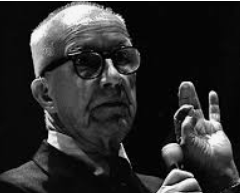
Thinking is a momentary dismissal of irrelevancies.
▼
Source
Utopia or Oblivion: The Prospects of Humanity (1969)
4 months ago
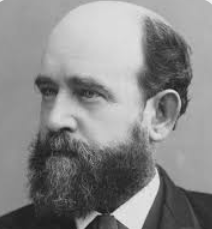
It is as to whether its services or uses are to be exchanged or not which makes a tool an article of capital or merely an article of wealth. Thus, the lathe of a manufacturer used in making things which are to be exchanged is capital, while the lathe kept by a gentleman for his own amusement is not.
▼
Source
Book I, Ch. 3
4 months ago
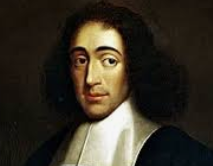
You seem to wish to employ reason, and ask me, "How I know that my philosophy is the best among all that have ever been taught in the world, or are being taught, or ever will be taught?" a question which I might with much greater right ask you ; for I do not presume that I have found the best philosophy, I know that I understand the true philosophy. If you ask in what way I know it, I answer: In the same way as you know that the three angles of a triangle are equal to two right angles: that this is sufficient, will be denied by no one whose brain is sound, and who does not go dreaming of evil spirits inspiring us with false ideas like the true. For the truth is the index of itself and of what is false. But you, who presume that you have at last found the best religion, or rather the best men, on whom you have pinned your credulity, you, "who know that they are the best among all who have taught, do now teach, or shall in future teach other religions. Have you examined all religions, ancient as well as modern, taught here and in India and everywhere throughout the world? And, if you, have duly examined them, how do you know that you have chosen the best" since you can give no reason for the faith that is in you? But you will say, that you acquiesce in the inward testimony of the Spirit of God, while the rest of mankind are ensnared and deceived by the prince of evil spirits. But all those outside the pale of the Romish Church can with equal right proclaim of their own creed what you proclaim of yours. As to what you add of the common consent of myriads of men and the uninterrupted ecclesiastical succession, this is the very catch-word of the Pharisees. They with no less confidence than the devotees of Rome bring forward their myriad witnesses, who as pertinaciously as the Roman witnesses repeat what they have heard, as though it were their personal experience. Further, they carry back their line to Adam. They boast with equal arrogance, that their Church has continued to this day unmoved and unimpaired in spite of the hatred of Christians and heathen. They more than any other sect are supported by antiquity. They exclaim with one voice, that they have received their traditions from God himself, and that they alone preserve the word of God, both written and unwritten. That all heresies have issued from them, and that they have remained constant through thousands of years under no constraint of temporal dominion, but by the sole efficacy of their superstition, no one can deny. The miracles they tell of would tire a thousand tongues. But their chief boast is that they count a far greater number of martyrs than any other nation, a number which is daily increased by those who suffer with singular constancy for the faith they profess; nor is their boasting false. I myself knew among others of a certain Judah called the faithful, who in the midst of the flames, when he was already thought to be dead, lifted his voice to sing the hymn beginning, "To thee, o God, I offer up my soul", and so singing perished.
▼
Source
[http://oll.libertyfund.org/?option=com_staticxt&staticfile=show.php%3Ftitle=1711&chapter=144250&layout=html&Itemid=27 Letter 74 (76) to Albert Burgh (1675)]
4 months ago
The waking man looks without fear at this offspring of his lawless Imagination; for he knows that they are but vain Spectres of his weakness. He feels himself lord of the world: his me hovers victorious over the Abyss; and will through Eternities hover aloft above that endless Vicissitude. Harmony is what his spirit strives to promulgate, to extend. He will even to infinitude grow more and more harmonious with himself and with his Creation; and at every step behold the all-efficiency of a high moral Order in the Universe, and what is purest of his Me come forth into brighter and brighter clearness. This significance of the World is Reason; for her sake is the World here; and when it is grown to be the arena of a childlike, expanding Reason, it will one day become the divine Image of her Activity, the scene of a genuine Church. Till then let man honour Nature as the Emblem of his own Spirit; the Emblem ennobling itself, along with him, to unlimited degrees. Let him, therefore, who would arrive at knowledge of Nature, train his moral sense, let him act and conceive in accordance with the noble Essence of his Soul; and as if of herself Nature will become open to him. Moral Action is that great and only Experiment, in which all riddles of the most manifold appearances explain themselves. Whoso understands it, and in rigid sequence of Thought can lay it open, is forever master of Nature.
4 months ago
Choose always the way that seems the best, however rough it may be; custom will soon render it easy and agreeable.
▼
Source
As quoted in A Dictionary of Thoughts: Being a Cyclopedia of Laconic Quotations from the Best Authors of the World, both Ancient and Modern (1908) by Tyron Edwards, p. 101
4 months ago
A declaration of war on the masses by higher men is needed! ... Everything that makes soft and effeminate, that serves the end of the people or the feminine, works in favor of universal suffrage, i.e. the domination of the inferior men. But we should take reprisal and bring this whole affair to light and the bar of judgment.
▼
Source
Sec. 864 (Notebook W II 5. Spring 1888, KGW VIII, 3.157-62, KSA 13.365-70)
4 months ago
People try so hard to believe in leaders now, pitifully hard. But we no sooner get a popular reformer or politician or soldier or writer or philosopher — a Roosevelt, a Tolstoy, a Wood, a Shaw, a Nietzsche, than the cross-currents of criticism wash him away. My Lord, no man can stand prominence these days. It's the surest path to obscurity.
▼
Source
F. Scott Fitzgerald in This Side of Paradise (1920)
4 months ago
This gift... which God gave us in order to enable us to perfect ourselves, to learn and to teach, must not be employed in doing that which is for us most degrading and perfectly disgraceful... Those who employ the faculty of thinking and speaking in the service of that sense which is no honour to us, who think more than necessary of drink and love, or even sing of these things; they employ and use the divine gift in acts of rebellion against the Giver, and in transgression of his commandments.
▼
Source
Ch.8
4 months ago
Wilt thou seal up the avenues of ill? Pay every debt as if God wrote the bill.
▼
Source
Fragment
4 months ago
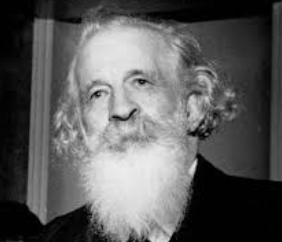
We are in an age that assumes the narrowing trends of specialization to be logical, natural, and desirable. Consequently, society expects all earnestly responsible communication to be crisply brief. . . . In the meantime, humanity has been deprived of comprehensive understanding. Specialization has bred feelings of isolation, futility, and confusion in individuals. It has also resulted in the individual's leaving responsibility for thinking and social action to others. Specialization breeds biases that ultimately aggregate as international and ideological discord, which, in turn, leads to war.
4 months ago
One must always maintain one’s connection to the past and yet ceaselessly pull away from it. To remain in touch with the past requires a love of memory. To remain in touch with the past requires a constant imaginative effort.
▼
Source
A Retrospective Glance at the Lifework of a Master of Books
4 months ago
Men must have rights before they can have equal rights. Each man has a right to use the world because he is here and wants to use the world. The equality of this right is merely a limitation arising from the presence of others with like rights. Society, in other words, does not grant, and cannot equitably withhold from any individual, the right to the use of land. That right exists before society and independently of society, belonging at birth to each individual, and ceasing only with his death. Society itself has no original right to the use of land. What right it has with regard to the use of land is simply that which is derived from and is necessary to the determination of the rights of the individuals who compose it. That is to say, the function of society with regard to the use of land only begins where individual rights clash, and is to secure equality between these clashing rights of individuals.
▼
Source
Part I : Declaration, Ch. IV : Mr. Spencer's Confusion as to Rights
4 months ago
Let not sleep fall upon thy eyes till thou has thrice reviewed the transactions of the past day. Where have I turned aside from rectitude? What have I been doing? What have I left undone, which I ought to have done? Begin thus from the first act, and proceed; and, in conclusion, at the ill which thou hast done, be troubled, and rejoice for the good.
▼
Source
As translated in [http://etext.lib.virginia.edu/etcbin/toccer-new2?id=Joh1Ram.sgm&images=images/modeng&data=/texts/english/modeng/parsed&tag=public&part=8&division=div1 The Rambler No. 8] (14 April 1750) by Samuel Johnson | Let not sleep e'er close thy ey
4 months ago
Meaning and morality of one's life come from within oneself. Healthy, strong individuals seek self-expansion by experimenting and by living dangerously. Life consists of an infinite number of possibilities, and the healthy person explores as many of them as possible. Religions that teach pity, self-contempt, humility, self-restraint and guilt are incorrect. The good life is ever-changing, challenging, devoid of regret, intense, creative, and risky.
▼
Source
Attributed to Nietzsche on quotes sites and on social media, the original quotation is from An Introduction to the History of Psychology by B. R. Hergenhahn (2008, page 226) and is the author's summary of Nietzsche's ideas: "The meaning and morality of on
4 months ago
The question, "What is the purpose thereof?" cannot be asked about anything which is not the product of an agent; therefore we cannot ask what is the purpose of the existence of God.
▼
Source
Ch.13
4 months ago
We do not count a man's years until he has nothing else to count.
▼
Source
Old Age
4 months ago
This is not a visible revolution and it is not political. You're dealing with the invisible world of technology....Politics is absolutely hopeless. That's why everything has gone wrong. You have ninety-nine percent of the people thinking "politics," and hollering and yelling. And that won't get you anywhere. Hollering and yelling won't get you across the English Channel. It won't reach from continent to continent; you need electronics for that, and you have to know what you're doing. Evolution has been at work doing all these things so it is now possible. Nobody has consciously been doing it. The universe is a lot bigger than you and me. We didn't invent it. If you take all the machinery in the world and dump it in the ocean, within months more than half of all humanity will die and within another six months they'd almost all be gone; if you took all the politicians in the world, put them in a rocket, and sent them to the moon, everyone would get along fine.

4 months ago
Nothing is so fatal to the progress of the human mind as to suppose that our views of science are ultimate; that there are no mysteries in nature; that our triumphs are complete, and that there are no new worlds to conquer.
▼
Source
In David Knight, Humphry Davy: Science & Power (1998) p. 87
4 months ago
Rejoice not in another man's misfortune!
4 months ago
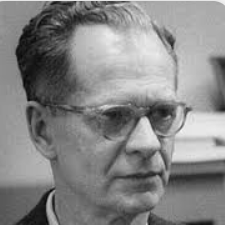
I was lucky in the ‘60s to also be taking a class in Classical Ethology by a professor named Tom Evans, where I learned that operant conditioning does not explain all animal behavior. He explained how fixed action patterns and hardwired instinctual behavior works. And I remember going on a visit to Dr. Skinner and I felt like I was visiting, you know, the grand temple of psychology. And I went up to his office and, you know, he seemed, I'm like, "oh, you mean he's actually an ordinary person?" And we got to talking and of course back then I wore a dress you know ‘cause, you know, ladies had to be, like, dressed up, and I had a very conservative dress on, and B.F. Skinner touched my legs. And I said "You may look at them, but you may not touch them" and that ended that. And that is as he was showing me around the rat lab, I said "Dr. Skinner if we can just learn about the brain then we really would know some things". And Dr. Skinner says to me "We don't need to know anything about the brain, we have operant conditioning". And I just never really could accept that. You know, especially after taking Tom Evans' class at the same time.
▼
Source
Temple Grandin [https://www.npr.org/2006/01/20/5165123/a-conversation-with-temple-grandin Interview] with NPR (2006)

4 months ago
Don’t get involved in partial problems, but always take flight to where there is a free view over the whole single great problem.
4 months ago
The difference between that which is ascribed to God and that which is ascribed to man is expressed in the words... "And your ways are not my ways."
▼
Source
Ch.20, (Is. lv. 8-9)
4 months ago
In the highest civilization, the book is still the highest delight. He who has once known its satisfactions is provided with a resource against calamity.
▼
Source
Quotation and Originality
4 months ago
Up to now, the world of politics doesn't know that. That's why all nations are dependent on armaments, why we have the arms race.
4 months ago
The traditional disputes of philosophers are, for the most part, as unwarranted as they are unfruitful. The surest way to end them is to establish beyond question what should be the purpose and method of a philosophical enquiry. And this is by no means so difficult a task as the history of philosophy would lead one to suppose. For if there are any questions which science leaves it to philosophy to answer, a straightforward process of elimination must lead to their discovery.
▼
Source
Ch. 1, first lines.
4 months ago
If we are not stupid or insincere when we say that the good or ill of man lies within his own will, and that all beside is nothing to us, why are we still troubled?
▼
Source
Book I, ch. 25, § 1.
4 months ago
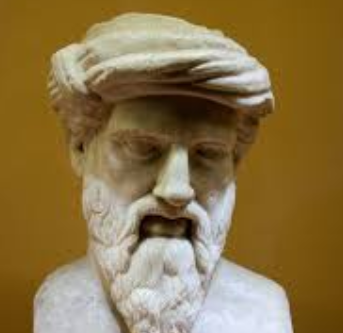
Pythagoras, it seems, did not only call the supreme Deity a monad, but also a tetrad, or tetractys... It is, in the golden verses, said to be the fountain of the eternal nature; and by Hierocles, the maker of all things, the intelligent god, the cause of the heavenly and sensible god, that is, of the animated world or heaven. The later Pythogoreans endeavour to give reasons why God should be called Tetractys, from certain mysteries in the number four; but... much more probable... this name was really nothing else but the tetragrammaton, or that proper name of the supreme God amongst the Hebrews, consisting of four letters; nor is it strange Pythagoras should be so well acquainted with the name Jehovah, since, besides travelling into other parts of the East, he is by Josephus, Porphyry, and others, to have conversed with the Hebrews also.
▼
Source
Anonymous, [https://books.google.com/books?id=1yldAAAAcAAJ&pg=PA10 The Ancient History of the Jews, and of the Minor Nations of Antiquity] (1834) p.10
4 months ago
Ignorant as regards the unity of man with himself, the world is still more ignorant in respect to the two other unities - unity of man with God and the universe.
4 months ago
What should we gain by a definition, as it can only lead us to other undefined terms?
▼
Source
p. 26
4 months ago
By following entirely the guidance of lust, in the manner of fools, man loses his intellectual energy, injures his body, and perishes before his natural time; sighs and cares multiply; there is an increase of envy, hatred, and warfare, for the purpose of taking what another possesses. The cause of all this is the circumstance that the ignorant considers physical enjoyment as an object to be sought for its own sake. God in His wisdom has therefore given us such commandments as would counteract that object, and prevent us altogether from directing our attention to it, and has debarred us from everything that leads only to excessive desire and to lust. This is an important thing included in the objects of our Law.
▼
Source
Ch.33
4 months ago
The Indian teaching, through its clouds of legends, has yet a simple and grand religion, like a queenly countenance seen through a rich veil. It teaches to speak truth, love others, and to dispose trifles. The East is grand - and makes Europe appear the land of trifles .... all is soul and the soul is Vishnu ... cheerful and noble is the genius of this cosmogony. Hari is always gentle and serene - he translates to heaven the hunter who has accidentally shot him in his human form, he pursues his sport with boors and milkmaids at the cow pens; all his games are benevolent and he enters into flesh to relieve the burdens of the world.
▼
Source
Quoted in S. Londhe, A Tribute to Hinduism (New Delhi: Pragun Publication, 2008)
4 months ago
Every child has an enormous drive to demonstrate competence. If humans are not required to earn a living to be provided survival needs, many are going to want very much to be productive, but not at those tasks they did not choose to do but were forced to accept in order to earn money. Instead, humans will spontaneously take upon themselves those tasks that world society really needs to have done.
4 months ago
Fanaticism consists in redoubling your efforts when you have forgotten your aim.
4 months ago
If people differ in an absolutely general way in their estimations of epistemic relevance, and if we follow the holism of meaning and individuate intentional states by way of the totality of their epistemic bonds, the consequence will be that two people (or, for that matter, two temporal sections of the same person) will never be in the same intentional state. Therefore, two people can never be subsumed under the same intentional generalizations. And, therefore, intentional generalization can never be successful. And, therefore again, there is no hope for an intentional psychology.
▼
Source
Fodor & E. Lepore (1992) Holism: A Shopper's Guide, Blackwell.
4 months ago
The life of man is of no greater importance to the universe than that of an oyster.
▼
Source
On Suicide
4 months ago
Do you suppose that you can do the things you do now, and yet be a philosopher? Do you suppose that you can eat in the same fashion, drink in the same fashion, give way to anger and to irritation, just as you do now?
▼
Source
Book III, ch. 15, § 10 (= Enchiridion 29 § 10).
4 months ago
Nicomachus concludes his first book with a theorem that indicates that mathematics was not yet free from ethical and æsthetic mixture. From Pythagoras onward two ideas were widespread in Greek, especially Platonic, philosophy. These are that the beautiful and the definite are prior to the ugly and the indefinite, and that from them are formed all the parts and classes of the infinite and indefinite. Nicomachus aims to show that in mathematics the same principle holds good in that from equality may be derived all the species of inequality.
▼
Source
George Johnson, [https://books.google.com/books?id=FIpNAAAAMAAJ The Arithmetical Philosophy of Nicomachus of Gersa] (1916)
4 months ago
Our language can be seen as an ancient city: a maze of little streets and squares, of old and new houses, and of houses with additions from various periods; and this surrounded by a multitude of new boroughs with straight regular streets and uniform houses.
▼
Source
§ 18

4 months ago
A philosophical essay leaves much to the reader, often saying too little for fear of saying too much; its attention is concentrated, but it does not stay to cross all the ts of the argument; its mood is cautious without being defensive; it is personal but never merely 'subjective'; it does not dissemble the conditionality of the conclusions it throws up and although it may enlighten it does not instruct. It is, in short, a well-considered intellectual adventure recollected in tranquility.
▼
Source
Preface
4 months ago
Natural religion supplies still all the facts which are disguised under the dogma of popular creeds. The progress of religion is steadily to its identity with morals.
▼
Source
p. 223
CivilSimian.com created by AxiomaticPanic, CivilSimian, Kalokagathia