

5 months 1 week ago
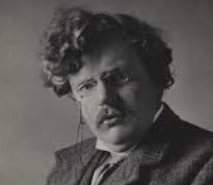
European soldiers, traders, missionaries - later on ably assisted by its colonial ideologies and scholars - opened up the East to the influences of the West. But Huxley belonged to that small group of European thinkers and seekers who opened up the West to the influence of the East - a more arduous task and in the long run perhaps more important too. He did not seek this role, it was merely a bye-product of his search for truth. Huxley was one of the finest products of Europe - of a new Europe seeking its old roots, of a Europe no longer satisfied with mere technology and science and rationality but seeking a new dimension of the spirit, a Europe self-critical and in search. He was also a profound student of Europe's various traditions, religious, literary and artistic, and he discusses them with great knowledge, insights, authority and intimacy. In his hands, cultural Europe becomes alive. A critical discussion of Europe by such a sympathetic insider is meant to help, to fecundate; it can do no harm but will only help Europe in its spiritual rediscovery. In opening up to India and China, it would merely be opening up to an ancient tradition which was lost by her but preserved and developed in India and China.
▼
Source
Ram Swarup, in On Hinduism: Reviews and Reflections (2000), Ch. 5
5 months 1 week ago
Never invoke the gods unless you really want them to appear. It annoys them very much.
▼
Source
As quoted in "The Sleep of Trees" (1980) by Jane Yolen, in Tales of Wonder (1983) by Jane Yolen, p. 33

5 months 1 week ago
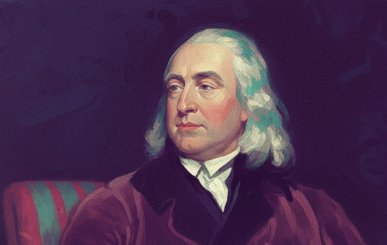
Whatever is known to us by consciousness, is known beyond possibility of question. What one sees or feels, whether bodily or mentally, one cannot but be sure that one sees or feels. No science is required for the purpose of establishing such truths; no rules of art can render our knowledge of them more certain than it is in itself. There is no logic for this portion of our knowledge.
▼
Source
p. 4
5 months 1 week ago
Prose is when all the lines except the last go on to the end. Poetry is when some of them fall short of it.
▼
Source
As quoted in Life of John Stuart Mill (1954) by M. St.J. Packe, Bk. I, Ch. II

5 months 1 week ago
Discipline 'makes' individuals; it is the specific technique of a power that regards individuals both as objects and as instruments of its exercise. It is not a triumphant power...it is a modest, suspicious power, which functions as a calculated, but permanent economy.
5 months 1 week ago
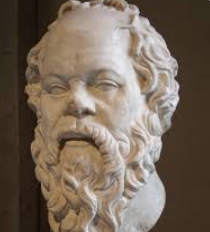
[Why is suicide held not to be right?] There is a doctrine uttered in secret that a man is a prisoner who has no right to open the door to his prison and run away; this is a great mystery which I do not understand. Yet I too, believe that the gods are our guardians, and that we are a possession of theirs. ...And if one of your possessions, an ox or an ass, for example took the liberty of putting himself out of the way when you had given no intimation of your wish that he should die, would you not be angry with him, and would you not punish him if you could? ...Then there may be reason in saying that a man should wait, and not take his own life until God summons him, as he is now summoning me.
5 months 1 week ago
We are living in a world which seems to be founded on the refusal to reflect.
▼
Source
p. 132
5 months 1 week ago
We are told that a utilitarian will be apt to make his own particular case an exception to moral rules, and, when under temptation, will see a utility in the breach of a rule, greater than he will see in its observance. But is utility the only creed which is able to furnish us with excuses for evil doing, and means of cheating our own conscience? They are afforded in abundance by all doctrines which recognise as a fact in morals the existence of conflicting considerations; which all doctrines do, that have been believed by sane persons. It is not the fault of any creed, but of the complicated nature of human affairs, that rules of conduct cannot be so framed as to require no exceptions, and that hardly any kind of action can safely be laid down as either always obligatory or always condemnable.
▼
Source
Ch. 2
5 months 1 week ago
When a philosopher criticizes a ... a citizen criticizes the majority... a pupil criticizes his teacher... such speakers may be using parrhesia.
5 months 1 week ago
When a simple man who has no skill in dialectics believes an argument to be true which he afterwards imagines to be false, whether really false or not, and then another and another, he no longer has any faith left, and great disputers, as you know, come to think, at last that they have grown to be the wisest of mankind; for they alone perceive the utter unsoundness and instability of all arguments, or, indeed, of all things, which like the currents in the Euripus, are going up and down in never-ceasing ebb and flow.

5 months 1 week ago
Banks are the temples of America. This is a holy war. Our economy is our religion. (p.8)
5 months 1 week ago
In the course of instruction which I have partially retraced, the point most superficially apparent is the great effort to give, during the years of childhood an amount of knowledge in what are considered the higher branches of education, which is seldom acquired (if acquired at all) until the age of manhood.
▼
Source
([https://archive.org/details/autobiography01mill/page/30/mode/1up p. 30])
5 months 1 week ago
Strictly speaking, the mass, as a psychological fact, can be defined without waiting for individuals to appear in mass formation. In the presence of one individual we can decide whether he is "mass" or not. The mass is all that which sets no value on itself — good or ill — based on specific grounds, but which feels itself "just like everybody," and nevertheless is not concerned about it; is, in fact, quite happy to feel itself as one with everybody else.
▼
Source
Chap.I: The Coming Of The Masses

5 months 1 week ago
There is a limit to the time assigned you, and if you don't use it to free yourself it will be gone and never return.
▼
Source
II, 4(Hays translation)
5 months 1 week ago
We are all agreed that your theory is crazy. The question that divides us is whether it is crazy enough to have a chance of being correct.
▼
Source
Said to Wolfgang Pauli after his presentation of Heisenberg's and Pauli's nonlinear field theory of elementary particles, at Columbia University (1958), as reported by F. J. Dyson in his paper "Innovation in Physics" (Scientific American, 199, No. 3, Sept
5 months 1 week ago
Sequestered in the usual sectarianism of the academic world, no stimulating reading had existed that took into consideration the arguments of Friedrich Hayek, Gary Becker, or Milton Friedman. On this point, one can only agree with Lagasnerie: Foucault allowed us to read and understand these authors, to discover in them a complex and stimulating body of thought. On that point I totally agree with him. It's undeniable that Foucault always took pains to inquire into theoretical corpuses of widely differing horizons and to constantly question his own ideas.
▼
Source
Daniel Zamora, "[https://www.jacobinmag.com/2014/12/foucault-interview/ Can We Criticize Foucault?]" (2014)
5 months 1 week ago
By means of beauty all beautiful things become beautiful. For this appears to me the safest answer to give both to myself and others; and adhering to this, I think that I shall never fall, but that it is a safe answer both for me and any one else to give — that by means of beauty beautiful things become beautiful.
▼
Source
Phaedo
5 months 1 week ago
Of which liberalism does one wish to speak? I distinguish two principal forms of liberalism. For one… liberty is a right; for the other a duty. For one it is a gift; for the other a conquest… One liberalism conceives liberty rooted in the individual, and therefore opposes the individual to the State, a State understood as possessing no intrinsic value—but exclusively serving the well being and the improvement of the individual. The State is seen as a means, not an end. It limits itself to the maintenance of public order, excluding itself from the entirety of spiritual life—which, therefore, remains exclusively a sphere restricted to the individual conscience. That liberalism, historically, is classical liberalism—of English manufacture. It is, we must recognize, a false liberalism, containing only half the truth. It was opposed among us by Mazzini with a criticism, that I maintain, is immortal. But there is another liberalism, that matured in Italian and German thought, that holds entirely absurd this view of the antagonism between the State and the individual.
▼
Source
Che cosa è il fascismo: Discorsi e polemiche (“What is Fascism?”), Florence: Vallecchi, (1925) pp. 42-45, 47-48, 49-51, 56,Origins and Doctrine of Fascism, A. James Gregor, translator and editor, Transaction Publishers, 2003, p. 63
5 months 1 week ago
I have never known any man who could do such ample justice to his best thoughts in colloquial discussion. His perfect command over his great mental resources, the terseness and expressiveness of his language and the moral earnestness as well as intellectual force of his delivery, made him one of the most striking of all argumentative conversers: and he was full of anecdote, a hearty laugher, and, when with people whom he liked, a most lively and amusing companion. It was not solely, or even chiefly, in diffusing his merely intellectual convictions that his power showed itself: it was still more through the influence of a quality, of which I have only since learnt to appreciate the extreme rarity: that exalted public spirit, and regard above all things to the good of the whole, which warmed into life and activity every germ of similar virtue that existed in the minds he came in contact with: the desire he made them feel for his approbation, the shame at his disapproval; the moral support which his conversation and his very existence gave to those who were aiming to the same objects, and the encouragement he afforded to the fainthearted or desponding among them, by the firm confidence which (though the reverse of sanguine as to the results to be expected in any one particular case) he always felt in the power of reason, the general progress of improvement, and the good which individuals could do by judicious effort.
▼
Source
([https://archive.org/details/autobiography01mill/page/101/mode/1up pp. 101-102])
5 months 1 week ago
Greeks and Latins appear in history lodged, like bees in their hives, within cities, poleis. … The polis is not primarily a collection of habitable dwellings, but a meeting-place for citizens, a space set apart for public functions. The city is not built, as is the cottage or the domus, to shelter from the weather and to propagate the species — these are personal, family concerns — but in order to discuss public affairs. … The man of the fields is still a sort of vegetable. His existence, all that he feels, thinks, wishes for, preserves the listless drowsiness in which the plant lives. The great civilisations of Asia and Africa were, from this point of view, huge anthropomorphic vegetations. …Socrates, the great townsman, quintessence of the spirit of the polis, can say: "I have nothing to do with the trees of the field, I have to do only with the man of the city." What has ever been known of this by the Hindu, the Persian, the Chinese, or the Egyptian?
▼
Source
Chapter XIV: Who Rules The World?
5 months 1 week ago
Nothing earthly succeeds by ignoring heaven, nothing heavenly by ignoring the earth. (Hays translation)
▼
Source
III, 14
5 months 1 week ago
Seemeth it nothing to you, never to accuse, never to blame either God or Man? to wear ever the same countenance in going forth as in coming in? This was the secret of Socrates: yet he never said that he knew or taught anything... Who amongst you makes this his aim? Were it indeed so, you would gladly endure sickness, hunger, aye, death itself.
▼
Source
Epictetus, Golden Sayings of Epictetus #85
5 months 1 week ago
Uncertainty is the refuge of hope.
▼
Source
— Amiel's journal; the Journal intime of Henri-Frédéric Amiel 1890 (p.368)
5 months 1 week ago
I soon perceived that she possessed in combination, the qualities which in all other persons whom I had known I had been only too happy to find singly. In her, complete emancipation from every kind of superstition (including that which attributes a pretended perfection to the order of nature and the universe), and an earnest protest against many things which are still part of the established constitution of society, resulted not from the hard intellect, but from strength of noble and elevated feeling, and co-existed with a highly reverential nature.
▼
Source
([https://archive.org/details/autobiography01mill/page/186/mode/1up p. 186])
5 months 1 week ago
I think that the philosopher must, for his own purposes, carry methodological strictness to an extreme when he is investigating and pursuing his truths, but when he is ready to enunciate them and give them out, he ought to avoid the cynical skill with which some scientists, like a Hercules at the fair, amuse themselves by displaying to the public the biceps of their technique.
▼
Source
pp. 19-20
5 months 1 week ago
Then what should we work for? Only this: proper understanding; unselfish action; truthful speech. A resolve to accept whatever happens as necessary and familiar, flowing like water from that same source and spring.
▼
Source
IV, 33(Hays translation)

5 months 1 week ago
Becoming a vegetarian is not merely a symbolic gesture. Nor is it an attempt to isolate oneself from the ugly realities of the world, to keep oneself pure and so without responsibility for the cruelty and carnage all around. Becoming a vegetarian is a highly practical and effective step one can take toward ending both the killing of nonhuman animals and the infliction of suffering upon them.
▼
Source
Ch. 4: Becoming a Vegetarian

5 months 1 week ago
It will be as well, I think, to explain these locutions of God, and to describe what the soul feels when it receives them, in order that you, my father, may understand the matter; for ever since that time of which I am speaking, when our Lord granted me that grace, it has been an ordinary occurrence until now, as will appear by what I have yet to say. The words are very distinctly formed; but by the bodily ear they are not heard. They are, however, much more clearly understood than they would be if they were heard by the ear. It is impossible not to understand them, whatever resistance we may offer. When we wish not to hear anything in this world, we can stop our ears, or give attention to something else: so that, even if we do hear, at least we can refuse to understand. In this locution of God addressed to the soul there is no escape, for in spite of ourselves we must listen; and the understanding must apply itself so thoroughly to the comprehension of that which God wills we should hear, that it is nothing to the purpose whether we will it or not; for it is His will, Who can do all things.
▼
Source
Ch. XXV. "Divine Locutions. Discussions on That Subject" ¶ 1 & 2
5 months 1 week ago
This morning the music of a brass band which had stopped under my windows moved me almost to tears. It exercised an indefinable, nostalgic power over me; it set me dreaming of another world, of infinite passion and supreme happiness. Such impressions are the echoes of Paradise in the soul; memories of ideal spheres whose sad sweetness ravishes and intoxicates the heart. O Plato! O Pythagoras! ages ago you heard these harmonies, surprised these moments of inward ecstasy, — knew these divine transports! If music thus carries us to heaven, it is because music is harmony, harmony is perfection, perfection is our dream, and our dream is heaven.
▼
Source
17 March 1870
5 months 1 week ago
The growing feeling that private life should be distanced from public life, and was in some sense opposed to it, wrecked the philosophic attempt to reconcile the two. Specifically it destroyed John Stuart Mill's attempt to combine social and moral philosophy under the unifying principle of utility. In one sense, Mill was successful. Setting out to provide a 'unifying social doctrine' by incorporating the 'major positive views' of his Intuitionist critics, he succeeded in giving Utilitarian justifications for many current social practices. Where Mill was much less successful was in linking his social doctrine with his morals.Mill's Autobiography is a brilliant dissection of Victorianism's mid-life crisis. It raised two problems which are vital for understanding the Cambridge civilisation of Keynes's day. First, how is one to reconcile the claims of personal happiness and social duty when the two diverge? And is happiness or pleasure an adequate aim for human conduct? Are there not some things worth doing some dispositions worth cultivating, which are valuable in themselves, irrespective of any Utilitarian justifications they might have? Is it not better to be Socrates dissatisfied than a fool satisfied?What Mill succeeded in doing was to make Cambridge Benthamite in that aspect of its thought which related to social policy. Mill's Utilitarianism, Cambridge mathematics and Cambridge's Nonconformist conscience were the chief constituents in what became the Cambridge School of Economics, whose founder was Alfred Marshall. What Mill failed to do was to make Cambridge moral philosophy Benthamite.
▼
Source
Robert Skidelsky, John Maynard Keynes: 1883-1946: Economist, Philosopher, Statesman (2003), Ch. 2. Cambridge Civilisation: Sidgwick and Marshall
5 months 1 week ago
The interlacedness of the two heterogeneous origins [Remark: This refers to the origins of governance: (1) necessity to work cooperatively, (2) the fight between man and man] prevails as the fundamental characteristic of governance. Therefore even any true community, being successful somewhere between boundaries for a common purpose, elsewhere becomes in theory a means for misleading, used to interpret and cover-up actually existing power. Again and again things are named by their contrary and are hidden. In that manner, under the pretense of communication - the open discussion - people are interrogated and commands are given, under the pretense of freedom and voluntariness behavior is enforced, in the coat of pure ethics the evil is carried out, under the pretense of truth lies and fraud are committed, and all values valid at any one time are, depending on the situation, either applied or ignored. [Remarks: "Herrschaft" = "governance" or "leadership", "Gewalt" = "power" or "violence"]
▼
Source
On Truth (1948), Pt 2, Ch. 3, II, B, 3, b)
5 months 1 week ago
Animals no doubt have different interests from humans, and may experience different pleasures and pains, but the principle of equal consideration for similar interests still holds, and pleasures and pains of similar intensity and duration should be given equal weight, whether they are experienced by humans or by animals.
▼
Source
p. 342

5 months 1 week ago
Then, inasmuch as He too has fabricated a world out of some underlying material which is unbegotten, and unmade, and contemporaneous with God, just as Marcion holds of the Creator, you reduce this likewise to the dignity of that local space which has enclosed two gods, both God and matter.
▼
Source
Book I, Chapter XV.—The Lateness of the Revelation of Marcion’s God. The Question of the Place Occupied by the Rival Deities. Instead of Two Gods, Marcion Really (Although, as It Would Seem, Unconsciously) Had Nine Gods in His System. | Compare Thomas Jef
5 months 1 week ago
The obligation of submission to both, is discoverable by so clear and so simple an use of our intellectual faculties, that it may be said properly enough to be revealed to us by God; and tho both these laws cannot be said properly to be given by Him, yet our obligation to submit to the civil law is a principal paragraph in the natural law, which he has most manifestly given us.
▼
Source
pp. 84-85
5 months 1 week ago
Is any man afraid of change? Why what can take place without change?
▼
Source
VII, 18
5 months 1 week ago
Philosophy makes progress not by becoming more rigorous but by becoming more imaginative.
▼
Source
Introduction to Truth and Progress: Philosophical Papers, Volume 3 (1998).
5 months 1 week ago
So true, moreover, is it that divorce “was not from the beginning,” that among the Romans it is not till after the six hundredth year from the building of the city that this kind of “hard-heartedness” is set down as having been committed. But they indulge in promiscuous adulteries, even without divorcing (their partners): to us, even if we do divorce them, even marriage will not be lawful.
▼
Source
Chapter 9
5 months 1 week ago
His conflict with the Catholic Church arose because deep in his heart Galileo was a believer. There was for him no path of compromise, no way to have separate secular and theological cosmologies. If the Copernican system was true as he believed, what else could Galileo do but fight with every weapon he had in his arsenal... to make his Church accept a new system of the universe. ...In the contrast between Galileo's heroic stand when he tried to reform the cosmological basis of orthodox theology and his humbled, kneeling surrender when he disavowed his Copernicanism, we may sense the tremendous forces attendant on the birth of modern science.
5 months 1 week ago
The nature of the All moved to make the universe.
▼
Source
VII, 75

5 months 1 week ago
A poet without love were a physical and metaphysical impossibility.
▼
Source
Burns (1828).

5 months 1 week ago
Utopus having understood that before his coming among them the old inhabitants had been engaged in great quarrels concerning religion, by which they were so divided among themselves, that he found it an easy thing to conquer them, since, instead of uniting their forces against him, every different party in religion fought by themselves. After he had subdued them he made a law that every man might be of what religion he pleased, and might endeavour to draw others to it by the force of argument and by amicable and modest ways, but without bitterness against those of other opinions; but that he ought to use no other force but that of persuasion, and was neither to mix with it reproaches nor violence; and such as did otherwise were to be condemned to banishment or slavery. This law was made by Utopus, not only for preserving the public peace, which he saw suffered much by daily contentions and irreconcilable heats, but because he thought the interest of religion itself required it. He judged it not fit to determine anything rashly; and seemed to doubt whether those different forms of religion might not all come from God, who might inspire man in a different manner, and be pleased with this variety; he therefore thought it indecent and foolish for any man to threaten and terrify another to make him believe what did not appear to him to be true. And supposing that only one religion was really true, and the rest false, he imagined that the native force of truth would at last break forth and shine bright, if supported only by the strength of argument, and attended to with a gentle and unprejudiced mind; while, on the other hand, if such debates were carried on with violence and tumults, as the most wicked are always the most obstinate, so the best and most holy religion might be choked with superstition, as corn is with briars and thorns; he therefore left men wholly to their liberty, that they might be free to believe as they should see cause.
▼
Source
Ch. 9 : Of the Religions of the Utopians
5 months 1 week ago
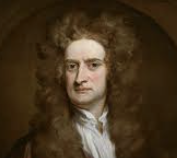
I have not been able to discover the cause of those properties of gravity from phenomena, and I frame no hypotheses; for whatever is not deduced from the phenomena is to be called a hypothesis, and hypotheses, whether metaphysical or physical, whether of occult qualities or mechanical, have no place in experimental philosophy.
▼
Source
Letter to Robert Hooke (15 February 1676) [5 February 1676 (O.S.)]
5 months 1 week ago
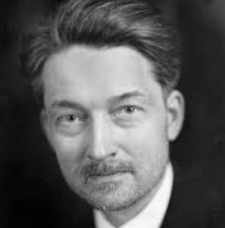
It is not possible to escape from the results of the irruption of faith into the structures of our knowledge.
▼
Source
p. 109.
5 months 1 week ago
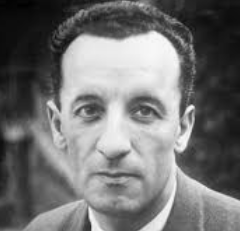
Theology recognizes the contingency of human existence only to derive it from a necessary being, that is, to remove it. Theology makes use of philosophical wonder only for the purpose of motivating an affirmation which ends it. Philosophy, on the other hand, arouses us to what is problematic in our own existence and in that of the world, to such a point that we shall never be cured of searching for a solution.
▼
Source
p. 44
5 months 1 week ago
Men exist for the sake of one another. Teach them then or bear with them. (Long translation)
▼
Source
All men are made one for another: either then teach them better, or bear with them. (trans. Meric Casaubon). | Οἱ ἄνθρωποι γεγόνασιν ἀλλήλων ἕνεκεν· ἢ δίδασκε οὖν ἢ φέρε. | VIII, 59
5 months 1 week ago
Man is not the creature and product of Mechanism; but, in a far truer sense, its creator and producer: it is the noble People that makes the noble Government; rather than conversely.
5 months 1 week ago
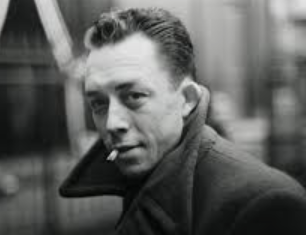
Accepting the absurdity of everything around us is one step, a necessary experience: it should not become a dead end. It arouses a revolt that can become fruitful.
▼
Source
"Three Interviews" in Lyrical and Critical Essays (1970)

5 months 1 week ago
I come out as if there were no hours in the days, nor planets in the hours; Neither do I care for any thing, but that interlude of Perendenga in Michael Cervantes: Let the old Man my Master live, and Christ be with us thus all. Thou wilt wonder now where this drives, Conde de lemos, nor a cardinal to pray for.
5 months 1 week ago
The Ellipse is the most simple of the Conic Sections, most known, and nearest of Kin to a Circle, and easiest describ'd by the Hand in plano. Though many prefer the Parabola before it, for the Simplicity of the Æquation by which it is express'd. But by this Reason the Parabola ought to be preferr'd before the Circle it self, which it never is. Therefore the reasoning from the Simplicity of the Æquation will not hold. The modern Geometers are too fond of the Speculation of Æquations.
CivilSimian.com created by AxiomaticPanic, CivilSimian, Kalokagathia