
5 months 1 week ago
From the moment of his self-dedication, when he threw His cares away, and went forth not knowing where to lay his head, the whole energy which others spend on interests of their own was poured into his humane and divine affections, and filled his life with an enthusiasm resistless and unique. However quiet his words, it is impossible not to feel the tender depths from which they come.
▼
Source
Vol. II, p. 31.

5 months 1 week ago
If a man is mistaken, instruct him kindly and show him his error. But if thou art not able, blame thyself, or blame not even thyself.
▼
Source
X, 4

5 months 1 week ago
I cannot contribute anything to this world because I only have one method: agony.

5 months 1 week ago
Great men are the inspired (speaking and acting) texts of that divine Book of Revelations, wherof a chapter is completed from epoch to epoch, and by some named History.
▼
Source
Bk. II, ch. 8.
5 months 1 week ago
With the exception of professional rationalists, today people despair of true knowledge. If the only significant history of human thought were to be written, it would have to be history of its successive regrets and impotences.
▼
Source
Absurd Walls

5 months 1 week ago
Abstinence from all injustice to other first-rate powers is a greater tower of strength than anything that can be gained by the sacrifice of permanent tranquillity for an apparent temporary advantage.
▼
Source
Book I, 1.42-[3]
5 months 1 week ago
Similarly, societies where news is censored cannot enjoy the luxury of false objectivity because they do not have the true variety. In free civilizations, false objectivity must be fought by true objectivity, not by some alien bureaucracy. Prejudiced history is eliminated, or at least combated, by serious history, and corrupt journalism can only be defeated by honest journalism, not by a government commission whose first act may be to distribute some secret subsidies.
▼
Source
As quoted in [http://www.friesian.com/gonzalz2.htm#note-9 Totalitarian Temptation] (1976).
5 months 1 week ago
Have I done something for the general interest? Well then I have had my reward. Let this always be present to thy mind, and never stop doing such good.
▼
Source
XI, 4
5 months 1 week ago
To detach yourself elegantly from the world; to give contour and grace to sadness; a solitude in style; a walk that gives cadence to memories; stepping towards the intangible; with the breath in the trembling margins of things; the past reborn in the overflow of fragrances; the smell, through which we conquer time; the contour of the invisible things; the forms of the immaterial; to deepen yourself in the intangible; to touch the world airborne by smell; aerial dialogue and gliding dissolution; to bathe in your own reflecting fragmentation...
5 months 1 week ago
It can be said of him [Scott], when he departed he took a man's life along with him. No sounder piece of British manhood was put together in that eighteenth century of time.
5 months 1 week ago
Of all the schools of patience and lucidity, creation is the most effective. It is also the staggering evidence of man's sole dignity: the dogged revolt against his condition, perseverance in an effort considered sterile. It calls for a daily effort, self-mastery, a precise estimate of the limits of truth, measure, and strength. It constitutes an ascesis. All that "for nothing," in order to repeat and mark time. But perhaps the great work of art has less importance in itself than in the ordeal it demands of a man and the opportunity it provides him of overcoming his phantoms and approaching a little closer to his naked reality.
5 months 1 week ago
That war is an evil is a proposition so familiar to every one that it would be tedious to develop it. No one is forced to engage in it by ignorance, or kept out of it by fear, if he fancies there is anything to be gained by it.
▼
Source
Book IV, 4.59-[2]; "Nobody is driven into war by ignorance, and no one who thinks that he will gain anything from it is deterred by fear." ([http://www.classicpersuasion.org/pw/thucydides/thucydides-passages.php?pleaseget=4.59-64 trans.] Benjamin Jowett)
5 months 1 week ago
Through a vicious circle of pure reason skepsis itself becomes dogma.
▼
Source
Briefwechsel, ed. Arthur Henkel (1955-1975), vol. V, p. 432.
5 months 1 week ago
Reason has never really directed social reality, but now reason has been so thoroughly purged of any specific trend or preference that it has finally renounced even the task of passing judgment on man’s actions and way of life. Reason has turned them over for ultimate sanction to the conflicting interests to which our world actually seems abandoned.
▼
Source
p. 9.
5 months 1 week ago
Whatever happens to you has been waiting to happen since the beginning of time. The twining strands of fate wove both of them together: your own existence and the things that happen to you.
▼
Source
V. 8, trans. Gregory Hays
5 months 1 week ago
A testimony is sufficient when it rests on: 1st. A great number of very sensible witnesses who agree in having seen well. 2d. Who are sane, bodily and mentally. 3d. Who are impartial and disinterested. 4th. Who unanimously agree. 5th. Who solemnly certify to the fact.
▼
Source
As quoted by H. P. Blavatsky in Isis Unveiled, Vol. I, p. 108, (1877)
5 months 1 week ago
As long as I live I shall not allow myself to forget that I shall die; I am waiting for death so that I can forget about it.
5 months 1 week ago
I called it a small light shining and shaping in the huge vortex of Norse darkness. Yet the darkness itself was alive; consider that. It was the eager inarticulate uninstructed Mind of the whole Norse People, longing only to become articulate, to go on articulating ever farther!
5 months 1 week ago
The evil that is in the world always comes of ignorance, and good intentions may do as much harm as malevolence, if they lack understanding. On the whole men are more good than bad; that, however, isn't the real point. But they are more or less ignorant, and it is this that we call vice or virtue; the most incorrigible vice being that of an ignorance which fancies it knows everything and therefore claims for itself the right to kill. There can be no true goodness, nor true love, without the utmost clear-sightedness.

5 months 1 week ago
The fire i th' flint Shows not till it be struck
▼
Source
Poet, scene i
5 months 1 week ago
Trust not him with your secrets, who, when left alone in your room, turns over your papers.
▼
Source
No. 449
5 months 1 week ago
Marcus Aurelius does not direct his reflections to others but only to himself. The “”Memoirs“” are not a lesson for an ideal or real disciple (as Seneca's “'Letters to Lucilius”' were), but a continuous effort to remind “'himself”' of the philosophical cornerstones that alone can guarantee him serenity and inner peace. They therefore have a dramatic tone that is lacking in other ancient and modern moral works. Marcus Aurelius' interlocutor is only himself: Marcus Aurelius, emperor and man. Only within himself does he believe he can find the law of truth and goodness. Seeking solitude is useless, he says; one must withdraw into oneself because only in the depths of one's soul can tranquillity and truth be found. This attitude, which was adopted by the Christian world, is the fundamental leitmotif of Marcus Aurelius's “Memoirs”. In himself, man finds the reason with which divine providence has ordered the universe, and the criterion of truth and moral conduct. But by withdrawing into himself, man does not find himself in isolation: reason binds him to all men with whom he shares it.
5 months 1 week ago
If there were no God, it would be necessary to invent one.
▼
Source
p. 96
5 months 1 week ago
In a single second we do away with all seconds; God himself could not do as much.
5 months 1 week ago
By awakening the Heroic that slumbers in every heart, can any Religion gain followers.
5 months 1 week ago
Alyosha can, in fact, treat Ivan with compassion as a "real simpleton." The latter only made an attempt at self-control and failed. Others will appear, with more serious intentions, who, on the basis of the same despairing nihilism, will insist on ruling the world. These are the Grand Inquisitors who imprison Christ and come to tell Him that His method is not correct, that universal happiness cannot be achieved by the immediate freedom of choosing between good and evil, but by the domination and unification of the world. The first step is to conquer and rule. The kingdom of heaven will, in fact, appear on earth, but it will be ruled over by men — a mere handful to begin with, who will be the Caesars, because they were the first to understand — and later, with time, by all men. The unity of all creation will be achieved by every possible means, since everything is permitted. The Grand Inquisitor is old and tired, for the knowledge he possesses is bitter. He knows that men are lazy rather than cowardly and that they prefer peace and death to the liberty of discerning between good and evil. He has pity, a cold pity, for the silent prisoner whom history endlessly deceives. He urges him to speak, to recognize his misdeeds, and, in one sense, to approve the actions of the Inquisitors and of the Caesars. But the prisoner does not speak.
▼
Source
Part 2: Metaphysical Rebellion
5 months 1 week ago
Whoever imposes severe punishment becomes repulsive to the people; while he who awards mild punishment becomes contemptible. But whoever imposes punishment as deserved becomes respectable. For punishment when awarded with due consideration, makes the people devoted to righteousness and to works productive of wealth and enjoyment; while punishment, when ill-awarded under the influence of greed and anger or owing to ignorance, excites fury even among hermits and ascetics dwelling in forests, not to speak of householders.
▼
Source
Book I : "Concerning Discipline" Chapter 4 "Determination of the Place of Varta and of Dandaniti"

5 months 1 week ago
Among civilized peoples, especially the very wealthy population of the United States of America, women have become objects of luxury who consume but do not produce.
▼
Source
p. 297.
5 months 1 week ago
Where questions of style and exposition are concerned I try to follow a simple maxim: if you can’t say it clearly you don’t understand it yourself.
▼
Source
P. x.
5 months 1 week ago
Ambition is the grand enemy of all peace.
▼
Source
p. 140
5 months 1 week ago
Jest with life: for that only is it good.
▼
Source
p. 239
5 months 1 week ago
When we cannot be delivered from ourselves, we delight in devouring ourselves.
5 months 1 week ago
Alas, the Hero from of old has had to cramp himself into strange shapes: the world knows not well at any time what to do with him, so foreign is his aspect in the world!
5 months 1 week ago
Great novelists are philosopher-novelists who write in images instead of arguments.
▼
Source
This may have arisen as a paraphrase of statements found in The Myth of Sisyphus (1942), "An Absurd Reasoning", or one found in The Novelist as Philosopher: Studies in French Fiction 1935-1960 (1962) edited by John Cruikshank, p. 218

5 months 1 week ago
The animal needing something knows how much it needs, the man does not.
▼
Source
Freeman (1948), p. 162 | Variant: The needy animal knows how much it needs, but the needy man does not.

5 months 1 week ago
The historical materialist leaves it to others to be drained by the whore called "Once upon a time" in historicism's bordello.
▼
Source
XVI
5 months 1 week ago
The mind of man may be compared to a musical instrument with a certain range of notes, beyond which in both directions we have an infinitude of silence.
▼
Source
Matter and Force.
5 months 1 week ago
It seems not absurd to conceive, that at first production of mixt bodies, the universal matter, whereof they among other parts of the universe consisted, was actually divided, into little particles, of several sizes and shapes, variously moved.
▼
Source
Proposition I
5 months 1 week ago
There's a Bible on that shelf there. But I keep it next to Voltaire – poison and antidote.
▼
Source
Bertrand Russell, Kenneth Harris Talking To: Bertrand Russell (1971)
5 months 1 week ago
Sooner or later, each desire must encounter its lassitude: its truth . . .

5 months 1 week ago
And as in other things, so in men, not the seller, but the buyer determines the Price.
▼
Source
The First Part, Chapter 10, p. 42
5 months 1 week ago
Fire is the best of servents; but what a master!
▼
Source
Bk. II, ch. 9.
5 months 1 week ago
However intimate we may be with the operations of the mind, we cannot think more than two or three minutes a day; — unless, by taste or by profession, we practice, for hours on end, brutalizing words in order to extract ideas from them. The intellectual represents the major disgrace, the culminating failure of Homo sapiens.
5 months 1 week ago
The RIGHT OF NATURE, which Writers commonly call Jus Naturale, is the Liberty each man hath, to use his own power, as he will himself, for the preservation of his own Nature; that is to say, of his own Life; and consequently, of doing any thing, which in his own Judgement, and Reason, he shall conceive to be the aptest means thereunto.
▼
Source
The First Part, Chapter 14, p. 64
5 months 1 week ago
He has now a second far greater success to gain: to seek out his real superiors, whom not the Tailor but the Almighty God has made superior to him, and see a little what he will do with these! Rebel against these also? Pass by with minatory eagle-glance, with calm-sniffing mockery, or even without any mockery or sniff, when these present themselves? The lion-hearted will never dream of such a thing. Forever far be it from him! His minatory eagle-glance will veil itself in softness of the dove: his lion- heart will become a lamb's; all is just indignation changed into just reverence, dissolved in blessed floods of noble humble love, how much heavenlier than any pride, nay, if you will, how much prouder!
5 months 1 week ago
For a man petticoat government is the limit of insolence.

5 months 1 week ago
Progressives regarded Woodrow Wilson’s Fourteen Points and the Atlantic Charter of Franklin Roosevelt and Winston Churchill as beacons of hope for mankind—and this precisely because they were considered expressions of nationalism, promising national independence and self-determination to enslaved peoples around the world. Conservatives from Teddy Roosevelt to Dwight Eisenhower likewise spoke of nationalism as a positive good, and in their day Ronald Reagan and Margaret Thatcher were welcomed by conservatives for the “new nationalism” they brought to political life. In other lands, statesmen from Mahatma Gandhi to David Ben-Gurion led nationalist political movements that won widespread admiration and esteem as they steered their peoples to freedom.
5 months 1 week ago
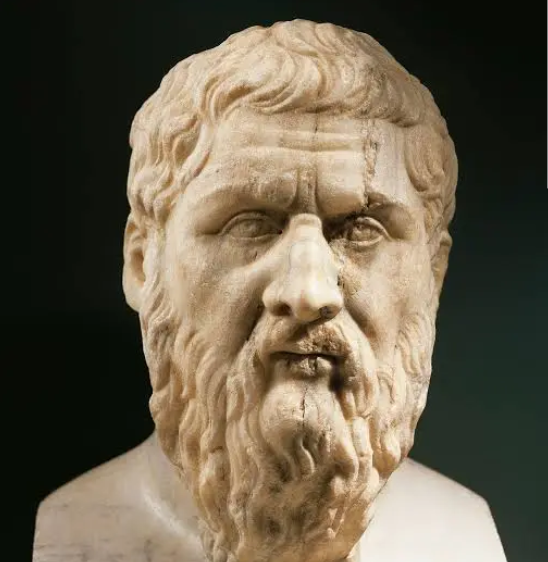
Parmenides: If the one is not, nothing is. Then, and we may add, whether the one is or is not, the one and the others in relation to themselves and to each other all in every way are and are not and appear and do not appear.
▼
Source
166c
5 months 1 week ago
If knowing is work, exclusively work, then the one who knows, knows only the fruit of his own, subjective activity, and nothing else. There is nothing in his knowing that is not the fruit of his own efforts; there is nothing "received" in it. It is the mark of "absolute activity" (which Goethe said "makes one bankrupt, in the end"); the hard quality of not-being-able-to-receive; a stoniness of heart, that will not brook any resistance — as expressed once, most radically, in the following terrifying statement: "Every action makes sense, even criminal acts … all passivity is senseless."
▼
Source
p. 14 | The Goethe quote is from his Maximen und Reflexionen, ed. Günther Müller (Stuttgart, 1943), no. 1415. The other quote is from Hermann Rauschning's Conversations with Hitler (Gespräche mit Hitler, 1940).
5 months 1 week ago
Boyle's greatest service to learning consisted in the new spirit he introduced into chemistry. Henceforward chemistry was no longer the mere helpmeet of medicine. She became an independent science, the principles of which were to be ascertained by experiment; a science to be studied with the object of discovering the laws regulating the phenomena with which it is concerned and hence elucidating truth for truth's sake.
CivilSimian.com created by AxiomaticPanic, CivilSimian, Kalokagathia