

3 months 4 weeks ago
We always love . . . despite; and that "despite" covers an infinity.

3 months 4 weeks ago
And the Science of them, is the true and onely Moral Philosophy. For Moral Philosophy is nothing else but the Science of what is Good, and Evill, in the conversation, and Society of mankind. Good, and Evill, are names that signify our Appetites, and Aversions; which in different tempers, customes, and doctrines of men, are different:
▼
Source
The First Part, Chapter 15, p. 79

3 months 4 weeks ago
Man, little as he may suppose it, is necessitated to obey superiors. He is a social being in virtue of this necessity; nay he could not be gregarious otherwise. He obeys those whom he esteems better than himself, wiser, braver; and will forever obey such; and even be ready and delighted to do it.

3 months 4 weeks ago
Of all things the worst to teach the young is dalliance, for it is this that is the parent of those pleasures from which wickedness springs.
3 months 4 weeks ago
[I]n the wake of the growth of the animal-rights movement, there has recently arisen a hitherto unfelt need to demonise and demean our non-human victims - and those who try to help them - now that our previously well-nigh unquestioned right to kill and exploit them is being challenged. Bloodsports enthusiasts, for instance, currently spend a lot of time cataloguing the alleged depredations of our victims on the environment. Recreational animal-killers go to extraordinarily lengths to avoid admitting that they themselves enjoy hunting and killing other creatures for fun. But then until a few years ago such rationalisations seemed scarcely called for. Selfish DNA had honed our intuitions so that the most agonising bloodshed seemed simply "natural".
▼
Source
"[http://www.animal-rights-library.com/texts-m/pearce01.htm The Post-Darwinian Transition]", The Animal Rights Library, 1996

3 months 4 weeks ago
History breaks down in images not into stories.
3 months 4 weeks ago
The Christian philosopher of to-day has larger capacities and fuller knowledge than the Israelite of the time of Moses. What the one accepted as literal truth the other cannot accept save as a myth or figure. The children of Israel received without idealisation the statements of their great lawgiver. To them the tables of the law were true tablets of stone, prepared, engraved, broken, and re-engraved; while the graving tool which thus inscribed the law was held undoubtingly to be the finger of God. To us such conceptions are impossible. We may by habit use the words, but we attach to them no definite meaning.
3 months 4 weeks ago
Beholding beauty with the eye of the mind, he will be enabled to bring forth, not images of beauty, but realities (for he has hold not of an image but of a reality), and bringing forth and nourishing true virtue to become the friend of God and be immortal, if mortal man may.
▼
Source
212
3 months 4 weeks ago
I find that even Eminent Writers (such as Raymund Lully, Paracelsus, and others) do so abuse the termes they employ, that as they will now and then give divers things one name, so they will oftentimes give one thing, many Names; and some of them (perhaps) such, as do much more properly signifie some Distinct Body of another kind; nay even in Technical Words or Termes of Art, they refrain not from this Confounding Liberty; but will, as I have Observ'd call the same Substance, sometimes the Sulphur, and Sometimes the Mercury, of a Body.
3 months 4 weeks ago
A people represents not so much an aggregate of ideas and theories as of obsessions.
3 months 4 weeks ago
Thomas Hobbes was the first sociobiologist, two hundred years before Darwin.
▼
Source
Daniel Dennett, Darwin's Dangerous Idea, p. 453
3 months 4 weeks ago
All great peoples are conservative; slow to believe in novelties; patient of much error in actualities; deeply and forever certain of the greatness that is in law, in custom once solemnly established, and now long recognized as just and final.
3 months 4 weeks ago
I predict we will abolish suffering throughout the living world. Our descendants will be animated by gradients of genetically pre-programmed well-being that are orders of magnitude richer than today's peak experiences.
▼
Source
Quoted in Ethics Matters (2012) by Peter and Charlotte Vardy, p. 114

3 months 4 weeks ago
Proverbs is in many respects a work on ethics, presenting arguments concerning the manner in which moral precepts relate to life and the good; Job investigates the reasons good individuals (and, by implication, good nations) should suffer catastrophe; Esther seeks an account of how God’s will works in political circumstances in which one sees nothing but the decisions and deeds of human actors; and so forth.
3 months 4 weeks ago
Think of transitional processes of various kinds: waking from sleep, emerging from a coma or from general anesthesia, a fetus developing sentience in the womb, or a lineage evolving sentience over millions of years. In all of these cases, we face the question of whether there is a sudden jump from the complete absence of phenomenal consciousness to its presence in at least minimal form – a ‘lights on’ moment – or a gradual transition with a region of borderline cases in which there is no determinant fact of the matter about whether phenomenal consciousness is present or absent. On this second view, the metaphor of the light switch is no longer appropriate (not even a dimmer switch, because a dimmer switch still has a sharp transition from off to on). The transition is more like the transition from being non-bald to bald, or young to old, where there is no sharp threshold, no single moment at which the transition happens
▼
Source
[https://confessionsofaconservative.com/2024/11/18/the-edge-of-sentience-and-the-beauty-of-being-wrong/]
3 months 4 weeks ago
Necessity is the mother of invention.
▼
Source
Commonly misattributed due to Benjamin Jowett's popular idiomatic translation (1871) of Plato's Republic, Book II, 369c as "The true creator is necessity, who is the mother of our invention." Jowett's translation is noted for injecting flowery, if n
3 months 4 weeks ago
His published works contain many well-authenticated chemical facts, which are commonly held to be the discovery of a later time.
3 months 4 weeks ago
We are all secularised anarchists today.
3 months 4 weeks ago
In the lowest broad strata of the population, equally as in the highest and narrowest, are produced men of every kind of genius; man for man, your chance of genius is as good among the millions as among the units;—and class for class, what must it be! From all classes, not from certain hundreds now but from several millions, whatsoever man the gods had gifted with intellect and nobleness, and power to help his country, could be chosen: O Heavens, could,—if not by Tenpound Constituencies and the force of beer, then by a Reforming Premier with eyes in his head, who I think might do it quite infinitely better. Infinitely better. For ignobleness cannot, by the nature of it, choose the noble: no, there needs a seeing man who is himself noble, cognizant by internal experience of the symptoms of nobleness.
3 months 4 weeks ago
The Hedonistic Imperative outlines how genetic engineering and nanotechnology will abolish suffering in all sentient life.This project is ambitious but technically feasible. It is also instrumentally rational and ethically mandatory. The metabolic pathways of pain and malaise evolved only because they once served the fitness of our genes. They will be replaced by a different sort of neural architecture. States of sublime well-being are destined to become the genetically pre-programmed norm of mental health. The world's last aversive experience will be a precisely dateable event.Two hundred years ago, powerful synthetic pain-killers and surgical anesthetics were unknown. The notion that physical pain could be banished from most people's lives would have seemed absurd. Today most of us in the technically advanced nations take its routine absence for granted. The prospect that what we describe as psychological pain, too, could ever be banished is equally counter-intuitive. The feasibility of its abolition turns its deliberate retention into an issue of social policy and ethical choice.
▼
Source
[https://www.hedweb.com/hedab.htm Abstract]

3 months 4 weeks ago
The problem is, eternity is barred to humans, and so humans, all too painfully aware of that and entertaining little hope of appealing against that verdict of fate, seek to stifle and deafen their tragic wisdom in a hubbub of frail and fleeting pleasures. This admittedly being a false calculation—for the same reason which prompted it (that tragic wisdom can never be chased or conjured away for good)—they condemn themselves, whatever their material wealth, to perpetual spiritual poverty: to continuous unhappiness (‘A man is as unhappy as he has convinced himself to be’). Instead of seeking the way to happiness within the limits of their predicament, they take a long detour, hoping that somewhere along the route their odious and repulsive destiny may be escaped or fooled—only to land back in the despair that prompted them to start on their voyage of (dearly wished for, yet unattainable) discovery. The only discovery humans can possibly make on that voyage is that the route they have taken was but a detour that sooner or later will bring them back to the starting line.
▼
Source
[paraphrasing the view of Seneca], p. 34.
3 months 4 weeks ago
It should now be clear that "wonder" and philosophizing are connected with each other in a more essential sense than may at first appear in the statement, "Philosophy begins in wonder." For wonder is not merely the beginning, in the sense of initium, the first stage or phase of philosophy. Rather, wonder is the beginning in the sense of the "principle" (principium), the abiding, ever-intrinsic origin of philosophizing. It is not true to say that the philosopher, insofar as he philosophizes, ever "emerges from his wonder" — if he does depart from his state of wonder, he has ceased to philosophize.
▼
Source
pp. 105–106
3 months 4 weeks ago
The skeptic is the least mysterious man in the world, and yet, starting from a certain moment, he no longer belongs to this world.
3 months 4 weeks ago
What the Universities have mainly done—what I have found the University did for me, was that it taught me to read in various languages and various sciences, so that I could go into the books that treated of these things, and try anything I wanted to make myself master of gradually, as I found it suit me. Whatever you may think of all that, the clearest and most imperative duty lies on every one of you to be assiduous in your reading; and learn to be good readers, which is, perhaps, a more difficult thing than you imagine. Learn to be discriminative in your reading—to read all kinds of things that you have an interest in, and that you find to be really fit for what you are engaged in.
3 months 4 weeks ago
After Hegel, philosophy confronts the possibility of its own death, and in some sense has to do so if it is to remain the most fundamental kind of thinking.
▼
Source
Chapter 4, Philosophy As Writing: The Case Of Hegel, p. 88
3 months 4 weeks ago
If A were not allowed his better position, B would be even worse off than he is.
▼
Source
Chapter II, Section 17, pg. 103
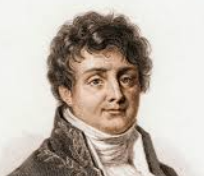
3 months 4 weeks ago
From the constitution of the solar system it is... probable that the temperature of the poles... are a little less than that of space... the same for all... although the distances from the sun may be unequal.
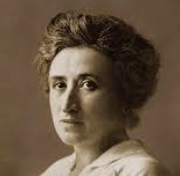
3 months 4 weeks ago
In the history of bourgeois society, legislative reform served to strengthen progressively the rising class till the latter was sufficiently strong to seize political power, to suppress the existing juridical system and to construct itself a new one.
▼
Source
Ch.8

3 months 4 weeks ago
Change alone is eternal, perpetual, immortal.
▼
Source
Unverified attribution noted in Respectfully Quoted: A Dictionary of Quotations (1993), ed. Suzy Platt, Library of Congress, p. 39; compare Heraclitus: Nothing endures but change.
3 months 4 weeks ago
If death had only negative aspects, dying would be an unmanageable action.
3 months 4 weeks ago
Can there be a more horrible object in existence than an eloquent man not speaking the truth?
▼
Source
Address as Lord Rector of Edinburgh University, (1866), reported in Bartlett's Familiar Quotations, 10th ed. (1919).
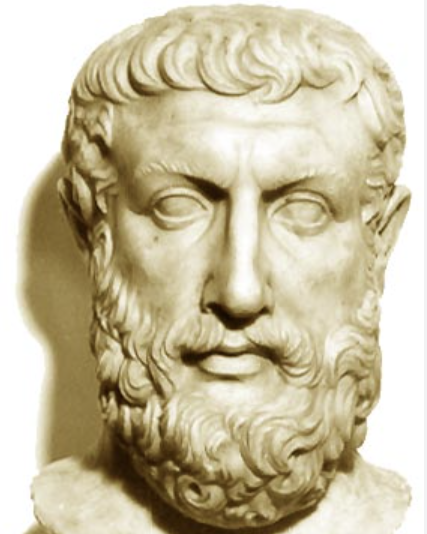
3 months 4 weeks ago
For it is the same thing that can be thought and that can be.
▼
Source
Frag. B 3, quoted by Plotinus, Enneads V, i.8
3 months 4 weeks ago
Being happy involves both a certain achievement in action and a rational assurance about the outcome.
▼
Source
Chapter IX, Section 83, p. 549
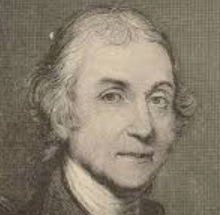
3 months 4 weeks ago
It may, perhaps, be true, though we cannot distinctly see it to be so, that as all finite things require a cause, infinites admit of none. It is evident, that nothing can begin to be without a cause; but it by no means follows from thence, that that must have had a cause which had no beginning. But whatever there may be in this conjecture, we are constrained, in pursuing the train of causes and effects, to stop at last at something uncaused. That any being should be self created is evidently absurd, because that would suppose that he had a being before he had, or that he existed, and did not exist at the same time. For want of clearer knowledge of this subject, we are obliged to content ourselves with terms that convey only negative ideas, and to say that God is a being untreated or uncaused; and this is all that we mean when we sometimes say that he is self existent.
▼
Source
Vol. I : Part I : The Being and Attributes of God, § 1 : Of the existence of God, and those attributes which art deduced from his being considered as uncaused himself, and the cause of every thing else (1772)
3 months 4 weeks ago
If we assume the viewpoint claimed as his own by Lenin and we fear the influence of intellectuals in the proletarian movement, we can conceive of no greater danger to the Russian party than Lenin's plan of organization. Nothing will more surely enslave a young labor movement to an intellectual elite hungry for power than this bureaucratic straightjacket, which will immobilize the movement and turn it into an automaton manipulated by a Central Committee. On the other hand there is no more effective guarantee against opportunist intrigue and personal ambition than the independent revolutionary action of the proletariat, as a result of which the workers acquire the sense of political responsibility and self-reliance.
3 months 4 weeks ago
Thus, because Christian morals leave animals out of consideration … therefore in philosophical morals they are of course at once outlawed; they are merely "things," simply means to ends of any sort; and so they are good for vivisection, for deer-stalking, bull-fights, horse-races, etc., and they may be whipped to death as they struggle along with heavy quarry carts. Shame on such a morality … which fails to recognize the Eternal Reality immanent in everything that has life, and shining forth with inscrutable significance from all eyes that see the sun!
▼
Source
Part II, Ch. VI, [https://archive.org/stream/basisofmorality00schoiala#page/94/mode/2up pp. 94]-95
3 months 4 weeks ago
I have all the defects of other people yet everything they do seems to me inconceivable.
3 months 4 weeks ago
When Froude took Lord Wolseley to see Carlyle, the sage bade the laurelled commander lock the doors of the parliamentary palaver, and walk off with the key.
▼
Source
John Morley, Recollections, Volume II (1917), p. 49
3 months 4 weeks ago
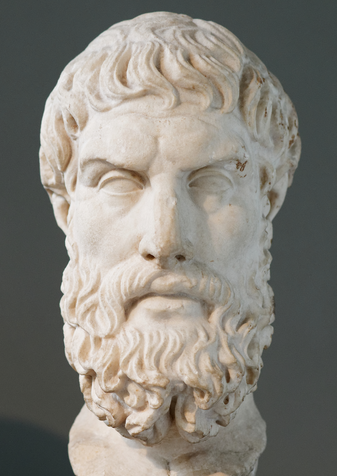
The happiness which belongs to man, is that state in which he enjoys as many of the good things, and suffers as few of the evils incident to human nature as possible; passing his days in a smooth course of permanent tranquility. A wise man, though deprived of sight or hearing, may experience happiness in the enjoyment of the good things which yet remain; and when suffering torture, or laboring under some painful disease, can mitigate the anguish by patience, and can enjoy, in his afflictions, the consciousness of his own constancy.
3 months 4 weeks ago
Parmenides does not say a word about "Being" anywhere. The assertion that it is...amounts to ...the universe is a plenum; and ...there is no ...empty space ...From this it follows that there can be no such thing as motion. Instead of endowing the One with an impulse to change, as Herakleitos... Parmenides dismissed change as an illusion. He showed... if you take the One seriously you are bound to deny everything else. All previous solutions... had missed the point.
3 months 4 weeks ago
Man needs to go outside himself in order to find repose and reveal himself.
▼
Source
"Vivir en Sí" [To Live in Oneself] (1891)

3 months 4 weeks ago
I then arrived at the certainty that it was necessary to posit that mathematics writes that which, of being itself, is pronounceable in the field of a pure theory of the Multiple. The entire history of rational thought appeared to me to be illuminated once one assumed the hypothesis that mathematics, far from being a game without object, draws the exceptional severity of its law from being bound to support the discourse of ontology.
▼
Source
Introduction
3 months 4 weeks ago
Our moral virtues benefit mainly other people; intellectual virtues, on the other hand, benefit primarily ourselves; therefore the former make us universally popular, the latter unpopular.
3 months 4 weeks ago
Paradise was unendurable, otherwise the first man would have adapted to it; this world is no less so, since here we regret paradise or anticipate another one. What to do? Where to go? Do nothing and go nowhere, easy enough.
3 months 4 weeks ago
My poems are like a dagger Sprouting flowers from the hilt; My poetry is like a fountain Sprinkling streams of coral water.
▼
Source
V
3 months 4 weeks ago
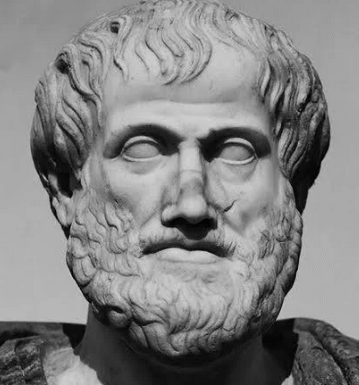
The infinite is in capacity. That, however, which is infinite in capacity is not to be assumed as that which is infinite in energy. ...It has its being in capacity, and in division and diminution. ...It is always possible to assume something beyond it. It does not, however, on this account surpass every definite magnitude; as in division it surpasses every definite magnitude, and will be less.
▼
Source
Book III, Ch. VIII, pp. 164-166.

3 months 4 weeks ago
Political thought as we understand it began in Athens because the Athenians were a trading people who looked at their contemporaries and saw how differently they organized themselves. If they had not lived where they did and organized their economic lives as they did, they could not have seen the contrast. Given the opportunity, they might not have paid attention to it. The Israelites of the Old Testament narrative were very conscious of their neighbors, Egyptian, Babylonian, and other, not least because they were often reduced to slavery or near-slavery by them. That narrative makes nothing of the fact that Egypt was a bureaucratic theocracy; it emphasizes that the Egyptians did not worship Yahweh. The history of Old Testament politics is the history of a people who did their best to have no politics. They saw themselves as under the direct government of God, with little room to decide their own fate except by obeying or disobeying God’s commandments. Only when God took them at their word and allowed them to choose a king did they become a political society, with familiar problems of competition for office and issues of succession. For the Jews, politics was a fall from grace. For the Greeks, it was an achievement. Many besides Plato thought it a flawed achievement; when historians and philosophers began to articulate its flaws, the history of political thought began among the argumentative Athenians.
3 months 4 weeks ago
In our monogamous part of the world, to marry means to halve one’s rights and double one’s duties.
▼
Source
Vol. 2, Ch. 27, § 370 | Variant translation: To marry is to halve your rights and double your duties.
3 months 4 weeks ago
Even when nothing happens, everything seems too much for me. What can be said, then, in the presence of an event, any event?
3 months 4 weeks ago
The man who esteems himself as he ought, and no more than he ought, seldom fails to obtain from other people all the esteem that he himself thinks due. He desires no more than is due to him, and he rests upon it with complete satisfaction.
▼
Source
Section III.
CivilSimian.com created by AxiomaticPanic, CivilSimian, Kalokagathia