
3 months 4 weeks ago
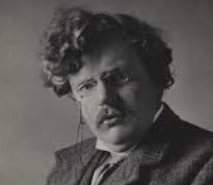
It is the one great weakness of journalism as a picture of our modern existence, that it must be a picture made up entirely of exceptions. We announce on flaring posters that a man has fallen off a scaffolding. We do not announce on flaring posters that a man has not fallen off a scaffolding. Yet this latter fact is fundamentally more exciting, as indicating that that moving tower of terror and mystery, a man, is still abroad upon the earth. That the man has not fallen off a scaffolding is really more sensational; and it is also some thousand times more common. But journalism cannot reasonably be expected thus to insist upon the permanent miracles. Busy editors cannot be expected to put on their posters, "Mr. Wilkinson Still Safe," or "Mr. Jones, of Worthing, Not Dead Yet." They cannot announce the happiness of mankind at all. They cannot describe all the forks that are not stolen, or all the marriages that are not judiciously dissolved. Hence the complex picture they give of life is of necessity fallacious; they can only represent what is unusual. However democratic they may be, they are only concerned with the minority.
▼
Source
Part IV: "A Discussion at Dawn", 2nd paragraph
3 months 4 weeks ago
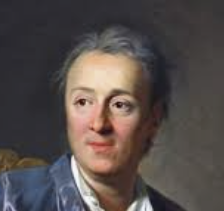
If there is one realm in which it is essential to be sublime, it is in wickedness. You spit on a petty thief, but you can’t deny a kind of respect for the great criminal.

3 months 4 weeks ago
To sum up all these steps, each of which is very lengthy and complex, we will have put the game of truth back in the network of constraints and dominations. Truth, I should say rather, the system of truth and falsity, will have revealed the face it turned away from us for so long and which is that of its violence.
▼
Source
p. 4

3 months 4 weeks ago
A student once interrupted him and said, "I just don't understand." He responded, "Why should you have the advantage over me?"
▼
Source
[https://web.archive.org/web/20040821091507/http://daily.nysun.com/Repository/getmailfiles.asp?Style=OliveXLib:ArticleToMail&Type=text/html&Path=NYS/2004/08/03&ID=Ar01400 Remembering Sidney Morgenbesser,] by Gary Shapiro in 'The New York Sun' 3 August 200

3 months 4 weeks ago
An intellectual is a person who has discovered something more interesting than sex.
▼
Source
As quoted without citation in Discovering Evolutionary Ecology: Bringing Together Ecology And Evolution (2006) by Peter J. Mayhew, p. 24
3 months 4 weeks ago
Heaven shall forgive you Bridge at dawn, The clothes you wear — or do not wear — And Ladies’ Leap-frog on the lawn And dyes and drugs, and petits verres.
▼
Source
Ballade d'une Grande Dame

3 months 4 weeks ago
It is not because men's desires are strong that they act ill; it is because their consciences are weak.
▼
Source
On Liberty (1859)
3 months 4 weeks ago
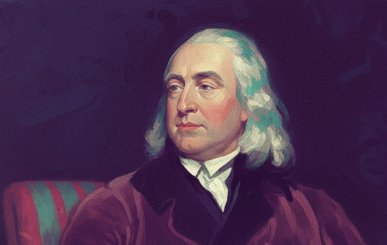
To what shall the character of utility be ascribed, if not to that which is a source of pleasure?
▼
Source
Théorie des peines et des récompenses (1811); translation by Richard Smith, The Rationale of Reward, J. & H. L. Hunt, London, 1825, Bk. 3, Ch. 1
3 months 4 weeks ago
Of course it would not do for the church to allow a man to die in peace who had added to the intellectual wealth of the world. The moment Diderot was dead, Catholic priests began painting and recounting the horrors of his expiring moments. They described him as overcome with remorse, as insane with fear; and these falsehoods have been repeated by the Protestant world, and will probably be repeated by thousands of ministers after we are dead. The truth is, he had passed his threescore years and ten. He had lived for seventy-one years. He had eaten his supper. He had been conversing with his wife. He was reclining in his easy chair. His mind was at perfect rest. He had entered, without knowing it, the twilight of his last day. Above the horizon was the evening star, telling of sleep. The room grew still and the stillness was lulled by the murmur of the street. There were a few moments of perfect peace. The wife said, "He is asleep." She enjoyed his repose, and breathed softly that he might not be disturbed. The moments wore on, and still he slept. Lovingly, softly, at last she touched him. Yes, he was asleep. He had become a part of the eternal silence.
▼
Source
Robert Green Ingersoll in "Diderot" in The Great Infidels (1881); The Works of Robert G. Ingersoll Vol. III (1900), p. 367
3 months 4 weeks ago
A great prison structure was planned, whose different levels would correspond exactly to the levels of the centralized administration. The scaffold, where the body of the tortured criminal had been exposed to the ritually manifested force of the sovereign, the punitive theatre in which the representation of punishment was permanently available to the social body, was replaced by a great enclosed, complex and hierarchized structure that was integrated into the very body of the state apparatus.
▼
Source
Chapter Three, The Gentle Way in Punishment

3 months 4 weeks ago
Dare to believe me. Dare!
▼
Source
Raimon to Regina. p. 31
3 months 4 weeks ago
A foreigner is a man who laughs at everything except jokes. He is perfectly entitled to laugh at anything, so long as he realises, in a reverent and religious spirit, that he himself is laughable. I was a foreigner in America; and I can truly claim that the sense of my own laughable position never left me. But when the native and the foreigner have finished with seeing the fun of each other in things that are meant to be serious, they both approach the far more delicate and dangerous ground of things that are meant to be funny. The sense of humour is generally very national; perhaps that is why the internationalists are so careful to purge themselves of it. I had occasion during the war to consider the rights and wrongs of certain differences alleged to have arisen between the English and American soldiers at the front. And, rightly or wrongly, I came to the conclusion that they arose from the failure to understand when a foreigner is serious and when he is humorous. And it is in the very nature of the best sort of joke to be the worst sort of insult if it is not taken as a joke.
▼
Source
[http://www.online-literature.com/chesterton/what-i-saw-in-america/10/ "Fads and Public Opinion"]
3 months 4 weeks ago
We need not suppose that when power resides in an exclusive class, that class will knowingly and deliberately sacrifice the other classes to themselves: it suffices that, in the absence of its natural defenders, the interest of the excluded is always in danger of being overlooked: and, when looked at, is seen with very different eyes from those of the persons whom it directly concerns.
▼
Source
Ch. III: The Ideally Best Polity
3 months 4 weeks ago
Parrhesia is ordinarily translated into English by "free speech"... the parrhesiastes is the one who uses parrhesia, i.e., the one who speaks the truth.
3 months 4 weeks ago
It is nonsense to assert that revelry, vice, ecstasy, passion, would become impossible if man and woman were equal in concrete matters; the contradictions that put the flesh in opposition to the spirit, the instant to time, the swoon of immanence to the challenge of transcendence, the absolute of pleasure to the nothingness of forgetting, will never be resolved; in sexuality will always be materialised the tension, the anguish, the joy, the frustration, and the triumph of existence. To emancipate woman is to refuse to confine her to the relations she bears to man, not to deny them to her; let her have her independent existence and she will continue none the less to exist for him also: mutually recognising each other as subject, each will yet remain for the other an other. The reciprocity of their relations will not do away with the miracles — desire, possession, love, dream, adventure — worked by the division of human beings into two separate categories; and the words that move us — giving, conquering, uniting — will not lose their meaning. On the contrary, when we abolish the slavery of half of humanity, together with the whole system of hypocrisy that it implies, then the 'division' of humanity will reveal its genuine significance and the human couple will find its true form.
3 months 4 weeks ago
A weak mind is like a microscope, which magnifies trifling things but cannot receive great ones.
▼
Source
Though sometimes misattributed to Chesterton, this is generally attributed to Philip Stanhope, 4th Earl of Chesterfield, with the first publication of this yet located is in a section of proverbs called "Diamond Dust" in Eliza Cook's Journal, No. 98 (15 M
3 months 4 weeks ago
Landlords... grow richer, as it were in their sleep, without working, risking, or economizing.
▼
Source
Book V, Chapter 1, Section 5
3 months 4 weeks ago
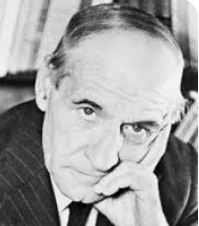
Life cannot wait until the sciences may have explained the universe scientifically. We cannot put off living until we are ready. The most salient characteristic of life is its coerciveness: it is always urgent, "here and now" without any possible postponement. Life is fired at us point-blank. And culture, which is but its interpretation, cannot wait any more than can life itself.
▼
Source
Original: "La vida no puede esperar a que las ciencias expliquen científicamente el Universo. No se puede vivir ad kalendas graecas. El atributo más esencial de la existencia es su perentoriedad: la vida es siempre urgente. Se vive aquí y ahora sin posibl
3 months 4 weeks ago
The hope may be entertained that some practitioner of the "sociology of knowledge" will one day have an interesting story to tell about -why the work of Michel Foucault generated such wide enthusiasm among certain intellectual elites for several decades in the latter half of the twentieth century. One or two hypotheses of my own may be hazarded. What is interesting about Foucault's unique rhetoric is that he steadfastly resists pronouncing explicit moral-political judgments, yet of course he is judging all the time. Foucault refuses to come clean on his normative commitments, but rather "insinuates" them throughout his work. This constitutes a kind of radical-left positivism that is somehow potently attractive to what I will call the hyper-liberal ethos of late modernity. The idea here is that one must avoid at all costs spelling out a normative vision, since it would ineluctably become the ground for a repressive regime of "normalization." This is clearly connected to the negativism one associates with postmodern writers.
▼
Source
Ronald Beiner, "Foucault's hyper‐liberalism", Critical Review: A Journal of Politics and Society (1995)
3 months 4 weeks ago
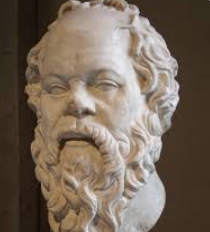
Either knowledge is not to be attained at all, or if at all, after death. For then, and not til then, the soul will be in herself alone and without the body.
3 months 4 weeks ago
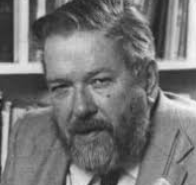
Modern technology is not simply an extension of human making through the power of a perfected science, but is a new account of what it is to know and to make in which both activities are changed by their co-penetration.
▼
Source
p. 13
3 months 4 weeks ago
He thought human life a poor thing at best, after the freshness of youth and of unsatisfied curiosity had gone by. This was a topic on which he did not often speak, especially, it may be supposed, in the presence of young persons: but when he did, it was with an air of settled and profound conviction. He would sometimes say, that if life were made what it might be, by good government and good education, it would be worth having: but he never spoke with anything like enthusiasm even of that possibility.
▼
Source
([https://archive.org/details/autobiography01mill/page/48/mode/1up p. 48])
3 months 4 weeks ago
The form most contradictory to human life that can appear among the human species is the "self-satisfied man."
▼
Source
Chapter XI: The Self-Satisfied Age
3 months 4 weeks ago
And I rejoiced to think that I has found in Anaxagoras a teacher of the causes of existence such as I desired, and I imagined that he would tell me first whether the earth is flat or round; and then he would further explain that this position was the best, and I should be satisfied... and not want any other sort of cause. And I thought that I would then go and ask him about the sun and moon and stars, and he would explain to me their comparative swiftness, and their returnings and various states, and how their several affections, active and passive, were all for the best. For I could not imagine that when he spoke of mind as the disposer of them, he would give any other account of their being as they are, except that this was best; and I thought when he had explained to me in detail the cause of each and the cause of all, he would go on to explain to me what was best for me and what was best for all. ...I seized the books and read them as fast as I could in my eagerness to know the better and the worse.
3 months 4 weeks ago
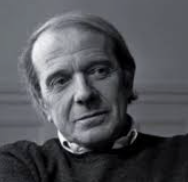
Instead of gambling on the eternal impossibility of the revolution and on the fascist return of a war-machine in general, why not think that a new type of revolution is in the course of becoming possible, and that all kinds of mutating, living machines conduct wars, are combined and trace out a plane of consistence which undermines the plane of organization of the World and the States?
▼
Source
from Dialogues with Claire Parnet, p. 147 [emphasis in original].

3 months 4 weeks ago
I want to be free from freedom. Free.
3 months 4 weeks ago
The question was, whether, if the reformers of society and government could succeed in their objects, and every person in the community were free and in a state of physical comfort, the pleasures of life, being no longer kept up by struggle and privation, would cease to be pleasures.
▼
Source
([https://archive.org/details/autobiography01mill/page/145/mode/1up pp. 145-146])
3 months 4 weeks ago
Man is a substantial emigrant on a pilgrimage of being, and it is accordingly meaningless to set limits to what he is capable of being.
▼
Source
“Man has no nature”

3 months 4 weeks ago
You could leave life right now. Let that determine what you do and say and think.
▼
Source
II, 11 (Hays translation)
3 months 4 weeks ago
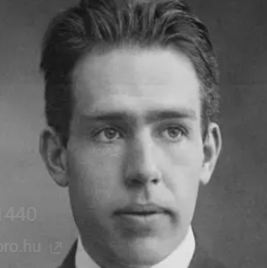
Oh, what idiots we all have been. This is just as it must be.
▼
Source
In response to Frisch & Meitner's explanation of nuclear fission, as quoted in The Physicists - A generation that changed the world (1981) by C.P.Snow, p. 96 | Variant: Oh what idiots we have all been not to have seen this before! This is wonderful! It ha
3 months 4 weeks ago
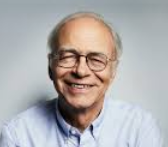
To be honest, I was somewhat disappointed... It's had effects around the margins, of course, but they have mostly been minor. When I wrote it, I really thought the book would change the world. I know it sounds a little grand now, but at the time the sixties still existed for us. It looked as if real changes were possible, and I let myself believe that this would be one of them. All you have to do is walk around the corner to McDonald's to see how successful I have been.
▼
Source
Quoted by Michael Specter on the impact of the book Animal Liberation, "[http://www.michaelspecter.com/1999/09/the-dangerous-philosopher/ The Dangerous Philosopher]", The New Yorker, 6 September 1999.
3 months 4 weeks ago
It is a disgrace to grow old through sheer carelessness before seeing what manner of man you may become by developing your bodily strength and beauty to their highest limit. But you cannot see that, if you are careless; for it will not come of its own accord.
▼
Source
Memorabilia III.7.8
3 months 4 weeks ago
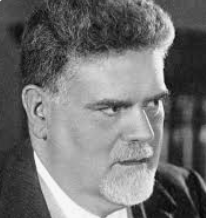
How many times has Fascism been accused with obtuse malevolence of barbarity? Well yes: once you understand the true significance of this barbarity we will boast of it, as the expression of the healthy energies which shatter false and baleful idols, and restore the health of the nation within the power of a State conscious of its sovereign rights which are its duties.
▼
Source
Che cosa è fascismo? ("What is fascism?"), lecture delivered in Florence (March 8, 1925)
3 months 4 weeks ago
I never knew a finer, tenderer, more sensitive or modest soul among the sons of men. There never was a more generous creature than he, nor a more modest.
▼
Source
Thomas Carlyle, response to Mill's death, quoted in Letters of Charles Eliot Norton, with Biographical Comment by His Daughter Sara Norton and M.A. DeWolfe Howe, Volume I (1913), pp. 495–496
3 months 4 weeks ago
Think on this doctrine,—that reasoning beings were created for one another's sake; that to be patient is a branch of justice, and that men sin without intending it.
▼
Source
IV, 3
3 months 4 weeks ago
Human social institutions can effect the course of human evolution. Just as climate-change, food supply, predators, and other natural forces of selection have molded our nature, so too can our culture.
▼
Source
Chapter 6, A New Understanding Of Ethics, p. 172
3 months 4 weeks ago
I would trade all of my technology for an afternoon with Socrates.
▼
Source
Steve Jobs in Newsweek (29 October 2001)
3 months 4 weeks ago
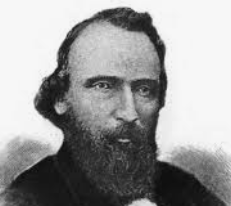
I have never felt any inward assurance of genius, or any presentiment of glory or of happiness. I have never seen myself in imagination great or famous, or even a husband, a father, an influential citizen. This indifference to the future, this absolute self-distrust, are, no doubt, to be taken as signs. What dreams I have are all vague and indefinite; I ought not to live, for I am now scarcely capable of living.
▼
Source
3 May 1849
3 months 4 weeks ago
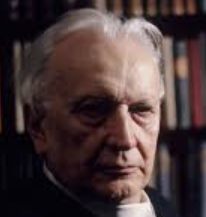
My path was not the normal one of professors of philosophy. I did not intend to become a doctor of philosophy by studying philosophy (I am in fact a doctor of medicine) nor did I by any means, intend originally to qualify for a professorship by a dissertation on philosophy. To decide to become a philosopher seemed as foolish to me as to decide to become a poet. Since my schooldays, however, I was guided by philosophical questions. Philosophy seemed to me the supreme, even the sole, concern of man. Yet a certain awe kept me from making it my profession.
3 months 4 weeks ago
Thou art a little soul bearing about a corpse, as Epictetus used to say.
▼
Source
IV, 41

3 months 4 weeks ago
It is no small pity, and should cause us no little shame, that, through our own fault, we do not understand ourselves, or know who we are. Would it not be a sign of great ignorance, my daughters, if a person were asked who he was, and could not say, and had no idea who his father or mother was, or from what country he came? Though that is a great stupidity, our own is incomparably greater if we make no attempt to discover what we are, and only know that we are living in these bodies and have a vague idea, because we have heard it, and because our faith tells us so, that we possess souls. As to what good qualities there may be in our souls, or who dwells within them, or how precious they are — those are things which seldom consider and so we trouble little about carefully preserving the soul's beauty. All our interest is centred in the rough setting of the diamond and in the outer wall of the castle – that is to say in these bodies of ours.
▼
Source
First Mansions, Ch. 1, as translated by E. Allison Peers (1961) p. 18

3 months 4 weeks ago
You may observe yourself...what a difference there is between the true strength of this nation and the fictitious one of the Whigs. How much time, how many lucky incidents, how many strains of power, how much money must go to create a majority of the latter; on the other hand, take but off the opinion that the Crown is another way inclined, the church interest rises with redoubled force, and by its natural genuine strength.
▼
Source
Letter to Mr. Drummond (10 November 1710), quoted in Gilbert Parke, Letters and Correspondence, Public and Private, of The Right Honourable Henry St. John, Lord Visc. Bolingbroke; during the Time he was Secretary of State to Queen Anne; with State Papers,
3 months 4 weeks ago
Just that you do the right thing. The rest doesn't matter. Cold or warm. Tired or well-rested. Despised or honored. Dying . . . or busy with other assignments. (Hays translation)
▼
Source
VI, 2

3 months 4 weeks ago
A well-written Life is almost as rare as a well-spent one.
▼
Source
Richter (1827).

3 months 4 weeks ago
I now inquire into your opinion, (to see) from what source you usurp this right to “the Church.”If, because the Lord has said to Peter, “Upon this rock will I build My Church,” “to thee have I given the keys of the heavenly kingdom;” or, “Whatsoever thou shalt have bound or loosed in earth, shall be bound or loosed in the heavens,” you therefore presume that the power of binding and loosing has derived to you, that is, to every Church akin to Peter, what sort of man are you, subverting and wholly changing the manifest intention of the Lord, conferring (as that intention did) this (gift) personally upon Peter? “On thee,” He says, “will I build My Church;” and, “I will give to thee the keys,” not to the Church; and, “Whatsoever thou shalt have loosed or bound,” not what they shall have loosed or bound.
▼
Source
Chapter XXI.—Of the Difference Between Discipline and Power, and of the Power of the Keys.
3 months 4 weeks ago
There are limitations indeed that would destroy the essential form of monarchy: or, in other words, a monarchical constitution may be changed, under pretence of limiting the monarch. This happened among us in the last century, when the vilest usurpation, and the most infamous tyranny, were established over our nation, by some of the worst and some of the meanest men in it. I will not say, that the essential form of monarchy should be preserved, tho the preservation of it were to cause the loss of liberty. Salus reipsuprema lex esto, is a fundamental law: and sure I am, the safety of a commonwealth is ill provided for, if the liberty be given up. But this I presume to say, and can demonstrate, that all the limitations necessary to preserve liberty, as long as the spirit of it subsists, and longer than that, no limitations of monarchy, nor any other form of government, can preserve it, are compatible with monarchy.
▼
Source
p. 96
3 months 4 weeks ago
Direct thy attention to what is said. Let thy understanding enter into the things that are doing and the things which do them.
▼
Source
VII, 30
3 months 4 weeks ago
Has any man, or any society of men, a truth to speak, a piece of spiritual work to do; they can nowise proceed at once and with the mere natural organs, but must first call a public meeting, appoint committees, issue prospectuses, eat a public dinner; in a word, construct or borrow machinery, wherewith to speak it and do it. Without machinery, they were hopeless, helpless.
3 months 4 weeks ago
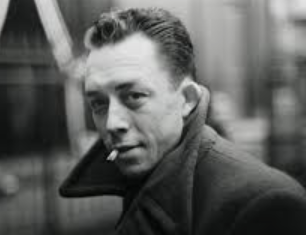
A novel is never anything but a philosophy put into images. And in a good novel, the whole of the philosophy has passed into the images. But if once the philosophy overflows the characters and action, and therefore looks like a label stuck on the work, the plot loses its authenticity and the novel its life. Nevertheless, a work that is to last cannot dispense with profound ideas. And this secret fusion between experiences and ideas, between life and reflection on the meaning of life, is what makes the great novelist.
▼
Source
Review of Nausea by Jean-Paul Sartre, published in the newspaper Alger Républicain (20 October 1938), p. 5; reprinted in Selected Essays and Notebooks, translated and edited by Philip Thody
3 months 4 weeks ago
We worship unity in trinity, and trinity in unity; neither confounding the person nor dividing the substance. There is one person of the Father, another of the Son, and another of the Holy Ghost; but the Godhead of the Father, and of the Son, and of the Holy Ghost, is all one; the glory equal, the majesty co-eternal.
▼
Source
As quoted in Dictionary of Burning Words of Brilliant Writers (1895) edited by Josiah Hotchkiss Gilbert, p. 285 | Actually from the Athanasian Creed: Fides autem catholica haec est: ut unum Deum in Trinitate, et Trinitatem in unitate veneremur. Neque conf
CivilSimian.com created by AxiomaticPanic, CivilSimian, Kalokagathia