
3 months 4 weeks ago
Choose the best life; for habit will make it pleasant.
▼
Source
Epictetus, Fragment 144
3 months 4 weeks ago
As for our celebrated lawgivers, who have cast us in our present awkward mold, you may be sure that they have acted to serve their interests and not ours. Witness all our political, civil, and religious institutions — examine them thoroughly: unless I am very much mistaken, you will see how, through the ages, the human race has been broken to the halter that a handful of rascals were itching to impose. Watch out for the fellow who talks about putting things in order! Putting things in order always means getting other people under your control.
▼
Source
"Supplement to Bougainville's Voyage" (1796) | Variant translation: | Never allow yourselves to forget that it is for their own sakes and not for yours that all those wise lawgivers have forced you into your present unnatural and rigid molds. And as evide

3 months 4 weeks ago
If we compare. e.g. the systems of classical mathematics and of intuitionistic mathematics, we find that the first is much simpler and technically more efficient, while the second is more safe from surprising occurences, e.g. contradictions. At the present time, any estimation of the degree of safety of the system of classical mathematics, in other words, the degree of plausibility of its principles, is rather subjective. The majority of mathematicians seem to regard this degree as sufficiently high for all practical purposes and therefore prefer the application of classical mathematics to that of intuitionistic mathematics. The latter has not, so far as I know, been seriously applied in physics by anybody.
▼
Source
Rudolf Carnap (1939; 51), as cited in: Paul van Ulsen. [http://www.illc.uva.nl/Research/Publications/Inaugurals/IV-10-Arend-Heyting.text.pdf Wetenschapsfilosofie], 6 november 2017.

3 months 4 weeks ago
I was looking at my furniture, not as the utilitarian who has to sit on chairs, to write at desks and tables, and not as the cameraman or scientific recorder, but as the pure aesthete whose concern is only with forms and their relationships within the field of vision or the picture space. But as I looked, this purely aesthetic, Cubist's-eye view gave place to what I can only describe as the sacramental vision of reality. I was back where I had been when I was looking at the flowers—back in a world where everything shone with the Inner Light, and was infinite in its significance.
▼
Source
describing his experiment with mescaline, p. 22
3 months 4 weeks ago
The Puritan is only strong enough to stiffen; the Catholic is strong enough to relax.
▼
Source
"The Critic"
3 months 4 weeks ago
The purpose of an encyclopedia is to collect knowledge disseminated around the globe; to set forth its general system to the men with whom we live, and transmit it to those who will come after us, so that the work of preceding centuries will not become useless to the centuries to come; and so that our offspring, becoming better instructed, will at the same time become more virtuous and happy, and that we should not die without having rendered a service to the human race in the future years to come
▼
Source
Encyclopédie (Diderot 1755 pp 365 - 48A)

3 months 4 weeks ago
At the end of the Middle Ages, leprosy disappeared from the Western world. In the margins of the community, at the gates of cities, there stretched wastelands which sickness had ceased to haunt but had left sterile and long uninhabitable. For centuries, these reaches would belong to the non-human. From the fourteenth to the seventeenth century, they would wait, soliciting with strange incantations a new incarnation of disease, another grimace of terror, renewed rites of purification and exclusion.
▼
Source
Part One: 1. Stultifera Navis
3 months 4 weeks ago
What else do conservatives and libertarians profess in common? The answer to that question is simple: nothing. Nor will they ever. To talk of forming a league or coalition between these two is like advocating a union of ice and fire.
3 months 4 weeks ago
The effectiveness of political and religious propaganda depends upon the methods employed, not upon the doctrines taught. These doctrines may be true or false, wholesome or pernicious—it makes little or no difference.
▼
Source
Chapter 7 (p. 63)
3 months 4 weeks ago
But since he stood for England And knew what England means, Unless you give him bacon You mustn’t give him beans.
▼
Source
Ch. XV: "The Songs of the Car Club" (The Englishman, st. 2)
3 months 4 weeks ago
Jacques said that his master said that everything good or evil we encounter here below was written on high.
▼
Source
Prologue
3 months 4 weeks ago
There can be no doubt that the existence of public tortures and executions were connected with something quite other than this internal organization. Rusche and Kirchheimer are right to see it as the effect of a system of production in which labour power, and therefore the human body, has neither the utility nor the commercial value that are conferred on them in an economy of an industrial type. Moreover, this ‘contempt’ for the body is certainly related to a general attitude to death; and, in such an attitude, one can detect not only the values proper to Christianity, but a demographical, in a sense biological, situation: the ravages of disease and hunger, the periodic massacres of the epidemics, the formidable child mortality rate, the precariousness of the bio-economic balances – all this made death familiar and gave rise to rituals intended to integrate it, to make it acceptable and to give a meaning to its permanent aggression. But in analysing why the public executions survived for so long, one must also refer to the historical conjuncture; it must not be forgotten that the ordinance of 1670 that regulated criminal justice almost up to the Revolution had even increased in certain respects the rigour of the old edicts; Pussort, who, among the commissioners entrusted with the task of drawing up the documents, represented the intentions of the king, was responsible for this, despite the views of such magistrates as Lamoignon; the number of uprisings at the very height of the classical age, the rumbling close at hand of civil war, the king's desire to assert his power at the expense of the parlements go a long way to explain the survival of so severe a penal system.
▼
Source
pp. 51

3 months 4 weeks ago
When Sartre and I met not only did our backgrounds fuse, but also our solidity, our individual conviction that we were what we were made to be. In that framework we could not become rivals. Then, as the relationship between Sartre and me grew, I became convinced that I was irreplaceable in his life, and he in mine. In other words, we were totally secure in the knowledge that our relationship was also totally solid, again preordained, though, of course, we would have laughed at that word then. When you have such security it's easy not to be jealous. But had I thought that another woman played the same role as I did in Sartre's life, of course, I would have been jealous.
▼
Source
[http://www.marxists.org/reference/subject/ethics/de-beauvoir/1976/interview.htm Interview by John Gerassi in Society (January-February 1976)]
3 months 4 weeks ago
It is something to have wept as we have wept, It is something to have done as we have done, It is something to have watched when all men slept, And seen the stars which never see the sun. It is something to have smelt the mystic rose, Although it break and leave the thorny rods, It is something to have hungered once as those Must hunger who have ate the bread of gods.
▼
Source
The Great Minimum

3 months 4 weeks ago
The great writers to whom the world owes what religious liberty it possesses, have mostly asserted freedom of conscience as an indefeasible right, and denied absolutely that a human being is accountable to others for his religious belief.
▼
Source
Ch. 1: Introductory
3 months 4 weeks ago
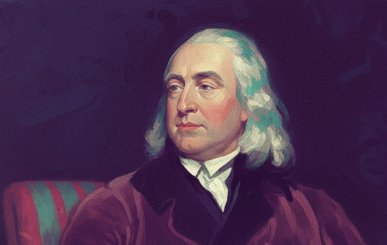
The community is a fictitious body, composed of the individual persons who are considered as constituting as it were its members. The interest of the community then is what? The sum of the interests of the several members who compose it.
▼
Source
Ch. 1: Of the Principle of Utility
3 months 4 weeks ago
Confession frees, but power reduces one to silence; truth does not belong to the order of power, but shares an original affinity with freedom: traditional themes in philosophy, which a political history of truth would have to overturn by showing that truth is not by nature free--nor error servile--but that its production is thoroughly imbued with relations of power. The confession is an example of this.
▼
Source
Vol. I, p. 60
3 months 4 weeks ago
It is doubtless impossible to approach any human problems with a mind free from bias.
▼
Source
[http://books.google.com/books?id=kUW0AAAAIAAJ&q=%22It+is+doubtless+impossible+to+approach+any+human+problems+with+a+mind+free+from+bias%22&pg=PA20#v=onepage Introduction : Woman as Other]
3 months 4 weeks ago
Nothing is more terrible than a bed; since it is always waiting to be a death-bed.
▼
Source
Ch. I: "'The Myth of Stevenson'"
3 months 4 weeks ago
Society should treat all equally well who have deserved equally well of it, that is, who have deserved equally well absolutely. This is the highest abstract standard of social and distributive justice; towards which all institutions, and the efforts of all virtuous citizens, should be made in the utmost degree to converge.
▼
Source
Ch. 5
3 months 4 weeks ago
Ion explains that in a democracy there are three categories of citizens: ...(1) citizens who have neither power nor wealth, and who hate all who are superior ...; (2) ...good Athenians ...capable of exercising power, but because they are wise ...keep silent ... and do not worry about ...political affairs ...(3) ...reputable men who are powerful, and use their discourse and reason to participate ...[T]he first group ...will hate him; the second ...will laugh at the young man who wishes to be regarded as one of the First Citizens of Athens; and the ...politicians, will be jealous ...and will try to get rid of him.
3 months 4 weeks ago
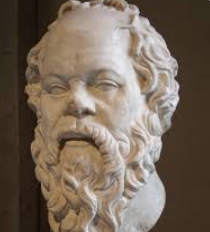
Wonder is the feeling of a philosopher, and philosophy begins in wonder.
▼
Source
Theaetetus, 155d
3 months 4 weeks ago
speaking metaphysically, the only genuine hope is hope in what does not depend on ourselves, hope springing from humility and not from pride.
3 months 4 weeks ago
It is evident that this, among many other of the purposes of my father's scheme of education, could not have been accomplished if he had not carefully kept me from having any great amount of intercourse with other boys. He was earnestly bent upon my escaping not only the ordinary corrupting influence which boys exercise over boys, but the contagion of vulgar modes of thought and feeling; and for this he was willing that I should pay the price of inferiority in the accomplishments which schoolboys in all countries chiefly cultivate. The deficiencies in my education were principally in the things which boys learn from being turned out to shift for themselves, and from being brought together in large numbers.
▼
Source
([https://archive.org/details/autobiography01mill/page/35/mode/1up p. 35])
3 months 4 weeks ago
Even to-day, in spite of some signs which are making a tiny breach in that sturdy faith, even to-day, there are few men who doubt that motorcars will in five years' time be more comfortable and cheaper than to-day. They believe in this as they believe that the sun will rise in the morning. The metaphor is an exact one. For, in fact, the common man, finding himself in a world so excellent, technically and socially, believes that it has been produced by nature, and never thinks of the personal efforts of highly-endowed individuals which the creation of this new world presupposed. Still less will he admit the notion that all these facilities still require the support of certain difficult human virtues, the least failure of which would cause the rapid disappearance of the whole magnificent edifice.… These traits together make up the well-known psychology of the spoilt child.
▼
Source
Chap. VI: The Dissection Of The Mass-Man Begins
3 months 4 weeks ago
He who is a philosopher or lover of learning, and is entirely pure at departing, is alone permitted to reach the gods. And this is the reason, Simmias and Cebes, why the true votaries of philosophy abstain from all fleshly lusts, and endure and refuse to give themselves up to them—not because they fear poverty or ruin of their families, like the lovers of money, and the world in general; nor like the lovers of power and honor, because they dread the dishonor or disgrace of evil deeds.

3 months 4 weeks ago
Gods are condemned to live the dream of the imperishable.
3 months 4 weeks ago
In this frame of mind it occurred to me to put the question directly to myself: "Suppose that all your objects in life were realized; that all the changes in institutions and opinions which you are looking forward to, could be completely effected at this very instant: would this be a great joy and happiness to you?" And an irrepressible self-consciousness distinctly answered, "No!" At this my heart sank within me: the whole foundation on which my life was constructed fell down. All my happiness was to have been found in the continual pursuit of this end. The end had ceased to charm, and how could there ever again be any interest in the means? I seemed to have nothing left to live for.
▼
Source
([https://archive.org/details/autobiography01mill/page/133/mode/1up pp. 133-134])
3 months 4 weeks ago
This fighting-shy of every obligation partly explains the phenomenon, half ridiculous, half disgraceful, Of the setting-up in our days of the platform of "youth" as youth. … In comic fashion people call themselves "young," because they have heard that youth has more rights than obligations, since it can put off the fulfilment of these latter to the Greek Kalends of maturity. …[T]he astounding thing at present is that these take it as an effective right precisely in order to claim for themselves all those other rights which only belong to the man who has already done something.
▼
Source
Chapter XV: We Arrive At The Real Question

3 months 4 weeks ago
From Apollonius, true liberty, and unvariable steadfastness, and not to regard anything at all, though never so little, but right and reason: and always..that it was possible for the same man to be both vehement and remiss: a man not subject to be vexed, and offended with the incapacity of his scholars and auditors in his lectures and expositions.
▼
Source
I, 5
3 months 4 weeks ago
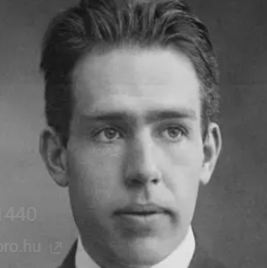
An expert is a person who has found out by his own painful experience all the mistakes that one can make in a very narrow field.
▼
Source
As quoted by Edward Teller, in [http://books.google.de/books?id=I1QEAAAAMBAJ&pg=PA62 Dr. Edward Teller's Magnificent Obsession by Robert Coughlan, in LIFE magazine (6 September 1954), p. 62] | Variant: An expert is a man who has made all the mistakes whic
3 months 4 weeks ago
Those also who are remarkable for having led holy lives are released from this earthly prison, and go to their pure home which is above, and dwell in the purer earth; and those who have duly purified themselves with philosophy live henceforth altogether without the body, in mansions fairer far than these...
3 months 4 weeks ago
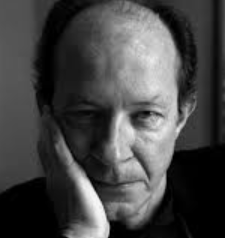
Whatever singularity, which wants to appropriate belonging itself, its own being-in-language, and thus rejects all identity and every condition of belonging, is the principal enemy of the State. Wherever these singularities peacefully demonstrate their being in common there will be Tiananmen, and, sooner or later, the tanks will appear.
▼
Source
page 86.
3 months 4 weeks ago
In those days I had seen little further than the old school of political economists into the possibilities of fundamental improvement in social arrangements. Private property, as now understood, and inheritance, appeared to me, as to them, the dernier mot of legislation: and I looked no further than to mitigating the inequalities consequent on these institutions, by getting rid of primogeniture and entails. The notion that it was possible to go further than this in removing the injustice—for injustice it is, whether admitting of a complete remedy or not—involved in the fact that some are born to riches and the vast majority to poverty, I then reckoned chimerical, and only hoped that by universal education, leading to voluntary restraint on population, the portion of the poor might be made more tolerable. In short, I was a democrat, but not the least of a Socialist. We were now much less democrats than I had been, because so long as education continues to be so wretchedly imperfect, we dreaded the ignorance and especially the selfishness and brutality of the mass: but our ideal of ultimate improvement went far beyond Democracy, and would class us decidedly under the general designation of Socialists. While we repudiated with the greatest energy that tyranny of society over the individual which most Socialistic systems are supposed to involve, we yet looked forward to a time when society will no longer be divided into the idle and the industrious; when the rule that they who do not work shall not eat, will be applied not to paupers only, but impartially to all; when the division of the produce of labour, instead of depending, as in so great a degree it now does, on the accident of birth, will be made by concert on an acknowledged principle of justice; and when it will no longer either be, or be thought to be, impossible for human beings to exert themselves strenuously in procuring benefits which are not to be exclusively their own, but to be shared with the society they belong to. The social problem of the future we considered to be, how to unite the greatest individual liberty of action, with a common ownership in the raw material of the globe, and an equal participation of all in the benefits of combined labour. We had not the presumption to suppose that we could already foresee, by what precise form of institutions these objects could most effectually be attained, or at how near or how distant a period they would become practicable. We saw clearly that to render any such social transformation either possible or desirable, an equivalent change of character must take place both in the uncultivated herd who now compose the labouring masses, and in the immense majority of their employers. Both these classes must learn by practice to labour and combine for generous, or at all events for public and social purposes, and not, as hitherto, solely for narrowly interested ones. But the capacity to do this has always existed in mankind, and is not, nor is ever likely to be, extinct. Education, habit, and the cultivation of the sentiments, will make a common man dig or weave for his country, as readily as fight for his country. True enough, it is only by slow degrees, and a system of culture prolonged through successive generations, that men in general can be brought up to this point. But the hindrance is not in the essential constitution of human nature. Interest in the common good is at present so weak a motive in the generality not because it can never be otherwise, but because the mind is not accustomed to dwell on it as it dwells from morning till night on things which tend only to personal advantage. When called into activity, as only self-interest now is, by the daily course of life, and spurred from behind by the love of distinction and the fear of shame, it is capable of producing, even in common men, the most strenuous exertions as well as the most heroic sacrifices. The deep-rooted selfishness which forms the general character of the existing state of society, is so deeply rooted, only because the whole course of existing institutions tends to foster it; modern institutions in some respects more than ancient, since the occasions on which the individual is called on to do anything for the public without receiving its pay, are far less frequent in modern life, than the smaller commonwealths of antiquity.
▼
Source
([https://archive.org/details/autobiography01mill/page/230/mode/1up pp. 230-233])
3 months 4 weeks ago
Respect the faculty that forms thy judgments.
▼
Source
III, 9

3 months 4 weeks ago
Human beings are social animals. We were social before we were human.
▼
Source
Chapter 1, The Origins Of Altruism, p. 3
3 months 4 weeks ago
Prefer knowledge to wealth, for the one is transitory, and the other perpetual.
▼
Source
Actually from Isocrates, it can be found on [https://books.google.com/books?id=7DcHEAAAQBAJ&pg=PA213#v=onepage&q&f=false p. 213] of Classical Rhetoric in English, 1650-1800: A Critical Anthology, part of a 1703 translation of a letter Isocrates wrote to h
3 months 4 weeks ago
A religion of life had come to replace a religion of penance and emaciation, of fasting and prayer. The crucified body had risen in its turn and was no longer abashed Man had reached a harmonious unity: he had discovered that he is a single being not made, like a pendulum, of two different metals, that check each other; he realised that the foe in his members had ceased to exist.
▼
Source
Alexander Herzen, Childhood, Youth, and Exile
3 months 4 weeks ago
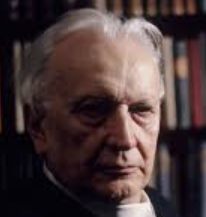
In bodily presence, though not commanding, at sixty he was attractive, spare in build, his voice low but harmonious, his eye sympathetic and responsive. His perfect simplicity and candour, friendly gravity with no accent of the don, his readiness of interest and curiosity, the evident love of truth and justice and improvement as the standing habit of mind—all this diffused a high, enlightening ethos that, aided by the magic halo of accepted fame, made him extraordinarily impressive.
▼
Source
p. 53
3 months 4 weeks ago
The would-be climber must be able to make himself liked ... please his superiors — avoid showing independence except in those matters wherein independence is expected of him by his chiefs... the winners in the race have qualities which disincline them to allow others to be their true selves. Hence the winners snub all those who aim at adequate self-expression, speaking of them as pretentious, eccentric, biased, unpractical, and measuring their achievements by insincere standards.
3 months 4 weeks ago
Does anything genuinely beautiful need supplementing? No more than justice does—or truth, or kindness, or humility. Are any of those improved by being praised? Or damaged by contempt? Is an emerald suddenly flawed if no one admires it? Or gold, or ivory, or purple? Lyres? Knives? Flowers? Bushes?
▼
Source
IV, 20(Hays translation)

3 months 4 weeks ago
Fear is the true enemy, the only enemy.
▼
Source
Attributed implicitly to Sun Tzu by "William Riker" in the episode The Last Outpost of the TV program Star Trek: The Next Generation, but no source for this quote predates the episode's airing in 1987.
3 months 4 weeks ago
The man who has no inner life is the slave of his surroundings.
▼
Source
21 January 1866
3 months 4 weeks ago
The things you think about determine the quality of your mind. Your soul takes on the color of your thoughts.
▼
Source
The soul becomes dyed with the colour of its thoughts. | V, 16 (Hays translation)

3 months 4 weeks ago
It is now almost my sole rule of life to clear myself of cants and formulas, as of poisonous Nessus shirts.
▼
Source
Letter to His Wife (1835).
3 months 4 weeks ago
To abjure the notion of the “truly human” is to abjure the attempt to divinize the self as a replacement for a divinized world.
▼
Source
Contingency, Irony, and Solidarity (1989), p. 35

3 months 4 weeks ago
Why lean upon a blind guide, if you have eyes of your own? Why be clothed by one who is naked, if you have put on Christ? Why use the shield of another, when the apostle gives you armour of your own? It would be better for him to learn from you to acknowledge the resurrection of the flesh, than for you from him to deny it; because if Christians must needs deny it, it would be sufficient if they did so from their own knowledge, without any instruction from the ignorant multitude.
▼
Source
De Resurrectione Carnis [Of the Resurrection of Flesh] Ch.1 as quoted in The Writings of Tertullian, [http://books.google.com/books?id=nlcPAQAAMAAJ Vol.2] Tr. Peter Holmes, as contained in Ante-Nicene Christian Library: Translations of the Writings of the

3 months 4 weeks ago
My Lord, I have insisted the more on this duty which men owe to their country, because I came out of England, and continue still, strongly affected with what I saw when I was there. Our government has approached, nearer than ever before, to the true principles of it, since the revolution of one thousand six hundred and eighty eight: and the accession of the present family to the throne, has given the fairest opportunities, as well as the justest reasons, for compleating the scheme of liberty, and improving it to perfection.
▼
Source
pp. 36-37
3 months 4 weeks ago
Of things that are external, happen what will to that which can suffer by external accidents. Those things that suffer let them complain themselves, if they will; as for me, as long as I conceive no such thing, that that which is happened is evil, I have no hurt; and it is in my power not to conceive any such thing.
3 months 4 weeks ago
A mystic bond of brotherhood makes all men one.
▼
Source
Essays, Goethe's Works.
CivilSimian.com created by AxiomaticPanic, CivilSimian, Kalokagathia