

3 months 4 weeks ago
And so they upbraid the discipline of monogamy with being a heresy; nor is there any other cause whence they find themselves compelled to deny the Paraclete more than the fact that they esteem Him to be the institutor of a novel discipline, and a discipline which they find most harsh: so that this is already the first ground on which we must join issue in a general handling (of the subject), whether there is room for maintaining that the Paraclete has taught any such thing as can either be charged with novelty, in opposition to catholic tradition, or with burdensomeness, in opposition to the “light burden” of the Lord.
▼
Source
Chapter 2

3 months 4 weeks ago
In the beginning of the year 1665 I found the method of approximating Series and the Rule for reducing any dignity of any Binomial into such a series. The same year in May I found the method of tangents of Gregory and Slusius, and in November had the direct method of Fluxions, and the next year in January had the Theory of Colours, and in May following I had entrance into the inverse method of Fluxions. And the same year I began to think of gravity extending to the orb of the Moon, and having found out how to estimate the force with which [a] globe revolving within a sphere presses the surface of the sphere, from Kepler's Rule of the periodical times of the Planets being in a sesquialterate proportion of their distances from the centers of their orbs I deduced that the forces which keep the Planets in their Orbs must [be] reciprocally as the squares of their distances from the centers about which they revolve: and thereby compared the force requisite to keep the Moon in her orb with the force of gravity at the surface of the earth, and found them answer pretty nearly. All this was in the two plague years of 1665 and 1666, for in those days I was in the prime of my age for invention, and minded Mathematicks and Philosophy more than at any time since. What Mr Hugens has published since about centrifugal forces I suppose he had before me. At length in the winter between the years 1676 and 1677 I found the Proposition that by a centrifugal force reciprocally as the square of the distance a Planet must revolve in an Ellipsis about the center of the force placed in the lower umbilicus of the Ellipsis and with a radius drawn to that center describe areas proportional to the times. And in the winter between the years 1683 and 1684 this Proposition with the Demonstration was entered in the Register book of the R. Society. And this is the first instance upon record of any Proposition in the higher Geometry found out by the method in dispute. In the year 1689 Mr Leibnitz, endeavouring to rival me, published a Demonstration of the same Proposition upon another supposition, but his Demonstration proved erroneous for want of skill in the method.
▼
Source
(ca. 1716) [https://books.google.com/books?id=3wcjAAAAMAAJ&pg=PR18 A Catalogue of the Portsmouth Collection of Books and Papers Written by Or Belonging to Sir Isaac Newton] (1888) Preface | Also partially quoted in Sir Sidney Lee (ed.), The Dictionary of

3 months 4 weeks ago
The accomplishments of his mind, which was adorned with the choicest gifts that God has yet thought fit to bestow upon the children of men; a strong memory, a clear judgment, a vast range of wit and fancy, a thorough comprehension, an invincible eloquence, with a most agreeable elocution.
▼
Source
Jonathan Swift, An Inquiry into the Behaviour of the Queen's last Ministry, &c. (June 1715), quoted The Works of the Rev. Jonathan Swift, Volume 4, ed. Thomas Sheridan (1801), in p. 310
3 months 4 weeks ago
Machiavelli is the complete contrary of a machiavellian, since he describes the tricks of power and “gives the whole show away.” The seducer and the politician, who live in the dialectic and have a feeling and instinct for it, try their best to keep it hidden.
▼
Source
p. 59

3 months 4 weeks ago
Look within. Within is the fountain of the good, and it will ever bubble up, if thou wilt ever dig.
▼
Source
VII, 59

3 months 4 weeks ago
Speak to any small man of a high, majestic Reformation, of a high majestic Luther; and forthwith he sets about “accounting” for it; how the “circumstances of the time” called for such a character, and found him, we suppose, standing girt and road-ready, to do its errand; how the “circumstances of the time” created, fashioned, floated him quietly along into the result; how, in short, this small man, had he been there, could have per formed the like himself! For it is the “force of circumstances” that does everything; the force of one man can do nothing. Now all this is grounded on little more than a metaphor. We figure Society as a “Machine,” and that mind is opposed to mind, as body is to body; whereby two, or at most ten, little minds must be stronger than one great mind. Notable absurdity! For the plain truth, very plain, we think is, that minds are opposed to minds in quite a different way; and one man that has a higher Wisdom, a hitherto unknown spiritual Truth in him, is stronger, not than ten men that have it not, or than ten thousand, but than all men that have it not; and stands among them with a quite ethereal, angelic power, as with a sword out of Heaven's own armory, sky-tempered, which no buckler, and no tower of brass, will finally withstand.

3 months 4 weeks ago
It takes time to live. Like any work of art, life needs to be thought about.

3 months 4 weeks ago
One rule observed in their council is, never to debate a thing on the same day in which it is first proposed; for that is always referred to the next meeting, that so men may not rashly and in the heat of discourse engage themselves too soon, which might bias them so much that, instead of consulting the good of the public, they might rather study to support their first opinions, and by a perverse and preposterous sort of shame hazard their country rather than endanger their own reputation, or venture the being suspected to have wanted foresight in the expedients that they at first proposed; and therefore, to prevent this, they take care that they may rather be deliberate than sudden in their motions.
▼
Source
Ch. 3 : Of Their Magistrates
3 months 4 weeks ago
The landscape has been so totally changed, the ways of thinking have been so deeply affected, that it is very hard to get hold of what it was like before... It is very hard to realize how total a change in outlook he has produced.
▼
Source
Hermann Bondi, "Newton and the Twentieth Century—A Personal View" in Let Newton Bel A New Perspective on his Life and Works (1988) R. Flood, J. Fauvel, M. Shortland, R. Wilson p. 241.
3 months 4 weeks ago
A community of free men cannot exist if its spiritual base is not solely law.
▼
Source
p. 43.
3 months 4 weeks ago
The cucumber is bitter? Then throw it out. There are brambles in the path? Then go around them. That's all you need to know. (Hays translation)
▼
Source
VIII, 50

3 months 4 weeks ago
To tell the truth, I couldn't care less about the relativity of knowledge, simply because the world does not deserve to be known.
3 months 4 weeks ago
Philosophy complains that Custom has hoodwinked us, from the first; that we do everything by Custom, even Believe by it; that our very Axioms, let us boast of Free-thinking as we may, are oftenest simply such Beliefs as we have never heard questioned. Nay, what is Philosophy throughout but a continual battle against Custom; an ever-renewed effort to transcend the sphere of blind Custom, and so become Transcendental?
▼
Source
Bk. III, ch. 8.
3 months 4 weeks ago
It happens that the stage sets collapse. Rising, streetcar, four hours in the office or the factory, meal, streetcar, four hours of work, meal, sleep and Monday Tuesday Wednesday Thursday Friday and Saturday according to the same rhythm — this path is easily followed most of the time. But one day the "why" arises and everything begins in that weariness tinged with amazement.

3 months 4 weeks ago
If thou wilt kick and fling, I shall say with the cardinal: Etiam asinus meus recaldtrat (My ass also kicks up his heels) for I value no man's Censure.
3 months 4 weeks ago
The Commons, faithful to their system, remained in a wise and masterly inactivity.
▼
Source
Vindiciæ Gallicæ (1791).
3 months 4 weeks ago
The characteristic activity of science is not construction, but induction. The more often something has occurred in the past, the more certain that it will in all the future. Knowledge relates solely to what is and to its recurrence. New forms of being, especially those arising from the historical activity of man, lie beyond empiricist theory. Thoughts which are not simply carried over from the prevailing pattern of consciousness, but arise from the aims and resolves of the individual, in short, all historical tendencies that reach beyond what is present and recurrent, do not belong to the domain of science.
▼
Source
p. 144.
3 months 4 weeks ago
Is it not better to use what is in thy power like a free man than to desire in a slavish and abject way what is not in thy power?
▼
Source
IX, 40
3 months 4 weeks ago
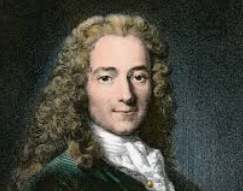
If I had had more time, this letter would have been shorter.
▼
Source
Written by Voltaire in an over-long letter to a friend, quoted to A. P. Martinich in Philosophical Writing: An Introduction, Note to the Second Edition (1996)
3 months 4 weeks ago
A heart without music is like beauty without melancholy.

3 months 4 weeks ago
Mr. Clerselier has written me that you are expecting from him my Meditations... in order to present them to the queen of the land. ...If I had only been as wise as they say the savages persuaded themselves that the monkeys were, I never would have become known as a maker of books: Since it is said that they imagined that the monkeys could indeed speak, if they wanted to, but that they chose not to so lest they be forced to work. And since I had not the same prudence to abstain from writing, I now have neither as much liesure nor as much peace as I would have had if I had kept quiet. But since the mistake has already been made, and since I am now known by an infinity of people at the academy, who look askance at my writings and scour them for means of harming me, I do have great hope of being known to persons of great merit, whose power and virtue could protect me.
▼
Source
Letter to (Nov. 1, 1646) as quoted by , Descartes' Secret Notebook (2005) citing René Descartes: Correspondance avec Elizabeth et autres lettres (1989) ed., Jean-Marie and M. Beysaade, pp. 245-246.
3 months 4 weeks ago
Democracy is, by the nature of it, a self-canceling business; and it gives in the long run a net result of zero.
▼
Source
Ch. 6, Laissez-Faire.
3 months 4 weeks ago
The actor's realm is that of the fleeting.

3 months 4 weeks ago
But as the power of Hellas grew, and the acquisition of wealth became more an objective, the revenues of the states increasing, tyrannies were established almost everywhere...
▼
Source
Book I, 1.13-[1] | See also: Karl Marx, Grundrisse, Introduction p. 7

3 months 4 weeks ago
It is a sad thing when men have neither enough intelligence to speak well, nor enough sense to hold their tongues; this is the root of all impertinence.
▼
Source
18 | Variant translation: | It is a sad thing when men have neither the wit to speak well, nor the judgment to hold their tongues. | As quoted in A Dictionary of Thoughts: being A Cyclopedia of Laconic Quotations from the Best Authors of the World, both A
3 months 4 weeks ago
The more ideas have become automatic, instrumentalized, the less does anybody see in them thoughts with a meaning of their own. They are considered things, machines. Language has been reduced to just another tool in the gigantic apparatus of production in modern society.
▼
Source
pp. 21-22.
3 months 4 weeks ago
And finally remember that nothing harms him who is really a citizen, which does not harm the state; nor yet does anything harm the state which does not harm law [order]; and of these things which are called misfortunes not one harms law. What then does not harm law does not harm either state or citizen.
▼
Source
X, 33
3 months 4 weeks ago
The Devil and Love are but one.
▼
Source
p. 25
3 months 4 weeks ago
In every man sleeps a prophet, and when he wakes there is a little more evil in the world
3 months 4 weeks ago
Much has been said of Mahomet's propagating his Religion by the sword. It is no doubt far nobler what we have to boast of the Christian Religion, that it propagated itself peaceably in the way of preaching and conviction. Yet withal, if we take this for an argument of the truth or falsehood of a religion, there is a radical mistake in it. The sword indeed: but where will you get your sword! Every new opinion, at its starting, is precisely in a minority of one. In one man's head alone, there it dwells as yet. One man alone of the whole world believes it; there is one man against all men. That he take a sword, and try to propagate with that, will do little for him. You must first get your sword! On the whole, a thing will propagate itself as it can. We do not find, of the Christian Religion either, that it always disdained the sword, when once it had got one.
3 months 4 weeks ago
'I'm glad to know he's [Paneloux] better than his sermon.'
3 months 4 weeks ago
I have often before now been convinced that a democracy is incapable of empire...
▼
Source
Book III, 3.37-[1] (Speech of Cleon).
3 months 4 weeks ago
The suffering that animals undergo while being caught and eaten may be intense and the process by which they are killed may last for a quarter of an hour or more. Because the number of predators worldwide is enormous, and because, like us, many of them must eat with considerable frequency, the aggregate amount of suffering in the world at any time that is caused by predation is unimaginably vast.
▼
Source
"[http://jeffersonmcmahan.com/wp-content/uploads/2012/11/The-Moral-Problem-of-Predation.pdf The Moral Problem of Predation]" (2014), p. 10
3 months 4 weeks ago
Soon you'll be ashes or bones. A mere name at most—and even that is just a sound, an echo. The things we want in life are empty, stale, trivial.
▼
Source
V. 33, trans. Gregory Hays
3 months 4 weeks ago
Illusion is the first of all pleasures.
▼
Source
p. 122
3 months 4 weeks ago
Your suffering like your fate is without motive. To suffer, truly to suffer, is to accept the invasion of ills without the excuse of causality, as a favor of demented nature, as a negative miracle...
3 months 4 weeks ago
Paganism we recognized as a veracious expression of the earnest awe-struck feeling of man towards the Universe; veracious, true once, and still not without worth for us. But mark here the difference of Paganism and Christianism; one great difference. Paganism emblemed chiefly the Operations of Nature; the destinies, efforts, combinations, vicissitudes of things and men in this world; Christianism emblemed the Law of Human Duty, the Moral Law of Man. One was for the sensuous nature: a rude helpless utterance of the first Thought of men,—the chief recognized virtue, Courage, Superiority to Fear. The other was not for the sensuous nature, but for the moral. What a progress is here, if in that one respect only—!
3 months 4 weeks ago
In every rebellion is to be found the metaphysical demand for unity, the impossibility of capturing it, and the construction of a substitute universe.
▼
Source
Part 4: Rebellion and Art
3 months 4 weeks ago
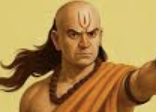
A person should not be too honest. Straight trees are cut first and honest people are screwed first.
3 months 4 weeks ago
Their swaying bodies reflected the agitation of their minds, and they suffered the worst agony of all, ever just within the reach of safety or just on the point of destruction.
▼
Source
Book VII, 7.71-[3] (See also: Fog of war).
3 months 4 weeks ago
You need to know enough of the natural sciences so that you are not a stranger in the world.
3 months 4 weeks ago
Him, who incessantly laughs in the street, you may commonly hear grumbling in his closet.
▼
Source
No. 315
3 months 4 weeks ago
Everything is in a state of metamorphosis. Thou thyself art in everlasting change and in corruption to correspond; so is the whole universe.
▼
Source
Meditations. ix. 19.
3 months 4 weeks ago
Cherish those who seek the truth but beware of those who find it.
▼
Source
"Croyez ceux qui cherchent la vérité, doutez de ceux qui la trouvent; doutez de tout, mais ne doutez pas de vous-même" — André Gide, Ainsi soit-il; ou, Les Jeux sont faits (1952), page 174.
3 months 4 weeks ago
Nothing is indefensible — from the absurdest proposition to the most monstrous crime.

3 months 4 weeks ago
Now I am about to take my last voyage, a great leap in the dark.
▼
Source
Last words
3 months 4 weeks ago
This Burns appeared under every disadvantage: uninstructed, poor, born only to hard manual toil; and writing, when it came to that, in a rustic special dialect, known only to a small province of the country he lived in. Had he written, even what he did write, in the general language of England, I doubt not he had already become universally recognized as being, or capable to be, one of our greatest men.
3 months 4 weeks ago
I think my life is of great importance, but I also think it is meaningless.
▼
Source
Attributed to Camus on social media, this sentence was taken from the Wikipedia article on Camus: "In Le Mythe, dualism becomes a paradox: we value our own lives in spite of our mortality and in spite of the universe's silence. While we can live with a du

3 months 4 weeks ago
If your desires are not great, a little will seem much to you; for small appetite makes poverty equivalent to wealth.
▼
Source
Freeman (1948), p. 170 | Variant: By desiring little, a poor man makes himself rich.

3 months 4 weeks ago
It is a known fact that almost all revolutions have been the work, not of the common people, but of the aristocracy, and especially of the decayed part of the aristocracy.
▼
Source
p. 92.
CivilSimian.com created by AxiomaticPanic, CivilSimian, Kalokagathia