

3 months 3 weeks ago
We suffer: the external world begins to exist . . . ; we suffer to excess: it vanishes. Pain instigates the world only to unmask its unreality.

3 months 3 weeks ago
For there is no such thing as perpetual Tranquility of mind, while we live here; because Life it selfe is but Motion, and can never be without Desire, nor without Feare, no more than without Sense.
▼
Source
The First Part, Chapter 6, p. 29 (See also: Rene Girard)

3 months 3 weeks ago
We shall either learn to know a Hero, a true Governor and Captain, somewhat better, when we see him; or else go on to be forever governed by the Unheroic;—had we ballot-boxes clattering at every street-corner, there were no remedy in these.

3 months 3 weeks ago
Many who have not learned wisdom live wisely, and many who do the basest deeds can make most learned speeches.

3 months 3 weeks ago
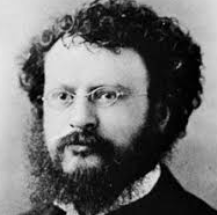
Mechanical reproduction emancipates the work of art from its parasitical dependence on ritual. To an ever greater degree the work of art reproduced becomes the work of art designed for reproducibility. From a photographic negative, for example, one can make any number of prints; to ask for the “authentic” print makes no sense. But the instant the criterion of authenticity ceases to be applicable to artistic production, the total function of art is reversed. Instead of being based on ritual, it begins to be based on another practice – politics.
▼
Source
Das Kunstwerk im Zeitalter seiner Reproduzierbarkeit The Work of Art in the Age of Mechanical Reproduction (1935)
3 months 3 weeks ago
The United States—bounded on the north by the Aurora Borealis, on the south by the precession of the equinoxes, on the east by the primeval chaos, and on the west by the Day of Judgment.
▼
Source
"Bounding the United States", attributed to Fiske in Bartlett's Familiar Quotations, 14th ed. (1968) p. 655, note. However, Fiske was himself quoting: | Among the legends of our late Civil War there is a story of a dinner-party given by the Americans resi
3 months 3 weeks ago
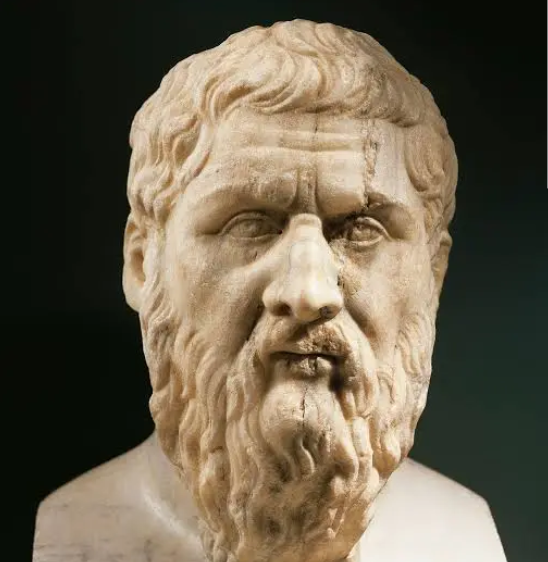
Parmenides: If anyone, with his mind fixed on all these objections and others like them, denies the existence of ideas of things, and does not assume an idea under which each individual thing is classed, he will be quite at a loss, since he denies that the idea of each thing is always the same, and in this way he will utterly destroy the power of carrying on discussion... Then what will become of philosophy? To what can you turn, if these things are unknown?
▼
Source
135b-c
3 months 3 weeks ago
Only optimists commit suicide, the optimists who can no longer be . . . optimists. The others, having no reason to live, why should they have any to die?
3 months 3 weeks ago
For all uniting of strength by private men, is, if for evil intent, unjust; if for intent unknown, dangerous to the Publique, and unjustly concealed.
▼
Source
The Second Part, Chapter 22, p. 122 (See also: Secret society)
3 months 3 weeks ago
The latest Gospel in this world is, Know thy work and do it. 'Know thyself:' long enough has that poor 'self' of thine tormented thee; thou wilt never get to 'know' it, I believe! Think it not thy business, this of knowing thyself; thou art an unknowable individual: know what thou canst work at; and work at it, like a Hercules! That will be thy better plan.
3 months 3 weeks ago
Men achieve tranquillity through moderation in pleasure and through the symmetry of life. Want and superfluity are apt to upset them and to cause great perturbations in the soul. The souls that are rent by violent conflicts are neither stable nor tranquil. One should therefore set his mind upon the things that are within his power, and be content with his opportunities, nor let his memory dwell very long on the envied and admired of men, nor idly sit and dream of them. Rather, he should contemplate the lives of those who suffer hardship, and vividly bring to mind their sufferings, so that your own present situation may appear to you important and to be envied, and so that it may no longer be your portion to suffer torture in your soul by your longing for more. For he who admires those who have, and whom other men deem blest of fortune, and who spends all his time idly dreaming of them, will be forced to be always contriving some new device because of his [insatiable] desire, until he ends by doing some desperate deed forbidden by the laws. And therefore one ought not to desire other men's blessings, and one ought not to envy those who have more, but rather, comparing his life with that of those who fare worse, and laying to heart their sufferings, deem himself blest of fortune in that he lives and fares so much better than they. Holding fast to this saying you will pass your life in greater tranquillity and will avert not a few of the plagues of life—envy and jealousy and bitterness of mind.
3 months 3 weeks ago
As the neurobiological basis of feeling and emotion is unravelled, and the human genome decoded and rewritten, it will become purely an issue of post-human decision whether negative modes of consciousness are generated in any form or texture whatsoever.
▼
Source
"[https://www.paradise-engineering.com/heav2.htm The Hedonistic Imperative: Heaven on Earth]", BLTC Research

3 months 3 weeks ago
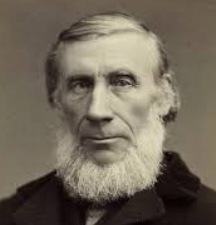
Journalism has become a great god of the period, and gods have a way of ruthlessly and demonically taking over their servitors.
▼
Source
Chapter Two, The Encounter With Nothingness, p. 27
3 months 3 weeks ago
Christian love was not the feeling which long animated the respective followers of Peter and Paul.We who have been born into a settled state of things can hardly realise the commotion out of which this tranquillity has emerged. We have, for example, the canon of Scripture already arranged for us. But to sift and select these writings from the mass of spurious documents afloat at the time of compilation was a work of vast labour, difficulty, and responsibility. The age was rife with forgeries. Even good men lent themselves to these pious frauds, believing that true Christian doctrine, which of course was their doctrine, would be thereby quickened and promoted. There were gospels and counter-gospels; epistles and counter-epistles—some frivolous, some dull, some speculative and romantic, and some so rich and penetrating, so saturated with the Master's spirit, that, though not included in the canon, they enjoyed an authority almost equal to that of the canonical books.
3 months 3 weeks ago
Then we may begin by assuming that there are three classes of men—lovers of wisdom, lovers of honor, lovers of gain?
▼
Source
[https://en.wikisource.org/wiki/The_Republic_of_Plato/Book_9 Jowett translation], p. 284
3 months 3 weeks ago
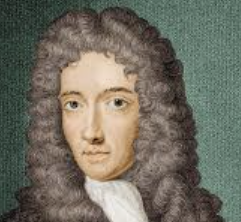
But for my part (Continues Carneades) what my Indignation at this Un-philosophical way of teaching Principles has now extorted from me, is meant chiefly to excuse my self, if I shall hereafter oppose any Particular Opinion or assertion, that some Follower of Paracelsus or any Eminent Artist may pretend not to be his Masters. For, as I told you long since, I am not Oblig'd to examine private mens writings, (which were a Labour as endless as unprofitable) being only engag'd to examine those Opinions about the Tria Prima, which I find those Chymists I have met with to agree in most: And I Doubt not but my Arguments against their Doctrine will be in great part easily enough applicable ev'n to those private Opinions, which they do not so directly and expresly oppose.
3 months 3 weeks ago
The more we try to wrest ourselves from our ego, the deeper we sink into it.
3 months 3 weeks ago
When Hobbes referred to the dire state of human beings in having ‘nasty, brutish and short’ lives, he also pointed, in the same sentence, to the disturbing adversity of being ‘solitary’. Escape from isolation may not only be important for the quality of human life, it can also contribute powerfully to understanding and responding to the other deprivations from which human beings suffer. There is surely a basic strength here which is complementary to the engagement in which theories of justice are involved.
▼
Source
Amartya Sen, The Idea of Justice, 2009; Ch. 18. Justice and the World
3 months 3 weeks ago
The fine arts once divorcing themselves from truth are quite certain to fall mad, if they do not die.
▼
Source
Latter Day Pamphlet, No. 8.
3 months 3 weeks ago
A few centuries from now, if involuntary suffering still exists in the world, the explanation for its persistence won't be that we've run out of computational resources to phase out its biological signature, but rather that rational agents – for reasons unknown – will have chosen to preserve it.
▼
Source
"[https://io9.gizmodo.com/the-radical-plan-to-eliminate-earths-predatory-species-1613342963 The Radical Plan to Phase out Earth's Predatory Species]", io9, 30 Jul. 2014

3 months 3 weeks ago
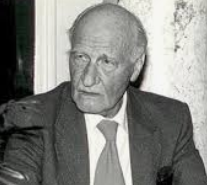
The nationalism I grew up with is a principled standpoint that regards the world as governed best when nations are able to chart their own independent course, cultivating their own traditions and pursuing their own interests without interference. This is opposed to imperialism, which seeks to bring peace and prosperity to the world by uniting mankind, as much as possible, under a single political regime.
3 months 3 weeks ago
Not only the Greeks in general — Aristotle no less than Plato — but the great medieval thinkers as well, all held that there was an element of purely receptive "looking," not only in self-perception but also in intellectual knowing or, as Heraclitus said, "Listening-in to the being of things."The medievals distinguished between the intellect as ratio and the intellect as intellectus. Ratio is the power of discursive thought, of searching and re-searching, abstracting, refining, and concluding [cf. Latin dis-currere, "to run to and fro"], whereas intellectus refers to the ability of "simply looking" (simplex intuitus), to which the truth presents itself as a landscape presents itself to the eye.
▼
Source
p. 11
3 months 3 weeks ago
And now that these unpleasant necessities are candidly written down, it remains to do willing homage to the power and profundity of Plato’s conception. Essentially he is right–is he not?–what this world needs is to be ruled by its wisest men. It is our business to adapt his thought to our own times and today we must take democracy for granted: we cannot limit the suffrage as Plato proposed; but we can put restrictions on the holding of office, and in this way secure that mixture of democracy and aristocracy which Plato seems to have in mind. We may accept without quarrel his contention that statesmen should be as specifically and thoroughly trained as physicians; we might establish departments of political science and administration in our universities; and when these departments have begun to function adequately we might make men ineligible for nomination to political office unless they were graduates of such political schools. We might even make every man eligible for an office who had been trained for it, and thereby eliminate entirely that complex system of nominations in which the corruption of our democracy has its seat; let the electorate choose any man who, properly trained and qualified, announces himself as a candidate. In this way democratic choice would be immeasurably wider than now, when Tweedledum and Tweedledee stage their quadrennial show and sham. Only one amendment would be required to make quite democratic this plan for the restriction of office to graduates in administrative technique; and that would be such equality of educational opportunity as would open to all men and women, irrespective of the means of their parents, the road to university training and political advancement. It would be very simple to have and counties and states offer scholarships to all graduates of grammar school, high school and who had shown. a certain standard’ of ability, and whose parents were financially unable to see them through the next stage of the educational process. That would be a democracy worthy of the name.
▼
Source
Will Durant, The Story of Philosophy: The Lives and Opinions of the World's Greatest Philosophers (1926), reprinted in Simon & Schuster/Pocket Books, 1991.
3 months 3 weeks ago
He revived the atomic hypothesis, and explained chemical combination on the basis of affinity.
3 months 3 weeks ago
“Meeting, after several years, someone we used to know as a child, the first glance almost always suggests that some great disaster must have befallen him” Leopardi, quoted by cioran.
3 months 3 weeks ago
The crop of spiritual talent that is born to you, of human nobleness and intellect and heroic faculty, this is infinitely more important than your crops of cotton or corn, or wine or herrings or whale-oil, which the Newspapers record with such anxiety every season.
3 months 3 weeks ago
It's easy to convince oneself that things can't really be that terrible, that the horror I allude to is being overblown, that what is going on elsewhere in space-time is somehow less real than the here-and-now, or that the good in the world somehow offsets the bad. Yet however vividly one thinks one can imagine what agony, torture or suicidal despair must be like, the reality is inconceivably worse. The force of "inconceivably" is itself largely inconceivable here. Blurry images of Orwell's "Room 101" can barely even hint at what I'm talking about. Even if one's ancestral namesakes [aka "younger self"] underwent great pain, then the state-dependence of memories means that much of pain's sheer dreadfulness is semantically, cognitively and emotionally inaccessible in the here-and-now. So this manifesto's rhapsodies on the incredible joys that do indeed lie ahead tend to belie its underlying seriousness of purpose. For the biological strategy is propounded here in deadly moral earnest.
▼
Source
2.7 [https://www.hedweb.com/hedethic/hedon2.htm#negative Why Be Negative?]

3 months 3 weeks ago
We shall not … begin this logic by definitions, axioms, or principles; we shall begin by observing the lessons which nature gives us.
▼
Source
The Logic of Condillac (trans. Joseph Neef, 1809), "Of the Method of Thinking", p. 3.
3 months 3 weeks ago
Being precedes Truth, and … Truth precedes the Good.
3 months 3 weeks ago
Speech and silence. We feel safer with a madman who talks than with one who cannot open his mouth.
3 months 3 weeks ago
If you find many people who are hard and indifferent to you in a world that you consider to be unhospitable and cruel—as often, indeed, happens to a tender-hearted, stirring young creature—you will also find there are noble hearts who will look kindly on you, and their help will be precious to you beyond price.
3 months 3 weeks ago
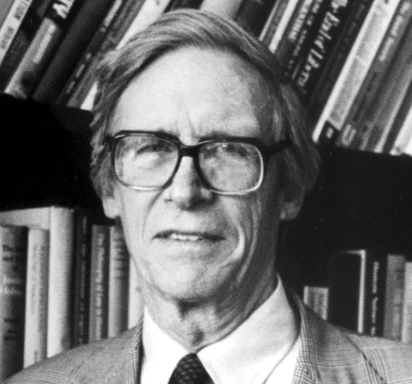
To each according to his threat advantage does not count as a principle of justice.
▼
Source
Chapter III, Section 24, pg. 141
3 months 3 weeks ago
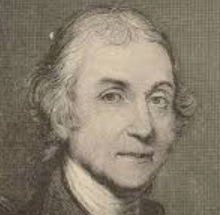
I was led into in consequence of inhabiting a house adjoining to a public brewery, where I at first amused myself with making experiments on the fixed air [carbon dioxide] which I found ready made in the process of fermentation. When I removed from that house I was under the necessity of making the fixed air for myself; and one experiment leading to another, as I have distinctly and faithfully noted in my various publications on the subject, I by degrees contrived a convenient apparatus for the purpose, but of the cheapest kind.
▼
Source
Letter to Dr. Richard Price (Oct. 19, 1771) as quoted in John Towill Rutt, [http://books.google.com/books?id=psMGAAAAQAAJ Life and Correspondence of Joseph Priestley] (1831)
3 months 3 weeks ago
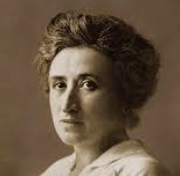
The scene has thoroughly changed. The six weeks' march to Paris has come world drama. Mass murder has become a monotonous task, and yet the final solution is not one step nearer. Capitalist rule is caught in its own trap, and cannot ban the spirit that it has Gone is the first mad delirium. Gone are the patriotic street demonstrations, the chase after suspicious-looking automobiles; the false telegrams, the cholera-poisoned wells. Gone the mad stories of Russian students who hurl bombs from every bridge of Berlin, or French men flying over Nuremberg; gone the excesses of spy-hunting populace, the singing through, the coffee shops with their patriotic songs; gone the violent mobs, ready to denounce, ready to persecute women, ready to whip themselves into a delirious frenzy over every wild rumor; gone the atmosphere of ritual murder, the Kishinev air that left the policeman at the corner as the only remaining representative of human dignity.
▼
Source
Ch.1

3 months 3 weeks ago
And now that I have allowed myself the jest to which in this two-sided life hardly any page can be too serious to grant a place, I part with the book with deep seriousness, in the sure hope that sooner or later it will reach those to whom alone it can be addressed; and for the rest, patiently resigned that the same fate should, in full measure, befall it, that in all ages has, to some extent, befallen all knowledge, and especially the weightiest knowledge of the truth, to which only a brief triumph is allotted between the two long periods in which it is condemned as paradoxical or disparaged as trivial. The former fate is also wont to befall its author. But life is short, and truth works far and lives long: let us speak the truth.
▼
Source
:s:The World as Will and Representation/Preface to the First Edition, last paragraph. | Mostly quoted rather incorrectly as: All truth passes through three stages. First, it is ridiculed. Second, it is violently opposed. Third, it is accepted as being sel
3 months 3 weeks ago
Having destroyed all my connections, burned my bridges, I should feel a certain freedom, and in fact I do. One so intense I am afraid to rejoice in it.
3 months 3 weeks ago
There was the puissant voice of Carlyle; so sorely strained, over-used, and mis-used since, but then fresh, comparatively sound, and reaching our hearts with true, pathetic eloquence. Who can forget the emotion of receiving in its first freshness such a sentence as that sentence of Carlyle upon Edward Irving, then just dead: ‘Scotland sent him forth a herculean man; our mad Babylon wore and wasted him with all her engines,—and it took her twelve years!’
▼
Source
Matthew Arnold, Discourses in America (1885), pp. 142-143
3 months 3 weeks ago
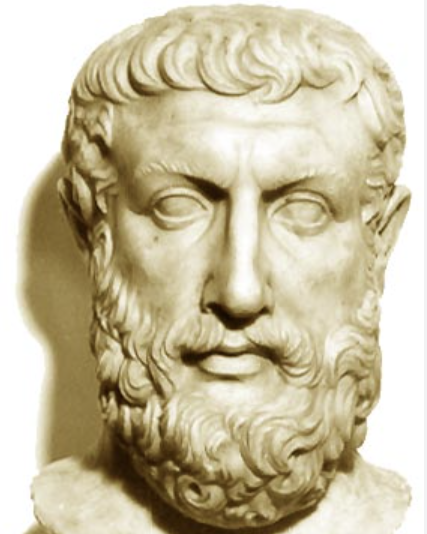
The Greek tradition was a complete contrast to that of the Far East. ...the Greeks placed logic at the pinnacle of human thinking. Their sceptical attitude towards the wielding of 'non-being' as some sort of 'something' that could be subject to logical development was exemplified by Parmenides' influential arguments against the concept of empty space. ...He maintained that you can only speak about what is: what is not cannot be thought of, and what cannot be thought of cannot be. ...more unexpected was the further conclusion that time, motion nor change could exist either.
▼
Source
John D. Barrow, The Book of Nothing (2009) chapter one "Zero—The Whole Story" p. 40
3 months 3 weeks ago
Why then in Britain has secularism become seen to be hostile to religion? Because neutrality is too often assumed to require the bleaching out of all traces of faith, excluding religious belief and discourse from public life. But it doesn't, and we can see why by appeal to the notion of public reason, articulated most clearly by the late political philosopher John Rawls. Rawls was quite clear that the religious have no obligation at all to keep their faith entirely to themselves. "Reasonable comprehensive doctrines, religious or non-religious, may be introduced in public political discussion at any time," he wrote, "provided that in due course proper political reasons – and not reasons given solely by comprehensive doctrines – are presented that are sufficient to support whatever the comprehensive doctrines are said to support."
▼
Source
Julian Baggini, in [http://www.guardian.co.uk/world/2012/feb/14/is-religion-really-under-threat?INTCMP=SRCH "Is religion really under threat?" in The Guardian (14 February 2012)]
3 months 3 weeks ago
As I conceive this doctrine to be a gross misrepresentation of the character and moral government of God, and to affect many other articles in the scheme of Christianity, greatly disfiguring and depraving it; I shall show, in a fuller manner than I mean to do with respect to any other corruption of Christianity, that it has no countenance whatever in reason, or the Scriptures; and, therefore, that the whole doctrine of atonement, with every modification of it, has been a departure from the primitive and genuine doctrine of Christianity.
▼
Source
On conventional doctrines of Jesus Christ's atonement for sins, in Part II : Opinions Relating to the Doctrine of Atonement, Introduction
3 months 3 weeks ago
Rarely was heard on her lips the phrase, “I cannot”; more frequently were heard the words, “I must.”
▼
Source
Clara Zetkin, as quoted in [https://www.marxists.org/archive/zetkin/1919/09/rosa.htm Rosa Luxemburg], marxists.org, September 1919.
3 months 3 weeks ago
The view of things [called Pantheism] … — that all plurality is only apparent, that in the endless series of individuals, passing simultaneously and successively into and out of life, generation after generation, age after age, there is but one and the same entity really existing, which is present and identical in all alike; — this theory … may be carried back to the remotest antiquity. It is the alpha and omega of the oldest book in the world, the sacred Vedas, whose dogmatic part, or rather esoteric teaching, is found in the Upanishads. There, in almost every page this profound doctrine lies enshrined; with tireless repetition, in countless adaptations, by many varied parables and similes it is expounded and inculcated. That such was, moreover, the fount whence Pythagoras drew his wisdom, cannot be doubted … That it formed practically the central point in the whole philosophy of the Eleatic School, is likewise a familiar fact. Later on, the New Platonists were steeped in the same … In the ninth century we find it unexpectedly appearing in Europe. It kindles the spirit of no less a divine than Johannes Scotus Erigena, who endeavours to clothe it with the forms and terminology of the Christian religion. Among the Mohammedans we detect it again in the rapt mysticism of the Sufi. In the West Giordano Bruno cannot resist the impulse to utter it aloud; but his reward is a death of shame and torture. And at the same time we find the Christian Mystics losing themselves in it, against their own will and intention, whenever and wherever we read of them! Spinoza's name is identified with it.
▼
Source
Part IV, Ch. 2, [https://archive.org/stream/basisofmorality00schoiala#page/269/mode/2up pp. 269]-272
3 months 3 weeks ago
Everything turns on pain; the rest is accessory, even nonexistent, for we remember only what hurts. Painful sensations being the only real ones, it is virtually useless to experience others.
3 months 3 weeks ago
Liberty he attached less importance to than economic security: in that a true man of the people. "Liberty, I am told, is a divine thing. Liberty, when it becomes the 'Liberty to die by starvation' is not so divine." It is here that Carlyle links up with the socialist trend of thought in his age.
▼
Source
A. L. Rowse, ‘Carlyle's Past and Present’, The English Spirit: Essays in History and Literature (1944), p. 227
3 months 3 weeks ago
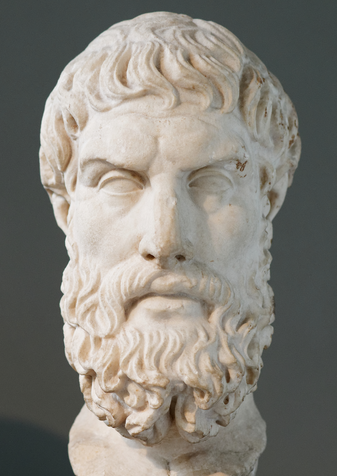
A prudent man, in order to secure his tranquility, will consult his natural disposition in the choice of his plan of life. If, for example, he be persuaded that he should be happier in a state of marriage than in celibacy, he ought to marry; but if he be convinced that matrimony would be an impediment to his happiness, he ought to remain single.
3 months 3 weeks ago
The appearances of multiplicity and motion, empty space and time, are illusions.
3 months 3 weeks ago
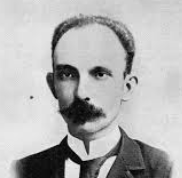
This is the age in which hills can look down upon the mountains.
▼
Source
A Morir [To Die]
3 months 3 weeks ago
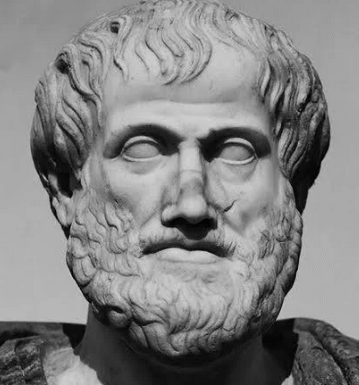
Knowledge of the fact differs from knowledge of the reason for the fact.
▼
Source
I.13, 78a.22

3 months 3 weeks ago
Everything turns on mastering the gap between the presupposition (that must be rejected) of a being of the one and the thesis of its 'there is'.
▼
Source
Meditation One: The One and the Multiple: a priori conditions of any possible ontology
3 months 3 weeks ago
Wealth is like sea-water; the more we drink, the thirstier we become.
▼
Source
E. Payne, trans. (1974) Vol. 1, p. 347
CivilSimian.com created by AxiomaticPanic, CivilSimian, Kalokagathia