
3 months 3 weeks ago
This procedure is the demonstration by recurrence. We first establish a theorem for n = 1; then we show that if it is true of n - 1, it is true of n, and thence conclude that it is true for all the whole numbers. ..Here then we have the mathematical reasoning par excellence, and we must examine it more closely....The essential characteristic of reasoning by recurrence is that it contains, condensed, so to speak, in a single formula, an infinity of syllogisms....to arrive at the smallest theorem [we] can not dispense with the aid of reasoning by recurrence, for this is an instrument which enables us to pass from the finite to the infinite.This instrument is always useful, for, allowing us to overleap at a bound as many stages as we wish, it spares us verifications, long, irksome and monotonous, which would quickly become impracticable. But it becomes indispensable as soon as we aim at the general theorem...In this domain of arithmetic,.. the mathematical infinite already plays a preponderant rôle, and without it there would be no science, because there would be nothing general.
▼
Source
Ch. I. (1905) Tr. George Bruce Halstead
3 months 3 weeks ago
There must have been many who had a relationship to Jesus similar to that of Barabbas (his name was Jesus Barrabas). The Danish "Barrabas" is about the same as "N.N." [Mr. X or John Doe], filius patris, his father's son. — It is too bad, however, that we do not know anything more about Barrabas; it seems to me that in many ways he could have become a counterpart to the Wandering Jew. The rest of his life must have taken a singular turn. God knows whether or not he became a Christian. — It would be a poetic motif to have him, gripped by Christ's divine power, step forward and witness for him.
▼
Source
Journals IIA 346 (1 February 1839)

3 months 3 weeks ago
The supreme Being is everywhere; but He is not equally visible everywhere. Let us seek Him in the simplest things, in the most fundamental laws of Nature, in the universal rules by which movement is conserved, distributed or destroyed; and let us not seek Him in phenomena that are merely complex consequences of these laws.
3 months 3 weeks ago
Literary people of the opposite sex do not really love each other. All they really desire is to read their manuscript aloud to a receptive listener.
▼
Source
p. 11

3 months 3 weeks ago
The higher culture of the West—whose moral, aesthetic, and intellectual values industrial society still professes—was a pre-technological culture in a functional as well as chronological sense. Its validity was derived from the experience of a world which no longer exists and which cannot be recaptured because it is in a strict sense invalidated by technological society. Moreover, it remained to a large degree a feudal culture, even when the bourgeois period gave it some of its most lasting formulations. It was feudal not only because of its confinement to privileged minorities, not only because of its inherent romantic element (which will be discussed presently), but also because its authentic works expressed a conscious, methodical alienation from the entire sphere of business and industry, and from its calculable and profitable order.
▼
Source
p. 58
3 months 3 weeks ago
This first non-evaluative insight into history does not inevitably lead to relativism, but rather to relationism. Knowledge, as seen in the light of the total conception of ideology, is by no means an illusory experience, for ideology in its relational concept is not at all identical with illusion. Knowledge arising out of our experience in actual life situations, though not absolute, is knowledge none the less. The norms arising out of such actual life situations do not exist in a social vacuum, but are effective as real sanctions for conduct. Relationism signifies merely that all of the elements of meaning in a given situation have reference to one another and derive their significance from this reciprocal interrelationship in a given frame of thought. Such a system of meanings is possible and valid only in a given type of historical existence, to which, for a time, it furnishes appropriate expression. When the social situation changes, the system of norms to which it had previously given birth ceases to be in harmony with it. The same estrangement goes on with reference to knowledge and to the historical perspective. All knowledge is oriented toward some object and is influenced in its approach by the nature of the object with which it is pre-occupied. But the mode of approach to the object to be known is dependent upon the nature of the knower.
3 months 3 weeks ago
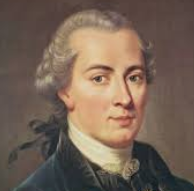
Moral Teleology supplies the deficiency in physical Teleology, and first establishes a Theology; because the latter, if it did not borrow from the former without being observed, but were to proceed consistently, could only found a Demonology, which is incapable of any definite concept.
▼
Source
Immanuel Kant, [http://books.google.com/books?id=fjzXAAAAMAAJ& Kant's Critique of Judgment] (1892) Tr. J.H. Bernard
3 months 3 weeks ago
Mathematics have a triple aim. They must furnish an instrument for the study of nature. But that is not all: they have a philosophic aim and, I dare maintain, an esthetic aim. They must aid the philosopher to fathom the notions of number, of space, of time. And above all, their adepts find therein delights analogous to those given by painting and music. They admire the delicate harmony of numbers and forms; they marvel when a new discovery opens to them an unexpected perspective; and has not the joy they thus feel the esthetic character, even though the senses take no part therein? Only a privileged few are called to enjoy it fully, it is true, but is not this the case for all the noblest arts?This is why I do not hesitate to say that mathematics deserve to be cultivated for their own sake, and the theories inapplicable to physics as well as the others. Even if the physical aim and the esthetic aim were not united, we ought not to sacrifice either.
▼
Source
Ch. 5: Analysis and Physics
3 months 3 weeks ago
The world is rejuvenated, but as Heine so wittily remarked, it was rejuvenated by romanticism to such a degree that it became a baby again.
▼
Source
p. 304
3 months 3 weeks ago
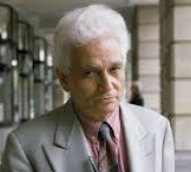
Circumcision, that’s all I’ve ever talked about.
▼
Source
"Circumfession." In Jacques Derrida, eds. G. Bennington & J. Derrida, trans. G. Bennington. Chicago: University of Chicago Press, 1993, p. 70
3 months 3 weeks ago
Sometimes we need bread, sometimes wine, sometimes a tonic or a hormone injection, sometimes the stimulation of a colour, sometimes the magic of a sound which goes in at our ears as a vibration and reaches our brains in the form of inspiration. ...There is something through which material and spiritual energy hold together and are complementary. ...There must be a single energy operating in the world. ...The 'soul' must be ...a focal point of transformation ...Forces of bodies converge, to become interiorised and sublimated in beauty and truth. ...Yet, ...direct transformation of one of these two energies into the other... has to be abandoned. As... we try to couple them... their mutual independence becomes as clear as their interrelation.
3 months 3 weeks ago
Do not dump your woes upon people — keep the sad story of your life to yourself. Troubles grow by recounting them.
▼
Source
p. 156
3 months 3 weeks ago
Functional communication is only the outer layer of the one- dimensional universe in which man is trained to target—to translate the negative into the positive so that he can continue to function, reduced but fit and reasonably well. The institutions of free speech and freedom of thought do not hamper the mental coordination with the established reality. What is taking place is a sweeping redefinition of thought itself, of its function and content. The coordination of the individual with his society reaches into those layers of the mind where the very concepts are elaborated which are designed to comprehend the established reality. These concepts are taken from the intellectual tradition and translated into operational terms—a translation which has the effect of reducing the tension between thought and reality by weakening the negative power of thought.
▼
Source
p. 104
3 months 3 weeks ago
Space is employed as the type even of the concept of time itself, representing it by a line, and its limits — moments — by points. Time, on the other had, approaches more to a universal and rational concept, comprising under its relations all things whatsoever, to wit, space itself, and besides, those accidents which are not comprehended in the relations of space, such as the thoughts of the soul. Again, time, besides this, though it certainly does not dictate the laws of reason, yet constitutes the principal conditions tinder favor of which the mind compares its notions according to the laws of reason. Thus, I cannot judge what is impossible except by predicating a and not-a of the same subject at the same time.
3 months 3 weeks ago
When one merely states that one has many subscribers and keeps on saying it, then one gets many; just as when one sheep goes to water, the next one also goes, and when it is continually said of a large flock of sheep that they go hither and yon to water, then the rest must also go, so people believe that it must be the demand of the times, that for the sake of use and custom – they must also subscribe.
▼
Source
Søren Kierkegaard, Writing Sampler, Nichol P. 89-90
3 months 3 weeks ago
Confined within this catch-all concept, within this vast encampment of the animal, in this general singular, within the strict enclosure of this definite article (“the Animal” and not “animals”), as in a virgin forest, a zoo, a hunting or fishing ground, a paddock or an abattoir, a space of domestication, are all the living things that man does not recognize as his fellows, his neighbors, or his brothers.
3 months 3 weeks ago
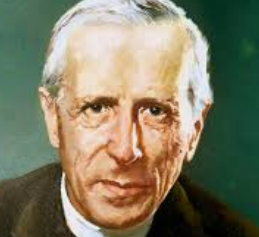
The astonishing resonance of his research, as well as the brilliance of his personality and richness of his thinking, have profoundly marked our epoch. In him, a powerful poetic intuition of nature's profound value, a sharp perception of creation's dynanism, and a broad vision of the world's future join together with an incontestable religious fervor. Similarly, his unremitting desire to dialogue with the science of his time and his bold optimism about the evolution of the world have given his intuitions — through the rich variety of his words and the magic of his images — considerable influence. Completely turned to the future, this synthesis, often lyrical and animated with passion for the universal, will help to restore hope to those assailed by doubts. ... What our contemporaries will undoubtedly remember, beyond the difficulties of conception and deficiencies of expression in this audacious attempt to reach a synthesis, is the testimomy of the coherent life of a man possessed by Christ in the depths of his soul. He was concerned with honoring both faith and reason, and anticipated the response to John Paul II's appeal: "Be not afraid, open, open wide to Christ the doors of the immense domains of culture, civilization, and progress."
▼
Source
Cardinal Agostino Casaroli, in [http://www.traditioninaction.org/ProgressivistDoc/A_020_CasaroliTeilhard.htm "Cardinal Agostino Casaroli praises the work of Fr. Teilhard de Chardin" in L'Osservatore Romano (10 June 1981)]
3 months 3 weeks ago
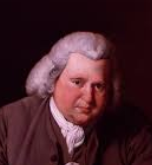
The Pʀᴏᴛᴇᴜs-ʟᴏᴠᴇʀ woos his playful bride,To win the fair he tries a thousand forms, Basks on the sands, or gambols in the storms.A Dolphin now, his scaly sides he laves,And bears the sportive damsel on the waves;She strikes the cymbal as he moves along,And wondering Ocean listens to the song.—And now a spotted Pard the lover stalks,Plays round her steps, and guards her favour’d walks;As with white teeth he prints her hand, caress’d, And lays his velvet paw upon her breast,O’er his round face her snowy fingers strainThe silken knots, and fit the ribbon-rein.—And now a Swan, he spreads his plumy sails,And proudly glides before the fanning gales;Pleas’d on the flowery brink with graceful handShe waves her floating lover to the land;Bright shines his sinuous neck, with crimson beakHe prints fond kisses on her glowing cheek,Spreads his broad wings, elates his ebon crest,And clasps the beauty to his downy breast.
▼
Source
[The Proteus-lover], The Botanic Garden (1791), Part ii, Canto iv, ll. 363-86.
3 months 3 weeks ago
Repression invades the academic enterprise itself, even prior to all restrictions on academic freedom. The pre-empting of the mind vitiates impartiality and objectivity: unless the student learns to think in the opposite direction, he will be inclined to place the facts into the predominant framework of values. Scholarship, i.e., the acquisition and communication of knowledge, prohibits the purification and isolation of facts from the context of the whole truth. An essential part of the latter is recognition of the frightening extent to which history is made and recorded by and for the victors, that is, the extent to which history was the development of oppression. And this oppression is in the facts themselves which it establishes; thus they themselves carry a negative value as part and aspect of their facticity. To treat the great crusades against humanity (like that against the Albigensians) with the same impartiality as the desperate struggles for humanity means neutralizing their opposite historical function, reconciling the executioners with their victims, distorting the record. Such spurious neutrality serves to reproduce acceptance of the dominion of the victors in the consciousness of man.
3 months 3 weeks ago
The master is himself an animal, and needs a master. Let him begin it as he will, it is not to be seen how he can procure a magistracy which can maintain public justice and which is itself just, whether it be a single person or a group of several elected persons. For each of them will always abuse his freedom if he has none above him to exercise force in accord with the laws. The highest master should be just in himself, and yet a man. This task is therefore the hardest of all; indeed, its complete solution is impossible, for from such crooked wood as man is made of, nothing perfectly straight can be built. That it is the last problem to be solved follows also from this: it requires that there be a correct conception of a possible constitution, great experience gained in many paths of life, and — far beyond these — a good will ready to accept such a constitution. Three such things are very hard, and if they are ever to be found together, it will be very late and after many vain attempts.
▼
Source
Sixth Thesis | Variant translations: | Out of the crooked timber of humanity, no straight thing was ever made. | Out of timber so crooked as that from which man is made nothing entirely straight can be built. | From such crooked wood as that which man is
3 months 3 weeks ago
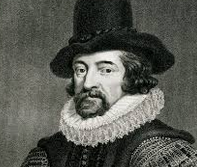
Nay, number (itself) in armies, importeth not much, where the people is of weak courage; for (as Virgil saith) it never troubles the wolf how many the sheep be.
▼
Source
Essays or Counsels Civil and Moral (1597), XXIX: "Of the True Greatness of Kingdoms and Estates."
3 months 3 weeks ago
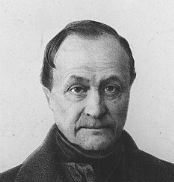
The errors of Communism must be rectified; but there is no necessity for giving up the name, which is a simple assertion of the paramount importance of Social Feeling. However, now that we have happily passed from monarchy to republicanism, the name of Communist is no longer indispensable; the word Republican expresses the meaning as well, and without the same danger. Positivism, then, has nothing to fear from Communism; on the contrary, it will probably be accepted by most Communists among the working classes, especially in France where abstractions have but little influence on minds thoroughly emancipated from theology. The people will gradually find that the solution of the great social problem which Positivism offers is better than the Communistic solution.
▼
Source
p. 169
3 months 3 weeks ago
No politics has been able, no politics is able, no worldliness has been able, no worldliness has been able to think through or to actualize to the ultimate consequences this idea: human-equality, human likeness [Menneske-Lighed]. To achieve perfect equality in the medium of world-likeness [Verds-Lighed], that is, in the medium that by nature is dissimilarity, and to achieve it in a world-like [verds-ligt], that is, differentiating way, is eternally, impossible, as one can see by the categories. If perfect equality, likeness, should be achieved, then worldliness would have to be completely eradicated, and when perfect equality, likeness, is achieved worldliness ceases to be. But is it not, then, like an obsession, that worldliness has gotten the idea of wanting to force perfect equality, likeness, and to force it in a worldly way – in worldliness, world-likeness! Ultimately only the essentially religious can with the help of eternity effect human equality [Menneske-Lighed], the godly, the essential, the not-worldly, the true, the only true possible human equality; and this is also why – be it said to tis glorification – the essentially religious is the true humanity [Menneskelighed].
▼
Source
The Point of View On My Work As An Author by Soren Kierkegaard (finished 1848) published by Peter Christian Kierkegaard 1859 translated by Howard and Edna Hong 1998 Princeton University Press P. 104 (Two “Notes” Concerning My Work As An Author by S. Kierk
3 months 3 weeks ago
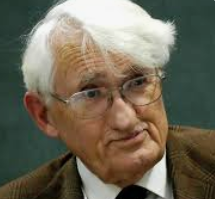
All affected can accept the consequences and the side effects that [the norm's] general observance can be anticipated to have for the satisfaction of everyone's interests, and the consequences are preferred to those of known alternative possibilities for regulation.
▼
Source
p. 65
3 months 3 weeks ago
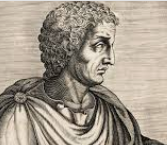
The depth of darkness into which you can descend, and still live, is an exact measure, I believe, of the height to which you can aspire to reach.
▼
Source
Alan McGlashan, as cited in The Night of the New Moon by Laurens van der Post

3 months 3 weeks ago
The Quaestor turned back the pages until he found himself among the Pensées. “We are not satisfied,” he read, “with the life we have in ourselves and our own being; we want to live an imaginary life in other people’s idea of us. Hence all our efforts are directed to seeming what we are not. We labor incessantly to preserve and embellish this imaginary being, and neglect that which is really ours.” The Quaestor put down the book, ... and ruefully reflected that all his own troubles had arisen from this desire to seem what in fact he was not. To seem a man of action, when in fact he was a contemplative; to seem a politician, when nature had made him an introspective psychologist; to seem a wit, which God had intended him for a sage.
▼
Source
“Variations on a Philosopher” in Themes and Variations (1943), p. 2
3 months 3 weeks ago
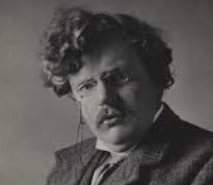
There is one creed: 'neath no world-terror's wing Apples forget to grow on apple-trees.
▼
Source
Ecclesiastes, st. 1. The Wild Knight, &c., 2nd ed. (1906)
3 months 3 weeks ago
Brutes are merely brutal; men and women are capable of being devils and lunatics. They are no less capable of being fully human-even, occasionally, of being a bit more than fully human, of being saints, heroes and geniuses.
▼
Source
Introduction to You Are Not The Target by Laura Archera Huxley (1963)
3 months 3 weeks ago
Among the rich you will never find a really generous man even by accident. They may give their money away, but they will never give themselves away; they are egotistic, secretive, dry as old bones. To be smart enough to get all that money you must be dull enough to want it.
▼
Source
A Miscellany of Men (1912)
3 months 3 weeks ago
Two things fill the mind with ever new and increasing admiration and awe, the oftener and the more steadily we reflect on them: the starry heavens above and the moral law within. I have not to search for them and conjecture them as though they were veiled in darkness or were in the transcendent region beyond my horizon; I see them before me and connect them directly with the consciousness of my existence. The former begins from the place I occupy in the external world of sense, and enlarges my connection therein to an unbounded extent with worlds upon worlds and systems of systems, and moreover into limitless times of their periodic motion, its beginning and continuance. The second begins from my invisible self, my personality, and exhibits me in a world which has true infinity, but which is traceable only by the understanding, and with which I discern that I am not in a merely contingent but in a universal and necessary connection, as I am also thereby with all those visible worlds. The former view of a countless multitude of worlds annihilates as it were my importance as an animal creature, which after it has been for a short time provided with vital power, one knows not how, must again give back the matter of which it was formed to the planet it inhabits (a mere speck in the universe). The second, on the contrary, infinitely elevates my worth as an intelligence by my personality, in which the moral law reveals to me a life independent of animality and even of the whole sensible world, at least so far as may be inferred from the destination assigned to my existence by this law, a destination not restricted to conditions and limits of this life, but reaching into the infinite.
▼
Source
Translated by Thomas Kingsmill Abbott
3 months 3 weeks ago
As we divided natural philosophy in general into the inquiry of causes, and productions of effects: so that part which concerneth the inquiry of causes we do subdivide according to the received and sound division of causes. The one part, which is physic, inquireth and handleth the material and efficient causes; and the other, which is metaphysic, handleth the formal and final causes.
▼
Source
Book VII, 3
3 months 3 weeks ago
The next thing you can learn from the woman who was a sinner, something she herself understood, is that with regard to finding forgiveness she is able to do nothing at all. P. 155
3 months 3 weeks ago
A true initiation never ends.
▼
Source
Masks of the Illuminati (1981), p. 257
3 months 3 weeks ago
Lord Edward was not listening to his assistant. He had taken his pipe out of his mouth, he had lifted his head and at the same time slightly cocked it on one side. He was frowning, as though making an effort to seize and remember something. He raised his hand in a gesture that commanded silence; Illidge interrupted himself in the middle of his sentence and also listened. A pattern of melody faintly traced itself upon the silence...Pongileoni's bowing and the scraping of the anonymous fiddlers had shaken the air in the great hall, had set the glass of the windows looking onto it vibrating: and thus in turn had shaken the air in Lord Edward's apartment on the further side. The shaking air rattled Lord Edward's membrane tympani; the interlocked malleus, incus, and stirrup bones were set in motion so as to agitate the membrane of the oval window and raise an infinitesimal storm in the fluid of the labyrinth. The hairy endings of the auditory nerve shuddered like weeds in a rough sea; a vast number of obscure miracles were performed in the brain, and Lord Edwards ecstatically whispered "Bach!" He smiled with pleasure, his eyes lit up. The young girl was singing to herself in solitude under the floating clouds. And then the cloud-solitary philosopher began poetically to meditate. "We must really go downstairs and listen," said Lord Edward. He got up, "Come," he said. "Work can wait. One doesn't hear this sort of thing every night."
▼
Source
Ch. 3
3 months 3 weeks ago
The cause which is blocking all progress today is the subtle scepticism which whispers in a million ears that things are not good enough to be worth improving. If the world is good we are revolutionaries, if the world is evil we must be conservatives. These essays, futile as they are considered as serious literature, are yet ethically sincere, since they seek to remind men that things must be loved first and improved afterwards.
▼
Source
"In Defence of a New Edition" — Preface to the second edition (1902)
3 months 3 weeks ago
The only satisfied rationalists today are blinkered scientists or Marxists.
▼
Source
Ch. 7, p. 113
3 months 3 weeks ago
Nature made women mature early and had them demand gentle and polite treatment from men, so that they would find themselves imperceptibly fettered by a child due to their own magnanimity; and they would find themselves brought, if not quite to morality itself, then at least to that which cloaks it, moral behavior, which is the preparation and introduction to morality.
▼
Source
Kant, Immanuel (1996), pages 219-220
3 months 3 weeks ago
The beginning is from God: for the business which is in hand, having the character of good so strongly impressed upon it, appears manifestly to proceed from God, who is the author of good, and the Father of Lights. Now in divine operations even the smallest beginnings lead of a certainty to their end. And as it was said of spiritual things, "The kingdom of God cometh not with observation," so is it in all the greater works of Divine Providence; everything glides on smoothly and noiselessly, and the work is fairly going on "before men are aware that it has begun. Nor should the prophecy of Daniel be forgotten, touching the last ages of the world: —"Many shall go to and fro, and knowledge shall be increased;" clearly intimating that the thorough passage of the world (which now by so many distant voyages seems to be accomplished, or in course of accomplishment), and the advancement of the sciences, are destined by fate, that is, by Divine Providence, to meet in the same age.
▼
Source
Aphorism 93
3 months 3 weeks ago
When Christianity came into the world the task was simply to proclaim Christianity. The same is the case wherever Christianity is introduced into a country the religion of which is not Christianity.
3 months 3 weeks ago
ONLY THE MADMAN IS ABSOLUTELY SURE.
▼
Source
Part I : The Eye in the Pyramid p. 176 of 1988 edition
3 months 3 weeks ago
At the core of the Perennial Philosophy we find four fundamental doctrines.First: the phenomenal world of matter and of individualized consciousness — the world of things and animals and men and even gods — is the manifestation of a Divine Ground within which all partial realities have their being, and apart from which they would be non-existent.Second: human beings are capable not merely of knowing about the Divine Ground by inference; they can also realize its existence by a direct intuition, superior to discursive reasoning. This immediate knowledge unites the knower with that which is known.Third: man possesses a double nature, a phenomenal ego and an eternal Self, which is the inner man, the spirit, the spark of divinity within the soul. It is possible for a man, if he so desires, to identify himself with the spirit and therefore with the Divine Ground, which is of the same or like nature with the spirit.Fourth: man's life on earth has only one end and purpose: to identify himself with his eternal Self and so to come to unitive knowledge of the Divine Ground.
3 months 3 weeks ago
Much of our modern difficulty, in religion and other things, arises merely from this: that we confuse the word "indefinable" with the word "vague." If some one speaks of a spiritual fact as "indefinable" we promptly picture something misty, a cloud with indeterminate edges. But this is an error even in commonplace logic. The thing that cannot be defined is the first thing; the primary fact. It is our arms and legs, our pots and pans, that are indefinable. The indefinable is the indisputable. The man next door is indefinable, because he is too actual to be defined. And there are some to whom spiritual things have the same fierce and practical proximity; some to whom God is too actual to be defined.
▼
Source
Ch 1: "The Dickens Period"
3 months 3 weeks ago
I was shocked many years ago when a physicist said to me that Kant was the greatest astrophysicist in a hundred-year period. And I asked “Why do you say that? You talk about Kant-Lagrange hypothesis?” He said “No, that was only a hypothesis. Kant showed by a very eloquent geometrical argument that we live near the edge of landscape galaxy in the center of the sphere that resembles Andromeda nebula”. I never heard of that, no philosopher told me that, no historian of philosophy told me that, an astronomer told me that! It was Steven Weinberg; he then said that Kant was the only astrophysicist in about a hundred years who believed that star clustering could be accounted for by gravitation alone.
▼
Source
Hilary Putnam, in [https://www.hardproblem.ru/en/posts/interviews/interview-with-hilary-putnam/ interview] with Vadim Vasilyev and Dmitry Volkov (April 21, 2010)
3 months 3 weeks ago
Choose the best life; for habit will make it pleasant.
▼
Source
Epictetus, Fragment 144

3 months 3 weeks ago
As for our celebrated lawgivers, who have cast us in our present awkward mold, you may be sure that they have acted to serve their interests and not ours. Witness all our political, civil, and religious institutions — examine them thoroughly: unless I am very much mistaken, you will see how, through the ages, the human race has been broken to the halter that a handful of rascals were itching to impose. Watch out for the fellow who talks about putting things in order! Putting things in order always means getting other people under your control.
▼
Source
"Supplement to Bougainville's Voyage" (1796) | Variant translation: | Never allow yourselves to forget that it is for their own sakes and not for yours that all those wise lawgivers have forced you into your present unnatural and rigid molds. And as evide

3 months 3 weeks ago
If we compare. e.g. the systems of classical mathematics and of intuitionistic mathematics, we find that the first is much simpler and technically more efficient, while the second is more safe from surprising occurences, e.g. contradictions. At the present time, any estimation of the degree of safety of the system of classical mathematics, in other words, the degree of plausibility of its principles, is rather subjective. The majority of mathematicians seem to regard this degree as sufficiently high for all practical purposes and therefore prefer the application of classical mathematics to that of intuitionistic mathematics. The latter has not, so far as I know, been seriously applied in physics by anybody.
▼
Source
Rudolf Carnap (1939; 51), as cited in: Paul van Ulsen. [http://www.illc.uva.nl/Research/Publications/Inaugurals/IV-10-Arend-Heyting.text.pdf Wetenschapsfilosofie], 6 november 2017.
3 months 3 weeks ago
I was looking at my furniture, not as the utilitarian who has to sit on chairs, to write at desks and tables, and not as the cameraman or scientific recorder, but as the pure aesthete whose concern is only with forms and their relationships within the field of vision or the picture space. But as I looked, this purely aesthetic, Cubist's-eye view gave place to what I can only describe as the sacramental vision of reality. I was back where I had been when I was looking at the flowers—back in a world where everything shone with the Inner Light, and was infinite in its significance.
▼
Source
describing his experiment with mescaline, p. 22
3 months 3 weeks ago
The Puritan is only strong enough to stiffen; the Catholic is strong enough to relax.
▼
Source
"The Critic"
3 months 3 weeks ago
The purpose of an encyclopedia is to collect knowledge disseminated around the globe; to set forth its general system to the men with whom we live, and transmit it to those who will come after us, so that the work of preceding centuries will not become useless to the centuries to come; and so that our offspring, becoming better instructed, will at the same time become more virtuous and happy, and that we should not die without having rendered a service to the human race in the future years to come
▼
Source
Encyclopédie (Diderot 1755 pp 365 - 48A)

3 months 3 weeks ago
At the end of the Middle Ages, leprosy disappeared from the Western world. In the margins of the community, at the gates of cities, there stretched wastelands which sickness had ceased to haunt but had left sterile and long uninhabitable. For centuries, these reaches would belong to the non-human. From the fourteenth to the seventeenth century, they would wait, soliciting with strange incantations a new incarnation of disease, another grimace of terror, renewed rites of purification and exclusion.
▼
Source
Part One: 1. Stultifera Navis
CivilSimian.com created by AxiomaticPanic, CivilSimian, Kalokagathia