

3 months 3 weeks ago
The true work of God is all good, since it is existence.
▼
Source
Ch.10

3 months 3 weeks ago
Obey the voice at eve obeyed at prime.
▼
Source
Terminus
3 months 3 weeks ago
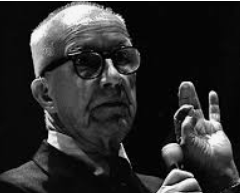
Quite clearly, our task is predominantly metaphysical, for it is how to get all of humanity to educate itself swiftly enough to generate spontaneous social behaviors that will avoid extinction.
3 months 3 weeks ago
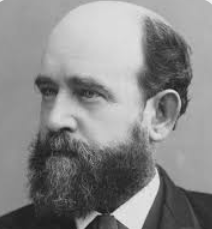
We have tested, in matters where ordinary intelligence and knowledge are competent to judge, the logical methods and intellectual honesty of the foremost of those who in the name of science eliminate God and degrade man, taking from human life its highest dignity and deepest hope. Now, if in simple matters we find such confusion, such credulity, such violation of every canon of sound reasoning as we have found here, shall we blindly trust in deeper matters — in those matters which always have and always must perplex the intellect of man? Let us rather, as I said in the beginning, not too much underrate our own powers in what is concerned with common facts and general relations. While we may not be scientists or philosophers we too are men. And as to things which the telescope cannot resolve, nor the microscope reveal, nor the spectrum analysis throw light on, nor the tests of the chemist discover, it is as irrational to accept blindly the dictum of those who say, "Thus saith science!" as it is in things that are the proper field of the natural sciences to bow before the dictum of those who say, "Thus saith religion!"
▼
Source
Conclusion : The Moral of this Examination
3 months 3 weeks ago
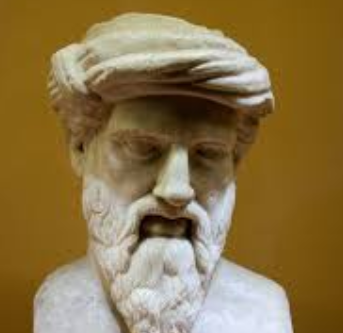
Do not even think of doing what ought not to be done.
▼
Source
"Pythagorean Ethical Sentences From Stobæus" (1904)
3 months 3 weeks ago
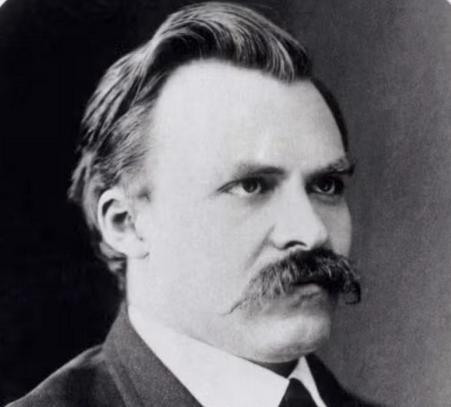
They muddy the waters to make them look deep.
▼
Source
A [https://www.google.com/search?q=%22they+muddy+the+waters+to+make%22+%22deep%22&udm=36&tbs=cdr%3A1%2Ccd_min%3A1800%2Ccd_max%3A2005 google books search with dates restricted to 1800-2005] finds only three sources, the earliest one being [https://www.goog
3 months 3 weeks ago
According to each one of the different theories there are things which are impossible, whose existence cannot be admitted, and whose creation is excluded from the power of God, and the assumption that God does not change their nature does not imply weakness in God, or a limit to his power. Consequently things impossible remain impossible, and do not depend on the action of an agent. It is now clear that a difference of opinion exists only as to the question to which of the two classes anything belongs; whether to the class of the impossible, or to that of the possible. Note it.
▼
Source
Ch.15
3 months 3 weeks ago
The true test of civilization is, not the census, nor the size of the cities, nor the crops - no, but the kind of man the country turns out.
▼
Source
Civilization
3 months 3 weeks ago
Those whom God hath joined together let no one put asunder.
▼
Source
To Anne Hewlett Fuller on this, our 63rd Wedding Anniversary and my 85 Birthday—July 12, 1980

3 months 3 weeks ago
These grand discoveries, which some ascribed to the 'enormous batteries which were placed in his hands,' were the result of his intellectual powers, not of fortuitous circumstances. His voltaic battery was within the reach of many of the chemists of Europe; and consisted, in fact, of three different batteries united, one of 24 plates of copper and zinc, 12 inches square, another of 100 plates of 6 inches, and another of 150 plates of 4 inches.
3 months 3 weeks ago
Wish not the thing, which thou mayest not obtain!

3 months 3 weeks ago
What is the case, the fact, is the existence of atomic facts. (2)
▼
Source
Original German: Was der Fall ist, die Tatsache, ist das Bestehen von Sachverhalten.
3 months 3 weeks ago
As there is a difference between works of nature and productions of human handicraft, so there is a difference between God's rule, providence, and intention in reference to all natural forces, and our rule, providence, and intention in reference to things which are the objects of our rule, providence, and intention. This lesson is the principal object of the whole Book of Job; it lays down this principle of faith, and recommends us to derive a proof from nature, that we should not fall into the error of imagining His knowledge to be similar to ours, or His intention, providence, and rule similar to ours. When we know this, we shall find everything that may befall us easy to bear; mishap will create no doubts in our hearts concerning God, whether He knows our affairs or not, whether He provides for us or abandons us. On the contrary, our fate will increase our love of God; as is said in the end of this prophecy: "Therefore I abhor myself and repent concerning the dust and ashes" (xlii. 6); and as our Sages say: "The pious do everything out of love, and rejoice in their own afflictions." If you pay to my words the attention which this treatise demands, and examine all that is said in the Book of Job, all will be clear to you, and you will find that I have grasped and taken hold of the whole subject; nothing has been left unnoticed, except such portions as are only introduced because of the context and the whole plan of the allegory. I have explained this method several times in the course of this treatise.
▼
Source
Ch.23
3 months 3 weeks ago
The profit of books is according to the sensibility of the reader. The profoundest thought or passion sleeps as in a mine until an equal mind and heart finds and publishes it.
▼
Source
Quotation and Originality
3 months 3 weeks ago
Critical Path is a way to dig yourself out from all that misinformation.
3 months 3 weeks ago
What appears to us to be an accurate definition of justice does not also appear to be so to the Gods. For we, looking to that which is most brief, direct our attention to things present, and to this momentary life, and the manner in which it subsists. But the Powers that are superior to us know the whole life of the Soul, and all its former lives.
▼
Source
The Mysteries of the Egyptians, Chaldeans, and Assyrians, [https://universaltheosophy.com/legacy/works/iamblichus-on-the-mysteries-of-the-egyptians-chaldeans-and-assyrians/ translated from the Greek by Thomas Taylor], (1821) quoted by Annie Besant in [htt
3 months 3 weeks ago
The principles of logic and mathematics are true simply because we never allow them to be anything else. And the reason for this is that we cannot abandon them without contradicting ourselves, without sinning against the rules which govern the use of language, and so making our utterances self-stultifying. In other words, the truths of logic and mathematics are analytic propositions or tautologies.
▼
Source
p. 77.
3 months 3 weeks ago
The essence of the good is a certain kind of moral purpose, and that of the evil is a certain kind of moral purpose.
▼
Source
Book I, ch. 29, § 1
3 months 3 weeks ago
But it is, however, in the teachings of Pythagoras that we find the closest and most frequent identities of teachings and argumentation [about as to the nature and position of the Gods], explained as due to Pythagoras himself having visited India and learned his philosophy there, as tradition asserts. In later centuries we find some peculiarly Sânkhyan and Buddhist ideas playing a prominent part in Gnostic thought.
▼
Source
Annie Besant, [https://www.theosophy.world/resource/ebooks/ancient-wisdom-annie-besant The Ancient Wisdom], p. 17 (1897)
3 months 3 weeks ago
When we see civilization elated with this declining and decrepit phase of its career, we are reminded of a faded belle who, boasting of her attractions in her fiftieth year, excites at once the remark that she was fairer at twenty-five. So it is with civilization, which, dreaming of perfection and progress, is constantly deteriorating, and which will find but too soon in its industrial achievements new sources of political oppression, crimes and commotions.
3 months 3 weeks ago
Frazer's account of the magical and religious views of mankind is unsatisfactory; it makes these views look like errors.
▼
Source
Ch. 7 : Remarks on Frazer's Golden Bough, p. 119
3 months 3 weeks ago
From Moses to Moses there was none like Moses.
▼
Source
Jewish saying, emphasizing the prominence of Moses Maimonides, as quoted in Cyclopaedia Bibliographica (1854) edited by James Darling
3 months 3 weeks ago
If the single man plant himself indomitably on his instincts, and there abide, the huge world will come round to him. 6.
▼
Source
Nature, Addresses and Lectures. The American Scholar
3 months 3 weeks ago
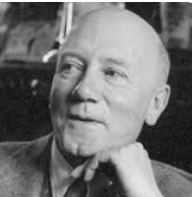
I understand that it is the wish of the Editor of this collection of essays that each contributor should describe his own system of philosophy. Were I to interpret this demand literally I could not contribute anything at all, for two excellent reasons. In the first place, I have nothing worth calling a system of philosophy of my own, and there is no other philosopher of whom I should be willing to reckon myself a faithful follower. If this be a defect I see no likelihood of its ever being cured. Secondly, if I had a system of my own, I should doubt the propriety of "pushing" my crude philosophical wares in competition with the excellent products of older firms with well-earned reputations.
▼
Source
From Critical and Speculative Philosophy (1924)
3 months 3 weeks ago
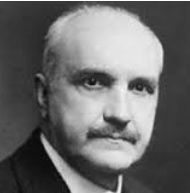
It is not society's fault that most men seem to miss their vocation. Most men have no vocation.
▼
Source
Ch. IV: The Aristocratic Ideal
3 months 3 weeks ago
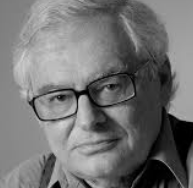
Suppose that the organism is given the problem of determining the analysis of a stimulus at a certain level of representation- e.g., the problem of determining which sequence of words a given utterance encodes. Since, in the general case, transducer outputs underdetermine perceptual analyses, we can think of the solution of such problems as involving processes of non-demonstrative inference. In particular, we can think of each input system as a computational mechanism which projects and confirms a certain class of hypotheses on the basis of a certain body of data.
▼
Source
p. 126, partly cited in: Meredith Williams (2002) Wittgenstein, Mind, and Meaning: Toward a Social Conception of Mind. p. 104. Quote about the direction of information flow in perceptual and observer analysis.
3 months 3 weeks ago
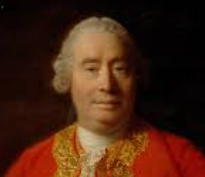
Here am I who have written on all sorts of subjects calculated to excite hostility, moral, political, and religious, and yet I have no enemies — except, indeed, all the Whigs, all the Tories, and all the Christians.
▼
Source
Statement to a friend shortly before his death, as recounted in Men of Letters by Lord Henry Brougham
3 months 3 weeks ago
But tell me this: did you never love any person... were you never commanded by the person beloved to do something which you did not wish to do? Have you never flattered your little slave? Have you never kissed her feet? And yet if any man compelled you to kiss Caesar's feet, you would think it an insult and excessive tyranny. What else then is slavery?
▼
Source
[https://books.google.com/books?id=7e0NAAAAYAAJ&newbks=1&newbks_redir=0&dq=epictetus%20caesar%20feet%20kiss&pg=PA296#v=onepage&q=epictetus%20caesar%20feet%20kiss&f=false Book IV, ch. 1, § 17.]
3 months 3 weeks ago
What appeared here, at the center of the Pythagorean tradition in philosophy, is another view of psyche that seems to owe little or nothing to the pan-vitalism or pan-deism (see theion) that is the legacy of the Milesians.
▼
Source
Francis E. Peters, in Greek Philosophical Terms: A Historical Lexicon (NYU Press 1967), p. 169 ISBN: 0814765521
3 months 3 weeks ago
What we are destroying is nothing but houses of cards and we are clearing up the ground of language on which they stood.
▼
Source
§ 118

3 months 3 weeks ago
The state is invisible...(it) needs to be symbolised before it can be loved.
▼
Source
A 1967 paper
3 months 3 weeks ago
Society undergoes continual changes; it is barbarous, it is civilized, it is Christianized, it is rich, it is scientific; but this change is not amelioration. For everything that is given something is taken. Society acquires new arts, and loses old instincts. The civilized man has built a coach, but has lost the use of his feet; he has a fine Geneva watch, but cannot tell the hour by the sun.
▼
Source
p. 243
3 months 3 weeks ago
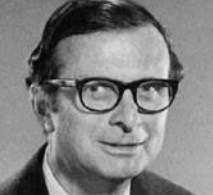
Wicked problems are social problems which are ill formulated, where the information is confusing, where there are many clients and decision-makers with conflicting values, and where the ramifications in the whole system are thoroughly confusing.
▼
Source
p. 141 cited in: John Mingers (2011) "Introduction to the Special Issue: Teaching Soft O.R., Problem Structuring Methods, and Multimethodology" in Informs, Vol. 12, No. 1, September 2011, pp. 1–3
3 months 3 weeks ago
No doubt the spirit or energy of the world is what is acting in us, as the sea is what rises in every little wave; but it passes through us, and cry out as we may, it will move on. Our privilege is to have perceived it as it moves.
▼
Source
p. 199
3 months 3 weeks ago
Custom, then, is the great guide of human life. It is that principle alone which renders our experience useful to us, and makes us expect, for the future, a similar train of events with those which have appeared in the past. Without the influence of custom, we should be entirely ignorant of every matter of fact beyond what is immediately present to the memory and senses. We should never know how to adjust means to ends, or to employ our natural powers in the production of any effect. There would be an end at once of all action, as well as of the chief part of speculation.
▼
Source
Variant (perhaps a paraphrase of this passage): It is not reason which is the guide of life, but custom.
3 months 3 weeks ago
All was oracular and dogmatic in the school of Pythagoras. He prized and justly prized the greatness of his attainments and discoveries, and had no conception that any thing could go beyond them. He did not encourage, nay, he resolutely opposed, all true independence of mind, and that undaunted spirit of enterprise which is the atmosphere in which the sublimest thoughts are most naturally generated. He therefore did not throw open the gates of science and wisdom, and invite every comer; but on the contrary narrowed the entrance, and carefully reduced the number of aspirants. He thought not of the most likely methods to give strength and permanence and an extensive sphere to the progress of the human mind. For these reasons he wrote nothing; but consigned all to the frail and uncertain custody of tradition. And distant posterity has amply avenged itself upon the narrowness of his policy; and the name of Pythagoras, which would otherwise have been ranked with the first luminaries of mankind, and consigned to everlasting gratitude, has in consequence of a few radical and fatal mistakes, been often loaded with obloquy, and the hero who bore it been indiscriminately classed among the votaries of imposture and artifice.
3 months 3 weeks ago
467. I am sitting with a philosopher in the garden; he says again and again "I know that that's a tree", pointing to a tree that is near us. Someone else arrives and hears this, and I tell them: "This fellow isn't insane. We are only doing philosophy."

3 months 3 weeks ago
The Art of Peace is not easy. It is a fight to the finish, the slaying of evil desires and all falsehood within. On occasion the Voice of Peace resounds like thunder, jolting human beings out of their stupor.
3 months 3 weeks ago
There was a majesty about him beyond all other men I have known, and he habitually dwelt in that ampler and diviner air to which most of us, if ever, only rise in spurts.
▼
Source
James Russell Lowell, as quoted in Oliver Wendell Holmes's Ralph Waldo Emerson (1884)
3 months 3 weeks ago
Finally we should note the basic assumption of the classical laboratory-namely, that nature is neither capricious nor secretive. If nature were capricious, she would tell one observer one thing and another observer a quite different thing... Also nature is not secretive, in the sense that she will not forever hide certain aspects of her being...
▼
Source
p. 57; as cited in: Carolyn Merchant (1982) "Isis' Consciousness Raised", in: Isis, Vol. 73, No. 3. (1982), pp. 398-409
3 months 3 weeks ago
O world, thou choosest not the better part!It is not wisdom to be only wise,And on the inward vision close the eyes,But it is wisdom to believe the heart.Columbus found a world, and had no chart,Save one that faith deciphered in the skies;To trust the soul's invincible surmiseWas all his science and his only art.
▼
Source
[http://www.bartleby.com/236/270.html O World, Thou Choosest Not] (1894)
3 months 3 weeks ago
What a noble privilege is it of human reason to attain the knowledge of the supreme Being; and, from the visible works of nature, be enabled to infer so sublime a principle as its supreme Creator? But turn the reverse of the medal. Survey most nations and most ages. Examine the religious principles, which have, in fact, prevailed in the world. You will scarcely be persuaded, that they are any thing but sick men's dreams: Or perhaps will regard them more as the playsome whimsies of monkies in human shape, than the serious, positive, dogmatical asseverations of a being, who dignifies himself with the name of rational.
▼
Source
Part XV - General corollary
3 months 3 weeks ago
Not one of the philosophical ideas in Part I of the commentary is peculiarly Neoplatonic. The doctrine of the Threeness of things... is found in Aristotle and goes back to the early Pythagoreans or to Homer even; paragraph 8 is mathematical in content rather than philosophical... although there is an allusion in it to the Monad as the principle of finitudes, again a very early Pythagorean doctrine; and these two paragraphs are the source of [Heinrich] Sitter's suggestion of the authorship of Proclus. As a matter of fact, the philosophical notions in Part I have been borrowed for the most part directly from Plato, with two or three exceptions that are Aristotelian... Plato's Theaetetus, Parmenides, and the Laws, are specifically mentioned. The Timaeus forms the background of much of the thought. And the Platonism of a mathematician of the turn of the third century A. D. need not surprise us, if we but recall Aristotle's accusation that the Academy tended to turn philosophy into mathematics.
▼
Source
pp. 40-41.
3 months 3 weeks ago
A hero looks death in the face, real death, not just the image of death. Behaving honourably in a crisis doesn't mean being able to act the part of a hero well, as in the theatre, it means being able to look death itself in the eye. For an actor may play lots of different roles, but at the end of it all he himself, the human being, is the one who has to die.
▼
Source
p. 50e
3 months 3 weeks ago
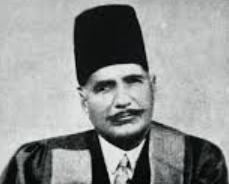
Shah Alamgir, that high and mighty king, Pride and renown of Gurgan Timur’s line,In whom Islam attained a loftier fameAnd wider honour graced the Prophet’s Law,He the last arrow to our quiver leftIn the affray of Faith with Unbelief ;When that the impious seed of heresy,By Akbar nourished, sprang and sprouted fresh In Dara’s soul, the candle of the heart Was dimmed in every breast, no more secureAgainst corruption our CommunityContinued ; then God chose from IndiaThat humble-minded warrior, Alamgir,Religion to revive, faith to renew.The lightning of his sword set all ablazeThe harvest of impiety ; faith’s torchOnce more its radiance o’er our counsels shed.
▼
Source
The Secrets of Selflessness, Emperor Alamgir and the Tiger
3 months 3 weeks ago
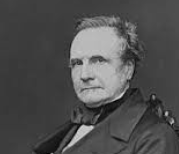
There are in the Exhibition some beautiful examples of such amongst the productions of other countries as well as of our own. They are made by the united labour of many women. The cost of a piece of lace will consist of:
3 months 3 weeks ago
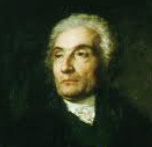
How many mistakes power has committed! And how often has it ignored the means to conserve itself! Man is insatiable for power; he is infinite in his desires, and, always discontented with what he has, he loves only what he has not. People complain about the despotism of princes; they should complain about that of man. We are all born despots, from the most absolute monarch of Asia to the child who smothers a bird with his hand for the pleasure of seeing something in the world weaker than himself. There is no man who does not abuse power, and experience proves that the most abominable despots, if they come to seize the sceptre, will be precisely those who rant against despotism.
3 months 3 weeks ago
Afyer the union of philosophy with the popular religion, upon the first establishment of Christianity, nothing was more usual, among all religious teachers, than declarations against reason, against the senses, against every principle derived merely from human research and inquiry.
▼
Source
Cleanthes to Demea, Part I
3 months 3 weeks ago
You must always be puzzled by mental illness. The thing I would dread most, if I became mentally ill, would be your adopting a common sense attitude; that you could take it for granted that I was deluded.
▼
Source
Conversation of 1947 or 1948

3 months 3 weeks ago
The universal jargon, in the sense explained above, is the same for the child and for the adult. It is the same for a Robinson Crusoe as for a human society. If Robinson wants to join what is in a protocol of yesterday with what is in his protocol today, that is, if he wants to make use of language at all, he must make use of the ‘intersubjective’ language. The Robinson of yesterday and the Robinson of today stand precisely in the same relation in which Robinson stands to Friday.
▼
Source
p. 96
CivilSimian.com created by AxiomaticPanic, CivilSimian, Kalokagathia