


9 months 1 week ago
If you're certain, you're certainly wrong, because nothing deserves certainty.
▼
Source
source
Bertrand Russell Speaks His Mind (1960), p. 14 (video)
9 months 4 weeks ago
Pleasure, or pain, is not only good, or evil, in itself, but the measure of what is good or evil, in every object of desire or aversion; for the ultimate reason why we pursue one thing, and avoid another, is because we expect pleasure from the former, and apprehend pain from the latter. If we sometimes decline a present pleasure, it is not because we are averse to pleasure itself, but because we conceive, that in the present instance, it will be necessarily connected with a greater pain. In like manner, if we sometimes voluntarily submit to a present pain, it is because we judge that it is necessarily connected with a greater pleasure.
9 months 1 week ago
So our self-feeling in this world depends entirely on what we back ourselves to be and do.
▼
Source
source
Ch. 10


8 months ago
In so far as words are not used obviously to calculate technically relevant probabilities or for other practical purposes, ... they are in danger of being suspect as sales talk of some kind.
▼
Source
source
p. 22.

8 months 2 weeks ago
To keep our eyes open longer were but to set our Antipodes. The Huntsmen are up in America, and they are already past their first sleep in Persia. But who can be drowsy at that hour which freed us from everlasting sleep? or have slumbering thoughts at that time, when sleep itself must end, and as some conjecture all shall awake again?
▼
Source
source
Ch. 5
6 months 4 days ago
Everyone is sure of this [that errors are normally distributed], Mr. Lippman told me one day, since the experimentalists believe that it is a mathematical theorem, and the mathematicians that it is an experimentally determined fact.
▼
Source
source
Calcul des probabilités (2nd ed., 1912), p. 171
10 months 1 week ago
I was brought up in the Christian religion, and although I can scarcely sanction all the improper attempts to gain the emancipation of woman, all paganlike reminiscences also seem foolish to me. My brief and simple opinion is that woman is certainly as good as man-period. Any more discursive elaboration of the difference between the sexes or deliberation on which sex is superior is an idle intellectual occupation for loafers and bachelors.
9 months ago
In speaking of the fear of religion, I don't mean to refer to the entirely reasonable hostility toward certain established religions and religious institutions, in virtue of their objectionable moral doctrines, social policies, and political influence. Nor am I referring to the association of many religious beliefs with superstition and the acceptance of evident empirical falsehoods. I am talking about something much deeper-namely, the fear of religion itself. I speak from experience, being strongly subject to this fear myself: I want atheism to be true and am made uneasy by the fact that some of the most intelligent and well-informed people I know are religious believers. It isn't just that I don't believe in God and, naturally, hope that I'm right in my belief. It's that I hope there is no God! I don't want there to be a God; I don't want the universe to be like that.
▼
Source
source
The Last Word, Oxford University Press, 1997, pp. 130-131.

8 months 6 days ago
The pessimist has to invent new reasons to exist every day: he is a victim of the "meaning" of life.
7 months 3 weeks ago
Ninety percent of our lives is governed by emotion. Our brains merely register and act upon what is telegraphed to them by our bodily experience. Intellect is to emotion as our clothes are to our bodies; we could not very well have civilized life without clothes, but we would be in a poor way if we had only clothes without bodies.
▼
Source
source
Ch. 29, June 10, 1943.
9 months 1 week ago
One always speaks badly when one has nothing to say.
▼
Source
source
1827
6 months 4 days ago
The mathematician is born, not made.
6 months 3 weeks ago
As human beings, we are endowed with this freedom of choice, and we cannot shuffle off our responsibility upon the shoulders of God or nature. We must shoulder it ourselves. It is up to us.
▼
Source
source
Ch. 3: Does History Repeat Itself?

5 months 6 days ago
I find that even Eminent Writers (such as Raymund Lully, Paracelsus, and others) do so abuse the termes they employ, that as they will now and then give divers things one name, so they will oftentimes give one thing, many Names; and some of them (perhaps) such, as do much more properly signifie some Distinct Body of another kind; nay even in Technical Words or Termes of Art, they refrain not from this Confounding Liberty; but will, as I have Observ'd call the same Substance, sometimes the Sulphur, and Sometimes the Mercury, of a Body.

8 months 1 week ago
Throughout all organic nature there is at work a modifying influence of the kind... as the cause, these specific differences: an influence which, though slow in its action, does, in time, if the circumstances demand it, produce marked changes-an influence, which to all appearance, would produce in the millions of years, and under the great varieties of condition which geological records imply, any amount of change.

5 months 6 days ago
Often injustice lies in what you aren't doing, not only in what you are doing.
▼
Source
source
IX. 5:223

9 months 1 week ago
Men and boys are learning all kinds of trades but how to make men of themselves. They learn to make houses; but they are not so well housed, they are not so contented in their houses, as the woodchucks in their holes. What is the use of a house if you haven't got a tolerable planet to put it on? - If you cannot tolerate the planet that it is on? Grade the ground first. If a man believes and expects great things of himself, it makes no odds where you put him, or what you show him ... he will be surrounded by grandeur. He is in the condition of a healthy and hungry man, who says to himself, - How sweet this crust is!
▼
Source
source
Letter to Harrison Blake (20 May 1860); published in Familiar Letters, 1865
6 months 6 days ago
A large plural society cannot be governed without recognizing that, transcending its plural interests, there is a rational order with a superior common law.
▼
Source
source
pp. 106-107

9 months 1 week ago
Need-love cries to God from our poverty; Gift-love longs to serve, or even to suffer for, God; Appreciative love says: "We give thanks to thee for thy great glory." Need-love says of a woman "I cannot live without her"; Gift-love longs to give her happiness, comfort, protection - if possible, wealth; Appreciative love gazes and holds its breath and is silent, rejoices that such a wonder should exist even if not for him, will not be wholly dejected by losing her, would rather have it so than never to have seen her at all.
6 months 2 days ago
Benevolence is the tranquil habitation of man, and righteousness is his straight path.
▼
Source
source
Justice and Truth, no. 100

8 months 6 days ago
In order to have the stuff of a tyrant, a certain mental derangement is necessary.

7 months 3 weeks ago
I use the word nursing for want of a better. It has been limited to signify little more than the administration of medicines and the application of poultices. It ought to signify the proper use of fresh air, light, warmth, cleanliness, quiet, and the proper selection and administration of diet - all at the least expense of vital power to the patient.
▼
Source
source
Notes on Nursing
9 months 5 days ago
Enjoyment of the work consists in participation in the creative state of the artist.
▼
Source
source
p. 117

9 months 1 week ago
The more we devote ourselves to observing animals and their behaviour, the more we love them, on seeing how gready they care for their young; in such a context, we cannot even contemplate cruelty to a wolf. Leibnitz put the grub he had been observing back on the tree with its leaf, lest he should be guilty of doing any harm to it. It upsets a man to destroy such a creature for no reason, and this tenderness is subsequently transferred to man.
▼
Source
source
Part II, pp. 212-213
9 months 1 week ago
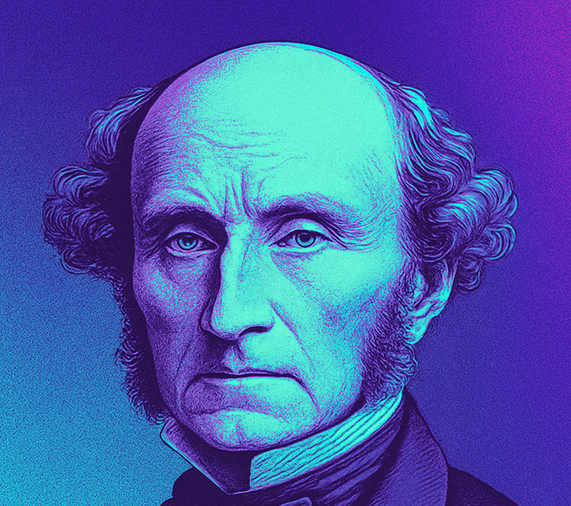
He thought human life a poor thing at best, after the freshness of youth and of unsatisfied curiosity had gone by. This was a topic on which he did not often speak, especially, it may be supposed, in the presence of young persons: but when he did, it was with an air of settled and profound conviction. He would sometimes say, that if life were made what it might be, by good government and good education, it would be worth having: but he never spoke with anything like enthusiasm even of that possibility.
▼
Source
source
(p. 48)
8 months 1 day ago
Stuart was not dismayed by his sexual feelings about the boy.
▼
Source
source
The Good Apprentice (1985), p. 247.

5 months 1 week ago
We, who are dying, are doing better, than they, who will live. For Crete doesn't need householders, she needs madmen like us. These madmen make Crete immortal.
▼
Source
source
Freedom and Death
8 months 6 days ago
An aphorism? Fire without flames. Understandable that no one tries to warm himself at it.

5 months 3 weeks ago
Religion is regarded by the common people as true, by the wise as false, and by rulers as useful.
▼
Source
source
As quoted in What Great Men Think About Religion (1945) by Ira D. Cardiff, p. 342.
9 months ago
Philosophers get attention only when they appear to be doing something sinister-corrupting the youth, undermining the foundations of civilization, sneering at all we hold dear. The rest of the time everybody assumes that they are hard at work somewhere down in the sub-basement, keeping those foundations in good repair. Nobody much cares what brand of intellectual duct tape is being used.
▼
Source
source
"Philosophical Convictions." The Nation, June 14, 2004.
7 months 3 weeks ago
In organized groups such as the army or the Church there is either no mention of love whatsoever between the members, or it is expressed only in a sublimated and indirect way, through the mediation of some religious imagine in the love of whom the members unite and whose all-embracing love they are supposed to imitate in their attitude towards each other. ... It is one of the basic tenets of fascist leadership to keep primary libidinal energy on an unconscious level so as to divert its manifestations in a way suitable to political ends.
▼
Source
source
"Freudian Theory and the Pattern of Fascist Propaganda," The Essential Frankfurt School Reader (1982), p. 123
6 months 4 weeks ago
A man who has never been within the tropics does not know what a thunderstorm means; a man who has never looked on Niagara has but a faint idea of a cataract; and he who has not read Barère's Memoirs may be said not to know what it is to lie.
▼
Source
source
Barère', The Edinburgh Review (April 1844), quoted in The Miscellaneous Writings of Lord Macaulay, Vol. II (1860), p. 109
10 months 1 week ago
Music directly represents the passion of the soul. If one listens to the wrong kind of music, he will become the wrong kind of person.

7 months 1 week ago
For man to be able to live he must either not see the infinite, or have such an explanation of the meaning of life as will connect the finite with the infinite.
▼
Source
source
Ch. 9

6 months 1 day ago
And wonderful it is to see how the Ideal or Soul, place it in what ugliest Body you may, will irradiate said Body with its own nobleness; will gradually, incessantly, mould, modify, new-form or reform said ugliest Body, and make it at last beautiful, and to a certain degree divine!

9 months 4 days ago
The condemned man found himself transformed into a hero by the sheer extend of his widely advertised crimes, and sometimes the affirmation of his belated repentance. Against the law, against the rich, the powerful, the magistrates, the constabulary or the watch, against taxes and their collectors, he appeared to have waged a struggle with which one all too easily identified. The proclamation of these crimes blew up to epic proportions the tiny struggle that passed unperceived in everyday life. If the condemned man was shown to be repentant, accepting the verdict, asking both God and man for forgiveness for his crimes, it was as if he had come through some process of purification: he died, in his own way, like a saint.
▼
Source
source
Chapter One: The Spectacle of the scaffold, pp. 67

9 months 1 week ago
If a given science accidentally reached its goal, this would by no means stop the workers in the field, who would be driven past their goal by the sheer momentum of the illusion of unlimited progress.
▼
Source
source
p. 55

7 months 3 weeks ago
Atheism ... in its philosophic aspect refuses allegiance not merely to a definite concept of God, but it refuses all servitude to the God idea, and opposes the theistic principle as such. Gods in their individual function are not half as pernicious as the principle of theism which represents the belief in a supernatural, or even omnipotent, power to rule the earth and man upon it. It is the absolutism of theism, its pernicious influence upon humanity, its paralyzing effect upon thought and action, which Atheism is fighting with all its power.
7 months 2 weeks ago
The most heated defenders of a science, who cannot endure the slightest sneer at it, are commonly those who have not made very much progress in it and are secretly aware of this defect.
▼
Source
source
F 8

5 months 1 week ago
What was man before the invention of words and the knowledge of language? An animal..
6 months 3 weeks ago
Sound knowledge respecting the habits and mode of life of the man-like Apes has been even more difficult of attainment than correct information regarding their structure.
▼
Source
source
Ch.1, p. 36

9 months 1 week ago
... the attempt to make heaven on earth invariably produces hell. It leads to intolerance. It leads to religious wars, and to the saving of souls through the inquisition. And it is, I believe, based on a complete misunderstanding of our moral duties. It is our duty to help those who need help; but it cannot be our duty to make others happy, since this does not depend on us, and since it would only too often mean intruding on the privacy of those towards whom we have such amiable intentions.
▼
Source
source
Vol. 2, Ch. 24 "Oracular Philosophy and the Revolt against Reason"

7 months 3 weeks ago
The dominant, almost general, idea of revolution - particularly the Socialist idea - is that revolution is a violent change of social conditions through which one social class, the working class, becomes dominant over another class, the capitalist class. It is the conception of a purely physical change, and as such it involves only political scene shifting and institutional rearrangements. Bourgeois dictatorship is replaced by the "dictatorship of the proletariat" - or by that of its "advance guard," the Communist Party. Lenin takes the seat of the Romanovs, the Imperial Cabinet is rechristened Soviet of People's Commissars, Trotsky is appointed Minister of War, and a labourer becomes the Military Governor General of Moscow. That is, in essence, the Bolshevik conception of revolution, as translated into actual practice.

7 months 1 week ago
As Narcissus fell in love with an outering (projection, extension) of himself, man seems invariably to fall in love with the newest gadget or gimmick that is merely an extension of his own body.
CivilSimian.com created by AxiomaticPanic, CivilSimian, Kalokagathia