

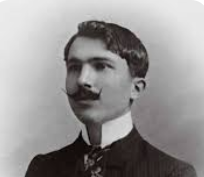
5 months 1 week ago
Eros? What other name may we give that impetus which becomes enchanted as soon as it casts its glance on matter and then longs to impress its features upon it? It confronts the body and longs to pass beyond it, to merge with the other erotic cry hidden in that body, to become one till both may vanish and become deathless by begetting sons. It approaches the soul and wishes to merge with it inseparably so that "you" and "I" may no longer exist; it blows on the mass of man - kind and wishes, by smashing the resistances of mind and body, to merge all breaths into one violent gale that may lift the earth! In moments of crisis this Erotic Love swoops down on men and joins them together by force - friends and foes, good and evil. It is a breath superior to all of them, independent of their desires and deeds. It is the spirit, the breathing of God on earth. It descends on men in whatever form it wishes - as dance, as eros, as hunger, as religion, as slaughter. It does not ask our permission.


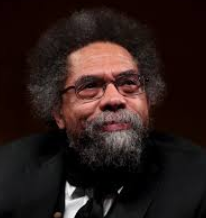
9 months 4 days ago
Harvard now, I think, suffers from a kind of self-idolatry, that it needs to be critical of itself in order to grow. And again, if you can be in contact with the best of its past, then it's got a chance. But if it just remains well adjusted to the status quo, generating careerist and opportunist students rather than critically oriented students who have a heart and soul, concerned about suffering here and around the world - then Harvard has a chance. I'm not giving up on Harvard, but I am making my way to New York.
▼
Source
source
Speaking in Too Radical for Harvard? Cornel West on Failed Fight for Tenure, Biden's First 50 Days & More, Democracy Now!
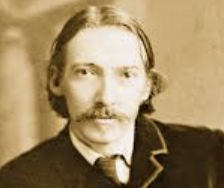
7 months 5 days ago
Old and young, we are all on our last cruise.
▼
Source
source
Crabbed Age and Youth.
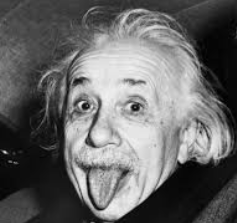
4 months 4 weeks ago
I am happy because I want nothing from anyone. I do not care about money. Decorations, titles or distinctions mean nothing to me. I do not crave praise. The only thing that gives me pleasure, apart from my work, my violin, and my sailboat, is the appreciation of my fellow workers.

8 months 5 days ago
The development of the human mind has practically extinguished all feelings, except a few sporadic kinds, like sound, colors, smells, warmth, etc., which now appear to be disconnected and separate.

9 months 2 weeks ago
Even from their infancy we frame them to the sports of love: their instruction, behavior, attire, grace, learning and all their words azimuth only at love, respects only affection. Their nurses and their keepers imprint no other thing in them.

8 months 2 days ago
And the Science of them, is the true and onely Moral Philosophy. For Moral Philosophy is nothing else but the Science of what is Good, and Evill, in the conversation, and Society of mankind. Good, and Evill, are names that signify our Appetites, and Aversions; which in different tempers, customes, and doctrines of men, are different.
▼
Source
source
The First Part, Chapter 15, p. 79
8 months 2 days ago
No system would have ever been framed if people had been simply interested in knowing what is true, whatever it may be. What produces systems is the interest in maintaining against all comers that some favourite or inherited idea of ours is sufficient and right.
10 months 1 week ago
From the Christian point of view it stands firm that the truly Christian venturing requires probability.
7 months 3 weeks ago
My own book Women, Race and Class was one of many that were published during that era, including, to name only a few, This Bridge Called My Back, edited by Gloria Anzaldúa and Cherrie Moraga, the work of bell hooks and Michelle Wallace, and the anthology All the Women Are White, All the Blacks Are Men, but Some of Us Are Brave: Black Women's Studies. So behind this concept of intersectionality is a rich history of struggle. A history of conversations among activists within movement formations, and with and among academics as well.
▼
Source
source
Angela Davis Freedom Is a Constant Struggle: Ferguson, Palestine, and the Foundations of a Movement (2015) p 19

9 months 1 week ago
The manly part is to do with might and main what you can do.
▼
Source
source
Wealth

9 months 1 week ago
I believe Buddhism to be a simplification of Hinduism and Islam to be a simplification of Xianity.
▼
Source
source
Letter to Sheldon Vanauken (14 December 1950), quoted in Sleuthing C. S. Lewis (2001) by Kathryn Ann Lindskoog, p. 393
7 months 5 days ago
You don't have to be a scientist - you don't have to play the Bunsen burner - in order to understand enough science to overtake your imagined need and fill that fancied gap. Science needs to be released from the lab into the culture.
10 months 1 week ago
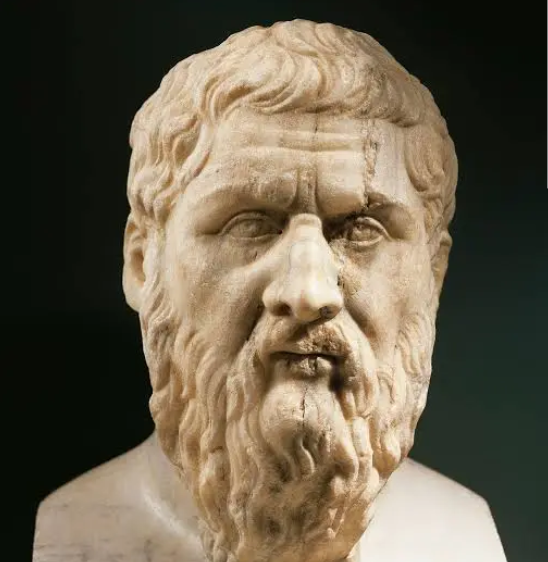
Wonder is the feeling of a philosopher, and philosophy begins in wonder.
7 months 3 weeks ago
Exploitation and manipulation produce boredom and triviality; they cripple man, and all factors that make man into a psychic cripple turn him also into a sadist or a destroyer. This position will be characterized by some as "overoptimistic," "utopian," or "unrealistic." In order to appreciate the merits of such criticism a discussion of the ambiguity of hope and the nature of optimism and pessimism seems called for.
▼
Source
source
p. 483
8 months 5 days ago
Fear for the Other, fear for the other man's death is my fear, but is in no way an individual's taking fright.
▼
Source
source
The Levinas reader by Levinas, Emmanuel p. 84

7 months 2 weeks ago
Until the seventeenth century there was no concept of evidence with which to pose the problem of induction!
▼
Source
source
Chapter 4, Evidence, p. 31.

5 months 3 weeks ago
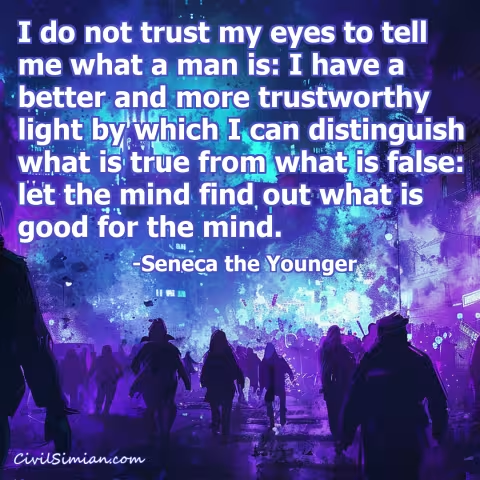
It is best to bear what cannot be changed.
▼
Source
source
Seneca, Moral Letters, 107. 9. As quoted in: Frank Breslin (Retired High-School Teacher) (December 21, 2017)
8 months 2 weeks ago
Scepticism is the first step towards truth. Variant: A thing is not proved just because no one has ever questioned it. What has never been gone into impartially has never been properly gone into. Hence skepticism is the first step toward truth. It must be applied generally, because it is the touchstone.
▼
Source
source
As quoted in The Anchor Book of French Quotations with English Translations (1963) by Norbert Gutermam
9 months 1 week ago
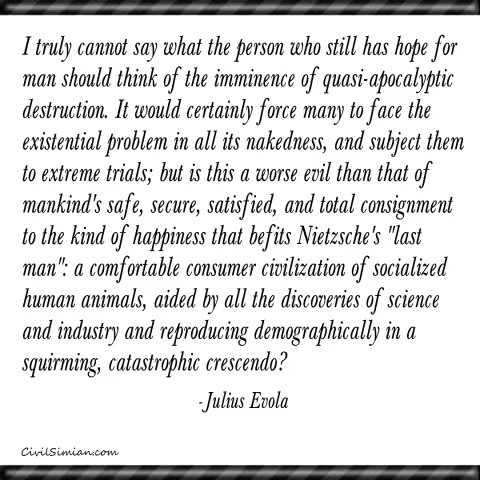
The thing done avails, and not what is said about it. An original sentence, a step forward, is worth more than all the censures.
▼
Source
source
First Visit to England
6 months 4 weeks ago
Soon fades the spell, soon comes the night: Say will it not be then the same, Whether we played the black or white,Whether we lost or won the game?
▼
Source
source
Sermon in a Churchyard, st. 8 (1825), quoted in The Miscellaneous Writings of Lord Macaulay, Vol. II (1860), p. 390

5 months 5 days ago
The Utopianism of the standpoint which expects an era of peace and retrenchment of militarism in the present social order is plainly revealed in the fact that it is having recourse to project making. For it is typical of Utopian strivings that, in order to demonstrate their practicability, they hatch "practical" recipes with the greatest possible details. To this also belongs the project of the "United States of Europe" as a basis for the limitation of international militarism.

5 months 6 days ago
The ruling power within, when it is in its natural state, is so related to outer circumstances that it easily changes to accord with what can be done and what is given it to do.
▼
Source
source
IV, 1

5 months 6 days ago
Ancient philosophy will always hold its own among those who are worthy to judge it, because it forms... a system that is solid and well articulated like the body, whereas all these scattered members of modern philosophy form no system.
▼
Source
source
Ch. VI Concerning the Sensitive Faculty of Matter
9 months 1 week ago
"A pleasure is full grown only when it is remembered. You are speaking, Hmān, as if the pleasure were one thing and the memory another. It is all one thing. The séroni could say it better than I say it now. Not better than I could say it in a poem. What you call remembering is the last part of the pleasure, as the crah is the last part of a poem. When you and I met, the meeting was over very shortly, it was nothing. Now it is growing something as we remember it. But still we know very little about it. What it will be when I remember it as I lie down to die, what it makes in me all my days till then-that is the real meeting. The other is only the beginning of it."
▼
Source
source
Hyoi, p. 73

8 months 5 days ago
Society: an inferno of saviors!
10 months 1 week ago
How could one speak properly about love if you were forgotten, you God of love, source of all love in heaven and on earth; you who spared nothing but in love gave everything; you who are love, so that one who loves is what he is only by being in you.
9 months ago
Without consciousness the mind-body problem would be much less interesting. With consciousness it seems hopeless.
▼
Source
source
p. 166.

9 months 4 days ago
This book is intended as a correlative history of the modern soul and of a new power to judge; a genealogy of the present scientifico-legal complex from which the power to punish derives its bases, justifications and rules, from which it extends its effects and by which it extends its effects and by which it masks its exorbitant singularity.
▼
Source
source
Chapter One, The Spectacle of the Scaffold, pp.42

6 months 5 days ago
We have to construct the figure of a new David, the multitude as champion of asymmetrical combat, immaterial workers who became a new kind of combatants, cosmopolitan bricoleurs of resistance and cooperation.
▼
Source
source
50

9 months 3 weeks ago
The Heavenly City outshines Rome, beyond comparison. There, instead of victory, is truth; instead of high rank, holiness; instead of peace, felicity; instead of life, eternity.
▼
Source
source
Book II, Chapter 29

7 months 1 week ago
It is always the psychic and social grounds, brought into play by each medium or technology, that readjust the balance of the hemispheres and of human sensibilities into equilibrium with those grounds.
▼
Source
source
p. 82
5 months 3 weeks ago
Political freedom means this: that the polis, the state, is free; religious freedom this: that religion is free, just as freedom of conscience indicates that conscience is free; thus, it does not that I am free from state, from religion, from conscience, or that I am rid of them. It does not mean my freedom, but the freedom of a power that rules and vanquishes me; it means that one of my oppressors, like state, religion, conscience, is free.
▼
Source
source
Landstreicher, p. 76
7 months 3 weeks ago
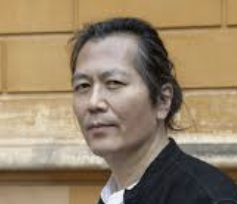
Rituals are symbolic acts. They represent, and pass on, the values and orders on which a community is based. They bring forth a community without communication; today, however, communication without community prevails.
8 months 6 days ago
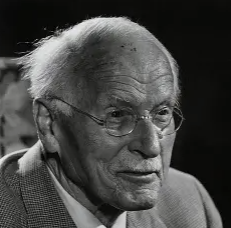
For it all depends on how we look at things, and not on how they are in themselves. The least of things with a meaning is worth more in life than the greatest of things without it.
▼
Source
source
p. 67

9 months 1 week ago
Out of my experience, such as it is (and it is limited enough) one fixed conclusion dogmatically emerges, and that is this, that we with our lives are like islands in the sea, or like trees in the forest. The maple and the pine may whisper to each other with their leaves. ... But the trees also commingle their roots in the darkness underground, and the islands also hang together through the ocean's bottom. Just so there is a continuum of cosmic consciousness, against which our individuality builds but accidental fences, and into which our several minds plunge as into a mother-sea or reservoir.
▼
Source
source
"Confidences of a 'Psychical Researcher'", in The American Magazine, Vol. 68 (1909), p. 589

8 months 1 week ago
Once it's been proved to you that you're descended from an ape, it's no use pulling a face; just accept it. Once they've proved to you that a single droplet of your own fat must be dearer to you than a hundred thousand of your fellow human beings and consequently that all so-called virtues and duties are nothing but ravings and prejudices, then accept that too, because there's nothing to be done.
▼
Source
source
Part 1 Chapter 3 (tr. ?)
5 months 1 week ago
Nothing great has great beginnings.
▼
Source
source
XXIII, p. 73

5 months 1 week ago
It is useless to try to adjudicate a long-standing animosity by asking who started it or who is the most wrong. The only sufficient answer is to give up the animosity and try forgiveness, to try to love our enemies and to talk to them and (if we pray) to pray for them. If we can't do any of that, then we must begin again by trying to imagine our enemies' children who, like our children, are in mortal danger because of enmity that they did not cause.

9 months 1 week ago
The rules of logic are to mathematics what those of structure are to architecture.
5 months 3 weeks ago
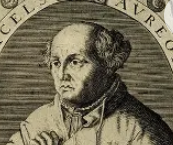
What else is the help of medicine than love?

9 months 4 days ago
My intention was not to deal with the problem of truth, but with the problem of the truth-teller, or of truth telling... [W]ho is able to tell the truth, about what, with what consequences, and with what relations to power. ...[W]ith the question of the importance of telling the truth, knowing who is able to tell the truth, and knowing why we should tell the truth, we have the roots of what we could call the 'critical' tradition in the West.
9 months 4 weeks ago
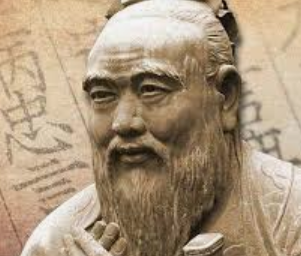
The superior man, extensively studying all learning, and keeping himself under the restraint of the rules of propriety, may thus likewise not overstep what is right.
CivilSimian.com created by AxiomaticPanic, CivilSimian, Kalokagathia