This is a recent interest of mine. Ask yourself the question: Why is it not justice to kill a man that kills a mouse? Then, apply that answer to a hypothetical being that stands over humanity with humanity as the mouse.


There is a great difference between the Idols of the human mind and the Ideas of the divine. That is to say, between certain empty dogmas, and the true signatures and marks set upon the works of creation as they are found in nature.
No man is free who is not master of himself.

And see, a kind, refined lady will devour the carcasses of these animals with full assurance that she is doing right, at the same time asserting two contradictory propositions: First, that she is, as her doctor assures her, so delicate that she cannot be sustained by vegetable food alone, and that for her feeble organism flesh is indispensable; and, secondly, that she is so sensitive that she is unable, not only herself to inflict suffering on animals, but even to bear the sight of suffering. Whereas the poor lady is weak precisely because she has been taught to live upon food unnatural to man; and she cannot avoid causing suffering to animals - for she eats them.

Fear of evil is greater than the evil itself.
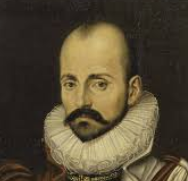
For truth itself does not have the privilege to be employed at any time and in every way; its use, noble as it is, has its circumscriptions and limits.

In democratic countries, the most important private organizations are economic. Unlike secret societies, they are able to exercize their terrorism without illegality, since they do not threaten to kill their enemies, but only to starve them.
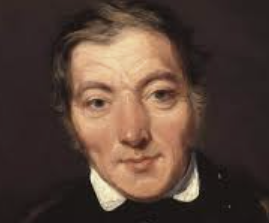
The errors of the times of superstition and bigotry still hold some sway, and compel those who wish to preserve a regard to their respectability in society to an over strained demeanor; and this demeanor sometimes degenerates into hypocrisy, and is often the cause of great inconsistency. It is destructive of every open, honest, generous, and manly feeling. It disgusts many, and drives them to the opposite extreme. It is sometimes the cause of insanity. It is founded in ignorance. While erroneous customs prevail in any country, it would evince an ignorance of human nature in any individual to offend against them, until he has convinced the community of their error.

Truth that has been merely learned is like an artificial limb, a false tooth, a waxen nose; at best, like a nose made out of another's flesh; it adheres to us only because it is put on. But truth acquired by thinking of our own is like a natural limb; it alone really belongs to us. This is the fundamental difference between the thinker and the mere man of learning. The intellectual attainments of a man who thinks for himself resemble a fine painting, where the light and shade are correct, the tone sustained, the colour perfectly harmonised; it is true to life. On the other hand, the intellectual attainments of the mere man of learning are like a large palette, full of all sorts of colours, which at most are systematically arranged, but devoid of harmony, connection and meaning.

I am a rationalist. ...I mean ...[I] wish... to understand the world, and to learn by arguing with others. (...I do not say a rationalist holds the mistaken theory that men are... rational.)

Let us keep to Christ, and cling to Him, and hang on Him, so that no power can remove us.

The Theophilanthropists believe in the existence of God, and the immortality of the soul.

In the United States, except for slaves, servants and the destitute fed by townships, everyone has the vote and this is an indirect contributor to law-making. Anyone wishing to attack the law is thus reduced to adopting one of two obvious courses: they must either change the nation's opinion or trample its wishes under foot.

We return to our analysis of qualities. Something preserves itself throughout this flux, something that passes into other things, but also stands against them as a being for itself. This something can exist only as the product of a process through which it integrates its otherness with its own proper being. Hegel says that its existence comes about through 'the negation of the negation.' The first negation is the otherness in which it turns, and the second is the incorporation of this other into its own self. Such a process presupposes that things possess a certain power over their movement, that they exist in a certain self-relation that enables them to 'mediate' their existential conditions.
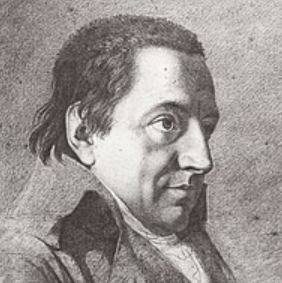
I have distinctly announced the grounds upon which I regard the Apostle John as the only teacher of true Christianity:-namely, that the Apostle Paul and his party, as the authors of the opposite system of Christianity, remained half Jews, and left unaltered the fundamental error of Judaism as well as of Heathenism, which we must afterwards notice. For the present the following may be enough: -It is only with John that the philosopher can deal, for he alone has respect for Reason, and appeals to that evidence which alone has weight with the philosopher-the internal. "If any man will do the will of him that sent me, he shall know of the doctrine, whether it be of God." But this Will of God, accord ing to John, is, that we should truly believe in God, and in Jesus Christ whom he hath sent. The other promulgators of Christianity, however, rely upon the external evidence of Miracle, which, to us at least, proves nothing.
Even serious students are misled by the myth of the subject.

A great man quotes bravely, and will not draw on his invention when his memory serves him with a word just as good.
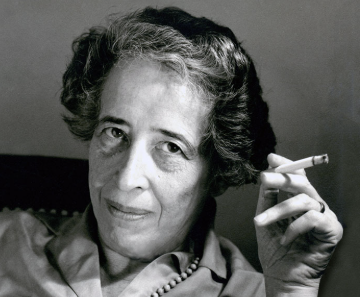
The concentration camps, by making death itself anonymous (making it impossible to find out whether a prisoner is dead or alive), robbed death of its meaning as the end of a fulfilled life. In a sense they took away the individual's own death, proving that henceforth nothing belonged to him and he belonged to no one. His death merely set a seal on the fact that he had never existed.
The student should have enough knowledge of his or her cultural tradition to know how it got to be the way it is. This involves both political and social history, on the one hand, as well as the mastery of some of the great philosophical and literary texts of the culture on the other. It involves reading not only texts that are of great value, like those of Plato, but many less valuable that have been influential, such as the works of Marx. For the United States, the dominant tradition is, and for the foreseeable future, will remain the European tradition. The United States is, after all, a product of the European Enlightenment. However, you do not understand your own tradition if you do not see it in relation to others. Works from other cultural traditions need to be studied as well.
What most clearly characterizes true freedom and its true employment is its misemployment.

Would you know what makes men greedy for the future? It is because no one has yet found himself.
If I shall have sufficient strength to improve and amplify what was written and published by me up to now about motion by adding some little speculations, and in particular those relating to the force of percussion, in the investigation of which I have consumed hundreds and thousands of hours, and finally reduced this to very easy explanation, so that people can understand it in less than half an hour of time.
The case of mere titles is so absurd that it would deserve to be treated only with ridicule were t not for the serious mischief they impose on mankind. The feudal system was a ferocious monster, devouring, where it came, all that the friend of humanity regards with attachment and love. The system of titles appears under a different form. The monster is at length destroyed, and they who followed in his train, and fattened upon the carcasses of those he slew, have stuffed his skin, and, b exhibiting it, hope still to terrify mankind into patient and pusillanimity.

Culture is an instrument wielded by professors to manufacture professors, who, when their turn comes, will manufacture professors.
When we get piled upon one another in large cities, as in Europe, we shall become corrupt as in Europe.
But if you can breed cattle for milk yield, horses for running speed, and dogs for herding skill, why on Earth should it be impossible to breed humans for mathematical, musical or athletic ability? Objections such as "these are not one-dimensional abilities" apply equally to cows, horses and dogs and never stopped anybody in practice. I wonder whether, some 60 years after Hitler's death, we might at least venture to ask what the moral difference is between breeding for musical ability and forcing a child to take music lessons. Or why it is acceptable to train fast runners and high jumpers but not to breed them. I can think of some answers, and they are good ones, which would probably end up persuading me. But hasn't the time come when we should stop being frightened even to put the question?
Those who are most to be considered, those for whose help the struggle must be made, if labor is to be enfranchised, and social justice won, are those least able to help or struggle for themselves, those who have no advantage of property or skill or intelligence, - the men and women who are at the very bottom of the social scale. In securing the equal rights of these we shall secure the equal rights of all. Hence it is, as Mazzini said, that it is around the standard of duty rather than around the standard of self-interest that men must rally to win the rights of man. And herein may we see the deep philosophy of Him who bade men love their neighbors as themselves. In that spirit, and in no other, is the power to solve social problems and carry civilization onward.
Patriotism is an ephemeral motive that scarcely ever outlasts the particular threat to society that aroused it.
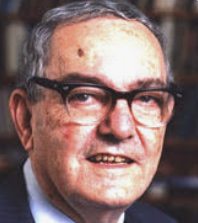
Most of the propositions that make up the body of administrative theory today share, unfortunately, this defect of proverbs. For almost every principle one can find an equally plausible and acceptable contradictory principle.
Just as the witticism brings two very different real objects under one concept, the pun brings two different concepts, by the assistance of accident, under one word.

Another may be more expert in casting [throwing] his opponent; but he is not more social, nor more modest, nor better disciplined to meet all that happens, nor more considerate with respect to the faults of his neighbors.
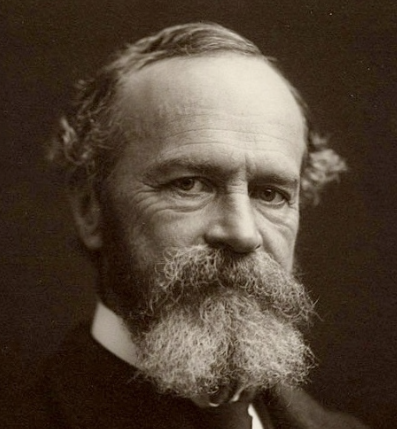
If belief consists in an emotional reaction of the entire man on an object, how can we believe at will? We cannot control our emotions.... But gradually our will can lead us to the same results by a very simple method: we need only in cold blood act as if the thing in question were real, and keep acting as if it were real, and it will infallibly end by growing into such a connection with our life that it will become real. It will become so knit with habit and emotion that our interests in it will be those which characterize belief.
I am myself deeply convinced that imagination is the basis of a sound reason. It is by dint of feeling, and of putting ourselves in fancy into the place of other men, that we can learn how we ought to treat them, and be moved to treat them as we ought. Man, to express the thing in familiar language, is a complex being, made up of a head and a heart. So far as we are employed in heaping up facts and in reasoning upon them merely, we are a species of machine; it is our impulses and our sentiments, that are the glory of our nature.

The most remarkable piece of reading that you may be recommended to take and try if you can study is a book by Goethe-one of his last books, which he wrote when he was an old man, about seventy years of age-I think one of the most beautiful he ever wrote, full of mild wisdom, and which is found to be very touching by those who have eyes to discern and hearts to feel it. It is one of the pieces in "Wilhelm Meister's Travels." I read it through many years ago; and, of course, I had to read into it very hard when I was translating it (applause), and it has always dwelt in my mind as about the most remarkable bit of writing that I have known to be executed in these late centuries. I have often said, there are ten pages of that which, if ambition had been my only rule, I would rather have written than have written all the books that have appeared since I came into the world.
He was arrested twice; he was taken in 1922 for a midnight interrogation with Dzerjinsky; Kamenev was also there. ... But Berdyaev did not humiliate himself, he did not beg, he firmly professed the moral and religious principles by virtue of which he did not adhere to the party in power; and not only did they judge that there was no point in putting him on trial, but he was freed. Now there is a man who had a "point of view"!
In obedience to the feeling of reality, we shall insist that, in the analysis of propositions, nothing "unreal" is to be admitted. But, after all, if there is nothing unreal, how, it may be asked, could we admit anything unreal? The reply is that, in dealing with propositions, we are dealing in the first instance with symbols, and if we attribute significance to groups of symbols which have no significance, we shall fall into the error of admitting unrealities, in the only sense in which this is possible, namely, as objects described.
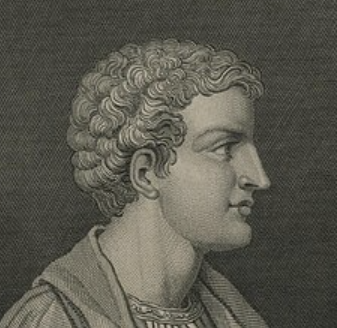
We are but dust and shadow.

But, suppose, besides, that the making of the new machinery affords employment to a greater number of mechanics, can that be called compensation to the carpet makers, thrown on the streets?
It is sometimes maintained that racial mixture is biologically undesirable. There is no evidence whatever for this view. Nor is there, apparently, any reason to think that Negroes are congenitally less intelligent than white people, but as to that it will be difficult to judge until they have equal scope and equally good social conditions.
Instead of deciding once in three or six years which member of the ruling class was to misrepresent the people in Parliament, universal suffrage was to serve the people, constituted in Communes, as individual suffrage serves every other employer in the search for the workmen and managers in his business.
Organizations and institutions provide the general stimuli and attention-directors that channelize the behaviors of the members of the group, and that provide those members with the intermediate objectives that stimulate action.
To apply oneself to great inventions, starting from the smallest beginnings, is no task for ordinary minds; to divine that wonderful arts lie hid behind trivial and childish things is a conception for superhuman talents.
But in the days that are now passing over us, even fools are arrested to ask the meaning of them; few of the generations of men have seen more impressive days. Days of endless calamity, disruption, dislocation, confusion worse confounded: if they are not days of endless hope too, then they are days of utter despair. For it is not a small hope that will suffice, the ruin being clearly, either in action or in prospect, universal. There must be a new world, if there is to be any world at all!
CivilSimian.com created by AxiomaticPanic, CivilSimian, Kalokagathia