

7 months 3 weeks ago
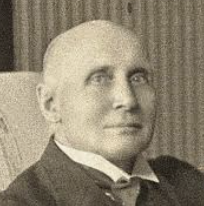
Buddhism is the most colossal example in the history of applied metaphysics.
▼
Source
source
in Verhoeven, Martin J. 2001. "Buddhism and Science: Probing the Boundaries Of Faith and Reason." Religion East and West (1): 77-97.
9 months 4 weeks ago
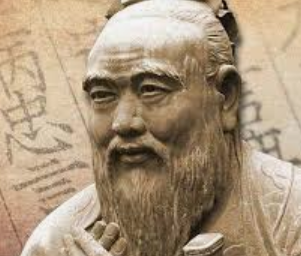
Fine words and an insinuating appearance are seldom associated with true virtue.
▼
Source
source
Variant: Someone who is a clever speaker and maintains a 'too-smiley' face is seldom considered a humane person.

7 months 3 weeks ago
(Gardner) writes about various kinds of cranks with the conscious superiority of the scientist, and in most cases one can share his sense of the victory of reason. But after half a dozen chapters this non-stop superiority begins to irritate; you begin to wonder about the standards that make him so certain he is always right. He asserts that the scientist, unlike the crank, does his best to remain open-minded. So how can he be so sure that no sane person has ever seen a flying saucer, or used a dowsing rod to locate water? And that all the people he disagrees with are unbalanced fanatics? A colleague of the positivist philosopher A. J. Ayer once remarked wryly "I wish I was as certain of anything as he seems to be about everything." Martin Gardner produces the same feeling.
▼
Source
source
pp. 2-3
5 months 1 week ago
The heart unites whatever the mind separates, pushes on beyond the arena of necessity and transmutes the struggle into love.
9 months 4 weeks ago
When a country is well governed, poverty and a mean condition are things to be ashamed of. When a country is ill governed, riches and honor are things to be ashamed of.

7 months 3 weeks ago
It has often been said that every man who has suffered misfortunes prefers to be himself, even with his misfortunes, rather than to be someone else without them. For unfortunate men, when they preserve their normality in their misfortune - that is to say, when they endeavor to persist in their own being - prefer misfortune to non-existence. For myself I can say that when a as a youth, and even as a child, I remained unmoved when shown the most moving pictures of hell, for even then nothing appeared to me quite so horrible as nothingness itself. It was a furious hunger of being that possessed me, an appetite for divinity, as one of our ascetics [San Juan de los Angeles] has put it.
9 months 4 days ago
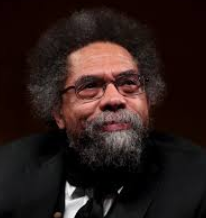
Nihilism is not overcome by arguments or analyses; it is tamed by love and care. Any disease of the soul must be conquered by a turning of one's soul.
▼
Source
source
(p19)

9 months 1 week ago
It is the magician's bargain: give up our soul, get power in return. But once our souls, that is, ourselves, have been given up, the power thus conferred will not belong to us. We shall in fact be the slaves and puppets of that to which we have given our souls.

9 months 1 week ago
Every really able man, in whatever direction he work,-a man of large affairs, an inventor, a statesman, an orator, a poet, a painter,-if you talk sincerely with him, considers his work, however much admired, as far short of what it should be.
▼
Source
source
Immortality

8 months 1 week ago
Hypocrisy, of course, delights in the most sublime speculations; for, never intending to go beyond speculation, it costs nothing to have it magnificent.
8 months 5 days ago
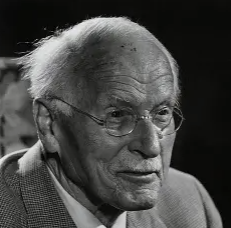
Every civilized human being, whatever his conscious development, is still an archaic man at the deeper levels of his psyche. Just as the human body connects us with the mammals and displays numerous relics of earlier evolutionary stages going back to even the reptilian age, so the human psyche is likewise a product of evolution which, when followed up to its origins, show countless archaic traits.
▼
Source
source
p. 126

8 months 5 days ago
The aphorism is cultivated only by those who have known fear in the midst of words, that fear of collapsing with all the words.

9 months 1 week ago
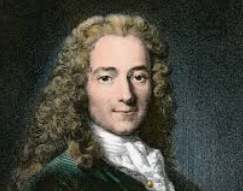
Our labour preserves us from three great evils -- weariness, vice, and want.

8 months 1 week ago
How it could come to pass I do not know, but I remember it clearly. The dream embraced thousands of years and left in me only a sense of the whole. I only know that I was the cause of their sin and downfall. Like a vile trichina, like a germ of the plague infecting whole kingdoms, so I contaminated all this earth, so happy and sinless before my coming. They learnt to lie, grew fond of lying, and discovered the charm of falsehood.
9 months 1 week ago
Genius borrows nobly. When Shakespeare is charged with debts to his authors, Landor replies: "Yet he was more original than his originals. He breathed upon dead bodies and brought them into life."
▼
Source
source
Quotation and Originality

7 months 1 week ago
A real mother, who knows the will of God by experience, will prepare her children also to fulfil it. Such a mother will suffer if she sees her child overfed, effeminate, and dressed-up, for she knows that these things will make it difficult for it to fulfil the will of God which she recognizes.
7 months 3 weeks ago
A terrible thing is intelligence. It tends to death as memory tends to stability. The living, the absolutely unstable, the absolutely individual, is strictly unintelligible. Logic tends to reduce everything to identities and genera, to each representation having no more than one self-same content in whatever place, time or relation it may occur to us. And there is nothing that remains for two successive moments of its existence. My idea of God is different each time that I conceive it. Identity, which is death, is the goal of the intellect. The mind seeks what is dead, for what is living escapes it; it seeks to congeal the flowing stream in blocks of ice; it seeks to arrest it. In order to analyze a body it is necessary to extenuate or destroy it. In order to understand anything it is necessary to kill it, to lay it out rigid in the mind.
10 months 6 days ago
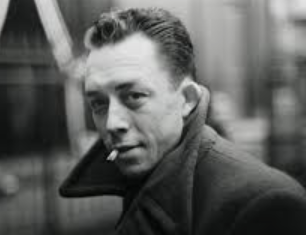
There always comes a time in history when the person who dares to say that 2+2=4 is punished by death. And the issue is not what reward or what punishment will be the outcome of that reasoning. The issue is simply whether or not 2+2=4.
8 months 1 week ago
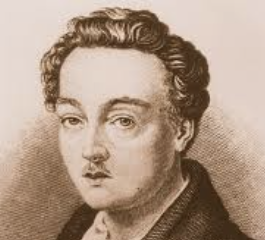
The power of the people and the power of reason are one.
▼
Source
source
Act III.
8 months 5 days ago
What can be said, lacks reality. Only what fails to make its way into words exists and counts.
9 months 1 week ago
The blazing evidence of immortality is our dissatisfaction with any other solution.
▼
Source
source
July 1855


9 months 1 week ago
A book can never be anything more than the impression of its author's thoughts [Ein Buch kann nie mehr seyn, als der Abdruck der Gedanken des Verfassers]. The value of these thoughts lies either in the matter about which he has thought, or in the form in which he develops his matter - that is to say, what he has thought about it.
8 months 6 days ago
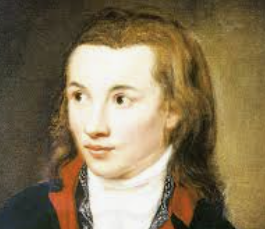
Someone arrived there - who lifted the veil of the goddess, at Sais. - But what did he see? He saw - wonder of wonders - himself. Novalis here alludes to Plutarch's account of the shrine of the goddess Minerva, identified with Isis, at Sais, which he reports had the inscription "I am all that hath been, and is, and shall be; and my veil no mortal has hitherto raised."
7 months 4 weeks ago
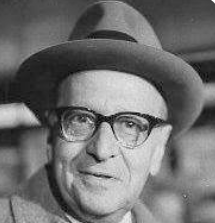
Once the philosophical foundation of democracy has collapsed, the statement that dictatorship is bad is rationally valid only for those who are not its beneficiaries, and there is no theoretical obstacle to the transformation of this statement into its opposite.
▼
Source
source
p. 29.

7 months 3 weeks ago
The prospects of revolution seem therefore quite restricted. For can a revolution avoid war? It is, however, on this feeble chance that we must stake everything or abandon all hope. An advanced country will not encounter, in the case of revolution, the difficulties which in backward Russia served as a base for the barbarous regime of Stalin. But a war of any scope will give rise to others as formidable.
▼
Source
source
Reflections on War (1933); also in Formative Writings
6 months 4 weeks ago
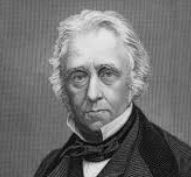
All parties seem to be agreed on one point, that the dialects commonly spoken among the natives of this part of India contain neither literary nor scientific information, and are moreover so poor and rude that, until they are enriched from some other quarter, it will not be easy to translate any valuable work into them.
7 months 5 days ago
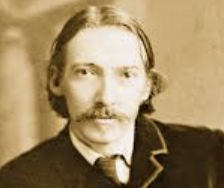
The difficulty of literature is not to write, but to write what you mean; not to affect your reader, but to affect him precisely as you wish.
▼
Source
source
Truth of Intercourse.

9 months 1 week ago
Nothing is so fatiguing as the eternal hanging on of an uncompleted task.
▼
Source
source
To Carl Stumpf, 1 January 1886
5 months 1 week ago
If you love me, be patient. Look at the trees. Are they in a hurry to ripen their fruit?
8 months 5 days ago
A man does not kill himself, as is commonly supposed, in a fit of madness but rather in a fit of unendurable lucidity, in a paroxysm which may, if so desired, be identified with madness; for an excessive perspicacity, carried to the limit and of which one longs to be rid at all costs, exceeds the context of reason.

5 months 6 days ago
Let us not limit the resources of nature; they are infinite, especially when reinforced by great art.

9 months 1 week ago
I should say that the universe is just there, and that is all.
▼
Source
source
BBC Radio Debate on the Existence of God, Bertrand Russell v. Frederick Copleston, 1948
7 months 1 week ago
What is the Jew?...What kind of unique creature is this whom all the rulers of all the nations of the world have disgraced and crushed and expelled and destroyed; persecuted, burned and drowned, and who, despite their anger and their fury, continues to live and to flourish. What is this Jew whom they have never succeeded in enticing with all the enticements in the world, whose oppressors and persecutors only suggested that he deny (and disown) his religion and cast aside the faithfulness of his ancestors?! The Jew - is the symbol of eternity. ... He is the one who for so long had guarded the prophetic message and transmitted it to all mankind. A people such as this can never disappear. The Jew is eternal. He is the embodiment of eternity.
▼
Source
source
Attributed in "The Final Resolution", in Jewish World Periodical (1908), p. 189
8 months 3 weeks ago
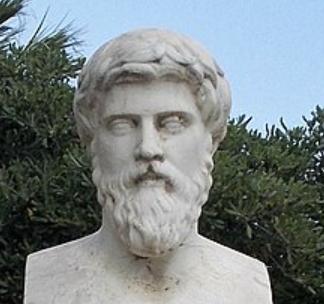
Diogenes the Cynic, when a little before his death he fell into a slumber, and his physician rousing him out of it asked him whether anything ailed him, wisely answered, "Nothing, sir; only one brother anticipates another,-Sleep before Death."
8 months 1 week ago
Once it's been proved to you that you're descended from an ape, it's no use pulling a face; just accept it. Once they've proved to you that a single droplet of your own fat must be dearer to you than a hundred thousand of your fellow human beings and consequently that all so-called virtues and duties are nothing but ravings and prejudices, then accept that too, because there's nothing to be done.
▼
Source
source
Part 1 Chapter 3 (tr. ?)

9 months 1 week ago
I deny that anyone knows, or can know, the nature of the two sexes, as long as they have only been seen in their present relation to one another. If men had ever been found in society without women, or women without men, or if there had been a society of men and women in which the women were not under the control of the men, something might have been positively known about the mental and moral differences which may be inherent in the nature of each. What is now called the nature of women is an eminently artificial thing - the result of forced repression in some directions, unnatural stimulation in others.
▼
Source
source
Ch. 1
6 months 3 weeks ago
Science seems to me to teach in the highest and strongest manner the great truth which is embodied in the Christian conception of entire surrender to the will of God. Sit down before fact as a little child, be prepared to give up every preconceived notion, follow humbly wherever and to whatever abysses nature leads, or you shall learn nothing. I have only begun to learn content and peace of mind since I have resolved at all risks to do this.
8 months 5 days ago
I used to ask myself, over a coffin: "What good did it do the occupant to be born?," I now put the same question about anyone alive.
8 months ago
It is not a question of the mass-man being a fool. On the contrary, to-day he is more clever, has more capacity of understanding than his fellow of any previous period. But that capacity is of no use to him; in reality, the vague feeling that he possesses it seems only to shut him up more within himself and keep him from using it. Once for all, he accepts the stock of commonplaces, prejudices, fag-ends of ideas or simply empty words which chance has piled up within his mind, and with a boldness only explicable by his ingenuousness, is prepared to impose them everywhere.... Why should he listen if he has within him all that is necessary? There is no reason now for listening, but rather for judging, pronouncing, deciding. There is no question concerning public life, in which he does not intervene, blind and deaf as he is, imposing his "opinions."
▼
Source
source
Chap. VIII: The Masses Intervene In Everything, And Why Their Intervention Is Solely By Violence
6 months 2 weeks ago
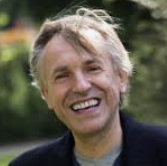
If we want eternal life, then we'll need to rewrite our bug-ridden genetic code and become god-like. "May all that have life be delivered from suffering", said Gautama Buddha. It's a wonderful sentiment. Sadly, only hi-tech solutions can ever eradicate suffering from the living world. Compassion alone is not enough.
▼
Source
source
Interview with Nick Bostrom and David Pearce, Dec. 2007

9 months 1 week ago
If you would convince a man that he does wrong, do right. But do not care to convince him. Men will believe what they see.
▼
Source
source
Let them see. Pearls of Thought (1881) p. 222
10 months 6 days ago
Life continues, and some mornings, weary of the noise, discouraged by the prospect of the interminable work to keep after, sickened also by the madness of the world that leaps at you from the newspaper, finally convinced that I will not be equal to it and that I will disappoint everyone, all I want to do is sit down and wait for evening. This is what I feel like, and sometimes I yield to it.
8 months ago
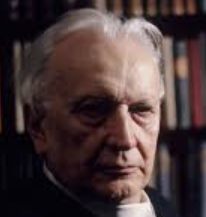
Rohde became more and more firmly bound to the bourgeois world, its institutions and accepted opinions. ... The contrast between the two natures makes Rohde and Nietzsche exemplary representatives of two distinctive worlds. In their youth they both live in the realm of boundless possibilities and feel an affinity through the exuberance of their noble aspirations. Subsequently they go in opposite directions. Nietzsche remains young, leaving concrete reality as his task assumes existential import. Rohde grows old, bourgeois, stable, and skeptical. Hence courage is a fundamental trait in Nietzsche, plaintive self-irony in Rohde. ... Rohde retained the interests but not the attitudes of his youth; he looked to the world of the Greeks for the object of his contemplation rather than the norm of obligation.
▼
Source
source
pp. 61-62
CivilSimian.com created by AxiomaticPanic, CivilSimian, Kalokagathia