


6 months 1 day ago
A certain degree of blindness as to the absoluteness of one's own values may be indispensable to extract the valuable qualities from the world, the qualities whose value is believed to be the highest. It is possible that in order to realize one's values one must have faith in their exclusive character.
▼
Source
source
Chapter Eight, Logical Empiricism, p. 202-203
6 months 5 days ago
Society attacks early, when the individual is helpless.
▼
Source
source
Walden Two (1948), p. 95

9 months 1 week ago
That man is the richest whose pleasures are the cheapest.
▼
Source
source
March 11, 1856

9 months 4 days ago
Don't get involved in partial problems, but always take flight to where there is a free view over the whole single great problem, even if this view is still not a clear one.
▼
Source
source
Journal entry
5 months 1 week ago
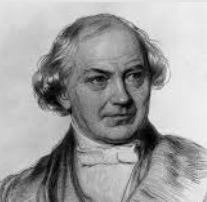
What remains is the remarkable and, for many, certainly disquieting diagnosis that all genuine political theories presuppose man to be evil, i.e., by no means an unproblematic but a dangerous and dynamic being.
5 months 1 week ago
New terms and changes of terms, which are not needed in order to express truth, are to be avoided.

5 months 6 days ago
The lot assigned to every man is suited to him, and suits him to itself.
▼
Source
source
III, 4

7 months 3 weeks ago
The philosophical thought of Kant, the supreme flower of the Germanic people, has its roots in the religious feeling of Luther, and it is not possible for Kantism, especially the practical part of it, to take root and bring forth flower and fruit in peoples who have not undergone the experience of the Reformation and who perhaps were incapable of experiencing it. Kantism is Protestant, and we Spaniards are fundamentally Catholic. And if Krause struck some roots here - more numerous and more permanent than is commonly supposed - it is because Krause has roots in pietism, and pietism, as Ritschl has demonstrated in his Geschichte des Pietismus, has specifically Catholic roots and may be described as the irruption, or rather the persistence of Catholic mysticism in the heart of Protestant rationalism. And this explains why not a few Catholic thinkers in Spain became followers of Krause.

9 months 1 week ago
A bureaucracy always tends to become a pedantocracy.
▼
Source
source
Ch. VI: Of the Infirmities and Dangers to Which Representative Government Is Liable (p. 234)
9 months 4 days ago
One can mistrust one's own senses, but not one's own belief. If there were a verb meaning "to believe falsely," it would not have any significant first person, present indicative.
▼
Source
source
Pt II, p. 162

5 months 6 days ago
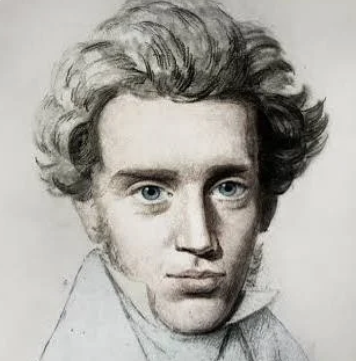
..If you are troubled by external circumstances, it is not the circumstances that trouble you, but your own perception of them - and they are in your power to change at any time.
10 months 1 week ago
It occurs to me that artists go forward by going backward, something which I have nothing against intrinsically when it is a reproduced retreat - as is the case with the better artists. But it does not seem right that they stop with the historical themes already given and, so to speak, think that only these are suitable for poetic treatment, because these particular themes, which intrinsically are no more poetic than others, are now again animated and inspirited by a great poetic nature. In this case the artists advance by marching on the spot. - Why are modern heroes and the like not just as poetic? Is it because there is so much emphasis on clothing the content in order that the formal aspect can be all the more finished?
8 months ago
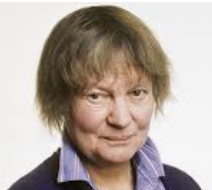
All art is the struggle to be, in a particular sort of way, virtuous.
▼
Source
source
The Black Prince (1973); 2003, p. 181.

6 months 4 days ago
While Trump is not going to be president, Trumpism is going to survive. ...The Democrats need to look very very carefully at those election results because ...the Republicans did well not necessarily because people love what they represent, but because they don't like what the Democrats represent... Unless they sort out what that is, they are going to continue to lose elections.
▼
Source
source
28:52:00

5 months 2 weeks ago
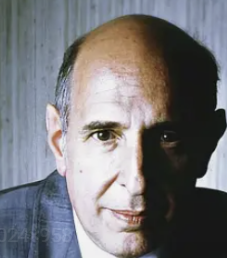
As to the viciousness of the philosophers, the meaning of this complaint is succinctly expressed in the charge that the philosophers do not "hold the gods the city holds." And this accusation is most true. The quest for wisdom begins in doubt of the conventional wisdom about the highest things. The most cherished beliefs of the community, the collective hopes and fears, are centered on its gods. The unpardonable thing is to be beyond these hopes and fears, beyond the awe and shame the gods impose.
▼
Source
source
Commerce and Culture, p. 287.
7 months 4 weeks ago
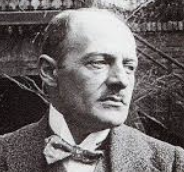
Whenever convictions are not arrived at by direct contact with the world and the objects themselves, but indirectly through a critique of the opinions of others, the processes of thinking are impregnated with ressentiment. The establishment of "criteria" for testing the correctness of opinions then becomes the most important task. Genuine and fruitful criticism judges all opinions with reference to the object itself. Ressentiment criticism, on the contrary, accepts no "object" that has not stood the test of criticism.
▼
Source
source
L. Coser, trans. (1973), pp. 67-68

7 months 1 week ago
The civilized pagan recognizes life not in himself alone, but in societies of men-in the tribe, the clan, the family, the kingdom -and sacrifices his personal good for these societies. The motive power of his life is glory. His religion consists in the exaltation of the glory of those who are allied to him-the founders of his family, his ancestors, his rulers-and in worshiping gods who are exclusively protectors of his clan, his family, his nation, his government.
▼
Source
source
Chapter IV, Christianity Misunderstood by Men of Science
8 months 1 week ago
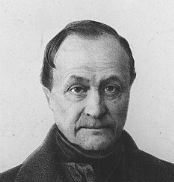
There are three successive states of morality answering to the three principal stages of human life; the personal, the domestic, and the social stage.
▼
Source
source
p. 104
8 months 1 day ago
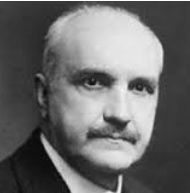
Professional philosophers are usually only apologists: that is, they are absorbed in defending some vested illusion or some eloquent idea. Like lawyers or detectives, they study the case for which they are retained.
▼
Source
source
pp. 48-49

7 months 3 weeks ago
No member of a crew is praised for the rugged individuality of his rowing.
▼
Source
source
"Harvard: The Future," The Atlantic Monthly, September 1936
10 months 1 week ago
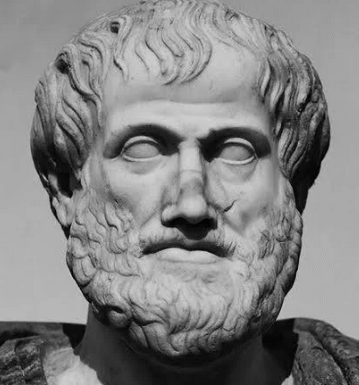
The first philosophers, in investigating the truth and the nature of things, wandered, as if led by ignorance, into a certain... path. Hence, they say that no being is either generated or corrupted, because it is necessary that what is generated should be generated either from being or non-being: but both these are impossible; for neither can being be generated, since it already is; and from nothing, nothing can be generated... And thus... they said that there were not many things, but that being alone had a subsistence. ...the ancient philosophers ...through this ignorance added so much to their want of knowledge, as to fancy that nothing else was generated or had a being; but they subverted all generation.
8 months 4 weeks ago
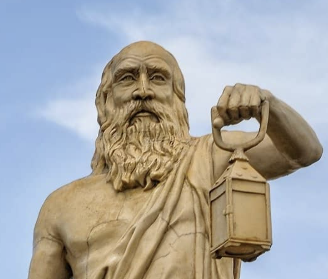
When some one boasted that at the Pythian games he had vanquished men, Diogenes replied, "Nay, I defeat men, you defeat slaves."
▼
Source
source
Diogenes Laërtius, vi. 33, 43

9 months 1 week ago
We are, like Nebuchadnezzar, dethroned, bereft of reason, and eating grass like an ox.
▼
Source
source
Prospects

5 months 1 week ago
When public opinion changes, it is with the rapidity of thought.
▼
Source
source
Letter to Colonel Charles Yancey (6 January 1816) ME 14:384
10 months 1 week ago
And happiness is thought to depend on leisure; for we are busy that we may have leisure, and make war that we may live in peace.
5 months 1 week ago
Behind all appearances, I divine a struggling essence. I want to merge with it. I feel that behind appearances this struggling essence is also striving to merge with my heart. But the body stands between us and separates us. The mind stands between us and separates us.

9 months 3 weeks ago
Venerate the martyrs, praise, love, proclaim, honor them. But worship the God of the martyrs.
▼
Source
source
273:9; translation from: The works of Saint Augustine, John E. Rotelle, New City Press, ISBN 1565480600 ISBN 9781565480605 p. 21


9 months 3 days ago
Recalling all the erroneous things that doctors have been able to say about sex or madness does us a fat lot of good. I think that what is currently politically important is to determine the regime of verediction established at a given moment ... on the basis of which you can now recognize, for example, that doctors in the nineteenth century said so many stupid things about sex. ... It is not so much the history of the true or the history of the false as the history of verediction which has a political significance.
▼
Source
source
Lecture 2, January 17, 1979, p. 36

8 months 5 days ago
To detach yourself elegantly from the world; to give contour and grace to sadness; a solitude in style; a walk that gives cadence to memories; stepping towards the intangible; with the breath in the trembling margins of things; the past reborn in the overflow of fragrances; the smell, through which we conquer time; the contour of the invisible things; the forms of the immaterial; to deepen yourself in the intangible; to touch the world airborne by smell; aerial dialogue and gliding dissolution; to bathe in your own reflecting fragmentation...

9 months 1 week ago
I wish to propose for the reader's favourable consideration a doctrine which may, I fear, appear wildly paradoxical and subversive. The doctrine in question is this: that it is undesirable to believe a proposition when there is no ground whatever for supposing it true.
▼
Source
source
Ch. 1: The Value of Scepticism

9 months 3 weeks ago
God only pours out his light into the mind after having subdued the rebellion of the will by an altogether heavenly gentleness which charms and wins it.

7 months 6 days ago
We are interested in others, when they are interested in us.
▼
Source
source
Maxim 16
5 months 2 weeks ago
Those who are wise won't be busy, and those who are too busy can't be wise.
▼
Source
source
p. 150
9 months 1 week ago
Too busy with the crowded hour to fear to live or die.
▼
Source
source
Quatrains, Nature
8 months 4 weeks ago
The encouragement of light-mindedness about traditional philosophical topics serves the same purposes as does the encouragement of light-mindedness about traditional theological topics. Like the rise of large market economies, the increase in literacy, the proliferation of artistic genres, and the insouciant pluralism of contemporary culture, such philosophical superficiality and light-mindedness helps along the disenchantment of the world. It helps make the world's inhabitants more pragmatic, more tolerant, more liberal, more receptive to the appeal of instrumental rationality.

9 months 1 week ago
Technological progress has merely provided us with more efficient means for going backwards.
▼
Source
source
Ch. 1, p. 9 [2012 reprint]. Also in "Tomorrow and Tomorrow and Tomorrow" in Adonis and the Alphabet (1956); later in Collected Essays (1959), p. 293
9 months 1 week ago
The sky is the daily bread of the eyes.
▼
Source
source
May 25, 1843

5 months 2 weeks ago
The wise man who has charge of governing the empire should know the cause of disorder before he can put it in order. Unless he knows its cause, he cannot regulate it.
▼
Source
source
Book 4; Universal Love I
7 months 2 weeks ago
Now, moral philosophers generally prefer to talk about virtues, or about (specific) duties, rights, and so on, rather than about moral images of the world. There are obvious reasons for this; nevertheless, I think that it is a mistake, and that Kant is profoundly right. What we require in moral philosophy is, first and foremost, a moral image of the world, or rather--since, here again, I am more of a pluralist than Kant--a number of complementary moral images of the world.
▼
Source
source
Lecture III: Equality and Our Moral Image of the World
CivilSimian.com created by AxiomaticPanic, CivilSimian, Kalokagathia