


9 months 1 week ago
The universe is composed of matter, and, as a system, is sustained by motion. Motion is not a property of matter, and without this motion the solar system could not exist. Were motion a property of matter, that undiscovered and undiscoverable thing, called perpetual motion, would establish itself. It is because motion is not a property of matter, that perpetual motion is an impossibility in the hand of every being, but that of the Creator of motion. When the pretenders to Atheism can produce perpetual motion, and not till then, they may expect to be credited.
▼
Source
source
A Discourse, &c. &c.


9 months 1 week ago
We cannot suppose that an individual's thinking survives bodily death, since that destroys the organization of the brain and dissipates the energy which utilized the brain tracks. God and immortality, the central dogma of the Christian religion, find no support in science. But we in the West have come to think of them as the irreducible minimum of theology. No doubt people will continue to entertain these beliefs, because they are pleasant, just as it is pleasant to think ourselves virtuous and our enemies wicked. But for my part I cannot see any grounds for either. I do not pretend to be able to prove that there is no God. I equally cannot prove Satan is a fiction. The Christian God may exist, so might the Gods of Olympus, Ancient Egypt or Babylon; but no one of these hypotheses is more probable than any other. They lie outside the region of provable knowledge and there is no reason to consider any of them.

6 months 2 weeks ago
In a traditional reading eating the apple was the original sin; but, as Gnostics understood the story, the two primordial humans were right to eat the apple. The God that commanded them not to do so was not the true God but only a demiurge, a tyrannical underling exulting in its power, while the serpent came to free them from slavery. True, when they ate the apple Adam and Eve fell from grace. This was indeed the Fall of Man - a fall into the dim world of everyday consciousness. But the Fall need not be final. Having eaten its fill from the Tree of Knowledge, humankind can then rise into a state of conscious innocence. When this happens, Herr C. declares, it will be 'the final chapter in the history of the world'.
▼
Source
source
The Faith of Puppets: The Freedom of the Marionette (p. 8)
7 months 3 weeks ago
Give us back our suffering, we cry to Heaven in our hearts - suffering rather than indifferentism; for out of nothing comes nothing. But out of suffering may come the cure. Better have pain than paralysis! A hundred struggle and drown in the breakers. One discovers the new world. But rather, ten times rather, die in the surf, heralding the way to that new world, than stand idly on the shore!
6 months 5 days ago
This miracle of social concord would result not from direct conciliation, which would be impossible, but from the development of new interests, and especially from the amazement with which the minds of men would be filled on being convinced of the radical falseness of the civilized social order by comparison with the associative or combined, and of the errors in which the social world has been so long plunged - misled by speculative philosophy, which upholds and extols this order with all its defects to the entire neglect of the study of association.
▼
Source
source
The Theory of Social Organization. Harmonian Man: Selected Writings of Charles Fourier, p. 5.

8 months 5 days ago
There is no means of proving it is preferable to be than not to be.



9 months 1 week ago
The world is upheld by the veracity of good men: they make the earth wholesome.
▼
Source
source
Uses of Great Men

7 months 1 week ago
The happiness of men consists in life. And life is in labor.
▼
Source
source
What Is To Be Done? (1886) Chap. XXXVIII
10 months 6 days ago
An atom blaster is a good weapon, but it can point both ways.
5 months 1 week ago
In religions which have lost their creative spark, the gods eventually become no more than poetic motifs or ornaments for decorating human solitude and walls.
▼
Source
source
Ch. 12

8 months 1 week ago
Americans combine to give fêtes, found seminaries, build churches, distribute books, and send missionaries to the antipodes. Hospitals, prisons, and schools take shape in that way. Finally, if they want to proclaim a truth or propagate some feeling by the encouragement of a great example, they form an association. In every case, at the head of any new undertaking, where in France you would find the government or in England some territorial magnate, in the United States you are sure to find an association. I have come across several types of association in America of which, I confess, I had not previously the slightest conception, and I have often admired the extreme skill they show in proposing a common object for the exertions of very many and in inducing them voluntarily to pursue it.
▼
Source
source
Book Two, Chapter V.
5 months 2 weeks ago
Human nature is full of riddles, and one of these riddles is this: How is it that people who have been crushed by the sheer weight of slavery and cast to the bottom of the pit can nevertheless find strength to rise up and free themselves, first in spirit then in body, while those who soar unhampered over the peaks of freedom suddenly appear to lose the taste for freedom, lose the will to defend it, and hopelessly confused and lost almost begin to crave slavery?
▼
Source
source
"Argentina's President Javier Milei Loves Being the Skunk at the Garden Party" (at 47m35s), Honestly with Bari Weiss, 6 June 2024.

7 months 3 weeks ago
With Puritanism as the constant check upon American life, neither truth nor sincerity is possible. Nothing but gloom and mediocrity to dictate human conduct, curtail natural expression, and stifle our best impulses.


9 months 2 weeks ago
In judging policies we should consider the results that have been achieved through them rather than the means by which they have been executed.
▼
Source
source
From an undated letter to Piero Soderini (translated here by Dr. Arthur Livingston), in The Living Thoughts of Machiavelli, by Count Carlo Sforza, published by Cassell, London (1942), p. 85
5 months 3 weeks ago
In the pedagogical as in certain other spheres freedom is not allowed to erupt, the power of the opposition is not allowed to put a word in edgewise: they want submissiveness. Only a formal and material training is being aimed at and only scholars come out of the menageries of the humanists, only "useful citizens" out of those of the realists, both of whom are indeed nothing but subservient people. Our good background of recalcitrancy [sic] gets strongly suppressed and with it the development of knowledge to free will. The result of school is then philistinism.
▼
Source
source
p. 23

9 months 1 week ago
Democracy can hardly be expected to flourish in societies where political and economic power is being progressively concentrated and centralized. But the progress of technology has led and is still leading to just such a concentration and centralization of power.
▼
Source
source
Chapter 3 (p. 19)

5 months 3 weeks ago
It was a great deed to conquer Carthage, but a greater deed to conquer death.
7 months 5 days ago
It is hard to believe that this simple truth is not understood by those leaders who forbid their followers to use effective contraceptive methods. They express a preference for 'natural' methods of population limitation, and a natural method is exactly what they are going to get. It is called starvation.
▼
Source
source
Ch. 7. Family planning
6 months 3 weeks ago
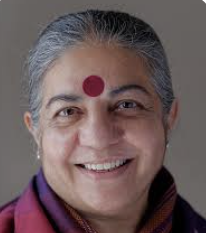
The business of grabbing and money-making, through a violent extractive economy that the 1% have built, is burdening the earth and humanity with unbearable and non-sustainable costs, and has brought us to the brink of extinction. We do not have to escape from the earth; we have to escape from the illusions that enslave our minds and make extinction look inevitable.
9 months 1 week ago
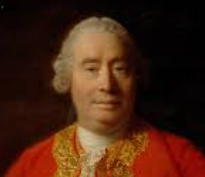
It is a great mortification to the vanity of man, that his utmost art and industry can never equal the meanest of nature's productions, either for beauty or value. Art is only the under-workman, and is employed to give a few strokes of embellishment to those pieces, which come from the hand of the master.
▼
Source
source
Part I, Essay 15: The Epicurean

7 months 1 week ago
When we put our central nervous system outside us we returned to the primal nomadic state.

5 months 1 week ago
Everything predicted by the enemies of banks, in the beginning, is now coming to pass. We are to be ruined now by the deluge of bank paper. It is cruel that such revolutions in private fortunes should be at the mercy of avaricious adventurers, who, instead of employing their capital, if any they have, in manufactures, commerce, and other useful pursuits, make it an instrument to burden all the interchanges of property with their swindling profits, profits which are the price of no useful industry of theirs.
▼
Source
source
Letter to Thomas Cooper, 1814. ME 14:61

9 months 1 week ago
But simultaneously with the development of capitalist production the credit system also develops. The money-capital which the capitalist cannot as yet employ in his own business is employed by others, who pay him interest for its use.
▼
Source
source
Vol. II, Ch. XVII, p. 325.
9 months 4 days ago
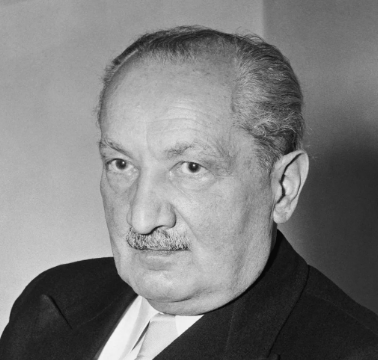
The critique of the highest values hitherto does not simply refute them or declare them invalid. It is rather a matter of displaying their origins as impositions which must affirm precisely what ought to be negated by the values established.
▼
Source
source
p. 26
8 months 5 days ago
Is it conceivable to adhere to a religion founded by someone else?
8 months 5 days ago
Only thoughts that are randomly born die. The other thoughts we carry with us without knowing them. They have abandoned themselves to forgetfulness so that they can be with us all the time.
5 months 6 days ago
Unhappily, history proves that war is, in a certain sense, the habitual state of mankind, which is to say that human blood must flow without interruption somewhere or other on the globe, and that for every nation, peace is only a respite.
▼
Source
source
Chapter III, p. 23

9 months 1 week ago
Perhaps I am more than usually jealous with respect to my freedom. I feel that my connection with and obligation to society are still very slight and transient. Those slight labors which afford me a livelihood, and by which it is allowed that I am to some extent serviceable to my contemporaries, are as yet commonly a pleasure to me, and I am not often reminded that they are a necessity. So far I am successful. But I foresee, that, if my wants should be much increased, the labor required to supply them would become a drudgery. If I should sell both my forenoons and afternoons to society, as most appear to do, I am sure, that, for me, there would be nothing left worth living for. I trust that I shall never thus sell my birthright for a mess of pottage.
▼
Source
source
p. 486
5 months 1 week ago
Sometimes it is said that man can not be trusted with the government of himself. Can he, then, be trusted with the government of others? Or have we found angels in the forms of kings to govern him? Let history answer this question.
7 months 3 weeks ago
It is a sign of sovereignty to risk one's life, that is, to turn life into a game.
9 months 3 weeks ago
If a person gave your body to any stranger he met on his way, you would certainly be angry. And do you feel no shame in handing over your own mind to be confused and mystified by anyone who happens to verbally attack you?
▼
Source
source
(28) [tr. Elizabeth Carter]
5 months 1 week ago
Above all things, lose no occasion of exercising your dispositions to be grateful, to be generous, to be charitable, to be humane, to be true, just, firm, orderly, courageous, &c. Consider every act of this kind, as an exercise which will strengthen your moral faculties and increase your worth.
8 months ago
The intellect is at home in that which is fixed only because it is done and over with, for intellect is itself just as much a deposit of past life as is the matter to which it is congenial. Intuition alone articulates in the forward thrust of life and alone lays hold of reality.
7 months 2 weeks ago
What is the good of drawing conclusions from experience? I don't deny we sometimes draw the right conclusions, but don't we just as often draw the wrong ones?
▼
Source
source
F 123
9 months 1 week ago
The child must be brought up free (that he allow others to be free). He must learn to endure the restraint to which freedom subjects itself for its own preservation (experience no subordination to his command). Thus he must be disciplined. This precedes instruction. Training must continue without interruption. He must learn to do without things and to be cheerful about it. He must not be obliged to dissimulate, he must acquire immediate horror of lies, must learn so to respect the rights of men that they become an insurmountable wall for him. His instruction must be more negative. He must not learn religion before he knows morality. He must be refined, but not spoiled (pampered). He must learn to speak frankly, and must assume no false shame. Before adolescence he must not learn fine manners ; thoroughness is the chief thing. Thus he is crude longer, but earlier useful and capable.
▼
Source
source
Part III : Selection on Education from Kant's other Writings, Ch. I Pedagogical Fragments, # 3

7 months 3 weeks ago
As we search as a nation for constructive ways to challenge racism and white supremacy, it is absolutely essential that progressive female voices gain a hearing.


9 months 4 days ago
A philosopher who is not taking part in discussions is like a boxer who never goes into the ring.
▼
Source
source
Conversation of 1930
CivilSimian.com created by AxiomaticPanic, CivilSimian, Kalokagathia