


2 months 2 days ago
He whom God has touched will always be a being apart: he is, whatever he may do, a stranger among men; he is marked by a sign.
▼
Source
source
Oeuvres Complètes, vol. 3. L'Avenir de la Science (1890).

5 months 3 weeks ago
For when every judgement is the act of hym that judgeth, it behoveth that every man performe hys worke and purpose, not by any forayne or straunge power or facultie, but by his owne proper power, and strength.

5 months 2 weeks ago
The greatest thing in the world is to know how to belong to oneself.
▼
Source
source
Ch. 39

5 months 2 weeks ago
Above all, every relation must be considered as suspicious, which depends in any degree upon religion, as the prodigies of Livy: And no less so, everything that is to be found in the writers of natural magic or alchemy, or such authors, who seem, all of them, to have an unconquerable appetite for falsehood and fable.
▼
Source
source
Aphorism 29

5 months 1 week ago
For want of the apparatus of propositional functions, many logicians have been driven to the conclusion that there are unreal objects. It is argued, e.g., by Meinong, that we can speak about "the golden mountain," "the round square," and so on; we can make true propositions of which these are the subjects; hence they must have some kind of logical being, since otherwise the propositions in which they occur would be meaningless. In such theories, it seems to me, there is a failure of that feeling for reality which ought to be preserved even in the most abstract studies. Logic, I should maintain, must no more admit a unicorn than zoology can; for logic is concerned with the real world just as truly as zoology, though with its more abstract and general features.
▼
Source
source
Ch. 16: Descriptions
3 months 2 weeks ago
A few years ago I had occasion to visit Peru, and I got to know a fine philosopher and a truly wonderful human being-Francisco Miro Casada. Miro Casada has been an idealist all his life, while being, at the same time, a man of great experience (a former member of several governments and a former Ambassador to France). I found him a man who represents the social democratic vision in its purest form. Talking to him, and to my other friends in Peru (who represented quite a spectrum of political opinion), I heard something that was summed up in a remark he, Miro Casada, made to me, "Whenever you have a Republican president, we get a wave of military dictatorships in Latin America".
▼
Source
source
How Not to Solve Ethical Problems
4 months 1 week ago
They say in the grave there is peace, and peace and the grave are one and the same.
▼
Source
source
Act I.
3 weeks 6 days ago
The most beautiful fate of a physical theory is to point the way to the establishment of a more inclusive theory, in which it lives on as a limiting case.

3 months 4 days ago
I've always been careful never to predict anything that had not already happened.
▼
Source
source
Interview: Tom Wolfe, TVOntario, August 1970


3 months 4 weeks ago
Whoever shall find the interpretation of these words shall not taste of death. (1) I have not a devil; but I honour my Father, and ye do dishonour me. And I seek not mine own glory: there is one that seeketh and judgeth. Verily, verily, I say unto you, If a man keep my saying, he shall never see death.
▼
Source
source
(John 8:49-51)
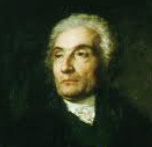
1 month 4 days ago
I am a perfect stranger to France, which I have never seen, and I expect nothing from her king, whom I shall never know.
▼
Source
source
Chapter VIII, p. 76

1 month 6 days ago
Reductionism (ultimately, the empirical explanability of everything and a cornerstone of science), has uses that are appropriate, and it also can be used inappropriately. It is appropriately used as a way (one way) of understanding what is empirically known or empirically knowable. When it becomes merely an intellectual "position" confronting what is not empirically known or knowable, then it becomes very quickly absurd, and also grossly desensitizing and false.
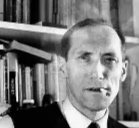
1 month 4 weeks ago
While the positivists were proclaiming the end "once and for all" of unverifiable metaphysical systems and speculative philosophy in general, new doctrines in flagrant contradiction to those ideals have sprung up one after the other. Positivists see no more in this development than evidence of human stupidity, not any reflection on themselves.
▼
Source
source
Chapter Eight, Logical Empiricism, p. 198


5 months 6 days ago
Then he tried to recall the lessons of Mr. Wisdom. "it is I myself, eternal Spirit, who drives this Me, the slave, along that ledge. I ought not to care whether he falls and breaks his neck or not. It is not he that is real, it is I - I - I.
▼
Source
source
Pilgrim's Regress 137

3 months 6 days ago
Reason has discovered the struggle for existence and the law that I must throttle all those who hinder the satisfaction of my desires. That is the deduction reason makes. But the law of loving others could not be discovered by reason, because it is unreasonable.
▼
Source
source
Pt. VIII, ch. 13

4 months 1 week ago
All writers, not ours alone but foreigners also, who have sought to represent Absolute Beauty, were unequal to the task, for it is an infinitely difficult one. The beautiful is the ideal ; but ideals, with us as in civilized Europe, have long been wavering. There is in the world only one figure of absolute beauty: Christ. That infinitely lovely figure is, as a matter of course, an infinite marvel.
▼
Source
source
Letter to his Niece Sofia Alexandrovna, Geneva, January 1, 1868. Ethel Golburn Mayne, Letters of Fyodor Michailovitch Dostoyevsky to His Family and Friends (1879), Dostoevsky's Letters XXXIX, p. 136

5 months 1 week ago
I pre-suppose, of course, a reader who is willing to learn something new and therefore to think for himself.
▼
Source
source
Author's prefaces to the First Edition.
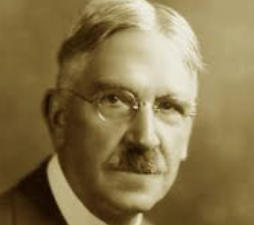
3 months 4 weeks ago
The artist in realizing his own individuality reveals potentialities hitherto unrealized. The revelation is the inspiration of other individuals to make the potentialities real, for it is not sheer revolt against things as they are which stirs human endeavor to its depth, but vision of what might be and is not. Subordination of the artists to any special cause no matter how worthy does violence not only to the artist but to the living source of a new and better future.
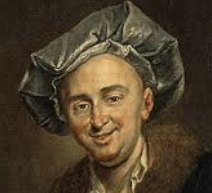
1 month 4 days ago
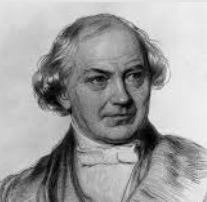
It is not enough for a wise man to study nature and truth; he should dare state truth for the benefit of the few who are willing and able to think.
1 month 6 days ago
According to the technical language of old writers, a thing and its qualities are described as subject and attributes; and thus a man's faculties and acts are attributes of which he is the subject. The mind is the subject in which ideas inhere. Moreover, the man's faculties and acts are employed upon external objects; and from objects all his sensations arise. Hence the part of a man's knowledge which belongs to his own mind, is subjective: that which flows in upon him from the world external to him, is objective.
▼
Source
source
Part I Of Ideas, Book I Of Ideas in General, Chap. 4 Of the Difference and Opposition of Sensation and Ideas
3 months 4 weeks ago
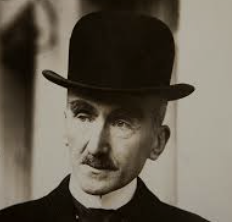
Religion is to mysticism what popularization is to science. What the mystic finds waiting for him, then, is a humanity which has been prepared to listen to his message by other mystics invisible and present in the religion which is actually taught. Indeed his mysticism itself is imbued with this religion, for such was its starting point. His theology will generally conform to that of the theologians. His intelligence and his imagination will use the teachings of the theologians to express in words what he experiences, and in material images what he sees spiritually. And this he can do easily, since theology has tapped that very current whose source is the mystical. Thus his mysticism is served by religion, against the day when religion becomes enriched by his mysticism. This explains the primary mission which he feels to be entrusted to him, that of an intensifier of religious faith.
▼
Source
source
Chapter III : Dynamic Religion
3 months 6 days ago
A real work of art destroys, in the consciousness of the receiver, the separation between himself and the artist.
5 months 3 weeks ago
It is more shameful to distrust our friends than to be deceived by them.

4 months 1 week ago
You had that action and counteraction which, in the natural and in the political world, from the reciprocal struggle of discordant powers draws out the harmony of the universe.
▼
Source
source
Volume iii, p. 277

6 months 4 days ago
The Dantean conceptions of Inferno were childish and unworthy of the Divine imagination: fire and torture. Boredom is much more subtle. The inner torture of a mind unable to escape itself in any way, condemned to fester in its own exuding mental pus for all time, is much more fitting. Oh, yes, my friend, we have been judged, and condemned, too, and this is not Heaven, but hell.
2 months 2 weeks ago
To understand how indirect communication is possible we must grasp what it is about ordinary communication that is being changed.
▼
Source
source
Chapter 6, Indirect Communication, p. 110
4 months 3 weeks ago
He made one of Antipater's recommendation a judge; and perceiving afterwards that his hair and beard were coloured, he removed him, saying, "I could not think one that was faithless in his hair could be trusty in his deeds."
▼
Source
source
40 Philip
4 months 4 days ago
The more I see of the world, the more I am convinced that civilisation is a blessing not sufficiently estimated by those who have not traced its progress; for it not only refines our enjoyments, but produces a variety which enables us to retain the primitive delicacy of our sensations. Without the aid of the imagination all the pleasures of the senses must sink into grossness, unless continual novelty serve as a substitute for the imagination, which, being impossible, it was to this weariness, I suppose, that Solomon alluded when he declared that there was nothing new under the sun!
▼
Source
source
Letter 2

5 months 1 week ago
The most violent revolutions in an individual's beliefs leave most of his old order standing. Time and space, cause and effect, nature and history, and one's own biography remain untouched. New truth is always a go-between, a smoother-over of transitions. It marries old opinion to new fact so as ever to show a minimum of jolt, a maximum of continuity.
▼
Source
source
"What Pragmatism Means," Pragmatism, pp. 60-61 (1931); lectures delivered at the Lowell Institute, Boston, Massachusetts

6 months 1 week ago
If someone were to expound that godliness is to belong to childhood in the temporal sense and thus dwindle and die with the years as childhood does, is to be a happy frame of mind that cannot be preserved but only recollected; if someone were to expound that repentance as a weakness of old age accompanies the decline of one's powers, when the senses are dulled, when sleep no longer strengthens but increases lethargy-this would be ungodliness and foolishness.
3 months 4 weeks ago
Art expresses, it does not state; it is concerned with existences in their perceived qualities, not with conceptions symbolized in terms.
▼
Source
source
p. 139
5 months 1 week ago
The law of simplicity and naïveté applies to all fine art, for it is compatible with what is most sublime. True brevity of expression consists in a man only saying what is worth saying, while avoiding all diffuse explanations of things which every one can think out for himself; that is, it consists in his correctly distinguishing between what is necessary and what is superfluous. On the other hand, one should never sacrifice clearness, to say nothing of grammar, for the sake of being brief. To impoverish the expression of a thought, or to obscure or spoil the meaning of a period for the sake of using fewer words shows a lamentable want of judgment.
3 months 4 weeks ago
Go thy way; and as thou hast believed, so be it done unto thee.
▼
Source
source
8:13 (KJV) Said to the officer.
4 months 1 week ago
The Revolution and Hanover succession had been objects of the highest veneration to the old Whigs. They thought them not only proofs of the sober and steady spirit of liberty which guided their ancestors; but of their wisdom and provident care of posterity.-The modern Whigs have quite other notions of these events and actions. They do not deny that Mr. Burke has given truly the words of the acts of parliament which secured the succession, and the just sense of them. They attack not him but the law.
▼
Source
source
p. 436

1 month 1 week ago
England was, until we copied her, the only country on earth which ever, by a general law, gave a legal right to the exclusive use of an idea. In some other countries it is sometimes done, in a great case, and by a special and personal act, but, generally speaking, other nations have thought that these monopolies produce more embarrassment than advantage to society; and it may be observed that the nations which refuse monopolies of invention, are as fruitful as England in new and useful devices.
1 month 4 days ago
Is it not better to use what is in thy power like a free man than to desire in a slavish and abject way what is not in thy power?
▼
Source
source
IX, 40
5 months 3 weeks ago
If there is something more excellent than the truth, then that is God; if not, then truth itself is God.
3 months 2 weeks ago
Pascal is called the founder of modern probability theory. He earns this title not only for the familiar correspondence with Fermat on games of chance, but also for his conception of decision theory, and because he was an instrument in the demolition of probabilism, a doctrine which would have precluded rational probability theory.
▼
Source
source
Chapter 3, Opinion, p. 23.

6 months 1 week ago
That which does not kill us makes us stronger.
3 months 2 weeks ago
We set the treatment of bodies so high above the treatment of souls, that the physician occupies a higher place in society than the school-master. The governess is to have every one of God's gifts; she is to do that which the mother herself is incapable of doing; but our son must not degrade himself by marrying the governess, nor our daughter the tutor, though she might marry the medical man.
3 months 4 weeks ago
Time, and Industry, produce everyday new knowledge.
▼
Source
source
The Second Part, Chapter 30, p. 176
1 month 1 week ago
Good wine is a necessity of life for me.
▼
Source
source
As quoted in The Man from Monticello : An Intimate Life of Thomas Jefferson (1969) by Thomas J. Fleming, p. 250

3 months 3 weeks ago
A Pharisee is someone who is virtuous out of obedience to the Great Beast.
▼
Source
source
p. 125
2 months 1 week ago
Whatever the practical origins of aesthetic discernment may have been, it has been used to create great works of art. When the very loftiest human creations are seen to derive from humble origins and functions, what needs revision is not our esteem for these creations but our notion of nobility.
▼
Source
source
The Nature of Rationality (1993), Ch. V : Instrumental Rationality and Its Limits; Rationality's Imagination, p. 181
6 months 4 days ago
In my fiction I am careful to make everything probable and to tie up all loose ends. Real life is not hampered by such considerations.

3 months 2 weeks ago
But as I listened to him, I felt a touch of coldness inside of me, as if I had suddenly become aware of the eyes of some dangerous creature. It passed in a moment, but I found myself shuddering.
▼
Source
source
p. 29
CivilSimian.com created by AxiomaticPanic, CivilSimian, Kalokagathia