


5 months 4 weeks ago
I take the liberty of asserting that there is one valid reason, and only one, for either punishing a man or rewarding him in this world; one reason, which ancient piety could well define: That you may do the will and commandment of God with regard to him; that you may do justice to him. This is your one true aim in respect of him; aim thitherward, with all your heart and all your strength and all your soul, thitherward, and not elsewhither at all! This aim is true, and will carry you to all earthly heights and benefits, and beyond the stars and Heavens. All other aims are purblind, illegitimate, untrue; and will never carry you beyond the shop-counter, nay very soon will prove themselves incapable of maintaining you even there. Find out what the Law of God is with regard to a man; make that your human law, or I say it will be ill with you, and not well!

9 months 6 days ago
By means of ever more effective methods of mind-manipulation, the democracies will change their nature; the quaint old forms- elections, parliaments, Supreme Courts and all the rest-will remain. The underlying substance will be a new kind of non-violent totalitarianism. All the traditional names, all the hallowed slogans will remain exactly what they were in the good old days. Democracy and freedom will be the theme of every broadcast and editorial-but democracy and freedom in a strictly Pickwickian sense. Meanwhile the ruling oligarchy and its highly trained elite of soldiers, policemen, thought-manufacturers and mind-manipulators will quietly run the show as they see fit.
▼
Source
source
Chapter 3, p. 25

5 months 1 week ago
Our people... will give you all the necessaries of war they produce, if, instead of the bankrupt trash they now are obliged to receive for want of any other, you will give them a paper promise funded on a specific pledge, and of a size for common circulation.
▼
Source
source
Letter to James Monroe, 1815. ME 14:228

8 months 1 week ago
In the pursuit of truth we must beware of being misled by terms which we do not rightly understand. That is the chief point. Almost all philosophers utter the caution; few observe it.
▼
Source
source
Paragraph 1
9 months 3 weeks ago
No thing great is created suddenly, any more than a bunch of grapes or a fig. If you tell me that you desire a fig, I answer you that there must be time. Let it first blossom, then bear fruit, then ripen.
▼
Source
source
Book I, ch. 15, 7.
10 months 4 days ago
The job of science will never be done, it will just sink deeper and deeper into never-ending complexity.

9 months 6 days ago
Whoso walketh in solitude, And inhabiteth the wood, Choosing light, wave, rock, and bird, Before the money-loving herd, Into that forester shall pass From these companions power and grace.
▼
Source
source
Wood-notes, no. II, st. 4
9 months 1 week ago
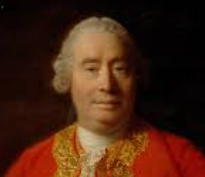
You need only look around you, replied PHILO, to satisfy yourself with regard to this question. A tree bestows order and organisation on that tree which springs from it, without knowing the order; an animal in the same manner on its offspring; a bird on its nest; and instances of this kind are even more frequent in the world than those of order, which arise from reason and contrivance. To say, that all this order in animals and vegetables proceeds ultimately from design, is begging the question; nor can that great point be ascertained otherwise than by proving, a priori, both that order is, from its nature, inseparably attached to thought; and that it can never of itself, or from original unknown principles, belong to matter.
▼
Source
source
Philo to Demea, Part VII
5 months 3 weeks ago
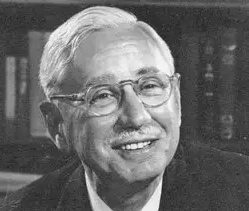
It is a mistake to think that the past is dead. Nothing that has ever happened is quite without influence at this moment. The present is merely the past rolled up and concentrated in this second of time. You, too, are your past; often your face is your autobiography; you are what you are because of what you have been; because of your heredity stretching back into forgotten generations; because of every element of environment that has affected you, every man or woman that has met you, every book that you have read, every experience that you have had; all these are accumulated in your memory, your body, your character, your soul. So with a city, a country, and a race; it is its past, and cannot be understood without it.
▼
Source
source
As quoted in "The Gentle Philosopher" (2006) by John Little at the Will Durant Foundation

8 months 4 days ago
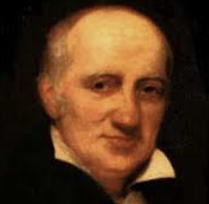
You rejoice in having made a convert to Atheism. I think there is something unnatural in a zeal of proselytism in an Atheist. I do not believe in an intellectual God, a God made after the image of man. In the vulgar acceptation of the word, therefore, I think a man is right who does not believe in God, but I am also persuaded that a man is wrong who is without religion.
▼
Source
source
Letter to H. B. Rosser (7 March 1820), quoted in C. Kegan Paul, William Godwin: His Friends and Contemporaries, Vol. II (1876), p. 263

8 months 1 week ago
Of the eternal incorporeal substance nothing is changed, is formed or deformed, but there always remains only that thing which cannot be a subject of dissolution, since it is not possible that it be a subject of composition, and therefore, either of itself or by accident, it cannot be said to die.
▼
Source
source
As translated by Arthur Imerti

9 months 2 weeks ago
He who fears he shall suffer, already suffers what he fears.
▼
Source
source
Book III, Ch. 13
10 months 1 week ago
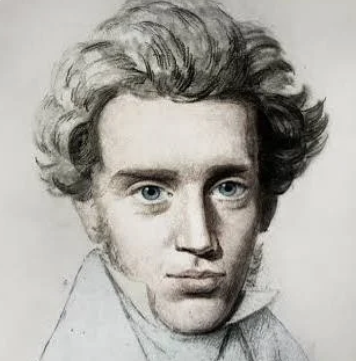
In all the flat, lethargic, dull moments, when the sensate dominates a person, to him Christianity is a madness because it is incommensurate with any finite wherefore. But then what good is it? Answer: Be quiet, it is the absolute. And that is how it must be presented, consequently as, that is, it must appear as madness to the sensate person. And therefore it is true, so true, and also in another sense so true when the sensible person in the situation of contemporaneity (see II A) censoriously says of Christ, “He is literally nothing”-quite so, for he is the absolute. Christianity is an absolute. Christianity came into the world as the absolute, not, humanly speaking, for comfort; on the contrary, it continually speaks about how the Christian must suffer or about how a person in order to become and remain a Christian must endure sufferings that he consequently can avoid simply by refraining from becoming a Christian.

9 months 1 week ago
Human beings have faculties more elevated than the animal appetites, and when once made conscious of them, do not regard anything as happiness which does not include their gratification. I do not, indeed, consider the Epicureans to have been by any means faultless in drawing out their scheme of consequences from the utilitarian principle. To do this in any sufficient manner, many Stoic, as well as Christian elements require to be included. But there is no known Epicurean theory of life which does not assign to the pleasures of the intellect, of the feelings and imagination, and of the moral sentiments, a much higher value as pleasures than to those of mere sensation.
▼
Source
source
Ch. 2
7 months 1 week ago
Just acquiring this amount of "education" will not, by itself, make you an educated person, even less will it give you what Oakeshott calls "judgment." But if the manner of instruction is adequate, the student should be able to acquire this much knowledge in a way that combines intellectual openness, critical scrutiny, and logical clarity. If so, learning will not stop when the student leaves the university.
5 months 6 days ago
You ask if I mean to publish anything on the subject of a letter of mine to my friend Charles Thompson? Certainly not. I write nothing for publication, and last of all things should it be on the subject of religion. On the dogmas of religion as distinguished from moral principles, all mankind, from the beginning of the world to this day, have been quarrelling, fighting, burning and torturing one another, for abstractions unintelligible to themselves and to all others, and absolutely beyond the comprehension of the human mind. Were I to enter on that arena, I should only add an unit to the number of Bedlamites.
▼
Source
source
Letter to Mathew Carey (11 November 1816). Published in The Works of Thomas Jefferson in Twelve Volumes, Federal Edition, Paul Leicester Ford, ed., New York: G. P. Putnam's Sons, 1904, Vol. 12, p. 42
7 months 2 weeks ago
Broadly stated, the task is to replace the global rationality of economic man with a kind of rational behavior that is compatible with the access to information and the computational capacities that are actually possessed by organisms, including man, in the kinds of environments in which such organisms exist.
▼
Source
source
Simon (1955) "A behavioral model of rational choice", The Quarterly Journal of Economics, Vol. 69 (1); As cited in: Gustavo Barros (2010, p. 462).

7 months 4 weeks ago
I will destroy this house, and no one will be able to build it....

8 months 1 week ago
Resolved to die in the last dike of prevarication.
▼
Source
source
Speech on the sixth article of charge in the impeachment of Warren Hastings (7 May 1789), quoted in The Works of the Right Honourable Edmund Burke, Volume the Tenth (1899), p. 406

9 months 6 days ago
The stronghold of the determinist argument is the antipathy to the idea of chance...This notion of alternative possibility, this admission that any one of several things may come to pass is, after all, only a roundabout name for chance.
▼
Source
source
The Dilemma of Determinism (1884) p.153


5 months 4 weeks ago
We learn history not in order to know how to behave or how to succeed, but to know who we are.
▼
Source
source
The Idolatry of Politics, U.S. Jefferson Lecture speech

9 months 1 week ago
To fear love is to fear life, and those who fear life are already three parts dead.

8 months 3 days ago
If death had only negative aspects, dying would be an unmanageable action.

5 months 2 weeks ago
I am now even more persuaded of the urgent need to study why Socrates was accused. The dislike of philosophy is perennial, and the seeds of the condemnation of Socrates are present at all times, not in the bosoms of pleasure-seekers, who don't give a damn, but in those of high-minded and idealistic persons who do not want to submit their aspirations to examination.
▼
Source
source
Western Civ, p. 19.
9 months 6 days ago
The trail of the human serpent is thus over everything.
▼
Source
source
Lecture II, What Pragmatism Means
9 months 3 weeks ago
The Yin based its propriety on that of the Xia, and what it added and subtracted is knowable. The Zhou has based its propriety on that of the Shang and what it added and subtracted is knowable. In this way, what continues from the Chou, even if 100 generations hence, is knowable.

9 months 6 days ago
In the long run the answer to all those who object to the doctrine of hell, is itself a question: What are you asking God to do? To wipe out their past sins and, at all costs, to give them a fresh start, smoothing every difficulty and offering every miraculous help? But He has done so, on Calvary. To forgive them? They will not be forgiven. To leave them alone? Alas, I am afraid that is what He does.
8 months 3 weeks ago
Be a craftsman in speech that thou mayest be strong, for the strength of one is the tongue, and speech is mightier than all fighting.
▼
Source
source
Translated by J. H. Breasted, The Dawn of Conscience (New York: Charles Scribner's Sons, 1933) p. 131
9 months 3 weeks ago
A scholar who loves comfort is not worthy of the name.
9 months 1 week ago
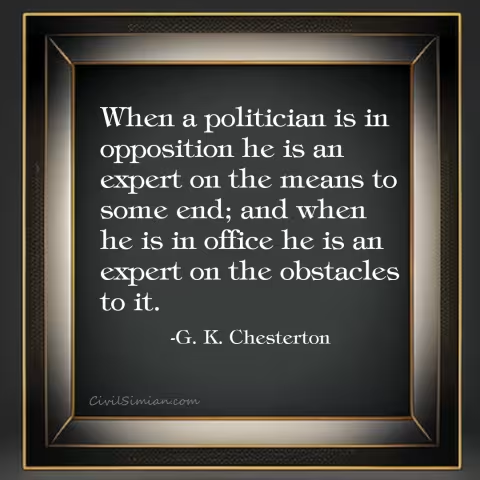
A good indignation brings out all one's powers.
▼
Source
source
1841
9 months 1 week ago
The moral things I wish to say to future generations is very simple. I should say love is wise hatred is foolish. In this world which is getting more and more closely interconnected, we have to learn to tolerate each other. We have to learn to put up with the fact that some people say things that we don't like. We can only live together in that way, and if we are to live together and not die together we must learn the kind of charity and kind of tolerance which is absolutely vital to the continuation of human life on this planet.
6 months 2 days ago
The possibility of associating two or three hundred families in agricultural and manufacturing industry depends upon a system so entirely different from what now exists, that it will open to the reader a new social world. He must consequently, in the study which opens before him, follow the guide with confidence, bearing constantly in min the gigantic results which will flow from association. Such results are well worth the sacrifice of a few prejudices. Every sensible reader will be of this opinion, and will concur to follow the advice which I shall constantly give, namely, to neglect the form and style of presentation, and occupy himself solely with the substance of the theory, seeking to determine whether the process of association is really discovered or not.
▼
Source
source
The Theory of Social Organization. Harmonian Man: Selected Writings of Charles Fourier, p. 5.

8 months 6 days ago
We have unmistakable proof that throughout all past time, there has been a ceaseless devouring of the weak by the strong.
▼
Source
source
Vol. I, Part III, Ch. 2 General Aspects of the Special-Creation-Hypothesis
9 months 1 week ago
A Turk thinks, or used to think (for even Turks are wiser now-a-days), that society would be on a sandbank if women were suffered to walk about the streets with their faces uncovered. Taught by these and many similar examples, I look upon this expression of loosening the foundations of society, unless a person tells in unambiguous terms what he means by it, as a mere bugbear to frighten imbeciles with.
▼
Source
source
Stability of Society (17 August 1850), quoted in Ann P. Robson and John M. Robson (eds.), The Collected Works of John Stuart Mill, XXV - Newspaper Writings December 1847 - July 1873 Part IV, 1986

5 months 4 weeks ago
That, on the whole, if you have got the intrinsic qualities, you have got everything, and the preliminaries will prove attainable; but that if you have got only the preliminaries, you have yet got nothing. A man of real dignity will not find it impossible to bear himself in a dignified manner; a man of real understanding and insight will get to know, as the fruit of his very first study, what the laws of his situation are, and will conform to these.

7 months 3 weeks ago
I must avert here once again to my view of the opposition that exists between individuality and personality, notwithstanding the fact that the one demands the other. Individuality is, if I may so express it, the container or thing which contains, personality the content or thing contained, or I might say that my personality is in a certain sense my comprehension, that which I comprehend or embrace within myself - which is in a certain way the whole Universe - and that my individuality is my extension; the one my infinite, the other my finite.
9 months 3 weeks ago
The propositions which are true and evident must of necessity be employed even by those who contradict them.
▼
Source
source
Book II, ch. 20, 1
9 months 2 weeks ago
All of the days go toward death and the last one arrives there.
▼
Source
source
Ch. 20. Of the Force of Imagination
5 months 1 week ago
The basis of our government being the opinion of the people, the very first object should be to keep that right; and were it left to me to decide whether we should have a government without newspapers, or newspapers without a government, I should not hesitate a moment to prefer the latter. But I should mean that every man should receive those papers and be capable of reading them.
▼
Source
source
Letter to Colonel Edward Carrington (16 January 1787) Lipscomb & Bergh ed. 6:57 Compare letter to John Norvell (11 June 1807), below.

7 months 4 weeks ago
Hegel's theological discussion repeatedly asks what the true relation is between the individual man and a state that no longer satisfies his capacities but exists rather as an 'estranged' institution from which the active political interest of the citizens has disappeared. Hegel defined this state with almost the same categories as those of eighteenth century liberalism: the state rests on the consent of the individuals, it circumscribes their rights and duties and protects its members from those internal and external dangers that might threaten the perpetuation of the whole.
▼
Source
source
P. 32

7 months 4 weeks ago
Art is the final cunning of the human soul which would rather do anything than face the gods.
▼
Source
source
"Art and Eros: A Dialogue about Art", Acastos: Two Platonic Dialogues (1986).
CivilSimian.com created by AxiomaticPanic, CivilSimian, Kalokagathia