


5 months 4 weeks ago
All old Poems, Homer's and the rest, are authentically Songs. I would say, in strictness, that all right Poems are; that whatsoever is not sung is properly no Poem, but a piece of Prose cramped into jingling lines,-to the great injury of the grammar, to the great grief of the reader, for most part! What we wants to get at is the thought the man had, if he had any: why should he twist it into jingle, if he could speak it out plainly? It is only when the heart of him is rapt into true passion of melody, and the very tones of him, according to Coleridge's remark, become musical by the greatness, depth and music of his thoughts, that we can give him right to rhyme and sing; that we call him a Poet, and listen to him as the Heroic of Speakers,-whose speech is Song.
8 months 6 days ago
The plea of anger or of drunkenness - as having placed the criminal for the moment beyond the control of his reason - relieves him from the charge of premeditated and malicious intent; but a rational legislation will rather provide more severe than milder punishment for such cases, particularly if such a state of mind is habitual with the accused; for a single unlawful act may well constitute an exception from an otherwise blameless life. But a person who pleads, "I habitually get so angry or so drunk as not to be any longer master of my senses!" confesses thereby that he changes himself into a beast on a fixed principle, and that he is, therefore, not fit to live among rational beings.
▼
Source
source
P. 351
8 months 3 weeks ago
Anger is a momentary madness so control your passion or it will control you.
▼
Source
source
Book I, epistle ii, line 62
6 months 1 week ago
One persistent strand in utopian thinking, as we have often mentioned, is the feeling that there is some set of principles obvious enough to be accepted by all men of good will, precise enough to give unambiguous guidance in particular situations, clear enough so that all will realize its dictates, and complete enough to cover all problems which actually arise. Since I do not assume that there are such principles, I do not presume that the political realm will whither away. The messiness of the details of a political apparatus and the details of how it is to be controlled and limited do not fit easily into one's hopes for a sleek, simple utopian scheme.
▼
Source
source
Ch. 10 : A Framework for Utopia; Utopian Means and Ends, p. 330
5 months 4 weeks ago
The only method of learning to bear with dignity the vicissitudes of fortune is to recall the catastrophes of others.
▼
Source
source
Polybius. The Histories of Polybius, trans. Evelyn S. Shuckburgh. London, New York: Macmillan and Co., 1889. Book I, Chapter 1
5 months 2 weeks ago
For a country to have a great writer ... is like having another government. That's why no régime has ever loved great writers, only minor ones.
▼
Source
source
Innokenty, in Ch. 57
9 months 2 weeks ago
Kings and philosophers shit, and so do ladies.
▼
Source
source
Ch. 42, English translation from Hartle, Ann (2003), Michel de Montaigne: Accidental Philosopher, Cambridge University Press.

5 months 3 days ago
Of the life of man the duration is but a point.
▼
Source
source
II. 17, trans. C.R. Haines
8 months 3 weeks ago
To one that promised to give him hardy cocks that would die fighting, "Prithee," said Cleomenes, "give me cocks that will kill fighting."
▼
Source
source
61 Cleomenes
10 months 1 week ago
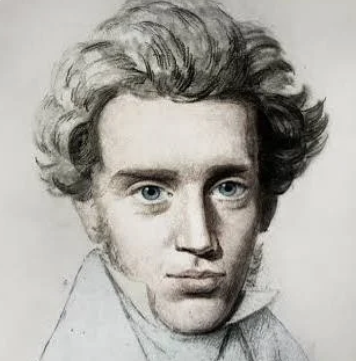
If the ethical, that is, social morality is the highest ... then no categories are needed other than the Greek philosophical categories.
5 months 1 week ago
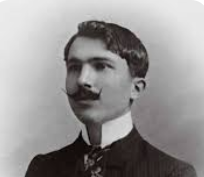
All my life I struggled to stretch my mind to the breaking point, until it began to creak, in order to create a great thought which might be able to give a new meaning to life, a new meaning to death, and to console mankind.
▼
Source
source
"Odyssey of Faith" in TIME magazine

7 months 4 days ago
It is sometimes expedient to forget who we are.
▼
Source
source
Maxim 233
5 months 1 week ago
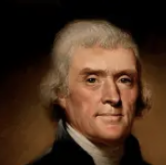
It should be remembered, as an axiom of eternal truth in politics, that whatever power in any government is independent, is absolute also; in theory only, at first, while the spirit of the people is up, but in practice, as fast as that relaxes. Independence can be trusted nowhere but with the people in mass. They are inherently independent of all but moral law.
▼
Source
source
Letter to Judge Spencer Roane

6 months 3 weeks ago
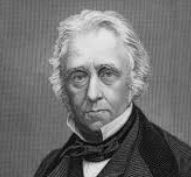
There were gentlemen and there were seamen in the navy of Charles II. But the seamen were not gentlemen, and the gentlemen were not seamen.
▼
Source
source
Vol. I, ch. 2

7 months 6 days ago
Saying that what we call our "selves" consist only of our bodies and that reason, soul, and love arise only from the body, is like saying that what we call our body is equivalent to the food that feeds the body. It is true that my body is only made up of digested food and that my body would not exist without food, but my body is not the same as food. Food is what the body needs for life, but it is not the body itself. The same thing is true of my soul. It is true that without my body there would not be that which I call my soul, but my soul is not my body. The soul may need the body, but the body is not the soul.
▼
Source
source
p. 12
9 months 2 weeks ago
There is a sort of gratification in doing good which makes us rejoice in ourselves.
▼
Source
source
Book III, Ch. 2

6 months 3 days ago
Today we have arrived at a point when the three principles [of modern resistance: 1. measure of efficacy, 2. the form of political and military organization correspond to the current forms of economic and social production, 3. democracy and freedom] coincide. The distributed network structure provides the model for an absolutely democratic organization that corresponds to the dominant forms of economic and social production and is also the most powerful weapon against the ruling power structure.
▼
Source
source
88
6 months 3 weeks ago
If...we look at the essential characteristics of the Whig and the Tory, we may consider each of them as the representative of a great principle, essential to the welfare of nations. One is, in an especial manner, the guardian of liberty, and the other, of order. One is the moving power, and the other the steadying power of the state. One is the sail, without which society would make no progress, the other the ballast, without which there would be small safety in a tempest.
▼
Source
source
The Earl of Chatham', The Edinburgh Review (October 1844), quoted in T. B. Macaulay, Critical and Historical Essays Contributed to The Edinburgh Review: A New Edition (1852), p. 725
5 months 3 weeks ago
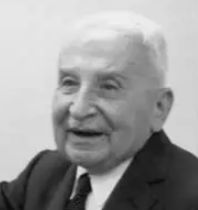
State and government are the social apparatus of violent coercion and repression. Such an apparatus, the police power, is indispensable in order to prevent anti-social individuals and bands from destroying social co-operation. Violent prevention and suppression of anti-social activities benefit the whole of society and each of its members. But violence and oppression are none the less evils and corrupt those in charge of their application. It is necessary to restrict the power of those in office lest they become absolute despots. Society cannot exist without an apparatus of violent coercion. But neither can it exist if the office holders are irresponsible tyrants free to inflict harm upon those they dislike.

9 months 1 week ago
Either we must have war against Russia, before she has the atom bomb, or we will have to lie down and let them govern us. ... Anything is better than submission.
▼
Source
source
Speech quoted in The Observer (21 November 1948), quoted in Robert Skildesky, Oswald Mosley (1981), p. 542 and Martin Ceadel, Thinking about Peace and War (1987), p. 52

9 months 6 days ago
What is now common to all men is a mere abstract universal, an H.C.F. [Highest Common Factor], and Man's conquest of himself means simply the rule of the Conditioners over the conditioned human material, the world of post-humanity which, some knowingly and some unknowingly, nearly all men in all nations are at present labouring to produce.
10 months 1 week ago
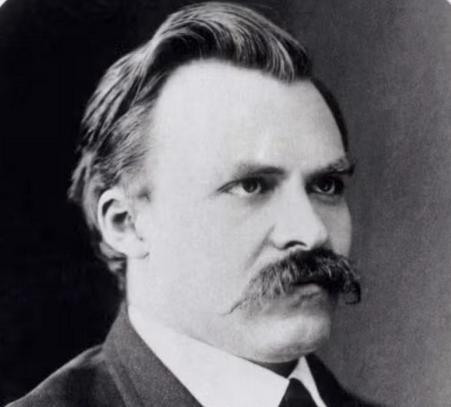
Whereas the man of action binds his life to reason and its concepts so that he will not be swept away and lost, the scientific investigator builds his hut right next to the tower of science so that he will be able to work on it and to find shelter for himself beneath those bulwarks which presently exist. And he requires shelter, for there are frightful powers which continuously break in upon him, powers which oppose scientific "truth" with completely different kinds of "truths" which bear on their shields the most varied sorts of emblems.
6 months 3 weeks ago
It is our deliberate opinion that the French Revolution, in spite of all its crimes and follies, was a great blessing to mankind.
▼
Source
source
'Sir James Mackintosh', The Edinburgh Review (July 1835), quoted in T. B. Macaulay, Critical and Historical Essays Contributed to The Edinburgh Review, Vol. II (1843), p. 215

9 months 1 week ago
Do not hire a man who does your work for money, but him who does it for love of it.
▼
Source
source
p. 486
9 months 1 week ago
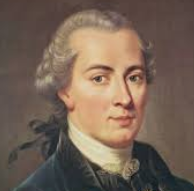
...happiness is not an ideal of reason but of imagination, resting solely on empirical grounds.
▼
Source
source
Fundamental Principles of the Metaphysics of Ethics (1785), Second Section.

7 months 4 weeks ago
Many, and I think the determining, constitutive facts remain outside the reach of the operational concept. And by virtue of this limitation-this methodological injunction against transitive concepts which might show the facts in their true light and call them by their true name-the descriptive analysis of the facts blocks the apprehension of facts and becomes an element of the ideology that sustains the facts. Proclaiming the existing social reality as its own norm, this sociology fortifies in the individuals the "faithless faith" in the reality whose victims they are.
▼
Source
source
p. 119

9 months 6 days ago
The most radical revolutionary will become a conservative the day after the revolution.
▼
Source
source
The New Yorker

5 months 3 weeks ago
Is it for this purpose that we are strong-that we may have light burdens to bear?
9 months 1 week ago
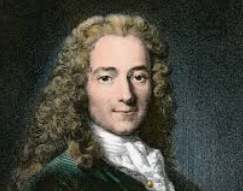
Man is free at the instant he wants to be.
▼
Source
source
Source Brutus, act II, scene I, 1730
8 months 1 week ago
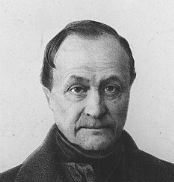
To understand a science it is necessary to know its history.
▼
Source
source
A Course of Positive Philosophy (1832 - 1842) [Six volumes]
7 months 3 weeks ago
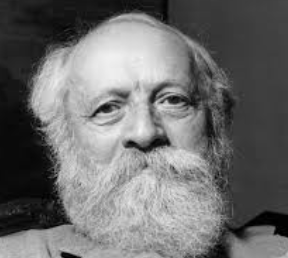
As the oil is in the olive, so is the teshuvah, repentance, hidden within sin.
▼
Source
source
p. 44
8 months 3 days ago
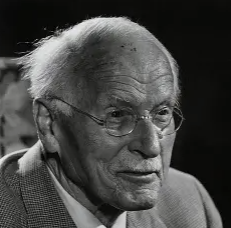
It is astounding that man, the instigator, inventor and vehicle of all these developments, the originator of all judgements and decisions and the planner of the future, must make himself such a quantité negligeable.
▼
Source
source
p 45
10 months 1 week ago
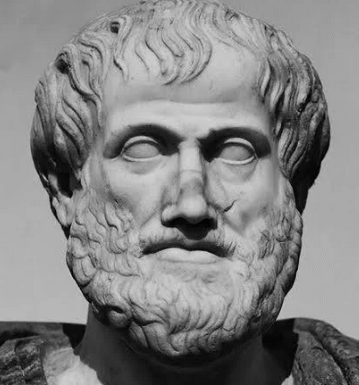
Nature flies from the infinite, for the infinite is unending or imperfect, and Nature ever seeks an end.
7 months 6 days ago
The civilized pagan recognizes life not in himself alone, but in societies of men-in the tribe, the clan, the family, the kingdom -and sacrifices his personal good for these societies. The motive power of his life is glory. His religion consists in the exaltation of the glory of those who are allied to him-the founders of his family, his ancestors, his rulers-and in worshiping gods who are exclusively protectors of his clan, his family, his nation, his government.
▼
Source
source
Chapter IV, Christianity Misunderstood by Men of Science

9 months 5 days ago
I will not be modest. Humble, as much as you like, but not modest. Modesty is the virtue of the lukewarm.
▼
Source
source
Act 4, sc. 5

8 months 6 days ago
Every pleasure raises the tide of life; every pain lowers the tide of life.
▼
Source
source
Ch. 6, The Biological View
7 months 6 days ago
Genuine religion is not about speculating about God or the soul or about what happened in the past or will happen in the future; it cares only about one thing-finding out exactly what should or should not be done in this lifetime.
▼
Source
source
p. 3

8 months 3 weeks ago
Human social institutions can effect the course of human evolution. Just as climate-change, food supply, predators, and other natural forces of selection have molded our nature, so too can our culture.
▼
Source
source
Chapter 6, A New Understanding Of Ethics, p. 172
9 months 6 days ago
The chief pleasure of his life in these days was to go down the road and look through the window in the wall in the hope of seeing the beautiful Island. ... the sight of the Island and the sounds became very rare ... and the yearning for the sight ... became so terrible that John thought he would die if he did not have them again soon. ... it came into his head that he might perhaps get the old feeling-for what, he thought, had the Island ever given him but a feeling?-by imagining. He shut his eyes and set his teeth again and made a picture of the Island in his mind.
▼
Source
source
Pilgrim's Regress 12-13
7 months 4 weeks ago
The intellectual is called on the carpet. ... Don't you conceal something? You talk a language which is suspect. You don't talk like the rest of us, like the man in the street, but rather like a foreigner who does not belong here. We have to cut you down to size, expose your tricks, purge you.
▼
Source
source
p. 192
5 months 1 week ago
Whenever the people are well informed, they can be trusted with their own government; that whenever things get so far wrong as to attract their notice, they may be relied on to set them to rights.
▼
Source
source
Letter to Richard Price
7 months 4 weeks ago
The closed language does not demonstrate and explain-it communicates decision, dictum, command. Where it defines, the definition becomes "separation of good from evil;" it establishes unquestionable.
▼
Source
source
p. 101

6 months 1 week ago
Universality is the foundation for law. Individuals are treated as ends in themselves, symmetry is applied and justice emerges. Ideologically, we don't have to try to be "good". This kind of kills freedom. We just have to avoid the worst of the bad, like killing, to preserve universality and justice.
7 months 6 days ago
If the slave-owner of our times has no slave, John, whom he can send to the cesspool, he has five shillings, of which hundreds of such Johns are in such need that the slave-owner of our times may choose any one out of hundreds of Johns and be a benefactor to him by giving him the preference, and allowing him, rather than another, to climb down into the cesspool.
▼
Source
source
Chapter 8: Slavery Exists Among Us
7 months 6 days ago
What! all of us, Christians, not only profess to love one another, but do actually live one common life; we whose social existence beats with one common pulse-we aid one another, learn from one another, draw ever closer to one another to our mutual happiness, and find in this closeness the whole meaning of life!-and to-morrow some crazy ruler will say some stupidity, and another will answer in the same spirit, and then I must go expose myself to being murdered, and murder men-who have done me no harm-and more than that, whom I love. And this is not a remote contingency, but the very thing we are all preparing for, which is not only probable, but an inevitable certainty.
▼
Source
source
Chapter V, Contradiction Between our Life and our Christian Conscience

9 months 5 days ago
Why do I think that we, the intellectuals, are able to help? Simply because we, the intellectuals, have done the most terrible harm for thousands of years. Mass murder in the name of an idea, a doctrine, a theory, a religion - that is all our doing, our invention: the invention of the intellectuals. If only we would stop setting man against man - often with the best intentions - much would be gained. Nobody can say that it is impossible for us to stop doing this.
6 months 4 weeks ago
Anxiety destroys scale, and suffering makes us lose perspective.
▼
Source
source
The Sealed Treasure (1960), p. 62
CivilSimian.com created by AxiomaticPanic, CivilSimian, Kalokagathia