


5 months 3 days ago
How easy it is to repel and to wipe away every impression which is troublesome or unsuitable, and immediately to be in all tranquility. To shrug it all off and wipe it clean--every annoyance and distraction--and reach utter stillness. Child's play.
▼
Source
source
(Hays translation) V, 2

9 months 2 weeks ago
Besides, you also have many Jews living in the country, who do much harm... You should know the Jews blaspheme and violate the name of our Savior day for day... for that reason you, Milords and men of authority, should not tolerate but expel them. They are our public enemies and incessantly blaspheme our Lord Jesus Christ, they call our Blessed Virgin Mary a harlot and her Holy Son a bastard and to us they give the epithet of changelings and abortions. Therefore deal with them harshly as they do nothing but excruciatingly blaspheme our Lord Jesus Christ, trying to rob us of our lives, our health, our honor and belongings.
▼
Source
source
Sermon at Eisleben, a few days before his death, February, 1546. See The Jews by Zuhdī Fātiḥ, 1972
7 months 2 weeks ago
If we accept values as given and consistent, if we postulate an objective description of the world as it really is, and if we assume that the decision maker's computational powers are unlimited, then two important consequences follow. First, we do not need to distinguish between the real world and the decision maker's perception of it: he or she perceives the world as it really is. Second, we can predict the choices that will be made by a rational decision maker entirely from our knowledge of the real world and without a knowledge of the decision maker's perceptions or modes of calculation. (We do, of course, have to know his or her utility function.)

9 months 1 week ago
The imagination is always restless and suggests a variety of thoughts, and the will, reason being laid aside, is ready for every extravagant project; and in this State, he that goes farthest out of the way, is thought fittest to lead, and is sure of most followers: And when Fashion hath once Established, what Folly or craft began, Custom makes it Sacred, and 'twill be thought impudence or madness, to contradict or question it. He that will impartially survey the Nations of the World, will find so much of the Governments, Religion, and Manners brought in and continued amongst them by these means, that they will have but little Reverence for the Practices which are in use and credit amongst Men.
▼
Source
source
First Treatise of Government

8 months 2 days ago
When you know quite absolutely that everything is unreal, you then cannot see why you should take the trouble to prove it.

9 months 1 week ago
We later learned that all the nineteen passengers in the non-smoking compartment had been killed. When the plane had hit the water a hole had been made in the plane and the water had rushed in. I had told a friend at Oslo who was finding me a place that he must find me a place where I could smoke, remarking jocularly, 'If I cannot smoke, I shall die'. Unexpectedly, this turned out to be true.

7 months 4 days ago
Renaissance Italy became a kind of Hollywood collection of sets of antiquity, and the new visual antiquarianism of the Renaissance provided an avenue to power for men of any class.
▼
Source
source
(p. 136)
8 months 1 week ago
It lays down, as is generally known, that our speculations upon all subjects whatsoever, pass necessarily through three successive stages: a Theological stage, in which free play is given to spontaneous fictions admitting of no proof; the Metaphysical stage, characterized by the prevalence of personified abstractions or entities; lastly, the Positive stage, based upon an exact view of the real facts of the case.
▼
Source
source
p. 36
9 months 1 week ago
The possession and the exercise of political, and among others of electoral, rights, is one of the chief instruments both of moral and of intellectual training for the popular mind; and all governments must be regarded as extremely imperfect, until every one who is required to obey the laws, has a voice, or the prospect of a voice, in their enactment and administration.
▼
Source
source
Thoughts on Parliamentary Reform (1859), p. 22
9 months 1 week ago
A spurious axiom of the first class is: Whatever is, is somewhere and sometime.

9 months 5 days ago
God!' said the Ghost, glancing around the landscape. 'God what?' asked the Spirit. 'What do you mean, "God what"?' asked the Ghost. 'In our grammar God is a noun' said the Spirit.
▼
Source
source
Ch. 9

9 months 2 days ago
People are deeply imbedded in philosophical, i.e., grammatical confusions. And to free them presupposes pulling them out of the immensely manifold connections they are caught up in.
▼
Source
source
Ch. 9 : Philosophy, p. 185
9 months 5 days ago
Our cause is never more in danger than when a human, no longer desiring, but still intending to do our Enemy's will, looks round upon a universe from which every trace of Him seems to have vanished, and asks why he has been forsaken, and still obeys.
▼
Source
source
Letter VIII
9 months 5 days ago
What we call Man's power over Nature turns out to be a power exercised by some men over other men with Nature as its instrument.
5 months 3 weeks ago
The State's behavior is violence, and it calls its violence "law"; that of the individual, "crime." The state calls its own violence law, but that of the individual, crime.
▼
Source
source
As quoted in The Great Quotations (1960) by George Seldes, p. 664
9 months 1 week ago
His reputation will go on increasing because scarcely anyone reads him.
▼
Source
source
"Dante", 1765
5 months 3 days ago
Before making a decision the first thing to do - don't get worked up. For everything happens according to the nature of all things, and in a short time you'll be nobody and nowhere even as the great emperors Hadrian and Augustus are now. The next thing to do - consider carefully the task at hand for what it is, while remembering that your purpose is to be a good human being. Get straight to doing what nature requires of you, and speak as you see most just and fitting - with kindness, modesty, and sincerity.
▼
Source
source
VIII. 5:162


9 months 3 weeks ago
The first and most necessary topic in philosophy is that of the use of moral theorems, such as, "We ought not to lie;" the second is that of demonstrations, such as, "What is the origin of our obligation not to lie;" the third gives strength and articulation to the other two, such as, "What is the origin of this is a demonstration." For what is demonstration? What is consequence? What contradiction? What truth? What falsehood? The third topic, then, is necessary on the account of the second, and the second on the account of the first. But the most necessary, and that whereon we ought to rest, is the first. But we act just on the contrary. For we spend all our time on the third topic, and employ all our diligence about that, and entirely neglect the first.
▼
Source
source
(51).
10 months 4 days ago
The foundation of all technology is fire.
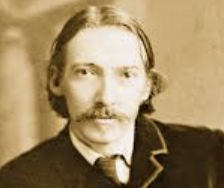
7 months 2 days ago
The devil, depend upon it, can sometimes do a very gentlemanly thing.
▼
Source
source
The Suicide Club, Story of the Young Man with the Cream Tarts.
9 months 1 week ago
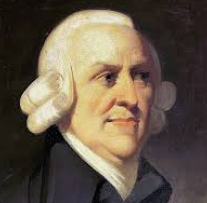
Among civilized and thriving nations, on the contrary, though a great number of people do no labor at all, many of whom consume the produce of ten times, frequently of a hundred times more labour than the greater part of those who work; yet the produce of the whole labour of the society is so great, that all are often abundantly supplied, and a workman, even of the lowest and poorest order, if he is frugal and industrious, may enjoy a greater share of the necessaries and conveniencies of life than it is possible for any savage to acquire.
▼
Source
source
Introduction and Plan of the Work, p. 2.

6 months 1 day ago
He whom God has touched will always be a being apart: he is, whatever he may do, a stranger among men; he is marked by a sign.
▼
Source
source
Oeuvres Complètes, vol. 3. L'Avenir de la Science (1890).

5 months 3 weeks ago
Battles, in these ages, are transacted by mechanism; with the slightest possible development of human individuality or spontaneity: men now even die, and kill one another, in an artificial manner.
▼
Source
source
Pt. I, Bk. VII, ch. 4.
7 months 2 weeks ago
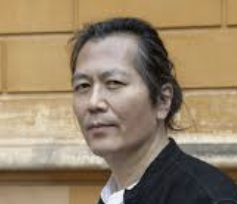
The pornographic face says nothing. It has no expressivity or mystery.
6 months 3 weeks ago
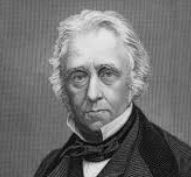
He had a head which statuaries loved to copy, and a foot the deformity of which the beggars in the streets mimicked.
▼
Source
source
p. 313
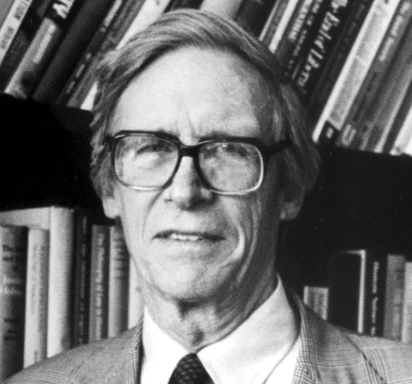
9 months 5 days ago
Ideally a just constitution would be a just procedure arranged to insure a just outcome.
▼
Source
source
Chapter IV, Section 31, pg. 197
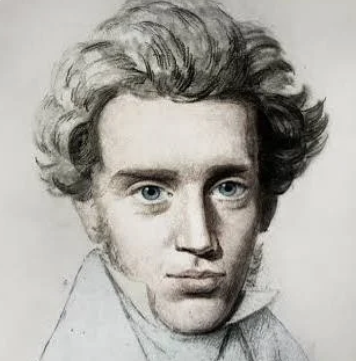
10 months 1 week ago
I have never definitely broken with Christianity nor renounced it. To attack it has never been my thought. No, from the time when there could be any question of the employment of my powers, I was firmly determined to employ them all to defend Christianity, or in any case to present it in its true form.
7 months 3 weeks ago
We are sorely deficient in talking with each other and listening to each other. We lack mobility, criticism and self-criticism. We incline to doctrinism. What makes it worse is that so many people do not really want to think. They want only slogans and obedience. They ask no questions and they give no answers, except by repeating drilled-in phrases. They can only assert and obey, neither probe nor apprehend. Thus they cannot be convinced, either. How shall we talk with people who will not go where others probe and think, where men seek independence in insight and conviction?
7 months 4 weeks ago
Technical progress and more comfortable living permit the systematic inclusion of libidinal components into the realm of commodity production and exchange. But no matter how controlled the mobilization of instinctual energy may be (it sometimes amounts to a scientific management of libido), no matter how much it may serve as a prop for the status quo-it is also gratifying to the managed individuals, just as racing the outboard motor, pushing the power lawn mower, and speeding the automobile are fun.
▼
Source
source
p. 75
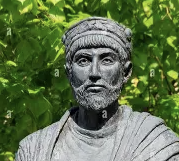
5 months 2 weeks ago
I am aware that the great Plato himself, and after him, a man posterior to him in date, though not in mind, I mean Iamblichus of Chalcis (who initiated us into other branches of philosophy, and also into this by means of his discourses), did both of them as far as hypothesis goes, take for granted the fact of a Creation and assumed the universe to have been, in a certain sense, the Work of Time, in order that the most important of the effects produced by this Power, may be reduced into a shape for examination.

9 months 1 week ago
When communist workmen associate with one another, theory, propaganda, etc., is their first end. But at the same time, as a result of this association, they acquire a new need - the need for society - and what appears as a means becomes an end. You can observe this practical processing its most splendid results whenever you see French socialist workers together. Such things as smoking, drinking, eating, etc., are no longer means of contact or means that bring together. Company, association, and conversation, which again has society as its end, are enough for them; the brotherhood of man is on mere phase with them, but a fact of life, and the nobility of man shines upon us from their work-hardened bodies.
▼
Source
source
"The Meaning of Human Requirements" p.99-100,The Marx-Engels Reader
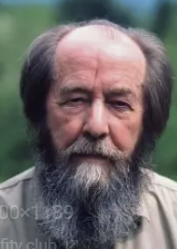
5 months 2 weeks ago
I am of course confident that I will fulfil my tasks as a writer in all circumstances - from my grave even more successfully and more irrefutably than in my lifetime. No one can bar the road to truth, and to advance its cause I am prepared to accept even death. But may it be that repeated lessons will finally teach us not to stop the writer's pen during his lifetime? At no time has this ennobled our history.
▼
Source
source
Open letter to the Fourth Soviet Writers' Congress (16 May 1967); as translated in Solzhenitsyn: A Documentary Record (1970) edited by Leopold Labedz

8 months 3 weeks ago
Sweet exists by convention, bitter by convention, colour by convention; atoms and Void [alone] exist in reality.
▼
Source
source
(trans. Freeman 1948), p. 92.
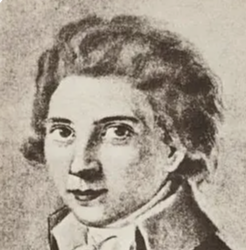
8 months 1 week ago
The romantic poetry is a progressive universal poetry.
▼
Source
source
Progressive Universalpoesie (1798)
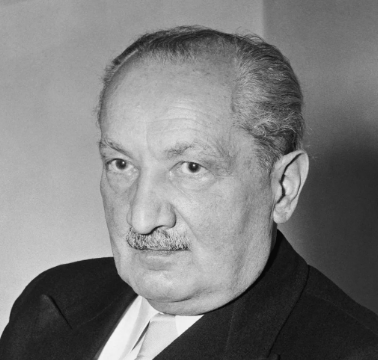
9 months 2 days ago
The critique of the highest values hitherto does not simply refute them or declare them invalid. It is rather a matter of displaying their origins as impositions which must affirm precisely what ought to be negated by the values established.
▼
Source
source
p. 26

8 months 1 week ago
The present state of France was ten times worse than a tyranny. The new constitution was said to be an experiment but the assertion was not true. It had already been tried, and had been found to be only productive of evils. They would go on from tyranny to tyranny, from oppression to oppression, till at last the whole system would terminate in the destruction of that miserable and deluded people... He sincerely hoped that no member of that House would ever barter the constitution of this country, the eternal jewel of their souls, for a wild and visionary system, which could only lead to confusion and disorder.
▼
Source
source
Speech in the House of Commons (6 May 1791), quoted in The Parliamentary History of England, From the Earliest Period to the Year 1803, Vol. XXIX (1817), column 397

5 months 6 days ago
The monopoly of a single bank is certainly an evil. The multiplication of them was intended to cure it; but it multiplied an influence of the same character with the first, and completed the supplanting the precious metals by a paper circulation. Between such parties the less we meddle the better.
▼
Source
source
Letter to Albert Gallatin, 1802. ME 10:323

7 months 3 weeks ago
Concern for the symbol has completely disappeared from our science. And yet, if one were to give oneself the trouble, one could easily find, in certain parts at least of contemporary mathematics... symbols as clear, as beautiful, and as full of spiritual meaning as that of the circle and mediation. From modern thought to ancient wisdom the path would be short and direct, if one cared to take it.
▼
Source
source
The Need for Roots (1949), p. 292

9 months 2 weeks ago
There is no man so good, who, were he to submit all his thoughts and actions to the laws, would not deserve hanging ten times in his life.
▼
Source
source
Book III, Ch. 9. Of Vanity
9 months 1 week ago
Thus the labour of a manufacture adds, generally, to the value of the materials which he works upon, that of his own maintenance, and of his masters profits. The labour of a menial servant, on the contrary, adds to the value of nothing.
▼
Source
source
Chapter III, p. 364 (see Proverbs 14-23 KJV).
9 months 3 weeks ago
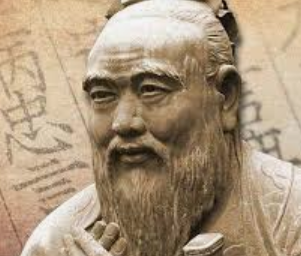
A scholar who loves comfort is not worthy of the name.
10 months 3 days ago
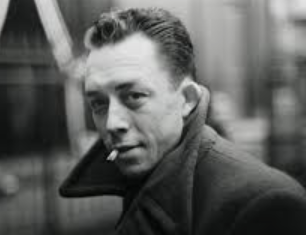
Since we're all going to die, it's obvious that when and how don't matter.
4 months 3 weeks ago
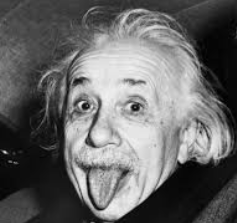
The whole of science is nothing more than a refinement of every day thinking.
▼
Source
source
"[https://www.sciencedirect.com/science/article/abs/pii/S0016003236910475 Physics and Reality]" (as translated by Jean Piccard) in the Journal of the Franklin Institute Vol. 221, Issue 3 (March 1936), at p. 349

5 months 3 weeks ago
You can tell the character of every man when you see how he gives and receives praise.
▼
Source
source
Line 12.

9 months 5 days ago
The best work is not what is most difficult for you; it is what you do best.
▼
Source
source
Act 6, sc. 2
5 months 2 weeks ago
A work of art bears within itself its own verification: conceptions which are devised or stretched do not stand being portrayed in images, they all come crashing down, appear sickly and pale, convince no one. But those works of art which have scooped up the truth and presented it to us as a living force - they take hold of us, compel us, and nobody ever, not even in ages to come, will appear to refute them.
9 months 1 week ago
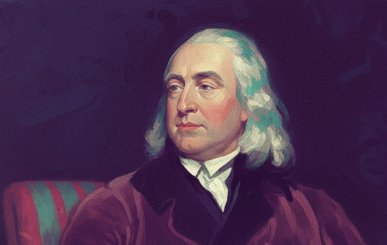
The community is a fictitious body, composed of the individual persons who are considered as constituting as it were its members. The interest of the community then is what? The sum of the interests of the several members who compose it.
▼
Source
source
Ch. 1: Of the Principle of Utility
8 months 6 days ago
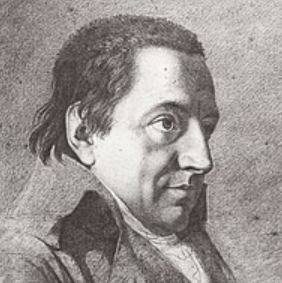
A living language can stand on a higher level of culture in comparison with another, but it can never in itself attain that perfection of development which a dead language quite easily attains. In the latter the connotation of words is fixed, and the possibilities of suitable combinations will also gradually become exhausted. Hence, he who wishes to speak this language must speak it just as it is; but, after he has once learnt to do this, the language speaks itself in his mouth and thinks and imagines for him.
▼
Source
source
Consequences of the Difference p. 85
CivilSimian.com created by AxiomaticPanic, CivilSimian, Kalokagathia