


7 months 3 weeks ago
The average mind is slow in grasping a truth, but when the most thoroughly organized, centralized institution, maintained at an excessive national expense, has proven a complete social failure, the dullest must begin to question its right to exist. The time is past when we can be content with our social fabric merely because it is "ordained by divine right," or by the majesty of the law.
10 months 2 weeks ago
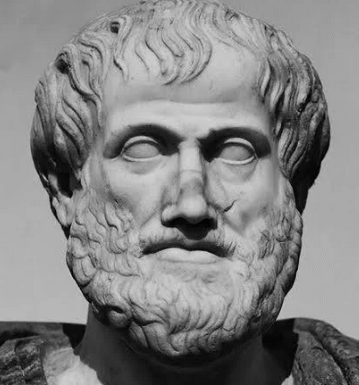
Misfortune shows those who are not really friends.


9 months 2 weeks ago
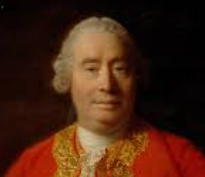
Does a man of sense run after every silly tale of hobgoblins or fairies, and canvass particularly the evidence? I never knew anyone, that examined and deliberated about nonsense who did not believe it before the end of his enquiries.
▼
Source
source
Letters

9 months 2 weeks ago
Money is not required to buy one necessity of the soul.
▼
Source
source
p. 370

6 months 5 days ago
Human virtue, if we went down to the roots of it, is not so rare. The materials of human virtue are everywhere abundant as the light of the sun: raw materials,-O woe, and loss, and scandal thrice and threefold, that they so seldom are elaborated, and built into a result! that they lie yet unelaborated, and stagnant in the souls of wide-spread dreary millions, fermenting, festering; and issue at last as energetic vice instead of strong practical virtue!
9 months 4 days ago
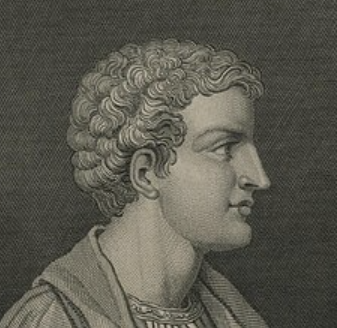
When you wish to instruct, be brief; that men's minds may take in quickly what you say, learn its lesson, and retain it faithfully. Every word that is unnecessary only pours over the side of a brimming mind.
▼
Source
source
Lines 335-337; Edward Charles Wickham translation
5 months 3 weeks ago
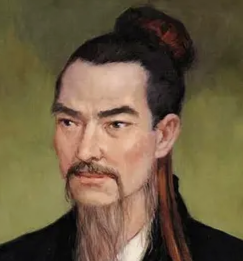
When we come to think about the several benefits in regard to their cause, how have they arisen? Have they arisen out of hate of others and injuring others? Of course we should say no. We should say they have arisen out of love of others and benefiting others. If we should classify one by one all those who love others and benefit others, should we find them to be partial or universal? Of course we should say they are universal. Now, since universal love is the cause of the major benefits in the world, therefore Mozi proclaims universal love is right. And, as has already been said, the interest of the magnanimous lies in procuring benefits for the world and eliminating its calamities. Now that we have found out the consequences of universal love to be the major benefits of the world and the consequences of partiality to be the major calamities in the world; this is the reason why Mozi said partiality is wrong and universality is right.
▼
Source
source
Book 4; Universal Love III
7 months 2 weeks ago
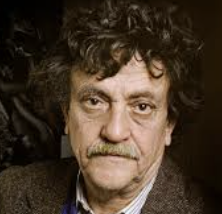
What television does is rent us friends and relatives who are quite satisfactory. The child watching TV loves these people, you know -- they're in color, and they're talking to the child. Why wouldn't a child relate to these people? And you know, if you can't sleep at 3 o'clock in the morning, you can turn on a switch, and there are your friends and relatives, and they obviously like you. And they're charming. Who wouldn't want Peter Jennings for a relative? This is quite something, to rent artificial friends and relatives right inside the house.
▼
Source
source
Interviewed by Frank Houston, "The Salon Interview: Kurt Vonnegut", Salon

8 months 1 day ago
For the mockers are those who die comically, and God laughs at their comic ending, while the nobler part, the part of tragedy, is theirs who endured the mockery.
7 months 1 week ago
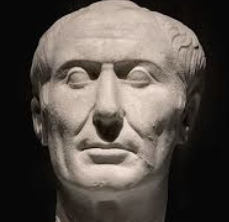
When Fortune flatters, she does it to betray.
▼
Source
source
Maxim 277

9 months 1 week ago
The chief function of the disciplinary power is to 'train', rather than to select and to levy; or, no doubt, to train in order to levy and select all the more. It does not link forces together in order to reduce them; it seeks to bind them together in such a way as to multiply and use them.
▼
Source
source
Part Three, The Means of Correct Training
10 months 3 days ago
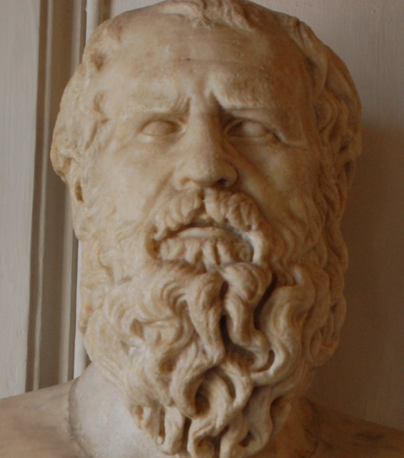
War is the father and king of all, and has produced some as gods and some as men, and has made some slaves and some free.

9 months 4 days ago
We do not have to make self- sacrifice a necessary element of altruism. We can regard people as altruists because of the kind of interests they have rather than because they are sacrificing their interests.
▼
Source
source
Chapter 9: Altruism and Happiness (p. 103)

9 months 1 week ago
Don't get involved in partial problems, but always take flight to where there is a free view over the whole single great problem.

6 months 3 weeks ago
Echoing the Christian faith in free will, humanists hold that human beings are - or may someday become - free to choose their lives. They forget that the self that does the choosing has not itself been chosen.
▼
Source
source
Beyond the Last Thought: Freud's cigars and the long way round to Nirvana (p. 86)
5 months 3 weeks ago
Those who are not shocked when they first come across quantum theory cannot possibly have understood it.
▼
Source
source
In a 1952 conversation with Heisenberg and Pauli in Copenhagen; quoted in Heisenberg, Werner, Physics and Beyond. (New York: Harper & Row, 1971) p. 206.
10 months 1 week ago
I wouldn't give an astrologer the time of day.

5 months 4 weeks ago
The cause of anger is the belief that we are injured; this belief, therefore, should not be lightly entertained. We ought not to fly into a rage even when the injury appears to be open and distinct: for some false things bear the semblance of truth. We should always allow some time to elapse, for time discloses the truth.
▼
Source
source
De Ira (On Anger): Book 2, cap. 22, line 2 Alternate translation: Time discovers truth. (translator unknown).
9 months 2 weeks ago
The whole is a riddle, an aenigma, an inexplicable mystery. Doubt, uncertainty, suspence of judgment appear the only result of our most accurate scrutiny, concerning this subject. But such is the frailty of human reason, and such the irresistible contagion of opinion, that even this deliberate doubt could scarcely be upheld; did we not enlarge our view, and opposing one species of superstition to another, set them a quarrelling; while we ourselves, during their fury and contention, happily make our escape, into the calm, though obscure, regions of philosophy.
▼
Source
source
Part XV - General corollary

9 months 2 weeks ago
The unity is brought about by force.
▼
Source
source
Notebook I, The Chapter on Money, p. 70.
5 months 4 days ago
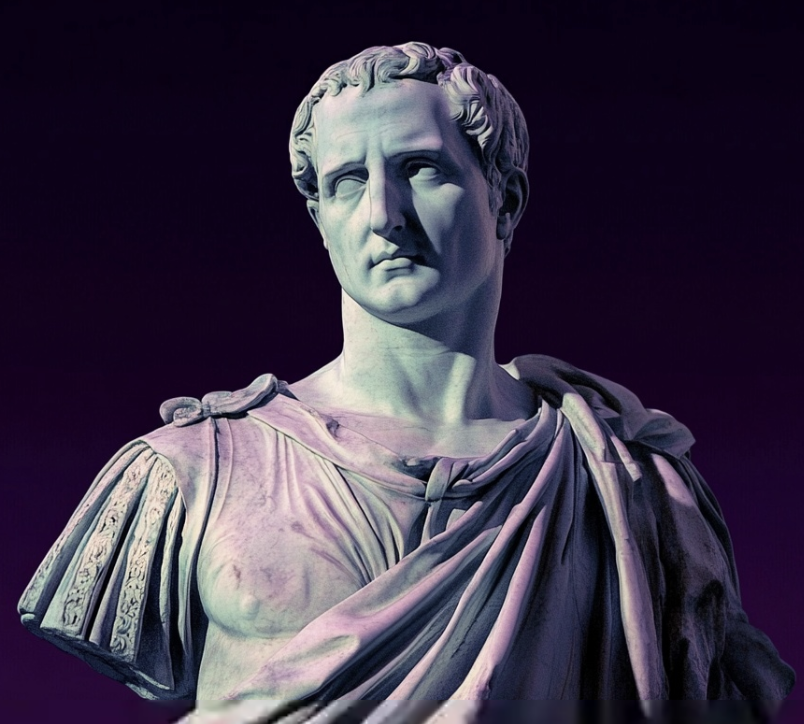
I have come to believe that the motion of the Earth cannot be detected by any optical experiment.
10 months 1 day ago
The greatest states have been overthrown by the young and sustained and restored by the old. ... Rashness is the product of the budding-time of youth, prudence of the harvest-time of age.
▼
Source
source
section 20
9 months 1 week ago
My difficulty is only an - enormous - difficulty of expression.
▼
Source
source
Journal entry (8 March 1915) p. 40

9 months 3 weeks ago
I doubt if a single individual could be found from the whole of mankind free from some form of insanity. The only difference is one of degree. A man who sees a gourd and takes it for his wife is called insane because this happens to very few people.
▼
Source
source
As quoted in Words from the Wise : Over 6,000 of the Smartest Things Ever Said (2007) by Rosemarie Jarski, p. 312. From The Praise of Folly.
9 months 2 weeks ago
The beginning of religion, more precisely its content, is the concept of religion itself, that God is the absolute truth, the truth of all things, and subjectively that religion alone is the absolutely true knowledge.
8 months 1 week ago
The student of mathematics often finds it hard to throw off the uncomfortable feeling that his science, in the person of his pencil, surpasses him in intelligence,-an impression which the great Euler confessed he often could not get rid of. This feeling finds a sort of justification when we reflect that the majority of the ideas we deal with were conceived by others, often centuries ago. In a great measure it is really the intelligence of other people that confronts us in science.
▼
Source
source
Mach, Ernst. p. 196: Mathematics seems possessed of intelligence
9 months 1 week ago
This is the moment when it becomes clear that the images of madness are nothing but dream and error, and that if the unfortunate sufferer who is blinded by them invokes them, it is the better to disappear with them into the annihilation for which they are destined.
▼
Source
source
Part Two: 2. The Transcendence of Delirium
10 months 2 weeks ago
Just as it sometimes happens that deformed offspring are produced by deformed parents, and sometimes not, so the offspring produced by a female are sometimes female, sometimes not, but male, because the female is as it were a deformed male.

6 months 3 weeks ago
The serpent, the king, the tiger, the stinging wasp, the small child, the dog owned by other people, and the fool: these seven ought not to be awakened from sleep.
9 months 3 weeks ago
Hope is a good breakfast, but it is a bad supper.
▼
Source
source
No. 36


8 months 2 weeks ago
Strong as it looks at the outset, State-agency perpetually disappoints every one. Puny as are its first stages, private efforts daily achieve results that astound the world.
▼
Source
source
Vol. 3, Ch. VII, Over-Legislation
10 months 3 days ago
Chance seldom interferes with the wise man; his greatest and highest interests have been, are, and will be, directed by reason throughout his whole life.

8 months 2 weeks ago
When we speak of the commerce with our [American] colonies, fiction lags after truth, invention is unfruitful, and imagination cold and barren.

8 months 2 weeks ago
Dreams, as we all know, are very queer things: some parts are presented with appalling vividness, with details worked up with the elaborate finish of jewellery, while others one gallops through, as it were, without noticing them at all, as, for instance, through space and time. Dreams seem to be spurred on not by reason but by desire, not by the head but by the heart, and yet what complicated tricks my reason has played sometimes in dreams, what utterly incomprehensible things happen to it!
9 months 3 weeks ago
But the best demonstration by far is experience, if it go not beyond the actual experiment.
▼
Source
source
Aphorism 70
7 months 1 week ago
Nationality is not the only kind of social membership, nor is it an exclusive tie. However, it is the only form of membership that has so far shown itself able to sustain a democratic process and a liberal rule of law.

8 months 6 days ago
All they that take the sword shall perish with the sword.
▼
Source
source
Matthew 26:52 (KJV)
8 months 1 week ago
It is false that kings are entitled to the eminence they obtain. They possess no intrinsic superiority over their subjects. The line of distinction that is drawn is the offspring of pretense, an indirect means employed for effecting certain purposes, and not the language of truth. It tramples upon the genuine nature of things, and depends for its support upon this argument, 'that, were it not for impositions of a similar nature, mankind would be miserable.'
▼
Source
source
Book V, Ch. 6, "Of Subjects"

7 months 1 week ago
To know what you prefer, instead of humbly saying Amen to what the world tells you you ought to prefer, is to have kept your soul alive.
▼
Source
source
An Inland Voyage (1878), Ch. III, "The Royal Sport Nautique".

9 months 1 week ago
I do not overlook the fact that there are irrationalists who love mankind, and that not all forms of irrationalism engender criminality. But I hold that he who teaches that not reason but love should rule opens up the way for those who rule by hate. (Socrates, I believe, saw something of this when he suggested that mistrust or hatred of argument is related to mistrust or hatred of man).
▼
Source
source
Vol. 2, Ch. 24 "Oracular Philosophy and the Revolt against Reason"

7 months 1 week ago
After Plotinus, says Schassler, fifteen centuries passed without the slightest scientific interest for the world of beauty and art. ...In reality, nothing of the kind happened. The science of aesthetics ... neither did nor could vanish, because it never existed. ... the Greeks were so little developed that goodness and beauty seemed to coincide. On that obsolete Greek view of life the science of aesthetics was invented by men of the eighteenth century, and especially shaped and mounted in Baumgarten's theory. The Greeks (as anyone may read in Bénard's book on Aristotle and Walter's work on Plato) never had a science of aesthetics.
7 months 2 weeks ago
I never knew a writer's wife who wasn't beautiful.
▼
Source
source
Preface (p. xi)
8 months 6 days ago
Verily, verily, I say unto you, Except ye eat the flesh of the Son of man, and drink his blood, ye have no life in you. Whoso eateth my flesh, and drinketh my blood, hath eternal life; and I will raise him up at the last day. For my flesh is meat indeed, and my blood is drink indeed. He that eateth my flesh, and drinketh my blood, dwelleth in me, and I in him.
▼
Source
source
6:53-56
CivilSimian.com created by AxiomaticPanic, CivilSimian, Kalokagathia