


8 months 1 day ago
Glorious is the risk! - καλος γαρ ο κινδυνος, glorious is the risk that we are able to run of our souls never dying ... Faced with this risk, I am presented with arguments designed to eliminate it, arguments demonstrating the absurdity of the belief in the immortality of the soul; but these arguments fail to make any impression on me, for they are reasons and nothing more than reasons, and it is not with reasons that the heart is appeased. I do not want to die - no; I neither want to die nor do I want to want to die; I want to live for ever and ever and ever. I want this "I" to live - this poor "I" that I am and that I feel myself to be here and now, and therefore the problem of the duration of my soul, of my own soul, tortures me.

6 months 3 weeks ago
For those who live inside a myth, it seems a self-evident fact. Human progress is a fact of this kind. If you accept it you have a place in the grand march of humanity. Humankind is, of course, not marching anywhere. 'Humanity' is a fiction composed from billions of individuals for each of whom life is singular and final. But the myth of progress is extremely potent. When it loses its power those who have lived by it are - as Conrad put it, describing Kayerts and Carlier - 'like those lifelong prisoners who, liberated after many years, do not know what use to make of their freedoms'. When faith in the future is taken from them, so is the image they have of themselves. If they then opt for death, it is because without that faith they can no longer make sense of living.
▼
Source
source
An Old Chaos: The Call of Progress (pp. 6-7)

9 months 1 week ago
The totalitarian movements aim at and succeed in organizing masses-not classes, like the old interest parties of the Continental nation-states; not citizens with opinions about, interests in, the handling of public affairs, like the parties of Anglo-Saxon countries.
▼
Source
source
Part 3, Ch. 10

5 months 1 week ago
What is not good for the swarm is not good for the bee.
▼
Source
source
VI, 54

5 months 4 weeks ago
A golden bit does not make a better horse.
10 months 1 day ago
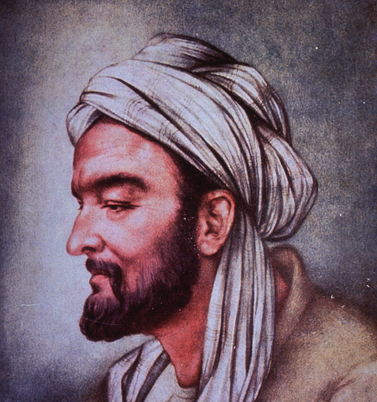
The knowledge of anything, since all things have causes, is not acquired or complete unless it is known by its causes. Therefore in medicine we ought to know the causes of sickness and health. And because health and sickness and their causes are sometimes manifest, and sometimes hidden and not to be comprehended except by the study of symptoms, we must also study the symptoms of health and disease. Now it is established in the sciences that no knowledge is acquired save through the study of its causes and beginnings, if it has had causes and beginnings; nor completed except by knowledge of its accidents and accompanying essentials. Of these causes there are four kinds: material, efficient, formal, and final.
9 months 1 week ago
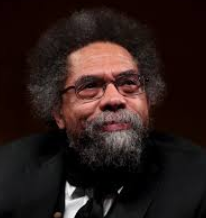
Free-market fundamentalism trivializes the concern for public interest. It puts fear and insecurity in the hearts of anxiety-ridden workers. It also makes money-driven, poll-obsessed elected officials deferential to corporate goals of profit - often at the cost of the common good. ... The free-market fundamentalism that prevails in the United States today promotes the pervasive sleepwalking of the populace. People see that the false prophets are handsomely rewarded - with money, status and access to more power. ... We are experiencing the sad gangsterization of America - an unbridled grasp at power, wealth and status.
▼
Source
source
Cornel West: Democracy Matters in The Globalist
7 months 3 weeks ago
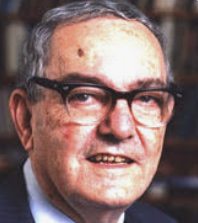
We are organization watchers in our role as citizens. Increasing attention has been fixed in recent years upon the functioning of society's organizations: its large corporations and its governments. Hence this could also be described as a book for Everyman-for it proposes a way of thinking about organizational issues that concern us all.
▼
Source
source
Simon (1975, p. ix); As cited in Stefano Franchi(2006) "Herbert simon, anti-philosopher." Computing and Philosophy. p. 34.
9 months 2 weeks ago
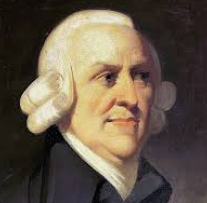
No regulation of commerce can increase the quantity of industry in any society beyond what its capital can maintain. It can only divert a part of it into a direction into which it might not otherwise have gone; and it is by no means certain that this artificial direction is likely to be more advantageous to the society than that into which it would have gone of its own accord. Every individual is continually exerting himself to find out the most advantageous employment for whatever capital he can command. It is his own advantage, indeed, and not that of the society, which he has in his view. But the study of his own advantage naturally, or rather necessarily leads him to prefer that employment which is most advantageous to the society.
▼
Source
source
Chapter II, p. 486.
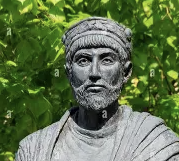
5 months 3 weeks ago
Can anyone be proved innocent, if it be enough to have accused him?
▼
Source
source
Julian, at the trial of Numerius, governor of Gallia Narbonensis, who was accused of embezzlement. Reported in Ammianus, Res gestae, bk. 18, ch. 1, sec. 4

8 months 6 days ago
When capitalism is negated, social processes no longer stand under the rule of blind natural laws.
▼
Source
source
P. 318

9 months 2 weeks ago
All the entertainment and talk of history is nothing almost but fighting and killing: and the honour and renown that is bestowed on conquerers (who for the most part are but the great butchers of mankind) farther mislead growing youth, who by this means come to think slaughter the laudible business of mankind, and the most heroick of virtues. By these steps unnatural cruelty is planted in us; and what humanity abhors, custom reconciles and recommends to us, by laying it in the way to honour. Thus, by fashioning and opinion, that comes to be a pleasure, which in itself neither is, nor can be any.
▼
Source
source
Sec. 116

8 months 6 days ago
What, could ye not watch with me one hour? Watch and pray, that ye enter not into temptation: the spirit indeed is willing, but the flesh is weak.
▼
Source
source
26:40-41 (KJV)

9 months 1 week ago
"A pleasure is full grown only when it is remembered. You are speaking, Hmān, as if the pleasure were one thing and the memory another. It is all one thing. The séroni could say it better than I say it now. Not better than I could say it in a poem. What you call remembering is the last part of the pleasure, as the crah is the last part of a poem. When you and I met, the meeting was over very shortly, it was nothing. Now it is growing something as we remember it. But still we know very little about it. What it will be when I remember it as I lie down to die, what it makes in me all my days till then-that is the real meeting. The other is only the beginning of it."
▼
Source
source
Hyoi, p. 73

9 months 3 weeks ago
Courtesy is a science of the highest importance. It is, like grace and beauty in the body, which charm at first sight, and lead on to further intimacy and friendship, opening a door that we may derive instruction from the example of others, and at the same time enabling us to benefit them by our example, if there be anything in our character worthy of imitation.
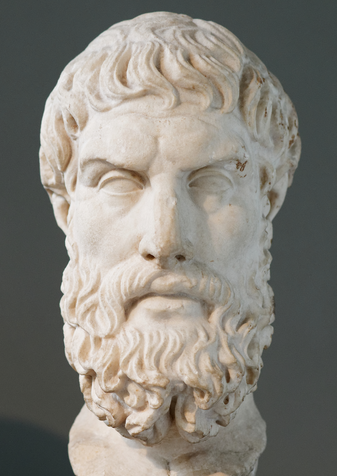
10 months 3 days ago
Self-sufficiency is the greatest of all wealth.
7 months 1 week ago
Writers, poets, painters, musicians, philosophers, political thinkers, to name only a few of the categories affected, must woo their readers, viewers, listeners, from distraction. To this we must add, for simple realism demands it, that these same writers, painters, etc., are themselves the children of distraction. As such, they are peculiarly qualified to approach the distracted multitudes. They will have experienced the seductions as well as the destructiveness of the forces we have been considering here. This is the destructive element in which we do not need to be summoned to immerse ourselves, for we were born to it.
▼
Source
source
The Distracted Public (1990), p. 167
5 months 1 week ago
The non-evaluative general total conception of ideology is to be found primarily in those historical investigations, where, provisionally and for the sake of the simplification of the problem, no judgments are pronounced as to the correctness of the ideas to be treated. This approach confines itself to discovering the relations between certain mental structures and the life-situations in which they exist. We must constantly ask ourselves how it comes about that a given type of social situation gives rise to a given interpretation. Thus the ideological element in human thought, viewed at this level, is always bound up with the existing life-situation of the thinker. According to this view human thought arises, and operates, not in a social vacuum but in a definite social milieu.

10 months 2 weeks ago
The man who is guided by concepts and abstractions only succeeds by such means in warding off misfortune, without ever gaining any happiness for himself from these abstractions. And while he aims for the greatest possible freedom from pain, the intuitive man, standing in the midst of a culture, already reaps from his intuition a harvest of continually inflowing illumination, cheer, and redemption in addition to obtaining a defense against misfortune. To be sure, he suffers more intensely, when he suffers; he even suffers more frequently, since he does not understand how to learn from experience and keeps falling over and over again into the same ditch.
9 months 2 weeks ago
There can be no difference anywhere that doesn't make a difference elsewhere - no difference in abstract truth that doesn't express itself in a difference in concrete fact and in conduct consequent upon that fact, imposed on somebody, somehow, somewhere and somewhen.
▼
Source
source
Lecture II, What Pragmatism Means

9 months 4 weeks ago
The philosophers who wished us to have the gods for our friends rank the friendship of the holy angels in the fourth circle of society, advancing now from the three circles of society on earth to the universe, and embracing heaven itself. And in this friendship we have indeed no fear that the angels will grieve us by their death or deterioration. But as we cannot mingle with them as familiarly as with men (which itself is one of the grievances of this life), and as Satan, as we read, sometimes transforms himself into an angel of light, to tempt those whom it is necessary to discipline, or just to deceive, there is great need of God's mercy to preserve us from making friends of demons in disguise, while we fancy we have good angels for our friends; for the astuteness and deceitfulness of these wicked spirits is equalled by their hurtfulness.
▼
Source
source
XIX, 9

5 months 2 weeks ago
It is in our lives, and not from our words, that our religion must be read. By the same test the world must judge me. But this does not satisfy the priesthood. They must have a positive, a declared assent to all their interested absurdities. My opinion is that there would never have been an infidel, if there had never been a priest.
▼
Source
source
Letter to Mrs. Harrison Smith

9 months 2 weeks ago
Theologian: But what is to love? Philosopher: To be delighted by the happiness of another.
▼
Source
source
Confessio philosophi, 1673

9 months 1 week ago
I maintain that inversion is the effect of neither a prenatal choice nor an endocrinal malformation nor even the passive and determined result of complexes. It is an outlet that a child discovers when he is suffocating.
5 months 4 weeks ago
Anger, as we have said, is eager to punish; and that such a desire should exist in man's peaceful breast is least of all according to his nature; for human life is founded on benefits and harmony and is bound together into an alliance for the common help of all, not by terror, but by love towards one another.
6 months 1 week ago
There are no conventions, no tabus, no gods, no priests, princes, fathers, or revelations which they must accept. ... The prison door is wide open. They stagger out into trackless space under a blinding sun.
▼
Source
source
Preface

8 months 2 weeks ago
Morality knows nothing of geographical boundaries, or distinctions of race.
▼
Source
source
Pt. IV, Ch. 30 : General Considerations
8 months 1 week ago
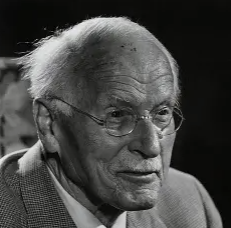
Among all my patients in the second half of life-that is to say, over thirty-five-there has not been one whose problem in the last resort was not that of finding a religious outlook on life. It is safe to say that every one of them fell ill because he had lost what the living religions of every age have given their followers, and none of them has been really healed who did not regain his religious outlook.
▼
Source
source
Chap. 11 (Psychotherapists or the Clergy), p. 229
9 months 4 weeks ago
It is not by change of place that we can come nearer to Him who is in every place, but by the cultivation of pure desires and virtuous habits.
▼
Source
source
p. 433
9 months 1 week ago
God will look to every soul like its first love because He is its first love.
6 months 4 weeks ago
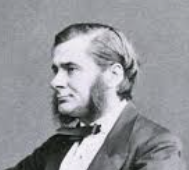
For myself I say deliberately, it is better to have a millstone tied round the neck and be thrown into the sea than to share the enterprises of those to whom the world has turned, and will turn, because they minister to its weaknesses and cover up the awful realities which it shudders to look at.
▼
Source
source
Aphorism #367, in Aphorisms and Reflections (1907) edited by Henrietta A. Huxley, his widow
9 months 2 weeks ago
The greatest improvement in the productive powers of labour, and the greatest part of skill, dexterity, and judgment with which it is any where directed, or applied, seem to have been the effects of the division of labour.
▼
Source
source
Chapter I, p. 7
5 months 2 weeks ago
I wish it were possible to obtain a single amendment to our Constitution. I would be willing to depend on that alone for the reduction of the administration of our government to the genuine principles of its Constitution; I mean an additional article, taking from the federal government the power of borrowing.
▼
Source
source
Letter to John Taylor (26 November 1798), shortened in The Money Masters to "I wish it were possible to obtain a single amendment to our Constitution ... taking from the federal government their power of borrowing".
9 months 3 weeks ago
The most profound joy has more of gravity than of gaiety in it.
▼
Source
source
Book II, Ch. 20
7 months 2 days ago
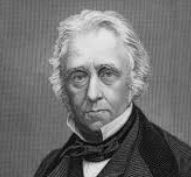
I say that where the public morality is concerned it may be the duty of the State to interfere with the contracts of individuals... It must then, I think, be admitted that, where health is concerned, and where morality is concerned, the State is justified in interfering with the contracts of individuals.
▼
Source
source
Speech in the House of Commons (22 May 1846), quoted in Speeches of the Right Honourable T. B. Macaulay, M.P. (1854), p. 442

8 months 2 weeks ago
There is a sort of enthusiasm in all projectors, absolutely necessary for their affairs, which makes them proof against the most fatiguing delays, the most mortifying disappointments, the most shocking insults; and what is severer than all, the presumptuous judgments of the ignorant upon their designs.
▼
Source
source
Volume I, p. 7
9 months 1 week ago
Forgiveness is the key to action and freedom.
▼
Source
source
As quoted in The Concise Columbia Dictionary of Quotations (1989) edited by Robert Andrews, p. 114

6 months 5 days ago
Insurrection, never so necessary, is a most sad necessity; and governors who wait for that to instruct them are surely getting into the fatalest courses,-proving themselves sons of Nox and Chaos, of blind Cowardice, not of seeing Valour! How can there be any remedy in insurrection? It is a mere announcement of the disease,-visible now even to sons of Night. Insurrection usually gains little; usually wastes how much. One of its worst kinds of waste, to say nothing of the rest, is that of irritating and exasperating men against each other, by violence done, which is always sure to be injustice done; for violence does even justice unjustly. Book I, Chap. III

7 months 4 weeks ago
What is morality in any given time or place? It is what the majority then and there happen to like, and immorality is what they dislike.
▼
Source
source
Ch. 22, August 30, 1941.
5 months 4 days ago
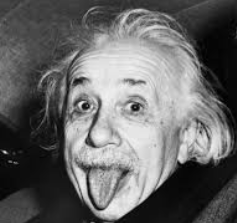
I believe in intuitions and inspirations. I sometimes feel that I am right. I do not know that I am. When two expeditions of scientists, financed by the Royal Academy, went forth to test my theory of relativity, I was convinced that their conclusions would tally with my hypothesis. I was not surprised when the eclipse of May 29, 1919, confirmed my intuitions. I would have been surprised if I had been wrong.
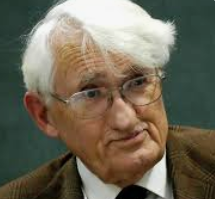
9 months 1 week ago
This investigation aims to analyze the type "bourgeois public sphere". Its particular approach is required, to begin with, by the difficulties specific to an object whose complexity precludes exclusive reliance on the specialized methods of a single discipline. Rather, the category. "public sphere" must be investigated within the broad field formerly reflected in the perspective of the traditional science of "politics."' When particular social-scientific discipline, this object disintegrates. The problems that result from fusing aspects of sociology and economics, of constitutional law and political science, and of social and intellectual history are obvious: given the present state of differentiation and specialization in the social sciences, scarcely anyone will be able to master several, let alone all, of these disciplines.
▼
Source
source
p.xvii
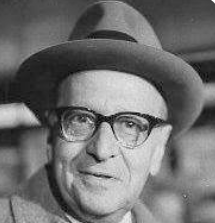
8 months 4 days ago
Although the formulations of science now offer the most advanced knowledge of nature, men continue to use obsolete forms of thought long discarded by scientific theory. In so far as these obsolete forms are superfluous for science, the fact that they persist violated the principle of the economy of thought, that characteristic trait of the bourgeois temper.
▼
Source
source
p. 133.
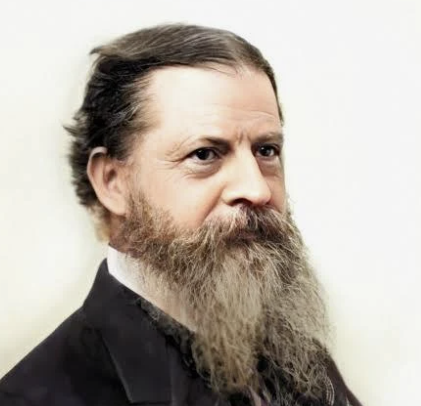
8 months 1 week ago
It has never been in my power to study anything, - mathematics, ethics, metaphysics, gravitation, thermodynamics, optics, chemistry, comparative anatomy, astronomy, psychology, phonetics, economics, the history of science, whist, men and women, wine, metrology, except as a study of semeiotic.
▼
Source
source
Letter to Victoria
5 months 1 week ago
Respect the faculty that forms thy judgments.
▼
Source
source
III, 9

9 months 2 weeks ago
Fanaticism is the danger of the world, and always has been, and has done untold harm. I might almost say that I was fanatical against fanaticism.
▼
Source
source
The Future of Science (1959), p. 79; also in BBC The Listener, Vol. 61 (1959), p. 505
5 months 1 week ago
Just that you do the right thing. The rest doesn't matter. Cold or warm. Tired or well-rested. Despised or honored. Dying . . . or busy with other assignments.
▼
Source
source
(Hays translation) VI, 2

9 months 2 weeks ago
Wisdom and contrivance are shown in overcoming difficulties, so there is no place for them in a Being for whom no difficulties exist.
▼
Source
source
pages 176-177; Early Modern Texts page 16
8 months 2 weeks ago
Men must be governed by those laws which they love. Where thirty millions are to be governed by a few thousand men, the government must be established by consent, and must be congenial to the feelings and to the habits of the people. That which creates tyranny is the imposition of a form of government contrary to the will of the governed: and even a free and equal plan of government, would be considered as despotic by those who desired to have their old laws and their ancient system.
▼
Source
source
Speech in the House of Commons on India (27 June 1781), quoted in The Parliamentary Register: Or, History of the Proceedings and Debates of the House of Commons, Volume III (1782), pp. 666-667
5 months 1 week ago
In attempting to expose the views of another, one is forced to make one's own view appear infallible and absolute, which is a procedure altogether to be avoided if one is making a specifically non-evaluative investigation. The second possible approach is nevertheless to combine such a non-evaluative analysis with a definite epistemology. Viewed from the angle of this second approach there are two separate and distinct solutions to the problem of what constitutes reliable knowledge - the one solution may be termed relationism, and the other relativism.
CivilSimian.com created by AxiomaticPanic, CivilSimian, Kalokagathia