

6 months 3 weeks ago
Science ... commits suicide when it adopts a creed.
▼
Source
source
"The Darwin Memorial"
5 months 2 weeks ago
[Successful meditation brings about realizations:] That we are no longer this poor little stranger and afraid in a world it never made. But that you are this universe and you are creating it in every moment... Because you see it starts now, it didn't begin in the past, there was no past. See, if the universe began in the past when that happened it was now; see, but it's still now - and the universe is still beginning now, and it's trailing off like the wake of a ship from now, and that wake fades out so does the past. You can look back there to explain things, but the explanation disappears. You'll never find it there. ... Things are not explained by the past, they are explained by what Happens Now. That Creates the past, and it begins here... That's the birth of responsibility.
▼
Source
source
On deep meditation and enlightenment that transcends temporal experiences and most notions of selfhoody

7 months 3 weeks ago
When we are the victims of illusion we do not feel it to be an illusion but a reality. It is the same perhaps with evil. Evil when we are in its power is not felt as evil but as a necessity, or even a duty.
▼
Source
source
p. 64

9 months 6 days ago
In how many churches, by how many prophets, tell me, is man made sensible that he is an infinite Soul; that the earth and heavens are passing into his mind; that he is drinking forever the soul of God?
▼
Source
source
p. 18
7 months 2 weeks ago
During and after World War II, a large number of academic economists were exposed directly to business life, and had more or less extensive opportunities to observe how decisions were actually made in business organizations. Moreover, those who became active in the development of the new management science were faced with the necessity of developing decision-making procedures that could actually be applied in practical situations. Surely these trends would be conducive to moving the basic assumptions of economic rationality in the direction of greater realism.



8 months 2 days ago
There is only this swarm of dying creatures stricken with longevity, all the more hateful in that they are so good at organizing their agony. p. 120, first American edition
▼
Source
source
1970
7 months 1 day ago
The old land is still the true love, the others are but pleasant infidelities.
▼
Source
source
Pt. I, ch. IV

9 months 6 days ago
I well knew that to propose something which would be called extreme, was the true way not to impede but to facilitate a more moderate experiment.
▼
Source
source
(p. 294)

9 months 5 days ago
The doctrine of the Second Coming has failed, so far as we are concerned, if it does not make us realize that at every moment of every year in our lives Donne's question "What if this present were the world's last night?" is equally relevant.
7 months 2 weeks ago
Computers were within my sphere of attention, but only computers used as number crunchers. In spite of the "giant brain" metaphor, there is little suggestion in this 1950 talk that the most important application of computers might lie in imitating intelligence symbolically, not numerically.
▼
Source
source
p. 199.
7 months 3 weeks ago
Fear and destructiveness are the major emotional sources of fascism, eros belongs mainly to democracy.
▼
Source
source
The Authoritarian Personality (1950), p. 976, co-written with Else Frenkel-Brunswik, Daniel Levinson, and Nevitt Sanford
5 months 2 weeks ago
And the simple step of a simple courageous man is not to partake in falsehood, not to support false actions! Let THAT enter the world, let it even reign in the world - but not with my help. But writers and artists can achieve more: they can CONQUER FALSEHOOD! In the struggle with falsehood art always did win and it always does win! Openly, irrefutably for everyone! Falsehood can hold out against much in this world, but not against art. And no sooner will falsehood be dispersed than the nakedness of violence will be revealed in all its ugliness - and violence, decrepit, will fall.
9 months 2 weeks ago
Neither did the dispensation of God vary in the times after our Saviour came into the world; for our Saviour himself did first show His power to subdue ignorance, by His conference with the priests and doctors of the law, before He showed His power to subdue nature by His miracles. And the coming of this Holy Spirit was chiefly figured and expressed in the similitude and gift of tongues, which are but vehicula scientiæ.
7 months 2 weeks ago
We will likely also find that the nature of the problem to be solved will be a principal determinant of the mix. With our growing understanding of the organization of judgmental and intuitive processes, of the specific knowledge that of the specific knowledge that is required to perform particular judgmental tasks, and of the cues that evoke such knowledge in situations in which it is relevant, we have a powerful new tool for improving expert judgment. We can specify the knowledge and the recognition capabilities that experts in a domain need to acquire, and use these specifications for designing appropriate learning procedures.
▼
Source
source
p. 137.
9 months 1 week ago
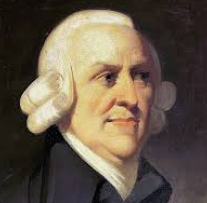
It may indeed be doubted, whether butcher's meat is any where a necessary of life. Grain and other vegetables, with the help of milk, cheese, and butter, or oil, where butter is not to be had, it is known from experience, can, without any butcher's meat, afford the most plentiful, the most wholesome, the most nourishing, and the most invigorating diet.
▼
Source
source
Chapter II, Part II, Appendix to Articles I and II.


5 months 2 days ago
Deem not life a thing of consequence. For look at the yawning void of the future, and at that other limitless space, the past.
▼
Source
source
IV, 50
7 months 2 weeks ago
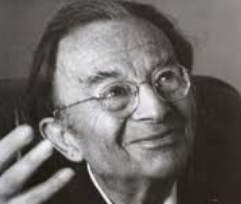
I believe that man is the product of natural evolution that is born from the conflict of being a prisoner and separated from nature, and from the need to find unity and harmony with it.

5 months 3 weeks ago
These are the two vices that beset Government Offices; both of them originating in insufficient Intellect,-that sad insufficiency from which, directly or indirectly, all evil whatsoever springs!
8 months 1 day ago
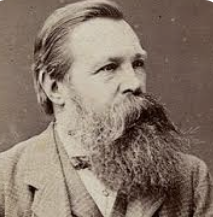
The bourgeoisie has gained a monopoly of all means of existence in the broadest sense of the word. What the proletarian needs, he can obtain only from this bourgeoisie, which is protected in its monopoly by the power of the state. The proletarian is, therefore, in law and in fact, the slave of the bourgeoisie, which can decree his life or death.
▼
Source
source
p. 112
8 months 2 days ago
If there was a God of sorrow, he would grow black heavy wings, to soar not for the skies, but for inferno.

9 months 5 days ago
We must frankly confess, then, using our empirical common sense and ordinary practical prejudices, that in the world that actually is, the virtues of sympathy, charity, and non-resistance may be, and often have been, manifested in excess. ... You will agree to this in general, for in spite of the Gospel, in spite of Quakerism, in spite of Tolstoi, you believe in fighting fire with fire, in shooting down usurpers, locking up thieves, and freezing out vagabonds and swindlers.
▼
Source
source
Lectures XIV and XV, "The Value of Saintliness"

8 months 1 week ago
Genius is present in every age, but the men carrying it within them remain benumbed unless extraordinary events occur to heat up and melt the mass so that it flows forth.
8 months 2 days ago
There was a time when time did not yet exist. ... The rejection of birth is nothing but the nostalgia for this time before time.
9 months 1 week ago
The world neither ever saw, nor ever will see, a perfectly fair lottery.
▼
Source
source
Chapter X, Part I.
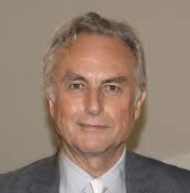
7 months 2 days ago
It would be deeply depressing if the only way children could get moral values was from religion. Either from scripture, and God knows we don't want them to get it from scripture, I mean, just look at scripture. Or, from being afraid of God, being intimidated by God. Anybody who is good for only those two reasons is not really being good at all. Why not teach children things like the Golden Rule, do as you would be done by, how would you like it if other children did that to you, so why do you do it to them... I think it's depressing that anybody should suggest that you actually need God in order to be moral. I would hope that our morals come from a better source than that, and therefore they are genuinely moral rather than based on outmoded scripture, or based on fear.
▼
Source
source
BBC,
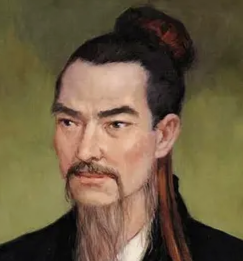
5 months 2 weeks ago
If every one in the world will love universally; states not attacking one another; houses not disturbing one another; thieves and robbers becoming extinct; emperor and ministers, fathers and sons, all being affectionate and filial -- if all this comes to pass the world will be orderly. Therefore, how can the wise man who has charge of governing the empire fail to restrain hate and encourage love? So, when there is universal love in the world it will be orderly, and when there is mutual hate in the world it will be disorderly.
▼
Source
source
Book 4; Universal Love I

8 months 3 days ago
I write in a hurry, because the little one, who has been sleeping a long time, begins to call for me. Poor thing! when I am sad, I lament that all my affections grow on me, till they become too strong for my peace, though they all afford me snatches of exquisite enjoyment.
▼
Source
source
Letter to Gilbert Imlay

7 months 3 weeks ago
The respect inspired by the link between man and the reality alien to this world can make itself evident to that part of man which belongs to the reality of this world. The reality of this world is necessity. The part of man which is in this world is the part which is in bondage to necessity and subject to the misery of need. The one possibility of indirect expression of respect for the human being is offered by men's needs, the needs of the soul and of the body, in this world.
7 months 1 week ago
The general nature of the speech act fallacy can be stated as follows, using "good" as our example. Calling something good is characteristically praising or commending or recommending it, etc. But it is a fallacy to infer from this that the meaning of "good" is explained by saying it is used to perform the act of commendation.
▼
Source
source
P. 139.

5 months 6 days ago
It has always been denied by the republican party in this country, that the Constitution had given the power of incorporation to Congress. On the establishment of the Bank of the United States, this was the great ground on which that establishment was combated; and the party prevailing supported it only on the argument of its being an incident to the power given them for raising money.
▼
Source
source
Letter to Dr. Maese (1809) ME 12:231 : The Writings of Thomas Jefferson "Memorial Edition" (20 Vols., 1903-04)
8 months 2 days ago
His power to adore is responsible for all his crimes: a man who loves a god unduly forces other men to love his god, eager to exterminate them if they refuse.

9 months 1 week ago
The effect of music is so very much more powerful and penetrating than is that of the other arts, for these others speak only of the shadow, but music of the essence.
▼
Source
source
Vol. I, Ch. II

7 months 2 weeks ago
The study of mathematics is apt to commence in disappointment... We are told that by its aid the stars are weighed and the billions of molecules in a drop of water are counted. Yet, like the ghost of Hamlet's father, this great science eludes the efforts of our mental weapons to grasp it.
▼
Source
source
ch. 1.

10 months 2 days ago
I was assailed by memories of a life that wasn't mine anymore, but one in which I'd found the simplest and most lasting joys.
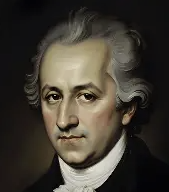
5 months 4 weeks ago
All poetry is supposed to be instructive but in an unnoticeable manner; it is supposed to make us aware of what it would be valuable to instruct ourselves in; we must deduce the lesson on our own, just as with life.
▼
Source
source
Letter to Carl Friedrich Zelter

8 months 5 days ago
If there be an order in which the human race has mastered its various kinds of knowledge, there will arise in every child an aptitude to acquire these kinds of knowledge in the same order. So that even were the order intrinsically indifferent, it would facilitate education to lead the individual mind through the steps traversed by the general mind. But the order is not intrinsically indifferent; and hence the fundamental reason why education should be a repetition of civilization in little.
5 months 2 weeks ago
It is not sufficient to say, "God spake and it was so." For the natures of things that are created ought to harmonise with the commands of God. I will say more clearly what I mean. Did God ordain that fire should mount upwards by chance and earth sink down? Was it not necessary, in order that the ordinance of God should be fulfilled, for the former to be light and the latter to weigh heavy? And in the case of other things also this is equally true.
6 months 3 weeks ago
Nothing is so galling to a people not broken in from the birth, as a paternal, or, in other words, a meddling government, a government which tells them what to read, and say, and eat, and drink, and wear.
▼
Source
source
p. 252

9 months 1 week ago
No man who believes that all is for the best in this suffering world can keep his ethical values unimpaired, since he is always having to find excuses for pain and misery.
▼
Source
source
The Collected Papers of Bertrand Russell: A fresh look at empiricism, 1927-42 (G. Allen & Unwin, 1996), p. 217
7 months 1 day ago
This is still the strangest thing in all man's travelling, that he should carry about with him incongruous memories.
▼
Source
source
Pt. II, ch. III.
8 months 2 days ago
I have never taken myself for a being. A non-citizen, a marginal type, a nothing who exists only by the excess, by the superabundance of his nothingness.

7 months 4 weeks ago
The lord of that servant will come in a day when he looketh not for him, and at an hour when he is not aware, and will cut him in sunder, and will appoint him his portion with the unbelievers.
▼
Source
source
Luke 12:46 (KJV)
7 months 3 weeks ago
To be sure, exchange-value exerts its power in a special way in the realm of cultural goods. For in the world of commodities this realm appears to be exempted from the power of exchange, to be in an immediate relationship with the goods, and it is this appearance in turn which alone gives cultural goods their exchange-value. But they nevertheless simultaneously fall completely into the world of commodities, are produced for the market, and are aimed at the market.
▼
Source
source
p. 279
8 months 6 days ago
There are only Epicureans, either crude or refined; Christ was the most refined.
▼
Source
source
Act I.
CivilSimian.com created by AxiomaticPanic, CivilSimian, Kalokagathia