

5 months 3 weeks ago
The divergent scales of values scream in discordance, they dazzle and daze us, and in order that it might not be painful we steer clear of all other values, as though from insanity, as though from illusion, and we confidently judge the whole world according to our own home values. Which is why we take for the greater, more painful and less bearable disaster not that which is in fact greater, more painful and less bearable, but that which lies closest to us. Everything which is further away, which does not threaten this very day to invade our threshold - with all its groans, its stifled cries, its destroyed lives, even if it involves millions of victims - this we consider on the whole to be perfectly bearable and of tolerable proportions.

8 months 2 weeks ago
The French want no-one to be their superior. The English want inferiors. The Frenchman constantly raises his eyes above him with anxiety. The Englishman lowers his beneath him with satisfaction.
▼
Source
source
Journeys to England and Ireland (1835).

8 months ago
It is the vital asserting itself, and in order to assert itself it creates, with the help of its enemy, the rational, a complete dogmatic structure, and this the Church defends against rationalism, against Protestantism, and against Modernism. The Church defends life. It stood up against Galileo, and it did right; for his discovery, in its inception and until it became assimilated to the general body of human knowledge, tended to shatter the anthropomorphic belief that the universe was created for man. It opposed Darwin, and it did right, for Darwinism tends to shatter our belief that man is an exceptional animal, created expressly to be eternalized. And lastly, Pius IX, the first Pontiff to be proclaimed infallible, declared he was irreconcilable with the so-called modern civilization. And he did right.

6 months 3 weeks ago
When I was a child, the institution of war, which, by then, had been in existence for perhaps about five thousand years, was still being taken for granted by most people in the World as a normal and acceptable fact of life. One small religious community, the Society of Friends, was at that time singular in condemning war as immoral and in consequently refusing to have any part or lot in war-making.
▼
Source
source
Experiences (New York: Oxford UP, 1969) pt. 2, sect. 4

5 months 2 weeks ago
Being doesn't know.


7 months 4 weeks ago
Imaginary evil is romantic and varied; real evil is gloomy, monotonous, barren, boring. Imaginary good is boring; real good is always new, marvelous, intoxicating.
▼
Source
source
p. 120
9 months 3 days ago
When asked why people give to beggars but not to philosophers, he replied, 'Because they expect they may become lame and blind, but never that they will become philosophers.'
▼
Source
source
Diogenes Laërtius, vi. 56, as reported in Diogenes the Cynic: Sayings and Anecdotes as translated by Robin Hard (Oxford: 2012), p. 18

9 months 1 week ago
Philosophical problems can be compared to locks on safes, which can be opened by dialing a certain word or number, so that no force can open the door until just this word has been hit upon, and once it is hit upon any child can open it.
▼
Source
source
Ch. 9 : Philosophy, p. 175

8 months 2 weeks ago
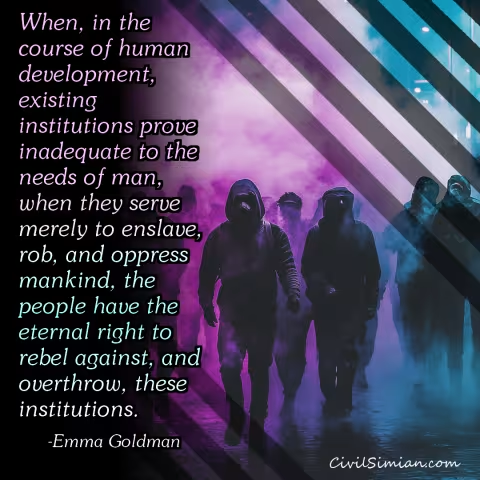
Deny them this participation of freedom, and you break that sole bond, which originally made, and must still preserve the unity of the empire.

5 months 1 week ago
In a democratic republic, where the mass of the people of all parties have the same interest at stake, some respect must be had to the feelings and wishes of the minority, especially when that minority is large and clamorous; otherwise, it will be impossible to avoid discord, and discord weakens the bonds of union.
▼
Source
source
Account of a conversation with Col. Richard M. Johnson in 1809, as recounted in A Biographical Sketch of Col. Richard M. Johnson of Kentucky, p.12

7 months 3 weeks ago
The pathos of it all is that the America which is to be protected by a huge military force is not the America of the people, but that of the privileged class; the class which robs and exploits the masses, and controls their lives from the cradle to the grave. No less pathetic is it that so few people realize that preparedness never leads to peace, but that it is indeed the road to universal slaughter.

8 months 6 days ago
When there were gathered together an innumerable multitude of people, insomuch that they trode one upon another, he began to say unto his disciples first of all, Beware ye of the leaven of the Pharisees, which is hypocrisy. For there is nothing covered, that shall not be revealed; neither hid, that shall not be known. Therefore whatsoever ye have spoken in darkness shall be heard in the light; and that which ye have spoken in the ear in closets shall be proclaimed upon the housetops. And I say unto you my friends, Be not afraid of them that kill the body, and after that have no more that they can do. But I will forewarn you whom ye shall fear: Fear him, which after he hath killed hath power to cast into hell; yea, I say unto you, Fear him.
▼
Source
source
12:1-5

9 months 2 weeks ago
To understand political power aright, and derive from it its original, we must consider what estate all men are naturally in, and that is, a state of perfect freedom to order their actions, and dispose of their possessions and persons as they think fit, within the bounds of the law of Nature, without asking leave or depending upon the will of any other man.
▼
Source
source
Second Treatise of Government, Ch. II, sec. 4

8 months 1 week ago
Speech and silence. We feel safer with a madman who talks than with one who cannot open his mouth.

5 months 4 weeks ago
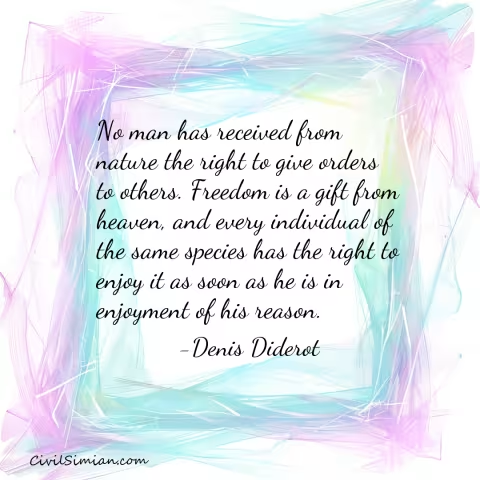
Impurity is caused by attitude, not events.
▼
Source
source
(trans. Emily Wilson)

7 months 3 weeks ago
It is we who are the measure of what is strange and miraculous: if we sought a universal measure the strange and miraculous would not occur and all things would be equal.
▼
Source
source
A 26
7 months 4 weeks ago
Alexander is to a peasant proprietor what Don Juan is to a happily married husband.
▼
Source
source
p. 78,


9 months 2 weeks ago
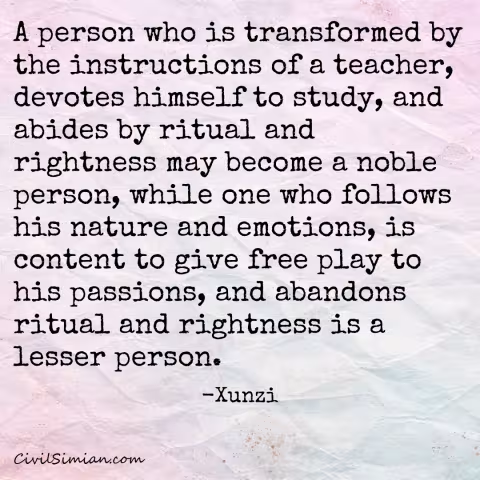
For as soon as the distribution of labour comes into being, each man has a particular exclusive sphere of activity, which is forced upon him and from which he cannot escape. He is a hunter, a fisherman, a shepherd, or a critical critic and must remain so if he does not wish to lose his means of livelihood; while in communist society, where nobody has one exclusive sphere of activity but each can become accomplished in any branch he wishes, society regulates the general production and thus makes it possible for me to do one thing today and another tomorrow, to hunt in the morning, to fish in the afternoon, rear cattle in the evening, criticize after dinner, just as I have in mind, without ever becoming hunter, fisherman, shepherd or critic.
▼
Source
source
Vol. 1, Part 1.
9 months 2 weeks ago
So long as the product is sold, everything is taking its regular course from the standpoint of the capitalist producer.
▼
Source
source
Vol. II, Ch. II, p. 78.

8 months 1 week ago
It was these Romans who reunited in one State the Culture which had now been produced by the intermixture of different races, and thereby completed the period of Ancient Time, and closed the simple course of Ancient Civilization. With respect to its influence on Universal History, this nation, more than any other, was the blind and unconscious instrument for the furtherance of a higher World-Plan; after having formed itself, by its internal des tiny indicated above, into a most fit and proper instrument for that purpose.
▼
Source
source
p. 192

6 months 1 week ago
The regeneration of the inferior or bastard races by the superior ones is consistent with God's plans for humanity. The man of the people, in our countries, is always a fallen aristocrat; his hands are made to handle the sword rather than the laborer's tools. He prefers warring to working, that is, he returns to his original calling.
▼
Source
source
93, as translated by Asselin Charles, in "Colonial Discourse Since Christopher Columbus," Journal of Black Studies, Vol. 26, No. 2 (November 1995), 147

8 months 1 week ago
We are living in what the Greeks called the right time for a "metamorphosis of the gods," i.e. of the fundamental principles and symbols. This peculiarity of our time, which is certainly not of our conscious choosing, is the expression of the unconscious man within us who is changing. Coming generations will have to take account of this momentous transformation if humanity is not to destroy itself through the might of its own technology and science.
▼
Source
source
p 110
9 months 2 weeks ago
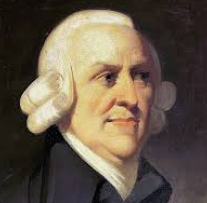
A merchant, it has been said very properly, is not necessarily the citizen of any particular country.
▼
Source
source
Chapter IV, p. 456.
7 months 4 weeks ago
From the power to transform him into a thing by killing him there proceeds another power, and much more prodigious, that which makes a thing of him while he still lives.
▼
Source
source
in The Simone Weil Reader, p. 155
8 months 6 days ago
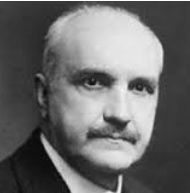
Philosophers are as jealous as women. Each wants a monopoly of praise.
▼
Source
source
P. 30

6 months 1 week ago
Contemporary capitalist production is characterized by a series of passages that name different faces of the same shift: from the hegemony of industrial labor to that of immaterial labor, from Fordism to post-Fordism, and from the modern to the postmodern.

6 months 4 days ago
The young generations of the world, who had in them the freshness of young children, and yet the depth of earnest men, who did not think that they had finished off all things in Heaven and Earth by merely giving them scientific names, but had to gaze direct at them there, with awe and wonder: they felt better what of divinity is in man and Nature; they, without being mad, could worship Nature, and man more than anything else in Nature.

9 months 3 weeks ago
Accustom him to every thing, that he may not be a Sir Paris, a carpet-knight, but a sinewy, hardy, and vigorous young man.
▼
Source
source
Ch. 26. Of the Education of Children, tr. Cotton, rev. W. Hazlitt, 1842
10 months 1 week ago
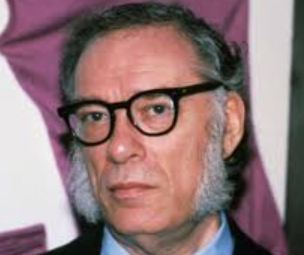
The undramatic fact is that I just think and think and think until I have something [for a story], and there is nothing marvelous or artistic about the phenomenon.

9 months 1 week ago
The way for a person to develop a [writing] style is (a) to know exactly what he wants to say, and (b) to be sure he is saying exactly that. The reader, we must remember, does not start by knowing what we mean. If our words are ambiguous, our meaning will escape him. I sometimes think that writing is like driving sheep down a road. If there is any gate open to the left or the right the readers will most certainly go into it.
▼
Source
source
As quoted in part 2 of Sherwood Eliot Wirt in "The Final Interview of C. S. Lewis", 1963
7 months 2 weeks ago
The very ideology of "cultural production" is antithetical to all culture, as is that of visibility and of the polyvalent space: culture is a site of the secret, of seduction, of initiation, of a restrained and highly ritualized symbolic exchange.
▼
Source
source
"The Beaubourg Effect," p. 64

9 months 2 weeks ago
Landlords... grow richer, as it were in their sleep, without working, risking, or economizing.
▼
Source
source
Book V, Chapter 1, Section 5
7 months 1 week ago
In many ways an artistic nature unfits a man for practical existence.
▼
Source
source
A Lodging for the Night.
9 months 2 weeks ago
Quite a heavy weight, a name too quickly famous.
▼
Source
source
La Henriade, chant troisième, l.41, 1722
7 months 3 weeks ago
If you are going to build something in the air it is always better to build castles than houses of cards.
▼
Source
source
F 39

9 months 2 weeks ago
The example of the Jews, in many things, may not be imitated by us; they had not only orders to cut off several nations altogether, but if they were obliged to war with others, and conquered them, to cut off every male; they were suffered to use polygamy and divorces, and other things utterly unlawful to us under clearer light.

9 months 3 weeks ago
...so it is with human reason, which strives not against faith, when enlightened, but rather furthers and advances it.
▼
Source
source
On Justification CCXCIV
8 months ago
The man of flesh and bone; the man who is born, suffers, and dies-above all, who dies; the man who eats and drinks and plays and sleeps and thinks and wills; the man who is seen and heard; the brother, the real brother.
10 months 3 days ago
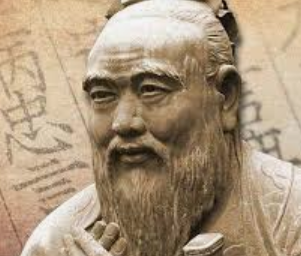
I hear and I forget. I see and I remember. I do and I understand.

9 months 2 weeks ago
The reason that I call my doctrine logical atomism is because the atoms that I wish to arrive at as the sort of last residue in analysis are logical atoms and not physical atoms. Some of them will be what I call "particulars" - such things as little patches of color or sounds, momentary things - and some of them will be predicates or relations and so on.
CivilSimian.com created by AxiomaticPanic, CivilSimian, Kalokagathia