

7 months 1 week ago
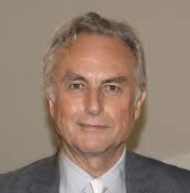
Nature is not cruel, only pitilessly indifferent. This is one of the hardest lessons for humans to learn. We cannot admit that things might be neither good nor evil, neither cruel nor kind, but simply callous - indifferent to all suffering, lacking all purpose.
9 months 2 weeks ago
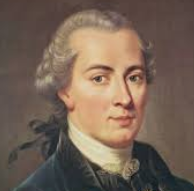
There must be a seed of every good thing in the character of men, otherwise no one can bring it out. Lacking that, analogous motives, honor, etc., are substituted. Parents are in the habit of looking out for the inclinations, for the talents and dexterity, perhaps for the disposition of their children, and not at all for their heart or character.
▼
Source
source
Part III : Selection on Education from Kant's other Writings, Ch. I Pedagogical Fragments, # 13
7 months 3 weeks ago
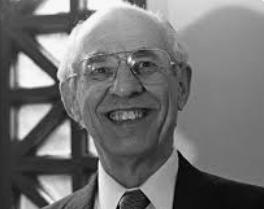
Truth and falsity are the most fundamental terms of rational criticism, and any adequate philosophy must give some account of these, or failing that, show that they can be dispensed with.
▼
Source
source
"Introduction: Philosophy of language and the rest of philosophy"



9 months 2 weeks ago
The foundations on which several duties are built, and the foundations of right and wrong from which they spring, are not perhaps easily to be let into the minds of grown men, not us'd to abstract their thoughts from common received opinions. Much less are children capable of reasonings from remote principles. They cannot conceive the force of long deductions. The reasons that move them must be obvious, and level to their thoughts, and such as may be felt and touched. But yet, if their age, temper, and inclination be consider'd, they will never want such motives as may be sufficient to convince them.
▼
Source
source
Sec. 81

8 months ago
Yes perhaps, as the Sage says, "nothing worthy of proving can be proven, nor yet disproven"; but can we restrain that instinct which urges man to wish to know, and above all to wish to know the things which conduce to life, to eternal life? Eternal life, not eternal knowledge as the Alexandrian gnostic said. For living is one thing and knowing is another; and... perhaps there is an opposition between the two that we may say that everything vital is anti-rational, not merely irrational, and that everything rational is anti-vital. And this is the basis of the tragic sense of life.
5 months 1 week ago
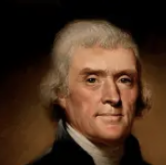
To begin an affair of that kind now, and carry it on so long a time in form, is by no means a proper plan ... whatever assurances I may give her in private of my esteem for her, or whatever assurances I may ask in return from her, depend on it - they must be kept in private. Necessity will oblige me to proceed in a method which is not generally thought fair; that of treating with a ward before obtaining the approbation of her guardian. I say necessity will oblige me to it, because I never can bear to remain in suspense so long a time. If I am to succeed, the sooner I know it, the less uneasiness I shall have to go through. If I am to meet with a disappointment, the sooner I know it, the more of life I shall have to wear it off: and if I do meet with one, I hope in God, and verily believe; it will be the last.
▼
Source
source
Letter to John Page (15 July 1763); published in The Works of Thomas Jefferson
5 months 3 days ago
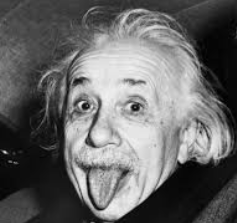
If I was not a physicist, I would probably be a musician. I often think in music. I live my daydreams in music. I see my life in terms of music. ... I cannot tell if I would have done any creative work of importance in music, but I do know that I get most joy in life out of my violin.

7 months 3 weeks ago
A dangerous form of psychological splitting had to have taken place, and it continues to take place, in the psyches of many African Americans who can on one hand oppose racism, and then on the other hand passively absorb ways of thinking about beauty that are rooted in white supremacist thought.
8 months 2 weeks ago
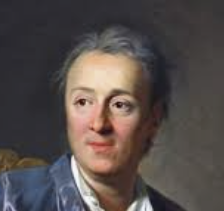
Power acquired by violence is only a usurpation, and lasts only as long as the force of him who commands prevails over that of those who obey.
▼
Source
source
Article on Political Authority, Vol. 1
10 months 1 week ago
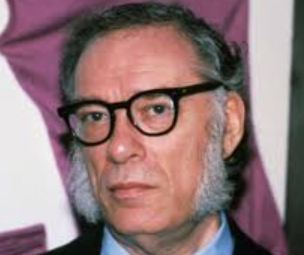
The whole business is the crudest sort of stratagem, since we have no way of foreseeing it to the end. It is a mere paying out of rope on the chance that somewhere along the length of it will be a noose.

9 months 3 weeks ago
Is it not a noble farce, wherein kings, republics, and emperors have for so many ages played their parts, and to which the whole vast universe serves for a theatre?
▼
Source
source
Book II, Ch. 36. Of the most Excellent Men

9 months 2 weeks ago
A thing, moderately good, is not so good as it ought to be. Moderation in temper, is always a virtue; but moderation in principle, is a species of vice.
8 months 1 week ago
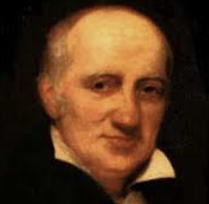
Ministers become a sort of miniature kings in their turn. Though they have the greatest opportunity of observing the impotence and unmeaningness of the character, they envy it. It is their trade perpetually to extol the dignity and importance of the master they serve; and men cannot long anxiously endeavor to convince others of the truth of any proposition without becoming half convinced themselves.
▼
Source
source
Book V, Ch. 5

9 months 2 weeks ago
Granted that any practice causes more pain to animals than it gives pleasure to man; is that practice moral or immoral? And if, exactly in proportion as human beings raise their heads out of the slough of selfishness, they do not with one voice answer 'immoral,' let the morality of the principle of utility be for ever condemned.
▼
Source
source
Dr. Whewell on Moral Philosophy (1852), in Dissertations and Discussions: Political, Philosophical, and Historical, vol. 2, London: John W. Parker and son, 1859, p. 485
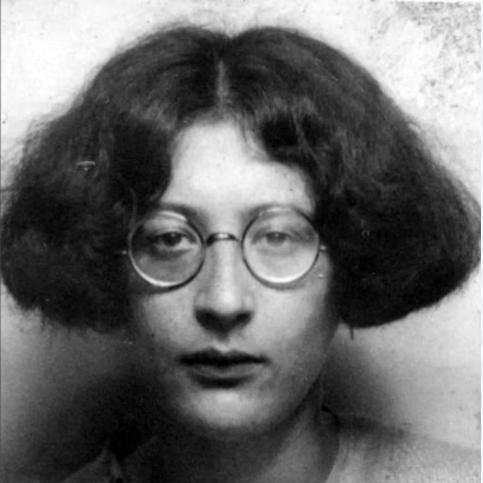
7 months 4 weeks ago
The needs of the soul can for the most part be listed in pairs of opposites which balance and complete one another. The human soul has need of equality and of hierarchy. Equality is the public recognition, effectively expressed in institutions and manners, of the principle that an equal degree of attention is due to the needs of all human beings. Hierarchy is the scale of responsibilities. Since attention is inclined to direct itself upwards and remain fixed, special provisions are necessary to ensure the effective compatibility of equality and hierarchy.
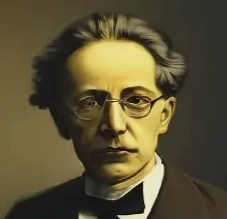
5 months 4 weeks ago
All right, men are as they should be, can be. What should they be? Surely not more than they can be! And what can they be? Not more, again, than they - can, than they have the competence, the force, to be. But this they really are, because what they are not, they are incapable of being; for to be capable means - really to be. One is not capable for anything that one really is not; one is not capable of anything that one does not really do. Could a man blinded by cataract see? Oh, yes, if he had his cataract successfully removed. But now he cannot see because he does not see. Possibility and reality always coincide. One can do nothing that one does not, as one does nothing that one cannot.
▼
Source
source
Cambridge 1995, p. 291
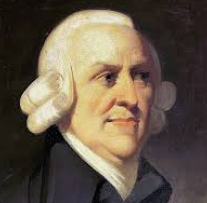
9 months 2 weeks ago
A great stock, though with small profits, generally increases faster than a small stock with great profits. Money, says the proverb, makes money. When you have a little, it is often easier to get more. The great difficulty is to get that little.
▼
Source
source
Chapter IX, p. 111.
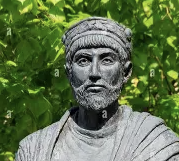
5 months 3 weeks ago
It is my opinion that the present subject interests all: "Whatever breathes, and moves upon the earth," all that are endowed with existence, with a rational soul, and with a mind: but that above all others it interests myself, inasmuch as I am a votary of the Sun.
10 months 2 weeks ago
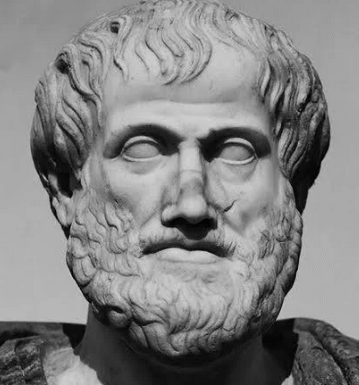
The best friend is he that, when he wishes a person's good, wishes it for that person's own sake.

5 months 3 weeks ago
The truth stands regardless of the character of the one who speaks it.
10 months 2 weeks ago
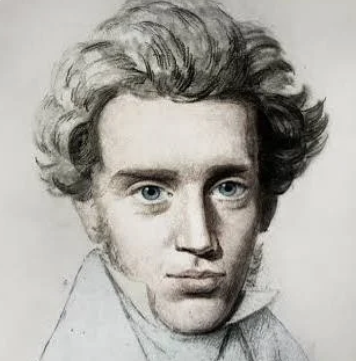
Irony is a qualification of subjectivity.
5 months 1 week ago
Dispersed as the Jews are, they still form one nation, foreign to the land they live in.
▼
Source
source
As quoted in The Americans by Daniel Boorstin. See Truth from the "Zog Bog" by Gyeorgos Ceres Hatonn, 1993, 224 p.

8 months 6 days ago
O ye of little faith, why reason ye among yourselves, because ye have brought no bread? Do ye not yet understand, neither remember the five loaves of the five thousand, and how many baskets ye took up? Neither the seven loaves of the four thousand, and how many baskets ye took up? How is it that ye do not understand that I spake it not to you concerning bread, that ye should beware of the leaven of the Pharisees and of the Sadducees?
▼
Source
source
16:8-11 (KJV)

8 months 2 weeks ago
Strange incongruities must ever perplex those, who confound the unhappiness of civil dissensions with the crime of treason.

7 months 1 week ago
The unhappiness of our life; patch up our false way of life as we will, propping it up by the aid of the sciences and arts - that life becomes feebler, sicklier, and more tormenting every year; every year the number of suicides and the avoidance of motherhood increases; every year the people of that class become feebler; every year we feel the increasing gloom of our lives. Evidently salvation is not to be found by increasing the comforts and pleasures of life, medical treatments, artificial teeth and hair, breathing exercises, massage, and so forth;...It is impossible to remedy this by any amusements, comforts, or powders - it can only be remedied by a change of life.
8 months 5 days ago
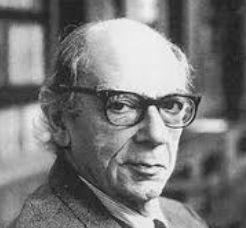
What has been shown by Machiavelli, who is often (like Nietzsche) congratulated for tearing off hypocritical masks, brutally revealing the truth, and so on, is not that men profess one thing and do another (although no doubt he shows this too) but that when they assume that the two ideals are compatible, or perhaps are even one and the same ideal, and do not allow this assumption to be questioned, they are guilty of bad faith (as the existentialists call it, or of "false consciousness," to use a Marxist formula) which their actual behavior exhibits. Machiavelli calls the bluff not just of official morality-the hypocrisies of ordinary life-but of one of the foundations of the central Western philosophical tradition, the belief in the ultimate compatibility of all genuine values. His own withers are unwrung. He has made his choice. He seems wholly unworried by, indeed scarcely aware of, parting company with traditional Western morality.
8 months 6 days ago
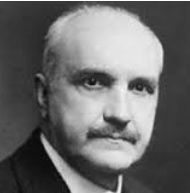
On fact, the whole machinery of our intelligence, our general ideas and laws, fixed and external objects, principles, persons, and gods, are so many symbolic, algebraic expressions. They stand for experience; experience which we are incapable of retaining and surveying in its multitudinous immediacy. We should flounder hopelessly, like the animals, did we not keep ourselves afloat and direct our course by these intellectual devices.
▼
Source
source
Theory helps us to bear our ignorance of fact. Pt. III, Form; § 30: "The average modified in the direction of pleasure.", p. 125

5 months 1 week ago
Know the joy of life by piling good deed on good deed until no rift or cranny appears between them.
▼
Source
source
XII, 29

8 months 1 week ago
The tyranny of Mrs. Grundy is worse than any other tyranny we suffer under.
▼
Source
source
On Manners and Fashion
6 months 6 days ago
I do not know what postmodern is and how it differs from the premodern, nor do I feel that I ought to know.
▼
Source
source
"Modernity on Endless Trial"
8 months 5 days ago
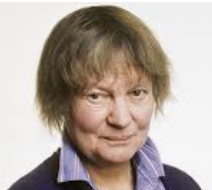
Being good is just a matter of temperament in the end.
▼
Source
source
The Nice and the Good (1968), ch. 14, p. 127. Murdoch attributed this opinion to her character Kate Gray. It was not her own.

9 months 1 week ago
Solvency is maintained by means of the national debt, on the principle, "If you will not lend me the money, how can I pay you?"
▼
Source
source
Ability
8 months 4 days ago
The blessing that the market does not ask about birth is paid for in the exchange society by the fact that the possibilities conferred by birth are molded to fit the production of goods that can be bought on the market.
▼
Source
source
E. Jephcott, trans., p. 9.
8 months ago
It appears to me to be indisputable that he who I am to-day derives, by a continuous series of states of consciousness, from him who was in my body twenty years ago. Memory is the basis of individual personality, just as tradition is the basis of the collective personality of a people. We live in memory, and our spiritual life is at bottom simply the effort of our memory to persist, to transform itself into hope, the effort of our past to transform itself into our future.
8 months ago
To say that everything is idea or that everything is spirit, is the same as saying that everything is matter or that everything is energy, for if everything is idea or spirit, just as my consciousness is, it is not plain why the diamond should not endure for ever, if my consciousness, because it is idea or spirit, endures forever.
5 months 4 weeks ago
All rational action is economic. All economic activity is rational action. All rational action is in the first place individual action. Only the individual thinks. Only the individual reasons. Only the individual acts.
▼
Source
source
Part II : The Economics of a Socialist Community, § I : The Economics of an Isolated Socialist Community, Ch. 5 : The Nature of Economic Activity, p. 97
7 months 1 week ago
I have lived through much, and now I think I have found what is needed for happiness. A quiet secluded life in the country, with the possibility of being useful to people to whom it is easy to do good, and who are not accustomed to have it done to them; then work which one hopes may be of some use; then rest, nature, books, music, love for one's neighbor -- such is my idea of happiness. And then, on the top of all that, you for a mate, and children perhaps -- what more can the heart of man desire?
▼
Source
source
Part 1, Chapter V


8 months 1 week ago
The death clock is ticking slowly in our breast, and each drop of blood measures its time, and our life is a lingering fever.
▼
Source
source
Act II.

8 months 6 days ago
Wherefore I say unto you, All manner of sin and blasphemy shall be forgiven unto men: but the blasphemy against the Holy Ghost shall not be forgiven unto men. And whosoever speaketh a word against the Son of man, it shall be forgiven him: but whosoever speaketh against the Holy Ghost, it shall not be forgiven him, neither in this world, neither in the world to come.
▼
Source
source
(Matthew 12:31-32) (KJV)

8 months 1 week ago
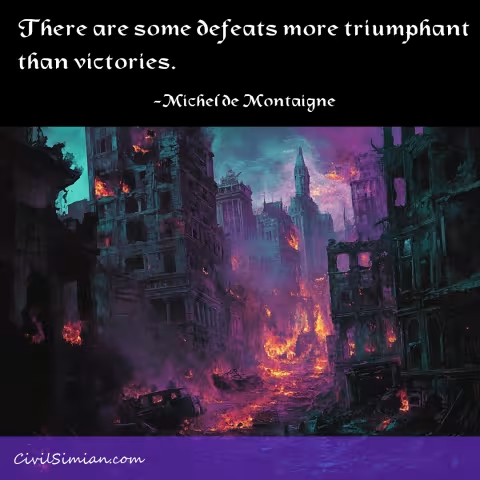
An anxious man constructs his terrors, then installs himself within them: a stay-at-home in a yawning chasm.

10 months 1 week ago
All systems of morality are based on the idea that an action has consequences that legitimize or cancel it. A mind imbued with the absurd merely judges that those consequences must be considered calmly. It is ready to pay up. In other words, there may be responsible persons, but there are no guilty ones, in its opinion. At very most, such a mind will consent to use past experience as a basis for its future actions.
7 months 4 weeks ago
Whether or no it be for the general good, life is robbery. It is at this point that with life morals become acute. The robber requires justification.
CivilSimian.com created by AxiomaticPanic, CivilSimian, Kalokagathia