


7 months 2 weeks ago
Rituals are symbolic acts. They represent, and pass on, the values and orders on which a community is based. They bring forth a community without communication; today, however, communication without community prevails.
5 months 6 days ago
The moment is ripe: leave the heart and the mind behind you, go forward, take the third step. Free yourself from the simple complacency of the mind that thinks to put all things in order and hopes to subdue phenomena. Free yourself from the terror of the heart that seeks and hopes to find the essence of things. Conquer the last, the greatest temptation of all: Hope. This is the third duty.
10 months 6 days ago
It is well said, then, that it is by doing just acts that the just man is produced, and by doing temperate acts the temperate man; without doing these no one would have even a prospect of becoming good. But most people do not do these, but take refuge in theory and think they are being philosophers and will become good in this way, behaving somewhat like patients who listen attentively to their doctors, but do none of the things they are ordered to do.
8 months 2 weeks ago
In anger we should refrain both from speech and action.
▼
Source
source
As quoted in Lives and Opinions of Eminent Philosophers, "Pythagoras", Sect. 23-24, as translated in Dictionary of Quotations (1906) by Thomas Benfield Harbottle, p. 370

6 months 1 day ago
It is a commonplace of the classical literature on Empire, from Polybius to Montesquieu and Gibbon, that Empire is from its inception decadent and corrupt.
▼
Source
source
201

8 months 3 weeks ago
Those who have a well-ordered character lead also a well-ordered life.
8 months 3 weeks ago
To all my friends without distinction I am ready to display my opulence: come one, come all; and whosoever likes to take a share is welcome to the wealth that lies within my soul.
▼
Source
source
iv. 35

8 months 2 days ago
I pride myself on my capacity to perceive the transitory character of everything. An odd gift which has spoiled all my joys; better: all my sensations.
6 months 2 weeks ago
Experience is what you get while looking for something else.
▼
Source
source
"Experience"
7 months 2 weeks ago
Power is not opposed to freedom. It is precisely freedom that distinguishes power from violence or coercion.
8 months 2 days ago
As the mathematics are now understood, each branch - or, if you please, each problem, - is but the study of the relations of a collection of connected objects, without parts, without any distinctive characters, except their names or designating letters. These objects are commonly called points; but to remove all notion of space relations, it may be better to name them monads. The relations between these points are mere complications of two different kinds of elementary relations, which may be termed immediate connection and immediate non-connection. All the monads except as serve as intermediaries for the connections have distinctive designations.
▼
Source
source
p. 268
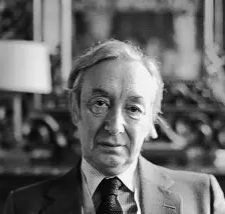
8 months 2 days ago
The ground for taking ignorance to be restrictive of freedom is that it causes people to make choices which they would not have made if they had seen what the realization of their choices involved.
▼
Source
source
"The Concept of Freedom".

9 months 6 days ago
Pure Mathematics is the class of all propositions of the form "p implies q," where p and q are propositions containing one or more variables, the same in the two propositions, and neither p nor q contains any constants except logical constants. And logical constants are all notions definable in terms of the following: Implication, the relation of a term to a class of which it is a member, the notion of such that, the notion of relation, and such further notions as may be involved in the general notion of propositions of the above form. In addition to these, mathematics uses a notion which is not a constituent of the propositions which it considers, namely the notion of truth.
▼
Source
source
Principles of Mathematics (1903), Ch. I: Definition of Pure Mathematics, p. 3

5 months 2 days ago
In the case of all things which have a certain constitution, whatever harm may happen to any of them, that which is affected becomes consequently worse; but in like case, a man becomes both better... and more worthy of praise, by making the right use of these accidents.
▼
Source
source
X, 33

9 months 6 days ago
Solitude, the safeguard of mediocrity, is to genius the stern friend.
▼
Source
source
Culture
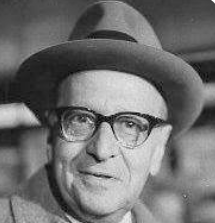
7 months 3 weeks ago
The complexity of the connection between the world of perception and the world of physics does not preclude that such a connection can be shown to exist at any time.
▼
Source
source
p. 133.
8 months 2 days ago
The consciousness of a general idea has a certain "unity of the ego" in it, which is identical when it passes from one mind to another. It is, therefore, quite analogous to a person, and indeed, a person is only a particular kind of general idea.
▼
Source
source
Man's Glassy Essence in The Monist, Vol. III, No. 1

9 months 5 days ago
There must be something solemn, serious, and tender about any attitude which we denominate religious. If glad, it must not grin or snicker; if sad, it must not scream or curse. It is precisely as being solemn experiences that I wish to interest you in religious experiences. ... The divine shall mean for us only such a primal reality as the individual feels impelled to respond to solemnly and gravely, and neither by a curse nor a jest.
▼
Source
source
Lecture II, "Circumscription of the Topic"
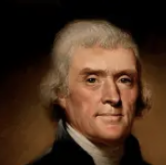
5 months 5 days ago
Freedom of religion, restricted only from acts of trespass on that of others.
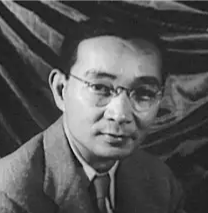
5 months 2 weeks ago
I like to think of criticism as the highest intellectual effort that mankind is capable of, and above all, I like to think of self-criticism as the most difficult attainment of an educated man.
▼
Source
source
"The Function of Criticism at the Present Time", in The China Critic, Vol. III, no. 4 (23 January 1930), p. 81

7 months 3 days ago
Without an understanding of causality there can be no theory of communication. What passes as information theory today is not communication at all, but merely transportation.
▼
Source
source
(p. 362)
8 months 2 days ago
Feeling which has not yet emerged into immediate consciousness is already affectible and already affected. In fact, this is habit, by virtue of which an idea is brought up into the present consciousness by a bond that has already been established between it and another idea while it was still in futuro.
7 months 4 weeks ago
To feel most beautifully alive means to be reading something beautiful, ready always to apprehend in the flow of language the sudden flash of poetry.
▼
Source
source
A Retrospective Glance at the Lifework of a Master of Books
8 months 2 days ago
Skepticism is the sadism of embittered souls.

5 months 2 days ago
Constantly regard the universe as one living being, having one substance and one soul; and observe how all things have reference to one perception, the perception of this one living being; and how all things act with one movement; and how all things are the cooperating causes of all things which exist; observe too the continuous spinning of the thread and the contexture of the web.
▼
Source
source
IV, 40
9 months 6 days ago
One who believes, as I do, that the free intellect is the chief engine of human progress, cannot but be fundamentally opposed to Bolshevism, as much as to the Church of Rome.
▼
Source
source
Part I, Ch. 9: International Policy

6 months 2 weeks ago
I mean to lead a simple life, to choose a simple shell I can carry easily - like a hermit crab. But I do not. I find that my frame of life does not foster simplicity. My husband and five children must make their way in the world. The life I have chosen as a wife and mother entrains a whole caravan of complications.
9 months 5 days ago
If I could put my hand on the north star, would it be as beautiful? The sea is lovely, but when we bathe in it, the beauty forsakes all the near water. For the imagination and senses cannot be gratified at the same time.
▼
Source
source
Beauty

8 months 1 week ago
The New Englander is attached to his township because it is strong and independent; he has an interest in it because he shares in its management; he loves it because he has no reason to complain of his lot; he invests his ambition and his future in it; in the restricted sphere within his scope, he learns to rule society; he gets to know those formalities without which freedom can advance only through revolutions, and becoming imbued with their spirit, develops a taste for order, understands the harmony of powers, and in the end accumulates clear, practical ideas about the nature of his duties and the extent of his rights.
▼
Source
source
Chapter V.
7 months 3 weeks ago
The metaphor is perhaps one of man's most fruitful potentialities. Its efficacy verges on magic, and it seems a tool for creation which God forgot inside one of His creatures when He made him. All our other faculties keep us within the realm of the real, of what is already there. The most we can do is to combine things or to break them up. The metaphor alone furnishes an escape; between the real things, it lets emerge imaginary reefs, a crop of floating islands. A strange thing, indeed, the existence in man of this mental activity which substitutes one thing for another - from an urge not so much to get at the first as to get rid of the second.
▼
Source
source
"Taboo and Metaphor"
5 months 2 days ago
How much more damage anger and grief do than the things that cause them.
▼
Source
source
(Hays translation) XI, 18

7 months 4 weeks ago
And the Science of them, is the true and onely Moral Philosophy. For Moral Philosophy is nothing else but the Science of what is Good, and Evill, in the conversation, and Society of mankind. Good, and Evill, are names that signify our Appetites, and Aversions; which in different tempers, customes, and doctrines of men, are different.
▼
Source
source
The First Part, Chapter 15, p. 79
5 months 2 weeks ago
Some subjects are so serious that one can only joke about them.
▼
Source
source
As quoted in The Genius of Science: A Portrait Gallery (2000) by Abraham Pais, p. 24

9 months 6 days ago
A true account of the actual is the rarest poetry, for common sense always takes a hasty and superficial view.

7 months 4 weeks ago
Heaven and earth shall pass away, but my words shall not pass away.
▼
Source
source
Mark 13:31, KJV
6 months 3 weeks ago
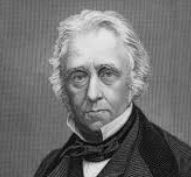
I finished the Iliad to-day... I never admired the old fellow so much, or was so strongly moved by him. What a privilege genius like his enjoys! I could not tear myself away. I read the last five books at a stretch during my walk to-day, and was at last forced to turn into a bypath, lest the parties of walkers should see me blubbering for imaginary beings, the creations of a ballad-maker who has been dead two thousand seven hundred years. What is the power and glory of Caesar and Alexander to that? Think what it would be to be assured that the inhabitants of Monomotapa would weep over one's writings.
▼
Source
source
Anno Domini 4551! Letter to his niece Margaret (August 1851), quoted in George Otto Trevelyan, The Life and Letters of Lord Macaulay, Volume II (1876), pp. 186-187
5 months 3 weeks ago
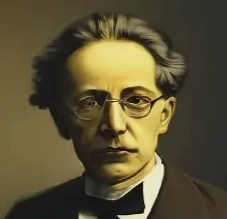
It would be foolish to assert that there is no power above mine. Only the attitude that I take toward it will be quite another than that of the religious age: I shall be the enemy of every higher power, while religion teaches us to make it our friend and be humble toward it.
▼
Source
source
Dover 2005, p. 184
9 months 1 week ago
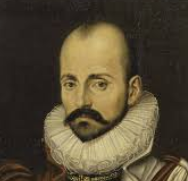
There is the name and the thing: the name is a voice which denotes and signifies the thing; the name is no part of the thing, nor of the substance; 'tis a foreign piece joined to the thing, and outside it. God, who is all fulness in Himself and the height of all perfection, cannot augment or add anything to Himself within; but His name may be augmented and increased by the blessing and praise we attribute to His exterior works: which praise, seeing we cannot incorporate it in Him, forasmuch as He can have no accession of good, we attribute to His name, which is the part out of Him that is nearest to us. Thus is it that to God alone glory and honour appertain; and there is nothing so remote from reason as that we should go in quest of it for ourselves; for, being indigent and necessitous within, our essence being imperfect, and having continual need of amelioration, 'tis to that we ought to employ all our endeavour.
▼
Source
source
Ch. 16
7 months 1 day ago
This is still the strangest thing in all man's travelling, that he should carry about with him incongruous memories.
▼
Source
source
Pt. II, ch. III.

7 months 1 week ago
There are two kinds of people, killers, and everybody else.
5 months 5 days ago
I am for freedom of religion, & against all maneuvres to bring about a legal ascendancy of one sect over another, for freedom of the press, and against all violations of the Constitution to silence by force and not by reason the complaints or criticisms, just or unjust, of our citizens against the conduct of their agents.
▼
Source
source
Letter to Elbridge Gerry (26 January 1799); published in The Writings of Thomas Jefferson, Memorial Edition 20 Vols., Washington, D.C., 1903-04, Volume 10, p. 78

8 months 6 days ago
Prejudice is of ready application in the emergency; it previously engages the mind in a steady course of wisdom and virtue and does not leave the man hesitating in the moment of decision sceptical, puzzled, and unresolved. Prejudice renders a man's virtue his habit, and not a series of unconnected acts. Through just prejudice, his duty becomes a part of his nature.
9 months 1 week ago
All natural philosophers, who wished to proceed mathematically in their work, have hence invariably (although unknown to themselves) made use of metaphysical principles, and must make use of such, it matters not how energetically they may otherwise repudiate any claim of metaphysics on their science.
▼
Source
source
Preface, Tr. Bax, 1883
CivilSimian.com created by AxiomaticPanic, CivilSimian, Kalokagathia