


9 months 1 week ago
Happiness is not achieved by the conscious pursuit of happiness; it is generally the by-product of other activities.
▼
Source
source
Essay "Religion and Time" in Vedanta for the Western World (1945) edited by Christopher Isherwood

5 months 1 week ago
Fortunately science, like that nature to which it belongs, is neither limited by time nor by space. It belongs to the world, and is of no country and of no age. The more we know, the more we feel our ignorance; the more we feel how much remains unknown; and in philosophy, the sentiment of the Macedonian hero can never apply, - there are always new worlds to conquer.
▼
Source
source
Discourse Delivered at the Royal Society (30 November 1825)
9 months ago
For many, as Cranton tells us, and those very wise men, not now but long ago, have deplored the condition of human nature, esteeming life a punishment, and to be born a man the highest pitch of calamity; this, Aristotle tells us, Silenus declared when he was brought captive to Midas.

5 months 1 week ago
If a nation expects to be ignorant and free, in a state of civilization, it expects what never was and never will be. The functionaries of every government have propensities to command at will the liberty and property of their constituents. There is no safe deposit for these but with the people themselves; nor can they be safe with them without information. Where the press is free, and every man able to read, all is safe.
▼
Source
source
Letter to Colonel Charles Yancey (6 January 1816) ME 14:384
10 months 1 week ago
I make no secret about being Jewish ... I just think it's more important to be human and to have a human heritage; and I think it is wrong for anyone to feel that there is anything special about any one heritage of whatever kind. It is delightful to have the human heritage exist in a thousand varieties, for it makes for greater interest, but as soon as one variety is thought to be more important than another, the groundwork is laid for destroying them all.
10 months 1 week ago
Law could never, by determining exactly what is noblest and must just for one and all, enjoin upon them that which is best; for the differences of men and of actions and the fact that nothing, I may say, in human life is ever at rest, forbid any science whatsoever to promulgate any simple rule for everything and for all time. So, that which is persistently simple is inapplicable to things which are never simple.
5 months 1 week ago
I consider, that as generally as Chymists are wont to appeal to Experience, and as confidently as they use to instance the several substances separated by the Fire from a Mixt Body, as a sufficient proof of their being its component Elements: Yet those differing Substances are many of them farr enough from Elementary simplicity, and may be yet look'd upon as mixt Bodies, most of them also retaining, somewhat... of the Nature of those Concretes whence they were forc'd.
6 months 5 days ago
Most precious are the people; next come the spirits of land and grain; and last, the kings.
▼
Source
source
7B:14.
5 months 1 week ago
We unfold out of the Idea of Space the propositions of geometry, which are plainly truths of the most rigorous necessity and universality. But if the idea of space were merely collected from observation of the external world, it could never enable or entitle us to assert such propositions: it could never authorize us to say that not merely some lines, but all lines, not only have, but must have, those properties which geometry teaches. Geometry in every proposition speaks a language which experience never dares to utter; and indeed of which she but half comprehends the meaning.
▼
Source
source
Part I Of Ideas, Book I Of Ideas in General, Chap. 12 The Fundamental Ideas Are Not Derived From Experience

8 months 5 days ago
This is the pure form of servitude: to exist as an instrument.
▼
Source
source
p. 33
8 months 1 week ago
The free being with absolute freedom proposes to itself certain ends. It wills because it wills, and the willing of an object is itself the last ground of such willing. Thus we have previously determined a free being, and any other determination would destroy the conception of an Ego, or of a free being. Now, if it could be so arranged that the willing of an unlawful end would necessarily - in virtue of an always effective law - result in the very reverse of that end, then the unlawful will would always ANNIHILATE ITSELF. A person could not will that end for the very reason because he did will it; his unlawful will would become the ground of its own annihilation, as the will is indeed always its own last ground.
▼
Source
source
p. 193

8 months 5 days ago
Bereavement is a darkness impenetrable to the imagination of the unbereaved.
▼
Source
source
The Sacred and Profane Love Machine (1974) p. 37.

8 months 1 week ago
Impossible to spend sleepless nights and accomplish anything: if, in my youth, my parents had not financed my insomnias, I should surely have killed myself.


7 months 3 weeks ago
We cannot think first and act afterwards. From the moment of birth we are immersed in action, and can only fitfully guide it by taking thought.
▼
Source
source
Ch. 12: "Religion and Science", p. 261
8 months 5 days ago
The way in which a society organizes the life of its members ... is one "project" of realization among others. But once the project has become operative in the basic institutions and relations, it tends to become exclusive and to determine the development of the society as a whole.
▼
Source
source
p. xlviii
9 months 2 weeks ago
If nature has been frugal in her gifts and endowments, there is the more need of art to supply her defects. If she has been generous and liberal, know that she still expects industry and application on our part, and revenges herself in proportion to our negligent ingratitude. The richest genius, like the most fertile soil, when uncultivated, shoots up into the rankest weeds; and instead of vines and olives for the pleasure and use of man, produces, to its slothful owner, the most abundant crop of poisons.
▼
Source
source
Part I, Essay 16: The Stoic
8 months 1 week ago
Every beloved object is the center point of a paradise.
▼
Source
source
Fragment No. 51; Jeder geliebte Gegenstand ist der Mittelpunkt eines Paradieses. Variant translations:

6 months 4 days ago
There are depths in man which go down the length of the lowest Hell, as there are heights which reach the highest Heaven; - for are not both Heaven and Hell made out of him, everlasting Miracle and Mystery that he is?
▼
Source
source
Pt. III, Bk. I, ch. 4. This was slightly paraphrased in A Dictionary of Thoughts : Being a Cyclopedia of Laconic Quotations from the Best Authors, Both Ancient and Modern (1891) edited by Tryon Edwards. p. 327.
5 months 3 days ago
In the temple of science are many mansions, and various indeed are they that dwell therein and the motives that have led them thither. Many take to science out of a joyful sense of superior intellectual power; science is their own special sport to which they look for vivid experience and the satisfaction of ambition; many others are to be found in the temple who have offered the products of their brains on this altar for purely utilitarian purposes. Were an angel of the Lord to come and drive all the people belonging to these two categories out of the temple, the assemblage would be seriously depleted, but there would still be some men, of both present and past times, left inside. Our Planck is one of them, and that is why we love him. I am quite aware that we have just now lightheartedly expelled in imagination many excellent men who are largely, perhaps chiefly, responsible for the buildings of the temple of science; and in many cases, our angel would find it a pretty ticklish job to decide. But of one thing I feel sure: if the types we have just expelled were the only types there were, the temple would never have come to be, any more than a forest can grow which consists of nothing but creepers. For these people any sphere of human activity will do if it comes to a point; whether they become engineers, officers, tradesmen, or scientists depends on circumstances.Now let us have another look at those who have found favor with the angel. Most of them are somewhat odd, uncommunicative, solitary fellows, really less like each other, in spite of these common characteristics, than the hosts of the rejected. What has brought them to the temple? That is a difficult question and no single answer will cover it.

10 months 1 week ago
So many men are deprived of grace. How can one live without grace? One has to try it and do what Christianity never did: be concerned with the damned.

9 months 1 week ago
Life has no meaning a priori ... It is up to you to give it a meaning, and value is nothing but the meaning that you choose.
▼
Source
source
p. 58
8 months 1 week ago
I have no ideas, only obsessions. Anybody can have ideas. Ideas have never caused anybody's downfall.

7 months 1 week ago
4 ways: Agnosticism, Relativism, Amorality, Morality. 1) I don't know. 2) Everybody is different. 3) Do whatever you can. 4) Do what you should.
5 months 3 weeks ago
When a man no longer confuses himself with the definition of himself that others have given him, he is at once universal and unique. He is universal by virtue of the inseparability of his organism from the cosmos. He is unique in that he is just this organism and not any stereotype of role, class, or identity assumed for the convenience of social communication.
▼
Source
source
p. 9

6 months 3 weeks ago
There is a strong affinity between the forces of empire and a politics of hate that justifies policies of domination and exclusion. So long as people's attention is focused on fear and hatred of foreigners or members of a particular religious group, such as Muslims, they are distracted from organizing to deal with the system of institutional domination and exploitation that is the real source of their insecurity.

9 months 1 week ago
There has been an inversion in the hierarchy of the two principles of antiquity, "Take care of yourself" and "Know yourself." In Greco-Roman culture, knowledge of oneself appeared as the consequence of the care of the self. In the modern world, knowledge of oneself constitutes the fundamental principle.
▼
Source
source
"Technologies of the Self," Ethics, Subjectivity and Truth (1994), p. 228

9 months 1 week ago
We are told that a utilitarian will be apt to make his own particular case an exception to moral rules, and, when under temptation, will see a utility in the breach of a rule, greater than he will see in its observance. But is utility the only creed which is able to furnish us with excuses for evil doing, and means of cheating our own conscience? They are afforded in abundance by all doctrines which recognise as a fact in morals the existence of conflicting considerations; which all doctrines do, that have been believed by sane persons. It is not the fault of any creed, but of the complicated nature of human affairs, that rules of conduct cannot be so framed as to require no exceptions, and that hardly any kind of action can safely be laid down as either always obligatory or always condemnable.
▼
Source
source
Ch. 2
5 months 3 weeks ago
Can a man who's warm understand one who's freezing?
6 months 2 weeks ago
Our principles fix what our life stands for, our aims create the light our life is bathed in, and our rationality, both individual and coordinate, defines and symbolizes the distance we have come from mere animality. It is by these means that our lives come to more than what they instrumentally yield. And by meaning more, our lives yield more.
▼
Source
source
The Nature of Rationality (1993), Ch. V : Instrumental Rationality and Its Limits; Rationality's Imagination, p. 181
8 months 5 days ago
At midday the daily food of all Spaniards was the puchero or cocido, as the dish is really called which the foreigners call pot-pourri or olla podrida. This contains principally yellow chick-peas, with a little bacon, some potatoes or other vegetables and normally also small pieces of beef or sausage, all boiled in one pot at a very slow fire; the liquid of the same makes the substantial broth that is served first.
▼
Source
source
p. 14
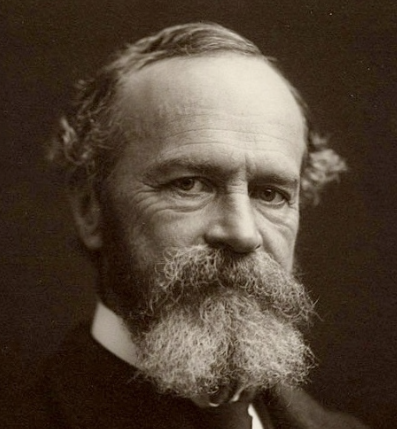
9 months 1 week ago
Nothing is so fatiguing as the eternal hanging on of an uncompleted task.
▼
Source
source
To Carl Stumpf, 1 January 1886

9 months 2 weeks ago
New opinions are always suspected, and usually opposed, without any other reason but because they are not already common.
▼
Source
source
Dedicatory epistle, as quoted in Fred R Shapiro (2006). The Yale Book of Quotations. Yale University Press. p. 468. ISBN 0-300-10798-6.

9 months 2 weeks ago
So that it will be found that the fundamental fault in the character of women is that they have no "sense of justice ." This arises from their deficiency in the power of reasoning already referred to, and reflection, but is also partly due to the fact that Nature has not destined them, as the weaker sex, to be dependent on strength but on cunning; this is why they are instinctively crafty, and have an ineradicable tendency to lie.
▼
Source
source
On Women
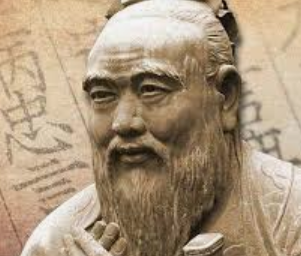
10 months 3 days ago
The administration of government lies in getting proper men. Such men are to be got by means of the ruler's own character. That character is to be cultivated by his treading in the ways of duty. And the treading those ways of duty is to be cultivated by the cherishing of benevolence.
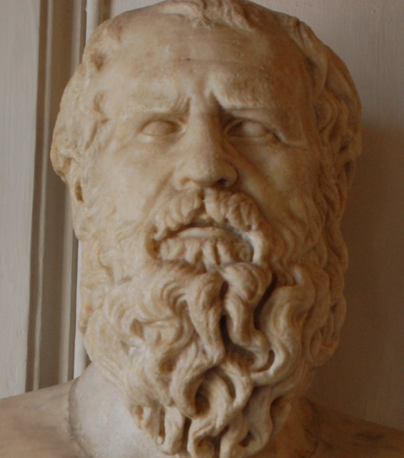
10 months 2 days ago
Into the same rivers we step and do not step, we are and are not.

8 months 1 week ago
A diversity of opinion upon almost every principle of politics, had indeed drawn a strong line of separation between them and some others. However, they were desirous not to extend the misfortune by unnecessary bitterness; they wished to prevent a difference of opinion on the commonwealth from festering into rancorous and incurable hostility. Accordingly they endeavoured that all past controversies should be forgotten; and that enough for the day should be the evil thereof. There is however a limit at which forbearance ceases to be a virtue. Men may tolerate injuries, whilst they are only personal to themselves. But it is not the first of virtues to bear with moderation the indignities that are offered to our country.
▼
Source
source
Describing the Government's position at a previous time of deep division in British politics in fact over policy on America, Observations on a Late Publication on the Present State of the Nation (1769), page 2
9 months 2 weeks ago
Sophistry is only fit to make men more conceited in their ignorance.
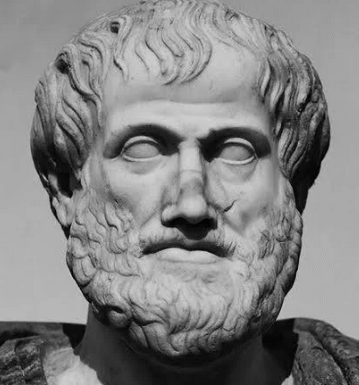
10 months 1 week ago
Since... nature is a principle of motion and mutation... it is necessary that we should not be ignorant of what motion is... But motion appears to belong to things continuous; and the infinite first presents itself to the view in that which is continuous. ...Frequently ...those who define the continuous, employ the nature or the infinite, as if that which is divisible to infinity is continuous.

7 months 1 week ago
Condemn me if you choose - I do that myself, - but condemn me, and not the path which I am following, and which I point out to those who ask me where, in my opinion, the path is.
▼
Source
source
"Letter to N.N.," quoted by Havelock Ellis in "The New Spirit" (1892) p. 226


9 months 3 days ago
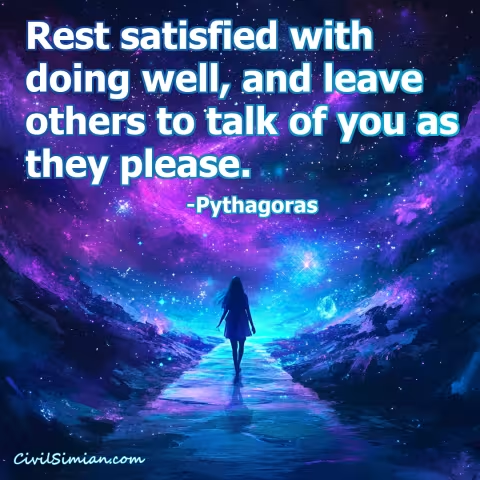
May we be those who shall heal this world.
▼
Source
source
Yasna 30,9
8 months 5 days ago
All metaphysical theories are inconclusively vulnerable to positivist attack.
▼
Source
source
Ch. 9, p. 127
10 months 1 week ago
People are entirely too disbelieving of coincidence. They are far too ready to dismiss it and to build arcane structures of extremely rickety substance in order to avoid it. I, on the other hand, see coincidence everywhere as an inevitable consequence of the laws of probability, according to which having no unusual coincidence is far more unusual than any coincidence could possibly be.

9 months 1 week ago
Philosophy unravels the knots in our thinking; hence its results must be simple, but its activity is as complicated as the knots that it unravels.
▼
Source
source
Ch. 9 : Philosophy, p. 183
7 months 2 weeks ago
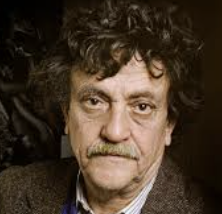
My theory is that all women have hydrofluoric acid bottled up inside.
▼
Source
source
On difficulties with women, as quoted in "Kurt Vonnegut, Writer of Classics of the American Counterculture, Dies at 84" by Dinitia Smith in The New York Times
7 months 1 week ago
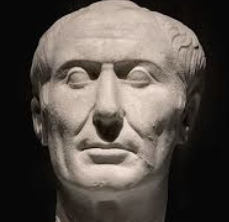
Learn to see in another's calamity the ills which you should avoid.
▼
Source
source
Maxim 120
CivilSimian.com created by AxiomaticPanic, CivilSimian, Kalokagathia