

7 months 1 week ago
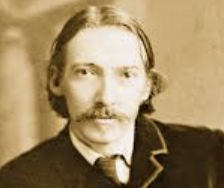
I shall doubtless outlive some troublesome desires; but I am in no hurry about that; nor, when the time comes, shall I plume myself on the immunity just in the same way, I do not greatly pride myself on having outlived my belief in the fairy tales of Socialism. Old people have faults of their own; they tend to become cowardly, niggardly, and suspicious. Whether from the growth of experience or the decline of animal heat, I see that age leads to these and certain other faults; and it follows, of course, that while in one sense I hope I am journeying towards the truth, in another I am indubitably posting towards these forms and sources of error.
▼
Source
source
Crabbed Age and Youth.

8 months 2 weeks ago
Tyrants seldom want pretexts.

9 months 2 weeks ago
Staying as I am, one foot in one country and the other in another, I find my condition very happy, in that it is free.
▼
Source
source
Letter to Elisabeth of Bohemia, Princess Palatine, Paris, June/July 1648




9 months 2 weeks ago
There must be a seed of every good thing in the character of men, otherwise no one can bring it out. Lacking that, analogous motives, honor, etc., are substituted. Parents are in the habit of looking out for the inclinations, for the talents and dexterity, perhaps for the disposition of their children, and not at all for their heart or character.
▼
Source
source
Part III : Selection on Education from Kant's other Writings, Ch. I Pedagogical Fragments, # 13


7 months 3 weeks ago
If one assumes, as I do, that battery is caused by the belief permeating this culture that hierarchical rule and coercive authority are natural, then all our relationships tend to be based on power and domination, and thus all forms of battery are linked.

9 months 1 week ago
And then one babbles - 'if only I could bear it, or the worst of it, or any of it, instead of her.' But one can't tell how serious that bid is, for nothing is staked on it. If it suddenly became a real possibility, then, for the first time, we should discover how seriously we had meant it. But is it ever allowed? It was allowed to One, we are told, and I find I can now believe again, that He has done vicariously whatever can be done. He replies to our babble, 'you cannot and dare not. I could and dared.'

9 months 1 week ago
Classics which at home are drowsily read have a strange charm in a country inn, or in the transom of a merchant brig.
▼
Source
source
Voyage to England

9 months 1 week ago
"If a nation expects to be ignorant and free," said Jefferson, "it expects what never was and never will be."
▼
Source
source
Chapter 4 (p. 34)

9 months 1 week ago
As far as men go, it is not what they are that interests me, but what they can become.
▼
Source
source
Act 5, sc. 3

6 months 4 days ago
I warmly second the advice of the wisest of men-"Don't be ambitious; don't be at all too desirous to success; be loyal and modest." Cut down the proud towering thoughts that you get into you, or see they be pure as well as high. There is a nobler ambition than the gaining of all California would be, or the getting of all the suffrages that are on the planet just now.
8 months 1 week ago
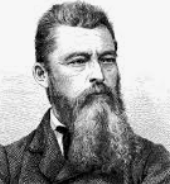
I have always taken as the standard of the mode of teaching and writing, not the abstract, particular, professional philosopher, but universal man, that I have regarded man as the criterion of truth, and not this or that founder of a system, and have from the first placed the highest excellence of the philosopher in this, that he abstains, both as a man and as an author, from the ostentation of philosophy, i.e., that he is a philosopher only in reality, not formally, that he is a quiet philosopher, not a loud and still less a brawling one.
▼
Source
source
Preface to Second Edition

6 months 2 weeks ago
What I liked was Thatcherism's Bolshevik aspect, which was to shake up the whole of Britain quite fundamentally, and if you read what I wrote in those years I think you might agree that in taking the view that I did then - that this was necessary and desirable - I never subscribed to the main delusion of the Thatcherites, which was that you could change everything and everything would remain the same. If what you wanted was a very anarchic, globalised, polyglot, mixed-up society in which most of the structures which had somehow been renewed from the Edwardian period to the Sixties were destroyed, then Thatcherism was what would do the job.
▼
Source
source
Quoted in Will Self, "John Gray: Forget everything you know," The Independent
5 months 1 week ago
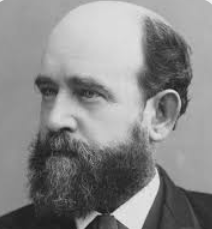
It is too narrow an understanding of production which confines it merely to the making of things. Production includes not merely the making of things, but the bringing of them to the consumer. The merchant or storekeeper is thus as truly a producer as is the manufacturer, or farmer, and his stock or capital is as much devoted to production as is theirs.
▼
Source
source
Book I, Ch. 2

9 months 3 days ago
Thou shouldst not become presumptuous through much treasure and wealth; for in the end it is necessary for thee to leave all.
9 months 3 weeks ago
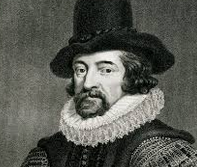
I bequeath my soul to God (...). My body to be buried obscurely. For my name and memory, I leave it to men's charitable speeches, and to foreign nations, and the next age.
▼
Source
source
His Will, 1626

9 months 1 week ago
A hero looks death in the face, real death, not just the image of death. Behaving honourably in a crisis doesn't mean being able to act the part of a hero well, as in the theatre, it means being able to look death itself in the eye. For an actor may play lots of different roles, but at the end of it all he himself, the human being, is the one who has to die.
▼
Source
source
p. 50e

9 months 2 weeks ago
I speak for the slave when I say that I prefer the philanthropy of Captain Brown to that philanthropy which neither shoots me nor liberates me.
10 months 2 weeks ago
The advantage of a bad memory is that one can enjoy the same good things for the first time several times.

5 months 1 week ago
The things you think about determine the quality of your mind. Your soul takes on the color of your thoughts.
▼
Source
source
(Hays translation) The soul becomes dyed with the colour of its thoughts. V, 16

9 months 3 weeks ago
Let me mention another requirement for a better understanding of Holy Scripture. I would suggest that you read those commentators who do not stick so closely to the literal sense. The ones I would recommend most highly after St. Paul himself are Origen, Ambrose, Jerome, and Augustine. Too many of our modern theologians are prone to a literal interpretation, which they subtly misconstrue.
▼
Source
source
p.37
5 months 1 week ago
I had been virtually a Unitarian (as I still am) but without knowing it. The experience of being among Unitarians who did know what they were, and attached much importance to it, was entirely novel to me, but I soon fell into their ways and found it easy to go forward on their road, the more so because the other roads became closed to me.
▼
Source
source
The Confession of an Octogenarian (1942), p. 99.


5 months 1 week ago
The most alarming sign of the state of our society now is that our leaders have the courage to sacrifice the lives of young people in war, but have not the courage to tell us that we must be less greedy and less wasteful.
▼
Source
source
Peaceableness Toward Enemies
9 months 2 weeks ago
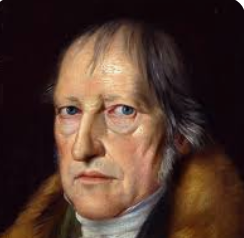
In Mohammedanism the narrow principle of the Jews is expanded into universality and thereby overcome. Here, God is no longer, as in the Far East, regarded as existent in an immediately sensory way but is conceived as the one infinite power elevated above all the multiplicity of the world. Mohammedanism is, therefore, in the strictest sense of the word, the religion of sublimity.
▼
Source
source
Hegel, Philosophy of Mind (quoted by W. Wallace & A. V. Miller in Philosophy of Mind, Oxford 2010; also quoted in other words by Slavoj Žižek in A Glance into the Archives of Islam, Lacan dot com, 1997).

5 months 1 week ago
From the nature of things, every society must at all times possess within itself the sovereign powers of legislation. The feelings of human nature revolt against the supposition of a state so situated as that it may not in any emergency provide against dangers which perhaps threaten immediate ruin. While those bodies are in existence to whom the people have delegated the powers of legislation, they alone possess and may exercise those powers; but when they are dissolved by the lopping off one or more of their branches, the power reverts to the people, who may exercise it to unlimited extent, either assembling together in person, sending deputies, or in any other way they may think proper.

7 months 3 weeks ago
There is no reason whatever to assume that woman, in her climb to emancipation, has been, or will be, helped by the ballot.


8 months 1 week ago
Even when he turns from religion, man remains subject to it; depleting himself to create false gods, he then feverishly adopts them; his need for fiction, for mythology triumphs over evidence and absurdity alike.

7 months 1 week ago
The revolutionaries say: "The government organization is bad in this and that respect; it must be destroyed and replaced by this and that." But a Christian says: "I know nothing about the governmental organization, or in how far it is good or bad, and for the same reason I do not want to support it."
▼
Source
source
Chapter IX, The Acceptance of the Christian Conception of Life will Emancipate Men from the Miseries of our Pagan Life

9 months 1 week ago
Capitalist production does not exist at all without foreign commerce.
▼
Source
source
Vol. II, Ch. XX, p. 474 (See also...David Ricardo, The Principles of Political Economy and Taxation, Ch. VII, p. 81).
9 months 1 week ago
Life is not so short but that there is always time enough for courtesy.
▼
Source
source
Social Aims
9 months 2 weeks ago
Habit... makes the endurance of evil easy (which, under the name of patience, is falsely honored as a virtue), because sensations of the same type, when continued without alteration for a long time, draw our attention away from the senses so that we are scarcely conscious of them at all. On the other hand, habit also makes the consciousness and the remembrance of good that has been received more difficult, which then gradually leads to ingratitude (a real vice). [...] Acquired habit deprives good actions of their moral value because it undermines mental freedom and, moreover, it leads to thoughtless repetitions of the same acts (monotony), and thus becomes ridiculous.
▼
Source
source
Kant, Immanuel (1996), pages 34-35

6 months 5 days ago
The way of learning is none other than finding the lost mind.
▼
Source
source
6A:11, as translated by Wing-tsit Chan in A Source Book in Chinese Philosophy (1963), p. 58

8 months 4 days ago
The direction of society has been taken over by a type of man who is not interested in the principles of civilisation. Not of this or that civilisation but - from what we can judge to-day - of any civilisation. ...The type of man dominant to-day is a primitive one, a Naturmensch rising up in the midst of a civilised world.
▼
Source
source
Chap.IX: The Primitive and the Technical

9 months 3 weeks ago
And to bring in a new word by the head and shoulders, they leave out the old one.
▼
Source
source
Book III, Ch. 5. Upon some Verses of Virgil

9 months 1 week ago
It is also the becoming-space of the spoken chain - which has been called temporal or linear; a becoming-space which makes possible both writing and every correspondence between speech and writing, every passage from one to the other.The activity or productivity connoted by the a of différance refers to the generative movement in the play of differences. The latter are neither fallen from the sky nor inscribed once and for all in a closed system, a static structure that a synchronic and taxonomic operation could exhaust. Differences are the effects of transformations, and from this vantage the theme of différance is incompatible with the static, synchronic, taxonomic, ahistoric motifs in the concept of structure.
▼
Source
source
p. 28
9 months 2 weeks ago
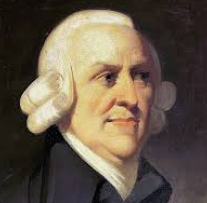
When the profits of trade happen to be greater than ordinary, over-trading becomes a general error both among great and small dealers.
▼
Source
source
Chapter I, p. 469.
8 months 1 week ago
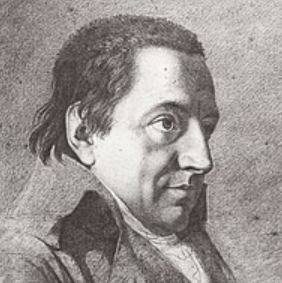
Upon the progress of knowledge the whole progress of the human race is immediately dependent: he who retards that, hinders this also. And he who hinders this, -what character does he assume towards his age and posterity? Louder than with a thousand voices, by his actions he proclaims into the deafened ear of the world present and to come -"As long as I live at least, the men around me shall not become wiser or better; - for in their progress I too, notwithstanding all my efforts to the contrary, should be dragged forward in some direction; and this I detest I will not become more enlightened, - I will not become nobler. Darkness and perversion are my elements, and I will summon all my powers together that I may not be dislodged from them."
▼
Source
source
Αs translated by William Smith, in The Popular Works of Johann Gottlieb Fichte (1889), Vol. I, Lecture IV, p. 188.

9 months 4 weeks ago
You can live, provided you live; that is, you can live for ever, provided you live a good life.
▼
Source
source
229H:3:2

8 months 5 days ago
Now I am about to take my last voyage, a great leap in the dark.
▼
Source
source
Last words
9 months 1 week ago
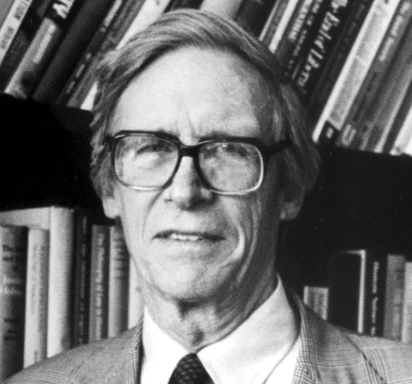
An intuitionist conception of justice is, one might say, but half a conception.
▼
Source
source
Chapter I, Section 8, pg. 41
8 months 1 week ago
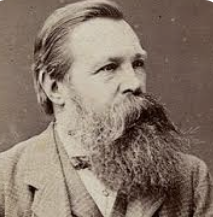
The slave is sold once and for all; the proletarian must sell himself daily and hourly. The individual slave, property of one master, is assured an existence, however miserable it may be, because of the master's interest. The individual proletarian, property as it were of the entire bourgeois class which buys his labor only when someone has need of it, has no secure existence. This existence is assured only to the class as a whole.

9 months 3 weeks ago
Dear rulers ... I maintain that the civil authorities are under obligation to compel the people to send their children to school. ... If the government can compel such citizens as are fit for military service to bear spear and rifle, to mount ramparts, and perform other martial duties in time of war, how much more has it a right to compel the people to send their children to school, because in this case we are warring with the devil, whose object it is secretly to exhaust our cities and principalities of their strong men.
▼
Source
source
letter to the German rulers (1524), as quoted in The History of Compulsory Education in New England, John William Perrin, 1896

9 months ago
After he routed Pharnaces Ponticus at the first assault, he wrote thus to his friends: "I came, I saw, I conquered."
▼
Source
source
Cæsar

9 months 2 weeks ago
The chief objection I have to Pantheism is that it says nothing. To call the world "God" is not to explain it; it is only to enrich our language with a superfluous synonym for the word "world".
▼
Source
source
On Pantheism as quoted in Faiths of Famous Men in Their Own Words (1900) by John Kenyon Kilbourn; also in Religion: A Dialogue and Other Essays (2007), p. 40
CivilSimian.com created by AxiomaticPanic, CivilSimian, Kalokagathia