



8 months 1 week ago
The only subversive mind is the one that questions the obligation to exist; all the others, the anarchist at the top of the list, compromise with the established order.
5 months 1 week ago
The mechanical mind has a passion for control - of everything except itself. Beyond the control it has won over the forces of nature it would now win control over the forces of society of stating the problem and producing the solution, with social machinery to correspond.
▼
Source
source
Revolt Against Mechanism (1933).

7 months 1 week ago
The ordinary person senses the greatness of the odds against him even without thought or analysis, and he adapts his attitudes unconsciously. A huge passivity has settled on industrial society. For people carried about in mechanical vehicles, earning their living by waiting on machines, listening much of the waking day to canned music, watching packaged movie entertainment and capsulated news, for such people it would require an exceptional degree of awareness and an especial heroism of effort to be anything but supine consumers of processed goods.
▼
Source
source
p. 21

5 months 3 weeks ago
It was a great deed to conquer Carthage, but a greater deed to conquer death.

5 months 1 week ago
Sovereign is he who decides on the exception.
▼
Source
source
p.5


8 months 1 week ago
...my extreme anxiety about the Object of our common sollicitude and my clear and decided conviction, that there is one part of the War, which instead of being postponed and considered in a secondary light, ought to have priority over every other, and requires our most early and our most careful attention; I mean La Vendée. ... This is a War directly against Jacobinism and its principles. It strikes at the Enemy in his weakest and most vulnerable part. At La Vendée with infinitely less Charge, we may make an impression likely to be decisive. This goes to the heart of the Business.
▼
Source
source
Letter to the Home Secretary Henry Dundas (8 October 1793), quoted in P. J. Marshall and John A. Woods (eds.)

7 months 1 week ago
Nonviolence is an ideal that cannot always be fully honored in the practice. To the degree that those who practice nonviolent resistance put their body in the way of an external power, they make physical contact, presenting a force against force in the process. Nonviolence does not imply the absence of force or of aggression. It is, as it were, an ethical stylization of embodiment, replete with gestures and modes of non-action, ways of becoming an obstacle, of using the solidity of the body and its proprioceptive object field to block or derail a further exercise of violence.
▼
Source
source
p. 22

8 months 1 week ago
The conception of Rights involves that when men are to live in a community, each must so restrict his freedom as to permit the coexistence of the freedom of all others. But it does not involve that this particular person, A, is to restrict his freedom by the freedom of those particular persons, B, C, and D. That it has happened so that I, A, must conform myself particularly to the freedom of these, B, C, and D, of all other men, is purely the result of my living together with them; and I so live with them, simply by my free-will, not because there is an obligation for me to do so.
▼
Source
source
P. 23-24
5 months 1 week ago
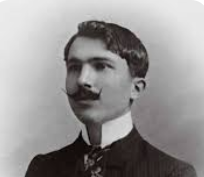
God, what is all this talk put out by the popes? Paradise is here, my good man. God, give me no other paradise!
▼
Source
source
Freedom and Death
9 months 1 week ago
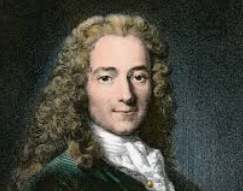
I opened with that which good Catholics have more than once made to Huguenots. "My dear sir," said I, "were you ever baptized?" "No, friend," replied the Quaker, "nor any of my brethren." "Zounds!" said I to him, "you are not Christians then!" "Friend," replied the old man, in a soft tone of voice, "do not swear; we are Christians, but we do not think that sprinkling a few drops of water on a child's head makes him a Christian." "My God!" exclaimed I, shocked at his impiety, "have you then forgotten that Christ was baptized by St. John?" "Friend," replied the mild Quaker, "once again, do not swear. Christ was baptized by John, but He Himself never baptized any one; now we profess ourselves disciples of Christ, and not of John." "Mercy on us," cried I, "what a fine subject you would be for the holy inquisitor! In the name of God, my good old man, let me baptize you."
▼
Source
source
Voltaire's account of his conversations with Andrew Pit

9 months 1 week ago
The world is his, who has money to go over it.
▼
Source
source
Wealth

8 months 1 week ago
If not reason, then the devil.
7 months 1 week ago
Applied knowledge in the Renaissance had to take the form of translation of the auditory into visual terms, of the plastic into retinal form.
▼
Source
source
(p. 180)

9 months 1 week ago
As a rule, begin my lectures on Scientific Method by telling my students that scientific method does not exist. ...having been ...the one and only professor of this non-existent subject within the British Commonwealth.
5 months 3 weeks ago
Nothing lasts forever, few things even last for long: all are susceptible of decay in one way or another; moreover all that begins also ends.
▼
Source
source
From Ad Polybium De Consolatione (Of Consolation, To Polybius), chap. I; translation based on work of Aubrey Stewart
10 months 1 day ago
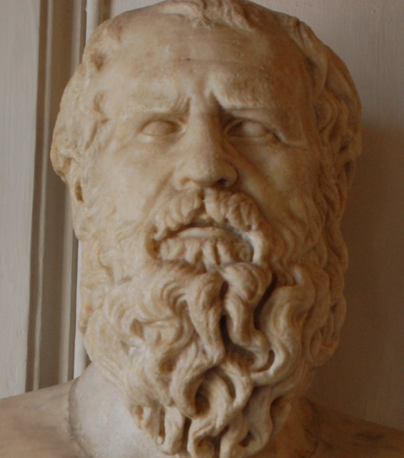
Men are at variance with the one thing with which they are in the most unbroken communion, the reason that administers the whole universe.
9 months 1 week ago
"Let us work without reasoning," said Martin; "it is the only way to make life endurable."
10 months 1 week ago
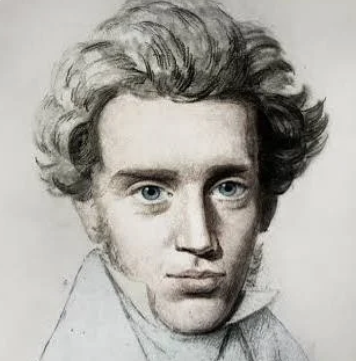
Magister Adler was deeply moved by something higher, but now when he wants to express his thoughts in words, wants to communicate, he confuses the subjective with the objective, his altered subjective state with an external event, the dawning of a light upon him with the coming into existence of something new outside him, the falling of the veil from his eyes with his having had a revelation. Subjectively his emotion is carried to the extreme; he wants to select the most powerful expression to describe it and by means of a mental deception grasps the objective qualification: having had a revelation.

5 months 1 week ago
The Bolsheviks themselves will not want, with hand on heart, to deny that, step by step, they have to feel out the ground, try out, experiment, test now one way now another, and that a good many of their measures do not represent priceless pearls of wisdom. Thus it must and will be with all of us when we get to the same point-even if the same difficult circumstances may not prevail everywhere.
▼
Source
source
Chapter Six, "The Problem of Dictatorship"

7 months 4 days ago
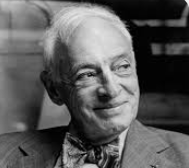
Tocqueville predicted that in democratic countries the public would demand larger and larger doses of excitement and increasingly stronger stimulants from its writers. He probably did not expect that public to dramatize itself so extensively, to make the world scene everybody's theatre, or, in the developed countries, to take to alcohol and drugs in order to get relief from the horrors of ceaseless intensity, the torment of thrills and distractions. A great many writers have done little more than meet the mounting demand for thrills. I think that this demand has, in the language of marketing, peaked.
▼
Source
source
The Distracted Public
8 months 2 days ago
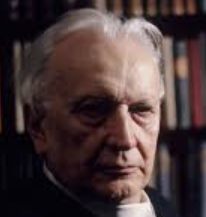
Even the most elevated psychological understanding is not a loving understanding.
6 months 5 days ago
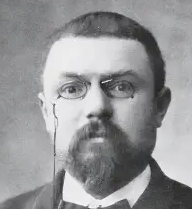
This shows, perhaps, why we have tried to put all physical phenomena into the same frame. But that can not pass for a definition of simultaneity, since this hypothetical intelligence, even if it existed, would be for us impenetrable. It is... necessary to seek something else.

9 months 1 week ago
If we are uncritical we shall always find what we want: we shall look for, and find, confirmations, and we shall look away from, and not see, whatever might be dangerous to our pet theories. In this way it is only too easy to obtain what appears to be overwhelming evidence in favor of a theory which, if approached critically, would have been refuted.
▼
Source
source
The Poverty of Historicism (1957) Ch. 29 The Unity of Method

9 months 1 week ago
Either we must have war against Russia, before she has the atom bomb, or we will have to lie down and let them govern us. ... Anything is better than submission.
▼
Source
source
Speech quoted in The Observer (21 November 1948), quoted in Robert Skildesky, Oswald Mosley (1981), p. 542 and Martin Ceadel, Thinking about Peace and War (1987), p. 52
5 months 3 weeks ago
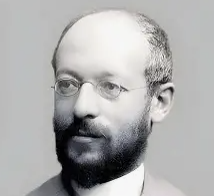
The individual who is subordinate to an objective law feels himself determined by it, while he, in turn, in no way determines the law, and has no possibility of reacting to it in a manner which could influence it-quite in contrast to even the most miserable slave, who, in some fashion at last, can still in this sense react to his master.
▼
Source
source
"Domination" (1908), in On Individuality and Social Forms (1971), pp. 113-114
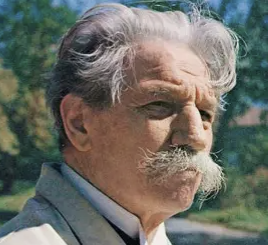
5 months 3 weeks ago
When in the spring the withered gray of the pastures gives place to green, this is due to the millions of young shoots which sprout up freshly from the old roots. In like manner the revival of thought which is essential for our time can only come through a transformation of the opinions and ideals of the many brought about by individual and universal reflection about the meaning of life and of the world.
▼
Source
source
p. 10
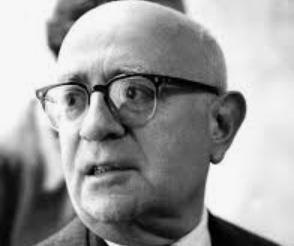
7 months 3 weeks ago
By abstaining from all definite content, whether as formal logic and theory of science or as the legend of Being beyond all beings, philosophy declared its bankruptcy regarding concrete social goals.
▼
Source
source
p. 6

8 months 2 weeks ago
The wise soul feareth not death; rather she sometimes striveth for death, she goeth beyond to meet her. Yet eternity maintaineth her substance throughout time, immensity throughout space, universal form throughout motion.
▼
Source
source
I 1

9 months 1 week ago
"Everything is already there in...." How does it come about that [an] arrow points? Doesn't it seem to carry in it something besides itself? - "No, not the dead line on paper; only the psychical thing, the meaning, can do that." - That is both true and false. The arrow points only in the application that a living being makes of it.
▼
Source
source
§ 454
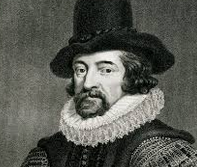
9 months 2 weeks ago
The logic now in use serves rather to fix and give stability to the errors which have their foundation in commonly received notions than to help the search for truth. So it does more harm than good.
▼
Source
source
Aphorism 7
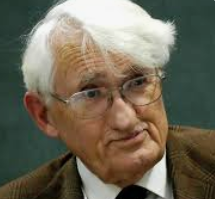
9 months 6 days ago
The only knowledge that can truly orient action is knowledge that frees itself from mere human interests and is based in Ideas-in other words knowledge that has taken a theoretical attitude.
▼
Source
source
p. 301
7 months 3 weeks ago
The bourgeoisie hides the fact that it is the bourgeoisie and thereby produces myth; revolution announces itself openly as revolution and thereby abolishes myth.
▼
Source
source
p. 146

7 months 3 weeks ago
The poor, stupid, free American citizen! Free to starve, free to tramp the highways of this great country, he enjoys universal suffrage, and, by that right, he has forged chains about his limbs. The reward that he receives is stringent labor laws prohibiting the right of boycott, of picketing, in fact, of everything, except the right to be robbed of the fruits of his labor.

6 months 1 week ago
The legacy of modernity is a legacy of fratricidal wars, devastating "development," cruel "civilization," and previously unimagined violence. Erich Auerbach once wrote that tragedy is the only genre that can properly claim realism in Western literature, and perhaps this is true precisely because of the tragedy Western modernity has imposed on the world.
▼
Source
source
46
9 months 2 days ago
Our own experience provides the basic material for our imagination, whose range is therefore limited. It will not help to try to imagine that one has webbing on one's arms, which enables one to fly around at dusk and dawn catching insects in one's mouth; that one has very poor vision, and perceives the surrounding world by a system of reflected high-frequency sound signals; and that one spends the day hanging upside down by one's feet in an attic. Insofar as I can imagine this (which is not very far), it tells me only what it would be like for me to behave as a bat behaves. But that is not the question. I want to know what it is like for a bat to be a bat. Yet if I try to imagine this, I am restricted to the resources of my own mind, and those resources are inadequate to the task.
▼
Source
source
p. 169.

8 months 4 days ago
I will destroy this house, and no one will be able to build it....
7 months 2 weeks ago
What I am saying, then, is that elements of what we call "language" or "mind" penetrate so deeply into what we call "reality" that the very project of representing ourselves as being "mappers" of something "language-independent" is fatally compromised from the very start. Like Relativism, but in a different way, Realism is an impossible attempt to view the world from Nowhere. In this situation it is a temptation to say, "So we make the world," or "our language makes up the world," or "our culture makes up the world"; but this is just another form of the same mistake. If we succumb, once again we view the world-the only world we know-as a product. One kind of philosopher views it as a product from a raw material: Unconceptualized Reality. The other views it as a creation ex nihilo. But the world isn't a product. It's just the world.
▼
Source
source
"Realism with a Human Face"

5 months 1 week ago
Considering the general tendency to multiply offices and dependencies and to increase expense to the ultimate term of burden which the citizen can bear, it behooves us to avail ourselves of every occasion which presents itself for taking off the surcharge; that it never may be seen here that, after leaving to labor the smallest portion of its earnings on which it can subsist, Government shall itself consume the whole residue of what it was instituted to guard.
▼
Source
source
Thomas Jefferson's First State of the Union Address
8 months 3 weeks ago
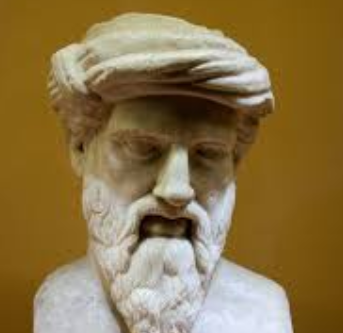
Number is the ruler of forms and ideas, and the cause of gods and daemons.
▼
Source
source
As quoted in Life of Pythagoras (c. 300) by Iamblichus of Chalcis, as translated by Thomas Taylor (1818)
5 months 1 week ago
You ask if I mean to publish anything on the subject of a letter of mine to my friend Charles Thompson? Certainly not. I write nothing for publication, and last of all things should it be on the subject of religion. On the dogmas of religion as distinguished from moral principles, all mankind, from the beginning of the world to this day, have been quarrelling, fighting, burning and torturing one another, for abstractions unintelligible to themselves and to all others, and absolutely beyond the comprehension of the human mind. Were I to enter on that arena, I should only add an unit to the number of Bedlamites.
▼
Source
source
Letter to Mathew Carey (11 November 1816). Published in The Works of Thomas Jefferson in Twelve Volumes, Federal Edition, Paul Leicester Ford, ed., New York: G. P. Putnam's Sons, 1904, Vol. 12, p. 42
5 months 1 day ago
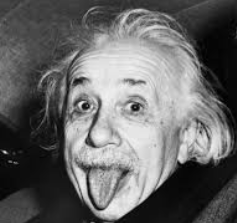
Science is international but its success is based on institutions, which are owned by nations. If therefore, we wish to promote culture we have to combine and to organize institutions with our own power and means.
7 months 3 weeks ago
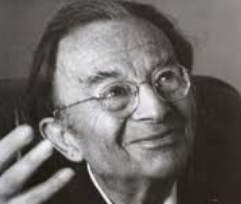
The application of psychoanalysis to sociology must definitely guard against the mistake of wanting to give psychoanalytic answers where economic, technical, or political facts provide the real and sufficient explanation of sociological questions. On the other hand, the psychoanalyst must emphasize that the subject of sociology, society, in reality consists of individuals, and that it is these human beings, rather than abstract society as such, whose actions, thoughts, and feelings are the object of sociological research.
▼
Source
source
"Psychoanalyse und Soziologie" (1929); published as "Psychoanalysis and Sociology" as translated by Mark Ritter, in Critical Theory and Society : A Reader (1989) edited by S. E. Bronner and D. M. Kellner
8 months 1 week ago
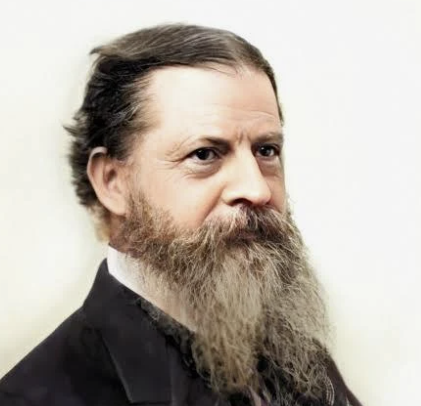
Philosophy, as I understand the word, is a positive theoretical science, and a science in an early stage of development. As such it has no more to do with belief than any other science. Indeed, I am bound to confess that it is at present in so unsettled a condition, that if the ordinary theorems of molecular physics and of archaeology are but the ghosts of beliefs, then to my mind, the doctrines of the philosophers are little better than the ghosts of ghosts. I know this is an extremely heretical opinion.
▼
Source
source
Lecture II : The Universal Categories, §3. Laws: Nominalism, CP 5.61
CivilSimian.com created by AxiomaticPanic, CivilSimian, Kalokagathia