

8 months 1 week ago
I see philosophy as a fairly abstract activity, as concerned mainly with the analysis of criticism and concepts, and of course most usefully of scientific concepts.
▼
Source
source
As quoted in Profile of Sir Alfred Ayer (June 1971) by Euro-Television, quoted in A.J. Ayer: A Life (1999), p. 2

9 months 1 week ago
The law of causality, I believe, like much that passes muster among philosophers, is a relic of a bygone age, surviving, like the monarchy, only because it is erroneously supposed to do no harm.
▼
Source
source
Ch. 9: On the Notion of Cause
7 months 4 days ago
Orwell's essay speaks to us today. It tells us that patriotism is the sine qua non of survival, and that it arises spontaneously in the ordinary human heart. It does not depend upon any grand narrative of triumph of the kind put about by the fascists and the communists, but grows from the habits of association that we British have been fortunate enough to inherit. We do not use grand and tainted honorifics like "la patrie" or "das Vaterland". We refer simply to this spot of earth, which belongs to us because we belong to it, have lived in it, loved it, defended it and established peace and prosperity within its borders.
▼
Source
source
'Brexit will give us back pride in our island roots', The Times (18 November 2017), p. 35

5 months 1 week ago
Whether the succeeding generation is to be more virtuous than their predecessors, I cannot say; but I am sure they will have more worldly wisdom, and enough, I hope, to know that honesty is the first chapter in the book of wisdom.
▼
Source
source
Letter to Nathaniel Macon

8 months 1 week ago
We dread the future only when we are not sure we can kill ourselves when we want to.


8 months 2 days ago
You do not attain to knowledge by remaining on the shore and watching the foaming waves, you must make the venture and cast yourself in, you must swim, alert and with all your force, even if a moment comes when you think you are losing consciousness; in this way, and in no other, do you reach anthropological insight.
▼
Source
source
p. 148
8 months 1 week ago
Nothing deserves to be undone, doubtless because nothing deserved to be done.

7 months 3 weeks ago
Every single empire in its official discourse has said that it is not like all the others, that its circumstances are special, that it has a mission to enlighten, civilize, bring order and democracy, and that it uses force only as a last resort. And, sadder still, there always is a chorus of willing intellectuals to say calming words about benign or altruistic empires, as if one shouldn't trust the evidence of one's eyes watching the destruction and the misery and death brought by the latest mission civilizatrice.
▼
Source
source
"Preface (2003)"
8 months 1 week ago
Personally, people know themselves very poorly.
▼
Source
source
Contributions to the analysis of the sensations (1897), translated by Cora May Williams, published by Open Court Publishing Company, p. 4
5 months 1 week ago
I agree with you that it is the duty of every good citizen to use all the opportunities, which occur to him, for preserving documents relating to the history of our country.
▼
Source
source
Letter to Hugh P. Taylor
10 months 1 week ago
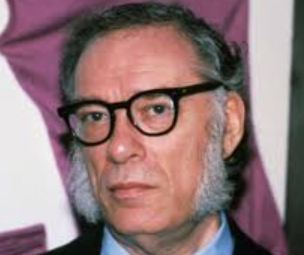
The purpose of aphorisms is to keep fools who have memorised them from having nothing to say.
7 months 1 week ago
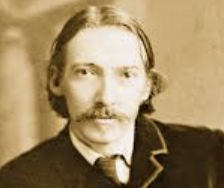
To spendthrifts money is so living and actual-it is such a thin veil between them and their pleasures! There is only one limit to their fortune-that of time; and a spendthrift with only a few crowns is the Emperor of Rome until they are spent. For such a person to lose his money is to suffer the most shocking reverse, and fall from heaven to hell, from all to nothing, in a breath.
▼
Source
source
A Lodging for the Night.
5 months 1 week ago
The question will be asked and ought to be looked at, what is to be the resource if loans cannot be obtained? There is but one, "Carthago delenda est." Bank paper must be suppressed, and the circulating medium must be restored to the nation to whom it belongs. It is the only fund on which they can rely for loans; it is the only resource which can never fail them, and it is an abundant one for every necessary purpose. Treasury bills, bottomed on taxes, bearing or not bearing interest, as may be found necessary, thrown into circulation will take the place of so much gold and silver, which last, when crowded, will find an efflux into other countries, and thus keep the quantum of medium at its salutary level. Let banks continue if they please, but let them discount for cash alone or for treasury notes.
▼
Source
source
11 September 1813, ME 13:361
8 months 1 week ago
Nothing is so wearing as the possession or abuse of liberty.

7 months 1 week ago
Today we experience, in reverse, what pre-literate man faced with the advent of writing.
▼
Source
source
p. 273
5 months 1 week ago
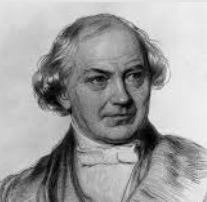
We unfold out of the Idea of Space the propositions of geometry, which are plainly truths of the most rigorous necessity and universality. But if the idea of space were merely collected from observation of the external world, it could never enable or entitle us to assert such propositions: it could never authorize us to say that not merely some lines, but all lines, not only have, but must have, those properties which geometry teaches. Geometry in every proposition speaks a language which experience never dares to utter; and indeed of which she but half comprehends the meaning.
▼
Source
source
Part I Of Ideas, Book I Of Ideas in General, Chap. 12 The Fundamental Ideas Are Not Derived From Experience
8 months 4 days ago
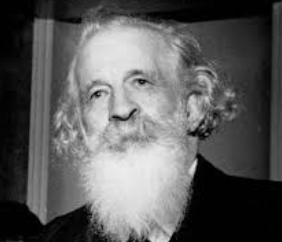
Poetry is one of the destinies of speech.... One would say that the poetic image, in its newness, opens a future to language.
▼
Source
source
Introduction, sect. 2

9 months 1 week ago
This much is certain, the ERA OF REVOLUTION has now FAIRLY OPENED IN EUROPE once more. And the general state of affairs is good.
▼
Source
source
Letter to Friedrich Engels (13 February 1863), quoted in The Collected Works of Karl Marx and Friedrich Engels: Volume 41. Letters 1860-64 (2010), p. 453
8 months 1 week ago
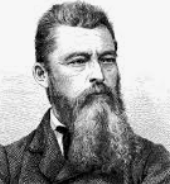
"Can any good come out of Nazareth?" This is always the question of the wiseacres and the knowing ones. But the good, the new, comes from exactly that quarter whence it is not looked for, and is always something different from what is expected. Everything new is received with contempt, for it begins in obscurity. It becomes a power unobserved.
▼
Source
source
As quoted in "Voices of the New Time" as translated by C. C. Shackford in The Radical Vol. 7 (1870), p. 329
8 months 1 week ago
To suffer is the great modality of taking the world seriously.

8 months 4 days ago
Have ye not read, that he which made them at the beginning made them male and female, And said, For this cause shall a man leave father and mother, and shall cleave to his wife: and they twain shall be one flesh? Wherefore they are no more twain, but one flesh. What therefore God hath joined together, let not man put asunder.
▼
Source
source
19:4-6 (KJV)
7 months 3 weeks ago
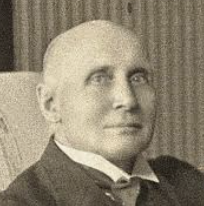
There remains the final reflection, how shallow, puny, and imperfect are efforts to sound the depths in the nature of things. In philosophical discussion, the merest hint of dogmatic certainty as to finality of statement is an exhibition of folly.
▼
Source
source
Preface, p. 16 (Corrected Edition)
5 months 1 week ago
There are extraordinary situations which require extraordinary interposition. An exasperated people, who feel that they possess power, are not easily restrained within limits strictly regular.
10 months 1 week ago
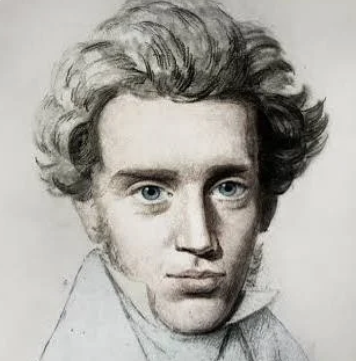
Death cannot explain itself. The earnestness consists precisely in this, that the observer must explain it to himself.

5 months 1 week ago
Man is an enigma whose knot has not ceased to occupy observers. The contradictions that he contains astonish reason and impose silence on it. So what is this inconceivable being who carries within him powers that clash and who is obliged to hate himself in order to esteem himself?

9 months 1 week ago
While there are manners and compliments we do not meet, we do not teach one another the lessons of honesty and sincerity that the brutes do, or of steadiness and solidity that the rocks do. The fault is commonly mutual, however; for we do not habitually demand any more of each other.
▼
Source
source
p. 490
9 months 1 week ago
Most people, at a crisis, feel more loyalty to their nation than to their class.
▼
Source
source
Ch. 8: Economic Power

9 months 1 week ago
Thought is all light, and publishes itself to the universe. It will speak, though you were dumb, by its own miraculous organ. It will flow out of your actions, your manners, and your face. It will bring you friendships. It will impledge you to truth by the love and expectation of generous minds. By virtue of the laws of that Nature, which is one and perfect, it shall yield every sincere good that is in the soul, to the scholar beloved of earth and heaven.
8 months 2 weeks ago
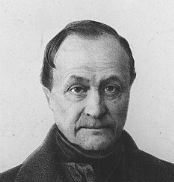
Every attempt to refer chemical questions to mathematical doctrines must be considered, now and always, profoundly irrational, as being contrary to the nature of the phenomena. . . . but if the employment of mathematical analysis should ever become so preponderant in chemistry (an aberration which is happily almost impossible) it would occasion vast and rapid retrogradation....
9 months 1 week ago
To be without some of the things you want is an indispensable part of happiness.
8 months 1 week ago
To hope is to contradict the future.

9 months 2 weeks ago
The world is all a carcass and vanity, The shadow of a shadow, a play And in one word, just nothing.
8 months 2 weeks ago
And now I have explained the series of social and intellectual conditions by which the discovery of sociological laws, and consequently the foundation of Positivism, was fixed for the precise date at which I began my philosophical career: that is to say, one generation after the progressive dictatorship of the Convention, and almost immediately after the fall of the retrograde tyranny of Bonaparte.
▼
Source
source
p. 71
10 months 1 week ago
Magister Adler was deeply moved by something higher, but now when he wants to express his thoughts in words, wants to communicate, he confuses the subjective with the objective, his altered subjective state with an external event, the dawning of a light upon him with the coming into existence of something new outside him, the falling of the veil from his eyes with his having had a revelation. Subjectively his emotion is carried to the extreme; he wants to select the most powerful expression to describe it and by means of a mental deception grasps the objective qualification: having had a revelation.

7 months 2 weeks ago
The alteration of motion is ever proportional to the motive force impressed; and is made in the direction of the right line in which that force is impressed.
▼
Source
source
Laws of Motion, II
8 months 3 weeks ago
He is not rich, that enjoyeth not his own goods.
7 months 1 week ago
Gravity is not a version of the truth. It is the truth. Anybody who doubts it is invited to jump out of a tenth-floor window.
▼
Source
source
The Genius of Charles Darwin
8 months 6 days ago
The class of the wholly propertyless, who are obliged to sell their labor to the bourgeoisie in order to get, in exchange, the means of subsistence for their support. This is called the class of proletarians, or the proletariat.

1 year 1 month ago
What is really disturbing about The Name of the Rose, however, is the underlying belief in the liberating, anti-totalitarain force of laughter, of ironic distance. Our thesis here is almost the exact opposite of the underlying premise of Eco's novel: in contemporary socities, democratic or totalitarian, that cynical distance, laughter, irony, are so to speak, part of the game. The ruling ideology is not meant to be taken seriously or literally. Perhaps the greatest danger for totalitarianism is people who take ideology seriously.
8 months 1 week ago
The Creation was the first act of sabotage.

5 months 1 week ago
I can control my thoughts as necessary; then how can I be troubled?
▼
Source
source
(Hays translation) VII, 2
9 months 2 weeks ago
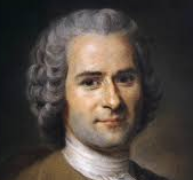
I love liberty, and I loathe constraint, dependence, and all their kindred annoyances. As long as my purse contains money it secures my independence, and exempts me from the trouble of seeking other money, a trouble of which I have always had a perfect horror; and the dread of seeing the end of my independence, makes me proportionately unwilling to part with my money. The money that we possess is the instrument of liberty, that which we lack and strive to obtain is the instrument of slavery.
5 months 3 weeks ago
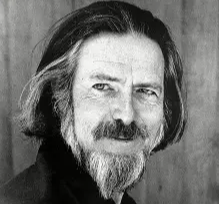
The prevalent sensation of oneself as a separate ego enclosed in a bag of skin is a hallucination which accords neither with Western science nor with the experimental philosophy-religions of the East - in particular the central and germinal Vedanta philosophy of Hinduism. This hallucination underlies the misuse of technology for the violent subjugation of man's natural environment and, consequently, its eventual destruction. We are therefore in urgent need of a sense of our own existence which is in accord with the physical facts and which overcomes our feeling of alienation from the universe.

8 months 2 weeks ago
For those endowed with insight there is in reality no object of love but God, nor does anyone but He deserve love Love, Longing, Intimacy and Contentment.
▼
Source
source
Islamic Texts Society. 2011. p. 23. ISBN 978-1-903682-27-2. Translated with an introduction and notes by Eric Ormsby.
10 months 2 weeks ago
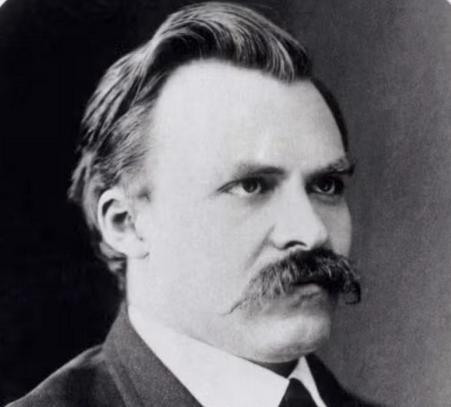
If you have hitherto believed that life was one of the highest value and now see yourselves disappointed, do you at once have to reduce it to the lowest possible price?

8 months 2 weeks ago
The one infinite is perfect, in simplicity, of itself, absolutely, nor can aught be greater or better, This is the one Whole, God, universal Nature, occupying all space, of whom naught but infinity can give the perfect image or semblance.
▼
Source
source
II 12 as translated by Dorothea Waley Singer

8 months 1 week ago
Think of something finite molded into the infinite, and you think of man.
▼
Source
source
"Selected Ideas (1799-1800)", Dialogue on Poetry and Literary Aphorisms, Ernst Behler and Roman Struc, trans. (1968) #98
CivilSimian.com created by AxiomaticPanic, CivilSimian, Kalokagathia