


8 months 1 week ago
...if the Catholick religion is destroyd by the Infidels, it is a most contemptible and absurd Idea, that, this, or any Protestant Church, can survive that Event. ... in Ireland particularly, the Roman Catholic Religion should be upheld in high respect and veneration. ... I am more serious on the positive encouragement to be given to this religion...because the serious and earnest belief and practice of it by its professors forms, as things stand, the most effectual Barrier, if not the sole Barrier, against Jacobinism.
▼
Source
source
Letter to William Smith, Member of the Irish Parliament (29 January 1795), quoted in R. B. McDowell (ed.)
5 months 3 weeks ago
Not everything assumes a name. Some things lead beyond words. Art inflames even a frozen, darkened soul to a high spiritual experience. Through art we are sometimes visited - dimly, briefly - by revelations such as cannot be produced by rational thinking. Like that little looking-glass from the fairy-tales: look into it and you will see - not yourself - but for one second, the Inaccessible, whither no man can ride, no man fly. And only the soul gives a groan...
9 months 1 day ago
Satisfaction linked with dishonor or with harm to others is a prison for the seeker.
▼
Source
source
Vahishto-Ishti Gatha; Yasna 53, 6.

8 months 1 week ago
We are all of us in error, the humorists excepted. They alone have discerned, as though in jest, the inanity of all that is serious and even of all that is frivolous.

5 months 1 week ago
We do not struggle for ourselves, nor for our race, not even for humanity. We do not struggle for Earth, nor for ideas. All these are the precious yet provisional stairs of our ascending God, and they crumble away as soon as he steps upon them in his ascent. In the smallest lightning flash of our lives, we feel all of God treading upon us, and suddenly we understand: if we all desire it intensely, if we organize all the visible and invisible powers of earth and fling them upward, if we all battle together like fellow combatants eternally vigilant - then the Universe might possibly be saved. It is not God who will save us - it is we who will save God, by battling, by creating, and by transmuting matter into spirit.
8 months 1 day ago
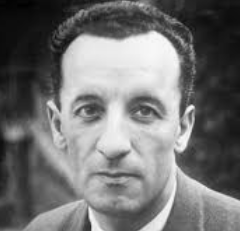
Philosophy is in history, and is never independent of historical discourse. But for the tacit symbolism of life it substitutes, in principle, a conscious symbolism; for a latent meaning, one that is manifest. It is never content to accept its historical situation. It changes this situation by revealing it to itself.
▼
Source
source
p. 57

5 months 1 week ago
What could be more absurd, to begin with, than our attitude of high moral outrage against other nations for manufacturing the selfsame weapons that we manufacture? The difference, as our leaders say, is that we will use these weapons virtuously, whereas our enemies will use them maliciously - a proposition that too readily conforms to a proposition of much less dignity: we will use them in our interest, whereas our enemies will use them in theirs.
8 months 1 week ago
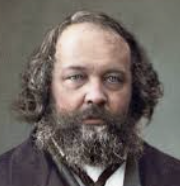
FREEDOM, the realization of freedom: who can deny that this is what today heads the agenda of history? ... Revolutionary propaganda is in its deepest sense the negation of the existing conditions of the State, for, with respect to its innermost nature, it has no other program than the destruction of whatever order prevails at the time.... We must not only act politically, but in our politics act religiously, religiously in the sense of freedom, of which the one true expression is justice and love. Indeed, for us alone, who are called the enemies of the Christian religion, for us alone it is reserved, and even made the highest duty ... really to exercise love, this highest commandment of Christ and this only way to true Christianity.
▼
Source
source
"The Reaction in Germany" (1842), Bakunin's first political writings, under the pseudonym "Jules Elysard"; it was not until 1860 that he began to publicly assert a stance of firm atheism and vigorous rejection of traditional religious institutions.
9 months 2 weeks ago
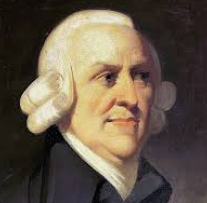
A very poor man may be said in some sense to have a demand for a coach and six; he might like to have it; but his demand is not an effectual demand, as the commodity can never be brought to market in order to satisfy it.
▼
Source
source
Chapter VII, p. 67.
8 months 2 days ago
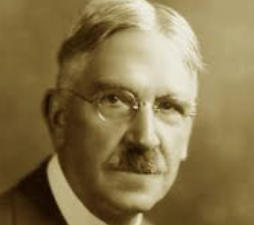
The application of scientific formulations of the principle of probability statistically determined is thus a logical corollary of the principle already stated, that the subject matter of scientific findings is relational, not individual. It is for this reason that it is safe to predict the ultimate triumph of the statistical doctrine.
9 months 2 weeks ago
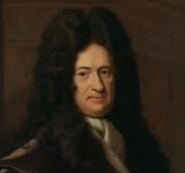
Music is a hidden arithmetic exercise of the soul, which does not know that it is counting.
▼
Source
source
Letter to Christian Goldbach, April 17, 1712.
9 months 1 day ago
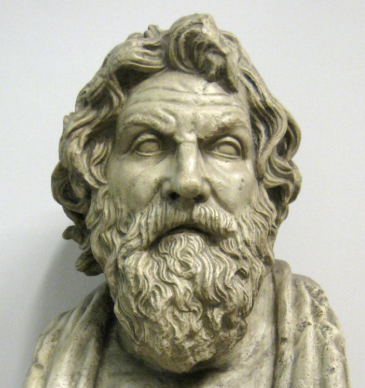
The investigation of the meaning of words is the beginning of education.
▼
Source
source
Arrian, Discourses of Epictetus, i. 17
7 months 3 weeks ago
...I pray to God to make me free of God.
9 months 1 week ago
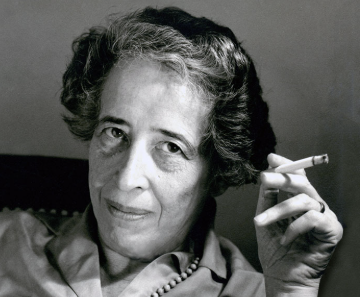
Kant stated that he had "found it necessary to deny knowledge to make room for faith," but all he had "denied" was knowledge of things that are unknowable, and he had not made room for faith but for thought.
▼
Source
source
p. 63

8 months 1 week ago
Nothing in the world is harder than speaking the truth and nothing easier than flattery. If there's the hundredth part of a false note in speaking the truth, it leads to a discord, and that leads to trouble. But if all, to the last note, is false in flattery, it is just as agreeable, and is heard not without satisfaction. It may be a coarse satisfaction, but still a satisfaction. And however coarse the flattery, at least half will be sure to seem true. That's so for all stages of development and classes of society.

9 months 1 week ago
If throughout your life you abstain from murder, theft, fornication, perjury, blasphemy, and disrespect toward your parents, your church, and your king, you are conventionally held to deserve moral admiration even if you have never done a single kind or generous or useful action. This very inadequate notion of virtue is an outcome of taboo morality, and has done untold harm.
▼
Source
source
p. 32

9 months 1 week ago
The eye may see for the hand, but not for the mind.
9 months 1 week ago
There is much pleasure to be gained from useless knowledge.
▼
Source
source
Ch. 2: 'Useless' Knowledge
9 months 1 week ago
All our knowledge falls with the bounds of experience.
▼
Source
source
A 146, B 185

9 months 1 day ago
A life without a holiday is like a long journey without an inn to rest at.
8 months 3 days ago
Liberal philosophy, at this point, ceases to be empirical and British in order to become German and transcendental. Moral life, it now believes, is not the pursuit of liberty and happiness of all sorts by all sorts of different creatures; it is the development of a single spirit in all life through a series of necessary phases, each higher than the preceding one. No man, accordingly, can really or ultimately desire anything but what the best people desire. This is the principle of the higher snobbery; and in fact, all earnest liberals are higher snobs.
▼
Source
source
"The Irony of Liberalism"
6 months 2 weeks ago
The serpent, the king, the tiger, the stinging wasp, the small child, the dog owned by other people, and the fool: these seven ought not to be awakened from sleep.
5 months 1 week ago
Having seen that I was not capable of using all my resources in political action, I returned to my literary activity. There lay the battlefield suited to my temperament. I wanted to make my novels the extension of my own father's struggle for liberty. But gradually, as I kept deepening my responsibility as a writer, the human problem came to overshadow political and social questions. All the political, social, and economic improvements, all the technical progress cannot have any regenerating significance, so long as our inner life remains as it is at present. The more the intelligence unveils and violates the secrets of Nature, the more the danger increases and the heart shrinks.
▼
Source
source
As quoted in Nikos Kazantzakis (1968) by Helen Kazantzakis, p. 529
9 months 1 week ago
A European who goes to New York and Chicago sees the future... when he goes to Asia he sees the past.
▼
Source
source
Ch. 8: Eastern and Western Ideals of Happiness
7 months 3 weeks ago
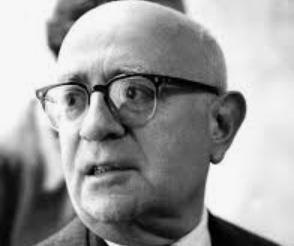
The jargon of authenticity ... is a trademark of societalized chosenness, ... sub-language as superior language.
▼
Source
source
pp. 5-6

7 months 3 weeks ago
The dominant, almost general, idea of revolution - particularly the Socialist idea - is that revolution is a violent change of social conditions through which one social class, the working class, becomes dominant over another class, the capitalist class. It is the conception of a purely physical change, and as such it involves only political scene shifting and institutional rearrangements. Bourgeois dictatorship is replaced by the "dictatorship of the proletariat" - or by that of its "advance guard," the Communist Party. Lenin takes the seat of the Romanovs, the Imperial Cabinet is rechristened Soviet of People's Commissars, Trotsky is appointed Minister of War, and a labourer becomes the Military Governor General of Moscow. That is, in essence, the Bolshevik conception of revolution, as translated into actual practice.

8 months 2 weeks ago
The one infinite is perfect, in simplicity, of itself, absolutely, nor can aught be greater or better, This is the one Whole, God, universal Nature, occupying all space, of whom naught but infinity can give the perfect image or semblance.
▼
Source
source
II 12 as translated by Dorothea Waley Singer

9 months 2 weeks ago
All the passages in the Holy Scriptures that mention assistance are they that do away with "free-will", and these are countless...For grace is needed, and the help of grace is given, because "free-will" can do nothing.
▼
Source
source
p. 270

7 months 3 weeks ago
May not the absolute and perfect eternal happiness be an eternal hope, which would die if it were realized? Is it possible to be happy without hope? And there is no place for hope once possession has been realized, for hope, desire, is killed by possession. May it not be, I say, that all souls grow without ceasing, some in a greater measure than others, but all having to pass some time through the same degree of growth, whatever that degree may be, and yet without ever arriving at the infinite, at God, to whom they continually approach? Is not eternal happiness an eternal hope, with its eternal nucleus of sorrow in order that happiness shall not be swallowed up in nothingness?
7 months 1 week ago
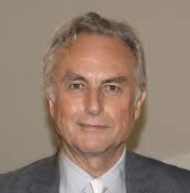
Such delusions of grandeur to think that a God with a hundred billion galaxies on his mind would give a tuppenny damn who you sleep with, or indeed whether you believe in him.
▼
Source
source
Richard Dawkins debates Rowan Williams
5 months 1 week ago
There is no chastisement that does not purify; there is no disorder that ETERNAL LOVE does not turn against the principle of evil.
▼
Source
source
Chapter III, p. 31
5 months 1 week ago
There is a great analogy between grace and genius, for genius is a grace. The real man of genius is the one who acts by grace or by impulsion, without ever contemplating himself and without ever saying to himself: Yes! It is by grace that I act.
▼
Source
source
p. 37
6 months 3 days ago
We can't form our children on our own concepts; we must take them and love them as God gives them to us.
▼
Source
source
Hermann und Dorothea
7 months 3 weeks ago
It has been said of old, all roads lead to Rome. In paraphrased application to the tendencies of our day, it may truly be said that all roads lead to the great social reconstruction. The economic awakening of the workingman, and his realization of the necessity for concerted industrial action; the tendencies of modern education, especially in their application to the free development of the child; the spirit of growing unrest expressed through, and cultivated by, art and literature, all pave the way to the Open Road.
9 months 1 week ago
Love is better than hate, because it brings harmony instead of conflict into the desires of the persons concerned. Two people between whom there is love succeed or fail together, but when two people hate each other the success of either is the failure of the other.
5 months 2 weeks ago
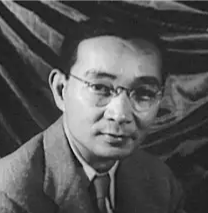
It is not so much what you believe in that matters, as the way in which you believe it and proceed to translate that belief into action.
▼
Source
source
Ch. I : The Awakening, p. 8
5 months 3 weeks ago
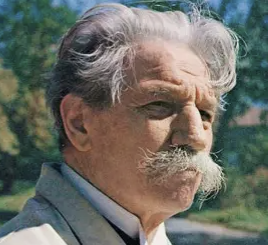
To the question whether I am a pessimist or an optimist, I answer that my knowledge is pessimistic, but my willing and hoping are optimistic.
▼
Source
source
Epilogue, p. 242

7 months 1 week ago
Having acknowledged the measure of the good to be pleasure, i.e., beauty, the European upper classes went back in their comprehension of art to the gross conception of the primitive Greeks which Plato had already condemned. And with this understanding of life, a theory of art was formulated.
7 months 1 week ago
If we want to postulate a deity capable of engineering all the organized complexity in the world, either instantaneously or by guiding evolution, that deity must have been vastly complex in the first place. The creationist, whether a naive Bible-thumper or an educated bishop, simply postulates an already existing being of prodigious intelligence and complexity. If we are going to allow ourselves the luxury of postulating organized complexity without offering an explanation, we might as well make a job of it and simply postulate the existence of life as we know it!
▼
Source
source
Chapter 11 "Doomed Rivals" (p. 316)
8 months 1 week ago
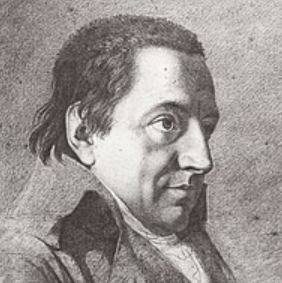
Only through blind Instinct, in which the only possible guidance of the Imperative is awanting, does the Power in Intuition remain undetermined; where it is schematised as absolute it becomes infinite; and where it is presented in a determinate form, as a principle, it becomes at least manifold. By the above-mentioned act of Intelligising, the Power liberates itself from Instinct, to direct itself towards Unity.
8 months 1 week ago
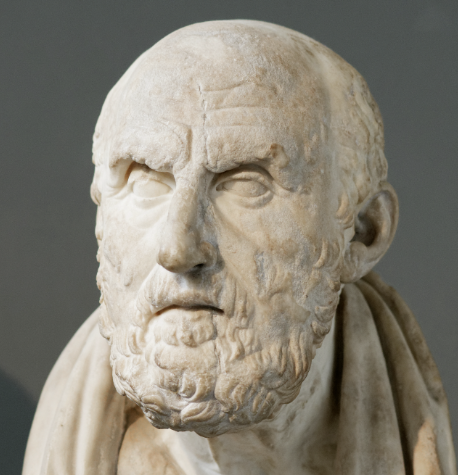
The source of our actions resides in an unconscious propensity to regard ourselves as the center, the cause, and the conclusion of time. Our reflexes and our pride transform into a planet the parcel of flesh and consciousness we are. If we had the right sense of our position in the world, if to compare were inseparable from to live, the revelation of our infinitesimal presence would crush us. But to live is to blind ourselves to our own dimensions. . . .
9 months 1 day ago
We should infer in the case of a beautiful dwelling-place that it was built for its owners and not for mice; we ought, therefore, in the same way to regard the universe as the dwelling-place of the gods.
▼
Source
source
As quoted in De Natura Deorum by Cicero, iii. 10.
9 months 2 weeks ago
There are some defeats more triumphant than victories.
10 months 1 week ago
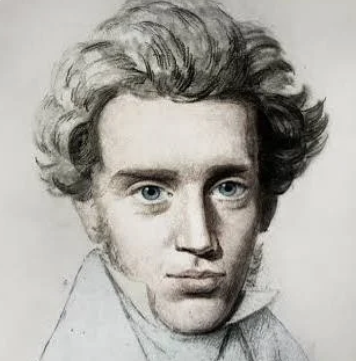
Out of love, God becomes man. He says: Here you see what it is to be a human being; but he adds: Take care, for I am also God - blessed is he who takes no offense at me.
▼
Source
source
As translated by Howard V. Hong and EdnaH. Hong (1980) Variant translation; Out of love, God becomes man. He says: "See, here is what it is to be a human being."
5 months 1 week ago
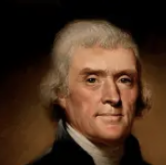
I am conscious that an equal division of property is impracticable. But the consequences of this enormous inequality producing so much misery to the bulk of mankind, legislators cannot invent too many devices for subdividing property..a means of silently lessening the inequality of property is to exempt all from taxation below a certain point, and to tax the higher portions of property in geometrical progression as they rise.
▼
Source
source
Letter to James Madison
8 months 1 week ago
Unity is the great goal toward which humanity moves irresistibly. But it becomes fatal, destructive of the intelligence, the dignity, the well-being of individuals and peoples whenever it is formed without regard to liberty, either by violent means or under the authority of any theological, metaphysical, political, or even economic idea. That patriotism which tends toward unity without regard to liberty is an evil patriotism, always disastrous to the popular and real interests of the country it claims to exalt and serve. Often, without wishing to be so, it is a friend of reaction - an enemy of the revolution, i.e., the emancipation of nations and men.
CivilSimian.com created by AxiomaticPanic, CivilSimian, Kalokagathia