




7 months 1 week ago
Quite apart from assiduous efforts to restrict the use of violence as means rather than an end, the actualization of violence as a means can inadvertently become its own end, producing new violence, producing violence anew, reiterating the license, and licensing further violence. Violence does not exhaust itself in the realization of a just end; rather, it renews itself in directions that exceed both deliberate intention and instrumental schemes. In other words, by acting as if the use of violence can be a means to achieve a nonviolent end, one imagines that the practice of violence does not in the act posit violence as its own end. The technē is undermined by the praxis, and the use of violence only makes the world into a more violent place, by bringing more violence into the world.
▼
Source
source
p. 20
8 months 1 day ago
We cannot avoid conflict, conflict with society, other individuals and with oneself. Conflicts may be the sources of defeat, lost life and a limitation of our potentiality but they may also lead to greater depth of living and the birth of more far-reaching unities, which flourish in the tensions that engender them.
▼
Source
source
As quoted in Turning Conflict Into Profit : A Roadmap for Resolving Personal and Organizational Disputes (2005) by Larry Axelrod and Rowland Johnson
9 months 6 days ago
In everything well known something worthy of thought still lurks.
▼
Source
source
p. xxxix
7 months 3 weeks ago
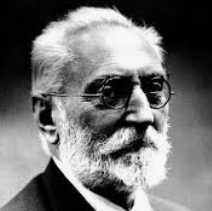
It has often been said that every man who has suffered misfortunes prefers to be himself, even with his misfortunes, rather than to be someone else without them. For unfortunate men, when they preserve their normality in their misfortune - that is to say, when they endeavor to persist in their own being - prefer misfortune to non-existence. For myself I can say that when a as a youth, and even as a child, I remained unmoved when shown the most moving pictures of hell, for even then nothing appeared to me quite so horrible as nothingness itself. It was a furious hunger of being that possessed me, an appetite for divinity, as one of our ascetics [San Juan de los Angeles] has put it.

9 months 1 day ago
The goal of maximizing the welfare of all may be better achieved by an ethic that accepts our inclinations and harnesses them so that, taken as a whole, the system works to everyone's advantage.
▼
Source
source
Chapter 6, A New Understanding Of Ethics, p. 157
10 months ago
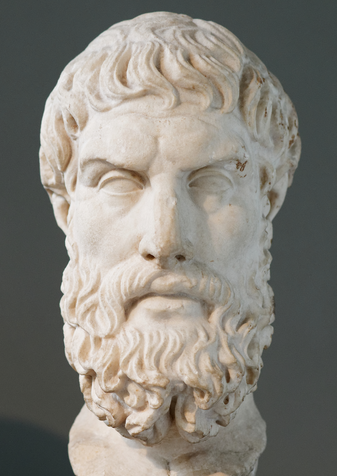
Natural justice is a symbol or expression of usefulness, to prevent one person from harming or being harmed by another.

8 months 2 weeks ago
Half our days we pass in the shadow of the earth; and the brother of death exacteth a third part of our lives.
10 months ago
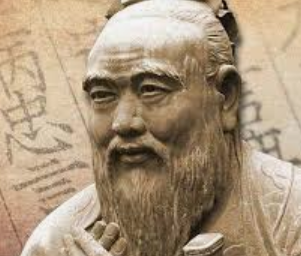
The superior man governs men, according to their nature, with what is proper to them, and as soon as they change what is wrong, he stops.
8 months 1 day ago
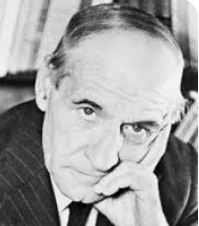
The surrealist thinks he has outstripped the whole of literary history when he has written (here a word that there is no need to write) where others have written "jasmines, swans and fauns." But what he has really done has been simply to bring to light another form of rhetoric which hitherto lay hidden in the latrines.
▼
Source
source
Chapter XI: The Self-Satisfied Age

5 months 1 week ago
There are three relations [between thee and other things]: the one to the body which surrounds thee; the second to the divine cause from which all things come to all; and the third to those who live with thee.
▼
Source
source
VIII, 27

9 months 3 weeks ago
Mahomet established a religion by putting his enemies to death; Jesus Christ, by commanding his followers to lay down their own lives.
▼
Source
source
Thoughts on Religion and Philosophy (W. Collins, 1838), Ch. XVI, p. 202
5 months 3 weeks ago
No social co-operation under the division of labour is possible when some people or unions of people are granted the right to prevent by violence and the threat of violence other people from working. When enforced by violence, a strike in vital branches of production or a general strike are tantamount to a revolutionary destruction of society.
8 months 6 days ago
The difference between a pessimistic and an optimistic mind is of such controlling importance in regard to every intellectual function, and especially for the conduct of life, that it is out of the question to admit that both are normal, and the great majority of mankind are naturally optimistic.
▼
Source
source
V

8 months 2 weeks ago
History, it is easily perceived, is a picture-gallery containing a host of copies and very few originals.
▼
Source
source
p. 88

8 months 1 week ago
It is the nature of all greatness not to be exact.

7 months 1 week ago
At electric speed, all forms are pushed to the limits of their potential.
▼
Source
source
p. 109

9 months 2 weeks ago
It is not titles that make men illustrious, but men who make titles illustrious.
▼
Source
source
Book 3, Ch. 38
7 months 2 weeks ago
What makes our poetry so contemptible nowadays is its paucity of ideas. If you want to be read, invent. Who the Devil wouldn't like to read something new?
▼
Source
source
D 62

5 months 1 week ago
It is permitted to modern philosophy, all swollen up with Bacon's venom, to repeat to us to satiety, to disgust, to nausea, that we make God similar to man; we will reply as many times that is not quite the same thing to say that a man resembles his portrait or that his portrait resembles him.
▼
Source
source
p. 293
6 months 4 weeks ago
In one point I fully agree with the gentlemen to whose general views I am opposed. I feel with them, that it is impossible for us, with our limited means, to attempt to educate the body of the people. We must at present do our best to form a class who may be interpreters between us and the millions whom we govern; a class of persons, Indian in blood and colour, but English in taste, in opinions, in morals, and in intellect. To that class we may leave it to refine the vernacular dialects of the country, to enrich those dialects with terms of science borrowed from the Western nomenclature, and to render them by degrees fit vehicles for conveying knowledge to the great mass of the population.
7 months 2 weeks ago
He was always smoothing and polishing himself, and in the end he became blunt before he was sharp.
▼
Source
source
L 70
6 months 2 days ago
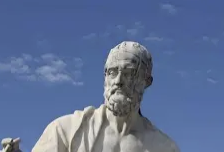
The only method of learning to bear with dignity the vicissitudes of fortune is to recall the catastrophes of others.
▼
Source
source
Polybius. The Histories of Polybius, trans. Evelyn S. Shuckburgh. London, New York: Macmillan and Co., 1889. Book I, Chapter 1
7 months 1 week ago
Interface, of the resonant interval as 'where the action is', whether chemical, psychic or social, involves touch.
▼
Source
source
p. 102
10 months 1 week ago
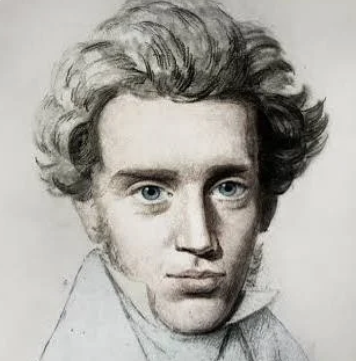
A line by Thomas à Kempis which perhaps could be used as a motto sometime. He says of Paul: Therefore he turned everything over to God, who knows all, and defended himself solely by means of patience and humility . . . . He did defend himself now and then so that the weak would not be offended by his silence.
8 months 1 week ago
Men who undertake considerable things, even in a regular way, ought to give us ground to presume ability.

7 months 3 weeks ago
Those who will not worship at the shrine of money, need not hope for recognition. On the other hand, they will also not have to think other people's thoughts or wear other people's political clothes. They will not have to proclaim as true that which is false, nor praise that as humanitarian which is brutal.

8 months 6 days ago
Each of us must pay for the slightest damage he inflicts upon a universe created for indifference and stagnation, sooner or later, he will regret not having left it intact.

9 months 4 weeks ago
There is no order between created being and non-being, but there is between created and uncreated being.
▼
Source
source
q. 7, art. 9, ad 8
10 months 1 week ago
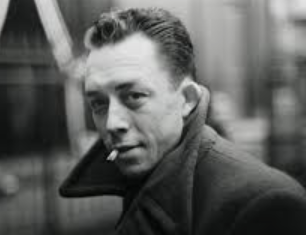
He tried to recall what he had read about the disease. Figures floated across his memory, and he recalled that some thirty or so great plagues known to history had accounted for nearly a hundred million deaths. But what are a hundred million deaths? When one has served in a war, one hardly knows what a dead man is, after a while. And since a dead man has no substance unless one actually sees him dead, a hundred million corpses broadcast through history are no more than a puff of smoke in the imagination.
9 months 1 week ago
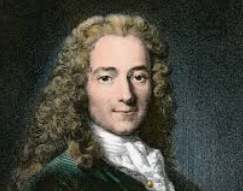
The institution of religion exists only to keep mankind in order, and to make men merit the goodness of God by their virtue. Everything in a religion which does not tend towards this goal must be considered foreign or dangerous.
▼
Source
source
"The Ecclesiastical Ministry"


5 months 3 weeks ago
No man ought to glory except in that which is his own.

7 months 3 weeks ago
It seemed perfectly possible that, in spite of my certainty of my own genius, I might die of some illness, or perhaps even in a street accident, before I had ever glimpsed the meaning of life. My moods of happiness and self-confidence convinced me that I had a "destiny" to become a famous writer, and to be remembered as one of the most important thinkers of the century.
▼
Source
source
p. 67
8 months 1 week ago
Philosophy can bake no bread; but she can procure for us God, Freedom, Immortality. Which, then, is more practical, Philosophy or Economy?
▼
Source
source
The first sentence of this was used by William Torrey Harris for the motto of the Journal of Speculative Philosophy

9 months 1 week ago
Character is higher than intellect...A great soul will be strong to live, as well as strong to think.
▼
Source
source
par. 27
6 months 2 weeks ago
After Hegel, philosophy confronts the possibility of its own death, and in some sense has to do so if it is to remain the most fundamental kind of thinking.
▼
Source
source
Chapter 4, Philosophy As Writing: The Case Of Hegel, p. 88

8 months 1 week ago
Expect nothing more from philosophy than a voice, language and grammar of the instinct for Godliness that lies at its origin, and, essentially, is philosophy itself.
▼
Source
source
"On Philosophy: To Dorothea," in Theory as Practice (1997), p. 421
8 months 2 days ago
To regiment artists, to make them servants of some particular cause does violence to the very springs of artistic creation. But it does more than that. It betrays the very cause of a better future it would serve, for in its subjugation of the individuality of the artist it annihilates the source of that which is genuinely new. Where the regimentation is successful, it would cause the future to be but a rearrangement of the past.
9 months 2 weeks ago
I have never seen a greater monster or miracle in the world than myself.
▼
Source
source
Book III, Ch. 11. Of Cripples

7 months 3 weeks ago
The materialists say, it is by means of a series of straight lines more or less perfect that one imagines the perfect straight line as an ideal limit. That is right, but the progression in itself necessarily contains what is infinite; it is in relation to the perfect straight line that one can say that such and such a straight line is less twisted than some other. ... Either one conceives the infinite or one does not conceive at all.
▼
Source
source
p. 87
10 months 1 week ago
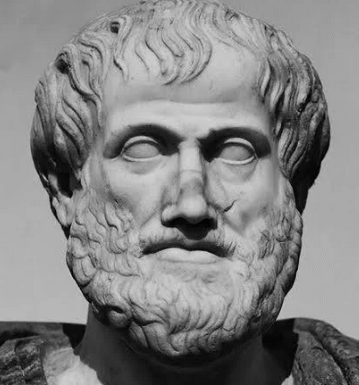
It is not necessary to ask whether soul and body are one, just as it is not necessary to ask whether the wax and its shape are one, nor generally whether the matter of each thing and that of which it is the matter are one. For even if one and being are spoken of in several ways, what is properly so spoken of is the actuality.
5 months 1 week ago
At dawn, when you have trouble getting out of bed, tell yourself: 'I have to go to work - as a human being. What do I have to complain of, if I'm going to do what I was born for - the things I was brought into the world to do? Or is this what I was created for? To huddle under the blankets and stay warm?'
▼
Source
source
(Farquharson translation)(Hays translation) At dawn of day, when you dislike being called, have this thought ready: "I am called to man's labour; why then do I make a difficulty if I am going out to do what I was born to do and what I was brought into the
CivilSimian.com created by AxiomaticPanic, CivilSimian, Kalokagathia