

6 months 1 week ago
News and truth are not the same thing and must be clearly distinguished. The function of news is to signalize an event, the function of truth is to bring to light the hidden facts, to set them into relation with each other, and make a picture of reality on which men can act. Only at those points, where social conditions take recognizable and measurable shape, do the body of truth and the body of news coincide.
▼
Source
source
Ch. XXIV: "News, Truth, and a Conclusion", p. 358 The clause in bold is sometimes quoted on its own in the form, "The news and the truth are not the same thing."

9 months 6 days ago
The truth can be spoken only by someone who is already at home in it; not by someone who still lives in untruthfulness, and does no more than reach out towards it from within untruthfulness.
▼
Source
source
p. 41e
10 months 1 week ago
It is very likely that there are many, many planets carrying life, even intelligent life, throughout the universe, because there are so many stars. By sheer chance, even if those chances are small, a great many life forms and a great many intelligences may exist.

9 months 1 week ago
There are men who astonish and delight, men who instruct and guide. Some men's words I remember so well that I must often use them to express my thought. Yes, because I perceive that we have heard the same truth, but they have heard it better.
▼
Source
source
Character

5 months 1 week ago
...be tolerant with others and strict with yourself. Remember, nothing belongs to you but your flesh and blood-and nothing else is under your control.
▼
Source
source
(Hays translation) V, 33

9 months 2 weeks ago
The most profound joy has more of gravity than of gaiety in it.
▼
Source
source
Book II, Ch. 20

9 months 3 weeks ago
This art, which I call the art of persuading, and which, properly speaking, is simply the process of perfect methodical proofs, consists of three essential parts: of defining the terms of which we should avail ourselves by clear definitions, of proposing principles of evident axioms to prove the thing in question; and of always mentally substituting in the demonstrations the definition in the place of the thing defined.
6 months 4 days ago
What postulate do we implicitly admit? It is that the duration of two identical phenomena is the same; or... that the same causes take the same time to produce the same effects. ...Is it impossible that experiment may some day contradict our postulate?

5 months 1 week ago
Hence the Pythagoreans in their theology called it sometimes "universe," sometimes "heaven," sometimes "all," sometimes "Fate" and "eternity," "power" and "trust" and "Necessity," "Atlas" and "unwearying," and simply "God" and "Phanes" and "sun."They called it "universe," because all things are arranged by it both in general and in particular, and because it is the most perfect boundary of number, in the sense that "decad" is, as it were, "receptacle," just as heaven is the receptacle of all things, they called it "heaven" and, among the Muses, "Ourania."
▼
Source
source
On the Decad
5 months 1 week ago
It might be said to the agitator, "However convinced you were of the justice of your cause and the truth of your convictions, you ought not to have made a public attack upon any man's character until you had examined the evidence on both sides with the utmost patience and care." In the first place, let us admit that, so far as it goes, this view of the case is right and necessary; right, because even when a man's belief is so fixed that he cannot think otherwise, he still has a choice in the action suggested by it, and so cannot escape the duty of investigating on the ground of the strength of his convictions; and necessary, because those who are not yet capable of controlling their feelings and thoughts must have a plain rule dealing with overt acts.

9 months 1 week ago
I believe that the advance of science depends upon the free competition of thought, and thus upon freedom, and that it must come to an end if freedom is destroyed (though it may well continue for some time in some fields, especially in technology).
▼
Source
source
Ch. 10 "Corroboration, or How a Theory Stands up to Tests", section 85: The Path of Science, p. 279, note 2.

8 months 1 week ago
There is a boundary to men's passions when they act from feeling; none when they are under the influence of imagination.
▼
Source
source
p. 460

9 months 1 week ago
The great writers to whom the world owes what religious liberty it possesses, have mostly asserted freedom of conscience as an indefeasible right, and denied absolutely that a human being is accountable to others for his religious belief.
▼
Source
source
Ch. 1: Introductory

9 months 1 day ago
There can be no brotherhood when some nations indulge in previously unheard of luxuries, while others struggle to stave off famine.
▼
Source
source
Chapter 4, Reason, p. 119
7 months 2 weeks ago
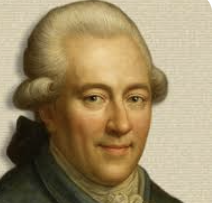
We often have need of a profound philosophy to restore to our feelings their original state of innocence, to find our way out of the rubble of things alien to us, to begin to feel for ourselves and to speak ourselves, and I might almost say to exist ourselves. Even if my philosophy does not extend to discovering anything new, it does nevertheless possess the courage to regard as questionable what has long been thought true.
▼
Source
source
B 49

9 months 5 days ago
A real subjection is born mechanically from a fictitious relation. So it is not necessary to use force to constrain the convict to good behavior, the madman to calm, the worker to work, the schoolboy to application, the patient to the observation of the regulations.
▼
Source
source
Part Four, Complete and austere institutions
6 months 4 weeks ago
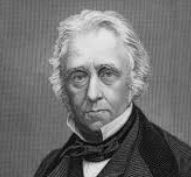
The ambassador of Russia and the grandees who accompanied him were so gorgeous that all London crowded to stare at them, and so filthy that nobody dared to touch them. They came to the court balls dropping pearls and vermin.
▼
Source
source
Vol. V, ch. 23
10 months 1 week ago
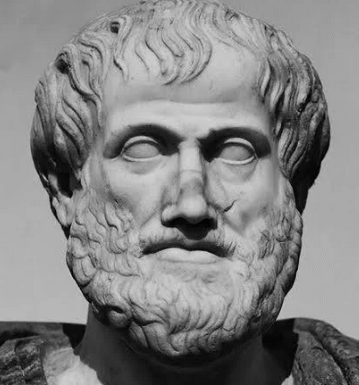
The single harmony produced by all the heavenly bodies singing and dancing together springs from one source and ends by achieving one purpose, and has rightly bestowed the name not of "disordered" but of "ordered universe" upon the whole.
5 months 1 week ago
From Antisthenes: It is royal to do good and be abused.
▼
Source
source
VII, 36

9 months 2 weeks ago
It is truly a marvelous thing to consider to what greatness Athens arrived in the space of one hundred years after she freed herself from the tyranny of Pisistratus; but, above all, it is even more marvelous to consider the greatness Rome reached when she freed herself from her kings. The reason is easy to understand, for it is the common good and not private gain that makes cities great. Yet, without a doubt, this common good is observed only in republics, for in them everything that promotes it is practised, and however much damage it does to this or that private individual, those who benefit from the said common good are so numerous that they are able to advance in spite of the inclination of the few citizens who are oppressed by it.
▼
Source
source
Book 2, Chapter 2
5 months 1 week ago
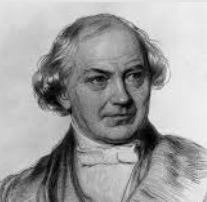
'The Law of Continuity' is this:-that a quantity cannot pass from one amount to another by any change of conditions, without passing through all intermediate magnitudes according to the intermediate conditions. It may often be employed to disprove distinctions which have no real foundation. 'The Method of Gradation' consists in taking a number of stages of a property in question, intermediate between two extreme cases which appear to be different. It is employed to determine whether the extreme cases are really distinct or not. 'The Method of Gradation', applied to decide the question, whether the existing phenomena arise from existing causes, leads to this result:-That the phenomena do appear to arise from existing causes, but that the action of existing causes have transgressed their recorded Limits of Intensity. 'The Method of Natural Classification' consists in classing cases, not according to any assumed definition, but according to the connexion of the facts themselves.

9 months 1 week ago
A strict allegory is like a puzzle with a solution: a great romance is like a flower whose smell reminds you of something you can't quite place. I think the something is 'the whole quality of life as we actually experience it.'
▼
Source
source
C. S. Lewis' Letters to Children - letter to Lucy, 9/11/1958
7 months 1 week ago
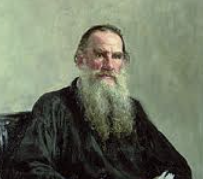
In historical events great men - so-called - are but labels serving to give a name to the event, and like labels they have the least possible connection with the event itself. Every action of theirs, that seems to them an act of their own free will, is in an historical sense not free at all, but in bondage to the whole course of previous history, and predestined from all eternity.
▼
Source
source
Bk. IX, ch. 1

8 months 6 days ago
Having always lived in fear of being surprised by the worst, I have tried in every circumstance to get a head start, flinging myself into misfortune long before it occurred.
7 months 6 days ago
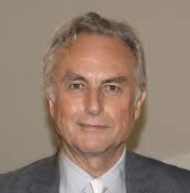
It's almost impossible to say anything against Islam in this country, because you are accused of being racist or Islamophobic.
▼
Source
source
2008 comment quoted in "Fury over Richard Dawkins's burka jibe as atheist tells of his 'visceral revulsion' at Muslim dress", Daily Mail
8 months 3 weeks ago
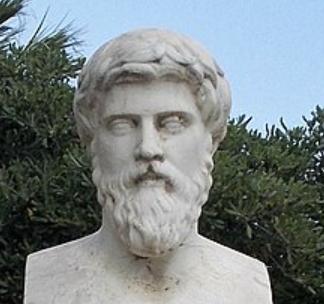
Cato requested old men not to add the disgrace of wickedness to old age, which was accompanied with many other evils.
▼
Source
source
Cato the Elder
5 months 3 weeks ago
This dogma had first to be shattered before men could once more go out in quest of the historical Jesus, before they could even grasp the thought of His existence. That the historic Jesus is something different from the Jesus Christ of the doctrine of the Two Natures seems to us now self-evident. We can, at the present day, scarcely imagine the long agony in which the historical view of the life of Jesus came to birth. And even when He was once more recalled to life. He was still, like Lazarus of old, bound hand and foot with grave-clothes - the grave-clothes of the dogma of the Dual Nature.
▼
Source
source
p. 3

7 months 3 weeks ago
In conclusion, I wish to say that my attitude to the whole tragic question is not dictated by my Jewish antecedents. It is motivated by my abhorrence of injustice, and man's inhumanity to man. It is because of this that I have fought all my life for anarchism which alone will do away with the horrors of the capitalist régime and place all races and peoples, including the Jews, on a free and equal basis. Until then I consider it highly inconsistent for socialists and anarchists to discriminate in any shape or form against the Jews.
8 months 6 days ago
I want to proclaim a truth that would forever exile me from among the living. I know only the conditions but not the words that would allow me to formulate it.
8 months 5 days ago
There have always been poor and working classes; and the working class have mostly been poor. But there have not always been workers and poor people living under conditions as they are today.

7 months 3 weeks ago
For the mockers are those who die comically, and God laughs at their comic ending, while the nobler part, the part of tragedy, is theirs who endured the mockery.
5 months 3 weeks ago
There is a word very commonly used these days: "anti-communism." It's a very stupid word, badly put together. It makes it appear as though communism were something original, something basic, something fundamental. Therefore, it is taken as the point of departure, and anti-communism is defined in relation to communism. Here is why I say that this word was poorly selected, that it was put together by people who do not understand etymology: the primary, the eternal concept is humanity. And communism is anti-humanity. Whoever says "anti-communism" is saying, in effect, anti-anti-humanity. A poor construction. So we should say: that which is against communism is for humanity. Not to accept, to reject this inhuman Communist ideology is simply to be a human being. It isn't being a member of a party.
▼
Source
source
Speech in Washington D.C. (30 June 1975), published in Solzhenitsyn: The Voice of Freedom (1975), p. 30
10 months ago
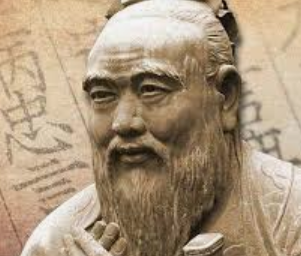
A man living without conflicts, as if he never lives at all.
8 months 3 weeks ago
A prating barber asked Archelaus how he would be trimmed. He answered, "In silence."
▼
Source
source
33 Archelaus
8 months 1 week ago
When he entered into the Whig party, he did not conceive that they pretended to any discoveries. They did not affect to be better Whigs, than those were who lived in the days in which principle was put to the test. Some of the Whigs of those days were then living. They were what the Whigs had been at the Revolution; what they had been during the reign of queen Anne; what they had been at the accession of the present royal family.
▼
Source
source
p. 409
9 months 1 week ago
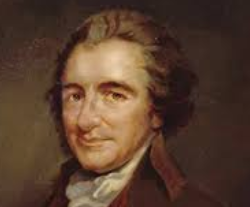
If we take a survey of ages and of countries, we shall find the women, almost - without exception - at all times and in all places, adored and oppressed. Man, who has never neglected an opportunity of exerting his power, in paying homage to their beauty, has always availed himself of their weakness He has been at once their tyrant and their slave.

7 months 3 weeks ago
There can be no freedom in the large sense of the word, no harmonious development, so long as mercenary and commercial considerations play an important part in the determination of personal conduct.
10 months 1 week ago
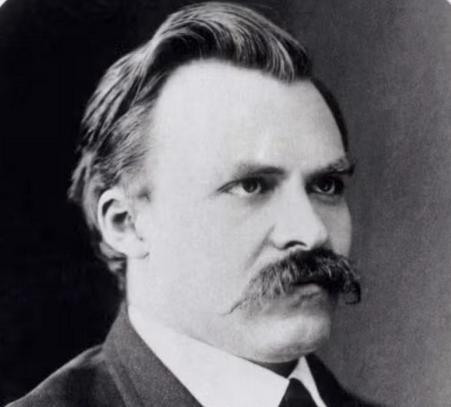
Socialism itself can hope to exist only for brief periods here and there, and then only through the exercise of the extremest terrorism. For this reason it is secretly preparing itself for rule through fear and is driving the word 'justice' into the heads of the half-educated masses like a nail so as to rob them of their reason... and to create in them a good conscience for the evil game they are to play.

9 months ago
The hopes of the right-minded may be realized, those of fools are impossible.

8 months 3 days ago
One of the scribes came to Jesus and asked him, "Which is the first of all commandments?" Jesus replied,"The first is this: Hear, O Israel! The Lord our God is Lord alone! You shall love the Lord your God with all your heart, with all your soul, with all your mind, and with all your strength. The second is like: You shall love your neighbor as yourself. There is no other commandment greater than these."
▼
Source
source
Mark 12:28-34
9 months 1 week ago
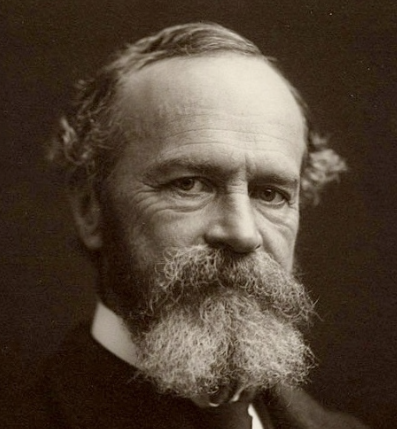
We must frankly confess, then, using our empirical common sense and ordinary practical prejudices, that in the world that actually is, the virtues of sympathy, charity, and non-resistance may be, and often have been, manifested in excess. ... You will agree to this in general, for in spite of the Gospel, in spite of Quakerism, in spite of Tolstoi, you believe in fighting fire with fire, in shooting down usurpers, locking up thieves, and freezing out vagabonds and swindlers.
▼
Source
source
Lectures XIV and XV, "The Value of Saintliness"
8 months 6 days ago
I have no ideas, only obsessions. Anybody can have ideas. Ideas have never caused anybody's downfall.

5 months 1 week ago
There is nothing but violence in the universe; but we are spoiled by a modern philosophy that tells us all is good, whereas evil has tainted everything, and in a very real sense, all is evil, since nothing is in its place.
▼
Source
source
Chapter III, p. 31
CivilSimian.com created by AxiomaticPanic, CivilSimian, Kalokagathia