



6 months 1 day ago
The seeing eye! It is this that discloses the inner harmony of things; what Nature meant, what musical idea Nature has wrapped up in these often rough embodiments. Something she did mean. To the seeing eye that something were discernible. Are they base, miserable things? You can laugh over them, you can weep over them; you can in some way or other genially relate yourself to them; - you can, at lowest, hold your peace about them, turn away your own and others' face from them, till the hour come for practically exterminating and extinguishing them!

9 months 1 week ago
All mortals tend to turn into the thing they are pretending to be.
▼
Source
source
Letter X

9 months 1 week ago
Belief in eternal hell fire was an essential item of Christian belief until pretty recent times. In this country, as you know, it ceased to be an essential item because of a decision of the Privy Council, and from that decision the Archbishop of Canterbury and the Archbishop of York dissented; but in this country our religion is settled by Act of Parliament, and therefore the Privy Council was able to override Their Graces and hell was no longer necessary to a Christian. Consequently I shall not insist that a Christian must believe in hell. What is a Christian?
▼
Source
source
1927

9 months 1 week ago
It costs a beautiful person no exertion to paint her image on our eyes; yet how splendid is that benefit! It costs no more for a wise soul to convey his quality to other men.
▼
Source
source
Uses of Great Men
5 months 1 week ago
I hold in fact(1) That small portions of space are in fact of a nature analogous to little hills on a surface which is on the average flat; namely, that the ordinary laws of geometry are not valid in them.(2) That this property of being curved or distorted is continually being passed on from one portion of space to another after the manner of a wave.(3) That this variation of the curvature of space is what really happens in that phenomenon which we call the motion of matter, whether ponderable or etherial.(4) That in the physical world nothing else takes place but this variation, subject possibly to the law of continuity.
▼
Source
source
Abstract
5 months 1 week ago
To preserve the freedom of the human mind then and freedom of the press, every spirit should be ready to devote itself to martyrdom; for as long as we may think as we will, and speak as we think, the condition of man will proceed in improvement. The generation which is going off the stage has deserved well of mankind for the struggles it has made, and for having arrested the course of despotism which had overwhelmed the world for thousands and thousands of years. If there seems to be danger that the ground they have gained will be lost again, that danger comes from the generation your contemporary. But that the enthusiasm which characterizes youth should lift its parricide hands against freedom and science would be such a monstrous phenomenon as I cannot place among possible things in this age and country.
▼
Source
source
Letter to William Green Mumford
5 months 1 week ago
To constrain the brute force of the people, the European governments deem it necessary to keep them down by hard labor, poverty and ignorance, and to take from them, as from bees, so much of their earnings, as that unremitting labor shall be necessary to obtain a sufficient surplus to sustain a scanty and miserable life.
▼
Source
source
Letter to Justice William Johnson

9 months 1 week ago
The theory of Communism may be summed up in the single sentence: Abolition of private property.
▼
Source
source
Section 2, paragraph 13.

9 months 1 week ago
"...faith and repentance, i. e. believing Jesus to be the Messiah, and a good life, are the indispensable conditions of the new covenant, to be performed by all those who would obtain eternal life. (The reasonableness, or rather necessity of which, that we may the better comprehend, we must a little look back to what was said in the beginning"
▼
Source
source
§ 106

9 months 1 week ago
...and if you are common, you can dress up as a woman, show you behind or write poems: there's nothing offensive about a naked behind if it's everybody's; each person will be mirrored in it.
▼
Source
source
p. 463
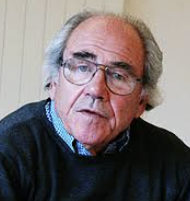
7 months 1 week ago
The Marxist critique is only a critique of capital, a critique coming from the heart of the middle and petit bourgeois classes, for which Marxism has served for a century as a latent ideology.... The Marxist seeks a good use of economy. Marxism is therefore only a limited petit bourgeois critique, one more step in the banalization of life toward the "good use" of the social!
▼
Source
source
Canadian Journal of Political and Social Theory 15 (1987) "When Bataille Attacked the Metaphysical Principle of Economy"
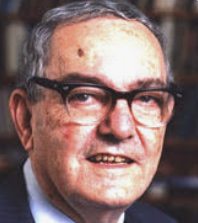
7 months 2 weeks ago
Human beings, viewed as behaving systems, are quite simple. The apparent complexity of our behavior over time is largely a reflection of the complexity of the environment in which we find ourselves.
▼
Source
source
p. 53.

9 months 1 week ago
So that it will be found that the fundamental fault in the character of women is that they have no "sense of justice ." This arises from their deficiency in the power of reasoning already referred to, and reflection, but is also partly due to the fact that Nature has not destined them, as the weaker sex, to be dependent on strength but on cunning; this is why they are instinctively crafty, and have an ineradicable tendency to lie.
▼
Source
source
On Women
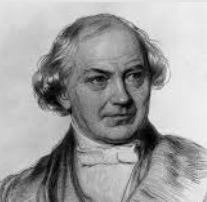
5 months 1 week ago
The fundamental terms of a system of Nomenclature may "be conveniently borrowed from casual or arbitrary circumstances.

5 months 3 weeks ago
It is quality rather than quantity that matters.
▼
Source
source
Line 1
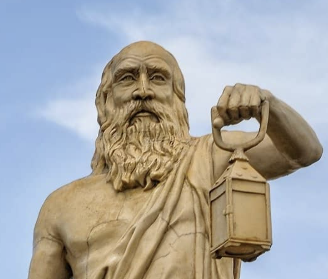
9 months ago
When the slave auctioneer asked in what he was proficient, he replied, "In ruling people."
▼
Source
source
Diogenes Laërtius, vi. 74
8 months 6 days ago
Fear for the Other, fear for the other man's death is my fear, but is in no way an individual's taking fright.
▼
Source
source
The Levinas reader by Levinas, Emmanuel p. 84
8 months 1 day ago
The masses are our masters; and for every one who looks facts in the face his existence has become dependent on them, so that the thought of them must control his doings, his cares, and his duties. Even an articulated mass always tends to become unspiritual and inhuman. It is life without existence, superstitions without faith. It may stamp all flat; it is disinclined to tolerate independence and greatness, but prone to constrain people to become as automatic as ants.

9 months 1 week ago
Whate'er we leave to God, God doesAnd blesses us.
▼
Source
source
"Inspiration", in An American Anthology, 1900

8 months 2 days ago
England is the paradise of individuality, eccentricity, heresy, anomalies, hobbies, and humors.
▼
Source
source
"The British Character"

9 months 2 weeks ago
A Christian has no need of any law in order to be saved, since through faith we are free from every law. Thus all the acts of a Christian are done spontaneously, out of a sense of pure liberty. As Christians we do not seek our own advantage or salvation because we are already fully satisfied and saved by God's grace through faith. Now our only motive is to do that which is pleasing to God.
▼
Source
source
pp. 75-76
9 months 1 week ago
These numerous points at which money is withdrawn from circulation and accumulated in numerous individual hoards or potential money-capitals appears as so many obstacles to circulation, because they immobilise the money and deprive it of its capacity to circulate for a certain time.
▼
Source
source
Vol. II, Ch. XXI, p. 497.

8 months 3 days ago
See thou tell no man; but go thy way, shew thyself to the priest, and offer the gift that Moses commanded, for a testimony unto them.
▼
Source
source
8:4 (KJV) Said to a man cured of leprosy.
5 months 1 week ago
Inquiry into the evidence of a doctrine is not to be made once for all, and then taken as finally settled. It is never lawful to stifle a doubt; for either it can be honestly answered by means of the inquiry already made, or else it proves that the inquiry was not complete. "But," says one, "I am a busy man; I have no time for the long course of study which would be necessary to make me in any degree a competent judge of certain questions, or even able to understand the nature of the arguments." Then he should have no time to believe.
10 months 1 week ago
That a woman is presented as a teacher, as a prototype of piety, cannot amaze anyone who knows that piety or godliness is fundamentally womanliness. ... from a woman you learn concern for the one thing needful, from Mary, sister of Lazarus, who sat silent at Christ's feet with her heart's choice: the one thing needful.
6 months 1 day ago
Henry of Essex's religion was the Inner Light or Moral Conscience of his own soul; such as is vouchsafed still to all souls of men;-which Inner Light shone here 'through such intellectual and other media' as there were; producing 'Phantasms,' Kircherean Visual-Spectra, according to circumstances! It is so with all men. The clearer my Inner Light may shine, through the less turbid media; the fewer Phantasms it may produce,-the gladder surely shall I be, and not the sorrier! Hast thou reflected, O serious reader, Advanced- Liberal or other, that the one end, essence, use of all religion past, present and to come, was this only: To keep that same Moral Conscience or Inner Light of ours alive and shining.

5 months 6 days ago
One is immediately struck with the obstinacy and rigid consistency with which Lenin and his comrades stuck to this slogan, a slogan which is in sharp contradiction to their otherwise outspoken centralism in politics as well as to the attitude they have assumed towards other democratic principles. Wile they showed a quite cool contempt for the Constituent Assembly, universal suffrage, freedom of press and assemblage, in short for the whole apparatus of basic democratic liberties of the people which, taken all together, constituted the "right of self-determination" inside Russia, they treated the right of self-determination of peoples as a jewel of democratic policy for the sake of which all practical considerations of real criticism had to be stilled.
▼
Source
source
Chapter Three, "Nationalities Question"

5 months 2 weeks ago
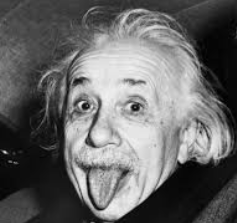
The truth stands regardless of the character of the one who speaks it.
5 months ago
I should unconditionally refuse every direct or indirect war service and try to induce my friends to adopt the same attitude, irrespective of the general opinion of the causes of war.

8 months 2 weeks ago
I have come across men of letters who have written history without taking part in public affairs, and politicians who have concerned themselves with producing events without thinking about them. I have observed that the first are always inclined to find general causes whereas the second, living in the midst of disconnected daily facts, are prone to imagine that everything is attributable to particular incidents, and that the wires they pull are the same as those that move the world. It is to be presumed that both are equally deceived.
▼
Source
source
Recollections of Alexis de Tocqueville, p. 80

9 months 3 weeks ago
We ought neither to fasten our ship to one small anchor nor our life to a single hope.
▼
Source
source
Fragment 30 (Oldfather translation)
9 months 2 weeks ago
I want death to find me planting my cabbages.
▼
Source
source
Ch. 20. Of the Force of Imagination (tr. Donald M. Frame)
9 months 1 week ago
A vivid thought brings the power to paint it; and in proportion to the depth of its source is the force of its projection.
▼
Source
source
p. 261
7 months 1 week ago
It seems to me obvious that infants and many animals that do not in any ordinary sense have a language or perform speech acts nonetheless have Intentional states. Only someone in the grip of a philosophical theory would deny that small babies can literally be said to want milk and that dogs want to be let out or believe that their master is at the door.
▼
Source
source
P. 5.

5 months 1 week ago
Not to display anger or other emotions. To be free of passion and yet full of love.
▼
Source
source
(Hays translation) I, 9
7 months 6 days ago
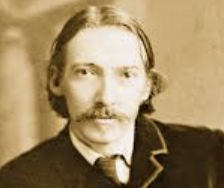
It is the mark of a good action that it appears inevitable in the retrospect. We should have been cut-throats to do otherwise. And there's an end. We ought to know distinctly that we are damned for what we do wrong; but when we have done right, we have only been gentlemen, after all. There is nothing to make a work about.
▼
Source
source
"Reflections and Remarks on Human Life", VI: Right and Wrong, published in Works: Letters and Miscellanies of Robert Louis Stevenson -- Sketches, Criticisms, Etc. (1895), p. 628.
5 months 1 week ago
How difficult, how extremely difficult for the soul to sever itself from its body the world: from mountains, seas, cities, people. The soul is an octopus and these are its tentacles. ... No force anywhere on earth is as imperialistic as the human soul. It occupies and is occupied in turn, but it always considers its empire too narrow. Suffocating, it desires to conquer the world in order to breathe freely.
▼
Source
source
My Friend The Poet. Mount Athos., Ch. 19, p. 188

8 months 6 days ago
Second, in the presence of this continuity of feeling, nominalistic maxims appear futile. There is no doubt about one idea affecting another, when we can directly perceive the one generally modified and shaping itself into the other. Nor can there any longer be any difficulty about one idea resembling another, when we can pass along the continuous field of quality from one to the other and back again to the point which we had marked.
9 months 1 week ago
I am looking forward very much to getting back to Cambridge, and being able to say what I think and not to mean what I say: two things which at home are impossible. Cambridge is one of the few places where one can talk unlimited nonsense and generalities without anyone pulling one up or confronting one with them when one says just the opposite the next day.
▼
Source
source
Letter to Alys Pearsall Smith (1893); published in The Selected Letters of Bertrand Russell, Volume 1: The Private Years (1884-1914), edited by Nicholas Griffin
8 months 3 weeks ago
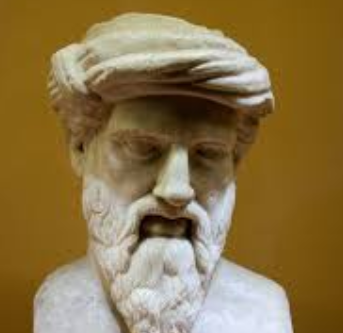
Neither will the horse be adjudged to be generous, that is sumptuously adorned, but the horse whose nature is illustrious; nor is the man worthy who possesses great wealth, but he whose soul is generous.
▼
Source
source
Pythagorean Ethical Sentences From Stobæus

5 months 1 week ago
The, diverse states of the soul are always correlative with those of the body.
CivilSimian.com created by AxiomaticPanic, CivilSimian, Kalokagathia