
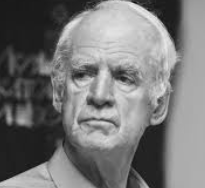
Charles Taylor
Member for
6 monthsCharles Taylor — Sources of the Self, the Politics of Recognition, and the Secular Age (1931– )
Charles Margrave Taylor is a Canadian philosopher — born in Montreal in 1931 to a Francophone Catholic mother and an Anglophone Protestant father, raised bilingually in a city that embodied the cultural tensions he would spend his career philosophically addressing, educated at McGill and then Oxford as a Rhodes Scholar under Isaiah Berlin at Balliol — who taught at McGill from 1961 to 1997 and returned as Professor Emeritus, held Oxford's Chichele Professorship of Social and Political Theory, ran four times as an NDP candidate in Canadian federal elections (once against Pierre Trudeau), co-chaired the Bouchard-Taylor Commission on cultural accommodation in Quebec, won the Templeton Prize, the Kyoto Prize, and the Berggruen Prize, and produced a body of philosophical work spanning political philosophy, philosophy of mind, hermeneutics, the philosophy of social science, and intellectual history that his mentor Isaiah Berlin described as unable to fail to broaden the outlook of anyone who engaged with it.
He is a devout Catholic who has spent his career arguing that secular liberal philosophy systematically misunderstands what human beings are and what they need — not by appeal to religious authority but by appeal to the historical depth and moral complexity of the traditions that secular liberalism has tended to flatten. His philosophy is always both philosophical and historical: he writes histories in order to make arguments, and makes arguments that require histories to be understood.
His central concern: that modern philosophical and political theory has systematically impoverished its account of the self — treating persons as if they were atomistic, context-free, disengaged agents when in fact human identity is always constituted through moral frameworks, narratives, communities, and languages that cannot be stripped away without destroying the self they constitute.
Against Atomism — The Communitarian Critique of Liberalism
Taylor's philosophical development took place against the backdrop of the liberal political philosophy dominant in Anglo-American thought — particularly the Rawlsian framework that imagined persons choosing principles of justice from behind a "veil of ignorance," abstracted from all their particular attachments, communities, and histories. Taylor argued that this abstraction was not merely methodological but philosophically confused: it misrepresented what a person was.
No one was a person in that way — prior to and independent of their particular language, their community, their narrative of self-development. The "self" of liberal theory was a philosophical fiction, useful perhaps for certain purposes but dangerous when mistaken for an accurate description of what human beings were. A theory of justice built on the fiction of the disengaged, context-free self would consistently fail to capture what actually mattered to actual people — their particular identities, their cultural memberships, their need for recognition as members of specific communities.
"Modern subjectivity, in all its epistemological, aesthetic, and political ramifications, has its roots in ideas of human good. Contemporary philosophers have ignored how self and good connect — Taylor's major project was to reconnect them."
Sources of the Self — The Making of Modern Identity
Taylor's 1989 "Sources of the Self: The Making of the Modern Identity" was the most ambitious philosophical history of modern selfhood attempted in English since Hegel — and its ambition was explicitly comparative with Hegel: to show that what the modern self was could only be understood through the history of how it had become what it was.
The argument: a modern conception of selfhood encompasses being who values freedom and inner depth, who sees nature as a source of goodness, who prizes authenticity and individuality, who affirms ordinary life against hierarchical conceptions of the good, who feels the pull of Romantic self-expression — and none of these features could be understood or defended without tracing the historical sources that gave rise to them: Augustinian inwardness, Protestant affirmation of ordinary life, Enlightenment reason and its discontents, Romantic expressivism and the recovery of nature. The modern self was not a given but an achievement — and one whose sources were richer and more morally substantial than the secular liberal account of it recognized.
His reply to the charge of nihilism or relativism was structural: the modern turn to subjectivity was not the abandonment of moral substance but the product of centuries of effort to define and reach the good. Properly understood, the modern self had moral resources that its critics on both religious right and postmodern left had failed to see.
"Taylor has taken on the most delicate and exacting of philosophical questions, the question of who we are and how we should live — and he has made this an adventure of self-discovery for his reader."
— Martha Nussbaum
The Ethics of Authenticity — Against the Debased Version
Taylor's 1991 Massey Lectures — published as "The Ethics of Authenticity" — addressed the most contested concept in contemporary popular moral culture: the ideal of being true to oneself, following one's inner voice, refusing to let external pressures dictate who you are. Taylor's argument was double-edged and characteristically generous.
The critics of authenticity — who saw it as mere narcissism, subjectivism, or the collapse of moral seriousness — were wrong: authenticity had genuine moral depth, rooted in the Romantic tradition and ultimately in Christian sources about the unique value of each individual. It was not merely self-indulgence but a serious moral ideal. But the popular debasement of authenticity — the version that amounted to "whatever feels right to me is right for me" — had severed the ideal from the horizons of significance that gave it meaning in the first place. To be authentically oneself required being true to something worth being true to — and that required engagement with the communities, traditions, and moral frameworks that constituted what was worth being.
"The ideal of authenticity is morally serious but historically rooted and vulnerable to deformation. It can be trivialized when severed from broader horizons of significance that give substance to what it means to live authentically."
The Politics of Recognition — Identity and Public Life
Taylor's 1992 essay "The Politics of Recognition" provided the philosophical foundation for thinking about why identity claims had become so central to modern political life. His argument began from a psychological observation: personal identity was partly formed by recognition — by how others saw us. Misrecognition — being seen through a distorted, demeaning, or absent image — inflicted genuine harm on the self, not merely on self-esteem but on the very capacity to develop a confident identity.
This psychological fact had political implications. When minority cultures were systematically misrecognized — when their languages, practices, and identities were treated as inferior — the harm was not merely to feelings but to the formation of persons. A liberal politics that claimed neutrality between conceptions of the good while in practice privileging the majority culture's self-understanding was not neutral but systematically unjust. Taylor's contribution was to provide a philosophical account of why recognition mattered that went deeper than preference satisfaction — grounding it in the constitutive role of intersubjective recognition in the formation of identity itself.
"Misrecognition or non-recognition can inflict genuine harm — it can imprison someone in a false, distorted, and reduced mode of being. Due recognition is not just a courtesy we owe people. It is a vital human need."
A Secular Age — The Most Important Work on Secularity
Taylor's 2007 "A Secular Age" — described by the New York Times as "a work of stupendous breadth and erudition" — was an 800-page intellectual history of how Western societies had moved from a condition in 1500 where God was implicated in all areas of social and political life, to the modern condition where a fully secular self-understanding was not only possible but in many quarters the default.
Taylor's account was neither a celebration nor a lament. He was not arguing that secularization was good or bad but trying to understand what had actually happened — what conditions made it possible for people to understand themselves, their society, and the natural world in purely secular terms. His "immanent frame" — the modern sense that reality is exhausted by the natural order accessible to science and ordinary experience — was a cultural achievement, not a discovery. It was itself produced by specific historical processes rooted in Latin Christendom, not a neutral description of how things simply were.
Taylor argued further that the immanent frame was not hermetically sealed — that the "cross-pressure" between secular and transcendent orientations remained a permanent feature of modern experience, that the yearning for meaning that went beyond the merely human was not eliminated by modernity but transformed and relocated. This was not a secret argument for religious return but a phenomenologically honest account of what modern spiritual life actually felt like.
"Taylor's monumental A Secular Age is perhaps the single most influential work ever published on the phenomena of secularity — it has rightly transformed discussions in fields from sociology to history, anthropology, and religious studies."
Quebec, Canada, and the Practice of Philosophy
Taylor's philosophy was never merely academic. When he held Oxford's Chichele Professorship in 1975, he limited himself to five years because he wanted to return to Montreal to ensure his daughters grew up bilingual — a personal enactment of the multicultural commitments he defended philosophically. He ran four times for the NDP in federal elections, contributing to debates about Canadian social democracy and national identity. He co-chaired the Bouchard-Taylor Commission in 2007–08, navigating the most politically charged questions of religious accommodation in a pluralist society — bringing philosophical argument to bear on genuine social conflict rather than manufactured examples.
Quebec was never far from his philosophical imagination: the province's situation as a linguistic minority within a majority-English federation, but also itself a majority that contained linguistic minorities, raised exactly the questions of recognition, authenticity, and cultural survival that occupied his theoretical work. He argued consistently that pluralist societies could be richer and stronger than those seeking cultural uniformity — but that this richness required genuine mutual recognition, not merely formal tolerance.
"Instead of being 'two solitudes,' Canada's major linguistic and cultural communities could enrich each other — but this required genuine recognition, not merely legal coexistence."
Legacy — The Historian of Moral Sources
Taylor remains active, writing and lecturing into his nineties, continuing the engagement with democracy, religion, and identity that has shaped his entire career. His influence spans philosophy, sociology, political theory, theology, and intellectual history — rare for any academic philosopher — and his work has genuinely shifted debates rather than merely contributing to them.
On CivSim he belongs alongside Hegel, Herder, Alasdair MacIntyre, and Paul Ricoeur — the tradition of thinkers who insist that human beings can only be understood through the historical, linguistic, and narrative contexts that constitute what they are. His challenge to Universal Humanism is the recognition challenge: that a framework organized around "necessity for all" must account for the constitutive role of particular identities in what it means to be a human being who can receive and use those necessities — that universal provision without universal recognition is an incomplete justice.
"Working out [the modern self's implications] is a basic task for human beings, both at the level of cultural differences and in individual life — reconciling the Enlightenment and Romantic sides of the modern self: the pursuit of both self-knowledge and self-mastery and distinctive self-expression and authenticity."
School Certificates: 0
No certificates shown yet.
CivilSimian.com created by AxiomaticPanic, CivilSimian, Kalokagathia