

3 months 1 day ago
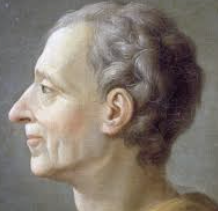
Oh, how empty is praise when it reflects back to its origin!
▼
Source
source
No. 50. (Rica writing to * * *)

4 weeks 1 day ago
Remember, however, before all else, to strip things of all that disturbs and confuses, and to see what each is at bottom; you will then comprehend that they contain nothing fearful except the actual fear.
▼
Source
source
Line 12
3 months 1 week ago
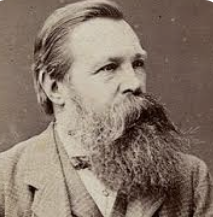
Community of women is a condition which belongs entirely to bourgeois society and which today finds its complete expression in prostitution. But prostitution is based on private property and falls with it. Thus, communist society, instead of introducing community of women, in fact abolishes it.
3 months ago
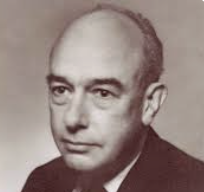
It is within science itself, and not in some prior philosophy, that reality is to be identified and described.
▼
Source
source
Theories and Things, Cambridge, MA: Harvard University Press. 1981

4 months 2 weeks ago
I thought that I was the only historian, that had at once neglected present power, interest, and authority, and the cry of popular prejudices; and as the subject was suited to every capacity, I expected proportional applause. But miserable was my disappointment: I was assailed by one cry of reproach, disapprobation, and even detestation; English, Scotch, and Irish, Whig and Tory, churchman and sectary, freethinker and religionist, patriot and courtier, united in their rage against the man, who had presumed to shed a generous tear for the fate of Charles I and the Earl of Strafford.
▼
Source
source
My Own Life' (1776), quoted in David Hume, Essays: Moral, Political, and Literary (1741-1777), ed. Eugene Miller (1985), p. xxxvii

5 months 2 weeks ago
Who is the most moral man? First, he who obeys the law most frequently, who ... is continually inventive in creating opportunities for obeying the law. Then, he who obeys it even in the most difficult cases. The most moral man is he who sacrifices the most to custom. ... Self-overcoming is demanded, not on account of any useful consequences it may have for the individual, but so that hegemony of custom and tradition shall be made evident.

4 months 2 weeks ago
To-day unbind the captive, So only are ye unbound; Lift up a people from the dust, Trump of their rescue, sound!
▼
Source
source
Boston Hymn, st. 17

4 months 2 weeks ago
Why? Surely they can find other men. Russell's reply when asked "if it wasn't unkind of him to love and leave so many women";
▼
Source
source
as quoted in My Father - Bertrand Russell (1975) by Katharine Tait, p. 106

4 months 3 weeks ago
When I play with my cat, who knows whether I do not make her more sport than she makes me?
▼
Source
source
Book II, Ch. 12. Apology for Raimond Sebond
4 months 1 week ago
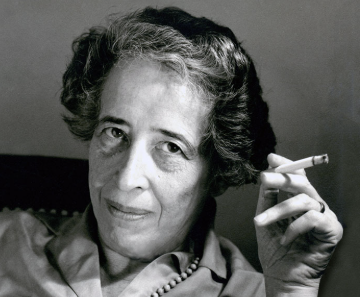
The phenomenon of the will [in Epictetus ] [...] a different mental ability whose chief characteristic is that it speaks an imperative even when it commands nothing but our ability to think. The goal is to annihilate reality insofar it concerns me.
▼
Source
source
Hannah Arendt Lecture on Thinking
3 months 1 week ago
So it is that you come to know what a real God is. ... The God wants my life. He wants to go with me, sit at the table with me, work with me. Above all he wants to be ever-present.
▼
Source
source
P. 291
5 months 2 weeks ago
The bodies of which the world is composed are solids, and therefore have three dimensions. Now, three is the most perfect number, it is the first of numbers, for of one we do not speak as a number, of two we say both, but three is the first number of which we say all. Moreover, it has a beginning, a middle, and an end.

3 months 3 weeks ago
Holding fast to these things, you will know the worlds of gods and mortals which permeates and governs everything. And you will know, as is right, nature similar in all respects, so that you will neither entertain unreasonable hopes nor be neglectful of anything.
▼
Source
source
As quoted in Divine Harmony: The Life and Teachings of Pythagoras by John Strohmeier and Peter Westbrook.
2 weeks 1 day ago
Where are we going? Do not ask! Ascend, descend. There is no beginning and no end. Only this present moment exists, full of bitterness, full of sweetness, and I rejoice in it all.
3 months 3 weeks ago
It is only necessary to make war with five things; with the maladies of the body, the ignorances of the mind, with the passions of the body, with the seditions of the city and the discords of families.
▼
Source
source
As quoted in The Biblical Museum: A Collection of Notes Explanatory, Homiletic, and Illustrative on the Holy Scriptures, Especially Designed for the Use of Ministers, Bible-students, and Sunday-school Teachers (1873) by James Comper Gray, Vol. V
4 months 2 weeks ago
For what avail the plough or sail, Or land or life, if freedom fail?
▼
Source
source
Boston
4 months 2 weeks ago
It is error only, and not truth, that shrinks from inquiry.

3 months 2 weeks ago
In the deep discovery of the Subterranean world, a shallow part would satisfy some enquirers.
▼
Source
source
Chapter I
3 months 4 weeks ago
Animals are rational; in most of them logos is imperfect, but it is certainly not wholly lacking. So if, as our opponents say, justice applies to rational beings, why should not justice, for us, also apply to animals?
▼
Source
source
3, 18, 1

2 months 1 week ago
Pornography and obscenity...work by specialism and fragmentation. They deal with a figure without a ground -- situations in which the human factor is suppressed in favor of sensations and kicks.
▼
Source
source
Letter to Clare Westcott, November 26 1975. Letters of Marshall McLuhan, p. 514
4 months 2 weeks ago
Many of these were not prisoners of war, and redeemed from savage conquerors, as some plead; and they who were such prisoners, the English, who promote the war for that very end, are the guilty authors of their being so; and if they were redeemed, as is alleged, they would owe nothing to the redeemer but what he paid for them.

4 months 2 weeks ago
The difference between the most dissimilar characters, between a philosopher and a common street porter, for example, seems to arise not so much from nature, as from habit, custom, and education.
▼
Source
source
Chapter II, p. 17.
3 weeks 2 days ago
I am aware that the great Plato himself, and after him, a man posterior to him in date, though not in mind, I mean Iamblichus of Chalcis (who initiated us into other branches of philosophy, and also into this by means of his discourses), did both of them as far as hypothesis goes, take for granted the fact of a Creation and assumed the universe to have been, in a certain sense, the Work of Time, in order that the most important of the effects produced by this Power, may be reduced into a shape for examination.

4 months 1 week ago
If you use a trick in logic, whom can you be tricking other than yourself?
▼
Source
source
p. 24e

3 months 2 weeks ago
The pursuit of individual happiness within those limits prescribed by social conditions, is the first requisite to the attainment of the greatest general happiness.
▼
Source
source
Ethics (New York:1915), § 70, pp. 190-191

3 months 1 week ago
The kingdom of heaven is like unto leaven, which a woman took, and hid in three measures of meal, till the whole was leavened.
▼
Source
source
13:33 (KJV)

1 month 5 days ago
With his sharp power of vision, resolute power of action, I doubt not he could have learned to write Books withal, and speak fluently enough;-he did harder things than writing of Books. This kind of man is precisely he who is fit for doing manfully all things you will set him on doing.

4 months 1 week ago
If you are tired of the real landscape, look at it in a mirror. By putting bread, gold, horse, apple, or the very roads into a myth, we do not retreat from reality: we rediscover it. As long as the story lingers in our mind, the real things are more themselves. This book applies the treatment not only to bread or apple but to good and evil, to our endless perils, our anguish, and our joys. By dipping them in myth we see them more clearly.
1 week 4 days ago
That to expect bad people not to injure others is crazy. It's to ask the impossible. And to let them behave like that to other people but expect them to exempt you is arrogant-the act of a tyrant.
▼
Source
source
(Hays translation) XI, 18
2 months 4 weeks ago
There continue to be complex debates about what Nietzsche understood truth to be. Quite certainly, he did not think, in pragmatist spirit, that beliefs are true if they serve our interests or welfare: we have just seen some of his repeated denials of this idea. The more recently fashionable view is that he was the first of the deniers, thinking that there is no such thing as truth, or that truth is what anyone thinks it is, or that it is a boring category that we can do without. This is also wrong, and more deeply so. Nietzsche did not think that the ideal of truthfulness went into retirement when its metaphysical origins were discovered, and he did not suppose, either, that truthfulness could be detached from a concern for the truth. Truthfulness as an ideal retains its power, and so far from his seeing truth as dispensable or malleable, his main question is how it can be made bearable.
▼
Source
source
p. 16
2 months 3 weeks ago
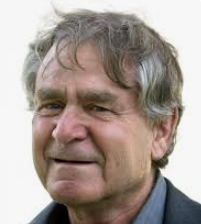
Opinion is the companion of probability within the medieval epistemology.
▼
Source
source
Chapter 3, Opinion, p. 28.

2 months 2 weeks ago
To say that the activity of science and art helps humanity's progress, if by that activity we mean the activity which now calls itself by those names, is as though one said that the clumsy, obstructive splashing of oars in a boat moving down stream assists the boat's progress. It only hinders it... The proof of this is seen in the confession made by men of science that the achievements of the arts and sciences are inaccessible to the labouring masses on account of the unequal distribution of wealth.

3 months 3 weeks ago
I entirely agree with you, as to the ill tendency of the affected doubts of some philosophers, and fantastical conceit of others. I am even so far gone of late in this way of think, that I have quitted several of the sublime notions I had got in their schools for vulgar opinions. And I give it you on my word, since this revolt from metaphysical notions to the plain dictates of nature and common sense, I find my understanding strangely enlightened, so that I can now easily comprehend a great many thing which before were all mystery and riddle.
▼
Source
source
Said by Philonous (Berkeley) to Hylas in the opening of dialog 1 with reference to the recent surge philosophic endeavors (Locke, Newton, et al) that seemed to lead to skepticism about the existence of the world.
4 months 2 weeks ago
Fanaticism is the danger of the world, and always has been, and has done untold harm. I might almost say that I was fanatical against fanaticism.
▼
Source
source
The Future of Science (1959), p. 79; also in BBC The Listener, Vol. 61 (1959), p. 505
4 weeks 1 day ago
... the only contestant who can confidently enter the lists is the man who has seen his own blood, who has felt his teeth rattle beneath his opponent's fist, who has been tripped and felt the full force of his adversary's charge, who has been downed in body but not in spirit, one who, as often as he falls, rises again with greater defiance than ever.

4 months 3 weeks ago
For Christ is Joy and Sweetness to a broken heart. Christ is a Lover of poor sinners, and such a Lover that He gave Himself for us. Now if this is true, and it is true, then are we never justified by our own righteousness.
▼
Source
source
Chapter 3, verse 20
2 months 3 weeks ago
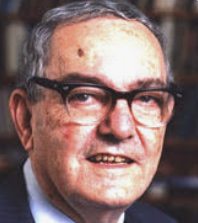
Definition of design = Everyone designs who devise courses of action aimed at changing existing situations into preferred ones. The intellectual activity that produces material artifacts is no different fundamentally from the one that prescribes remedies for a sick patient or the one that devises a new sales plan for a company or a social welfare policy for a state.
▼
Source
source
p. 130.
3 months 1 week ago
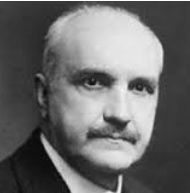
When Socrates and his two great disciples composed a system of rational ethics they were hardly proposing practical legislation for mankind...They were merely writing an eloquent epitaph for their country.


3 months 1 week ago
Never to have occasion to take a position, to make up one's mind, or to define oneself - there is no wish I make more often.
4 months 2 weeks ago
The idea that the poor should have leisure has always been shocking to the rich.
▼
Source
source
Ch. 1: In Praise of Idleness
4 months 2 weeks ago
The government of an exclusive company of merchants is, perhaps, the worst of all governments for any country whatever.
▼
Source
source
Chapter VII, Part Second, p. 619.
4 weeks 1 day ago
If any one is angry with you, meet his anger by returning benefits for it: a quarrel which is only taken up on one side falls to the ground: it takes two men to fight.
▼
Source
source
De Ira (On Anger): Book 2, cap. 34, line 5.

4 months 2 weeks ago
The collective name for the ripe fruits of religion in a character is Saintliness. The saintly character is the character for which spiritual emotions are the habitual centre of the personal energy; and there is a certain composite photograph of universal saintliness, the same in all religions, of which the features can easily be traced.
▼
Source
source
Lectures XI, XII, AND XIII : "Saintliness"

4 months 2 weeks ago
In capitalist society however where social reason always asserts itself only post festum great disturbances may and must constantly occur.
▼
Source
source
Vol. II, Ch. XVI, p. 319.

2 months 1 week ago
It is often said, mainly by the 'no-contests', that although there is no positive evidence for the existence of God, nor is there evidence against his existence. So it is best to keep an open mind and be agnostic. At first sight that seems an unassailable position, at least in the weak sense of Pascal's wager. But on second thoughts it seems a cop-out, because the same could be said of Father Christmas and tooth fairies. There may be fairies at the bottom of the garden. There is no evidence for it, but you can't prove that there aren't any, so shouldn't we be agnostic with respect to fairies?
▼
Source
source
From speech at the Edinburgh International Science Festival, 1992-04-15.

2 months 3 weeks ago
Now he saw the problem with great clarity. If he lived here, life would be pleasant and safe. But it would also be predictable. A child could be born here, grow up here, die here, without ever experiencing the excitement of discovery. Why did Dona question him endlessly about his life in the burrow and his journey to the country of the ants? Because for her, it represented a world that was dangerous and full of fascinating possibilities. For the children of this underground city, life was a matter of repetition, of habit. And this, he suddenly realized, was the heart of the problem. Habit. Habit was a stifling, warm blanket that threatened you with suffocation and lulled the mind into a state of perpetual nagging dissatisfaction. Habit meant the inability to escape from yourself, to change and develop . . .
▼
Source
source
pp. 132-133
1 month 5 days ago
A mystic bond of brotherhood makes all men one.
▼
Source
source
Essays, Goethe's Works.
3 months 2 weeks ago
People like us are unhappy in this world and in the next, I guess if we made it to heaven, we'd have to help make it thunder.
▼
Source
source
Scene VI.

5 months 1 week ago
Then we understand that rebellion cannot exist without a strange form of love. Those who find no rest in God or in history are condemned to live for those who, like themselves, cannot live; in fact, for the humiliated.
CivilSimian.com created by AxiomaticPanic, CivilSimian, Kalokagathia