

3 months 1 week ago
When one is not understood one should as a rule lower one's voice, because when one really speaks loudly enough and is not heard, it is because people do not want to hear. One had better begin to mutter to oneself, then they get curious.
▼
Source
source
Nietzsche's Zarathustra (1988), p. 30

3 months 1 week ago
It is terrible to see how a single unclear idea, a single formula without meaning, lurking in a young man's head, will sometimes act like an obstruction ... in an artery, hindering the nutrition of the brain, and condemning its victim to pine away in the fullness of his intellectual vigor and in the midst of intellectual plenty.
▼
Source
source
How to make our ideas clear, Popular Science Monthly, Vol. 12

4 months 2 weeks ago
A great man quotes bravely, and will not draw on his invention when his memory serves him with a word just as good.
▼
Source
source
Quotation and Originality

4 months 2 weeks ago
The first characteristic of the human species is man's ability, as a rational being, to establish character for himself, as well as for the society into which nature has placed him. This ability, however, presupposes an already favorable natural predisposition and an inclination to the good in man, because the evil is really without character (since it is at odds with itself, and since it does not tolerate any lasting principle within itself)
▼
Source
source
Kant, Immanuel (1996), page 246

1 week 4 days ago
Look at everything that exists, and observe that it is already in dissolution and change, and as it were putrefaction or dispersion, or that everything is so constituted in nature as to die.
▼
Source
source
X, 18

3 months 2 weeks ago
As there must be moderation in other things, so there must be moderation in self-criticism. Perpetual contemplation of our own actions produces a morbid consciousness, quite unlike that normal consciousness accompanying right actions spontaneously done; and from a state of unstable equilibrium long maintained by effort, there is apt to be a fall towards stable equilibrium, in which the primitive nature reasserts itself. Retrogression rather than progression may hence result.
▼
Source
source
Ch. 10, General Conclusions
2 weeks 1 day ago
If you are a man of learning, fight in the skull, kill ideas and create new ones. God hides in every idea as in every cell of flesh. Smash the idea, set him free! Give him another, a more spacious idea in which to dwell.

4 weeks 1 day ago
So the wise man will develop virtue, if he may, in the midst of wealth, or, if not, in poverty; if possible, in his own country-if not, in exile; if possible, as a commander-if not, as a common soldier; if possible, in sound health-if not, enfeebled. Whatever fortune he finds, he will accomplish therefrom something noteworthy.
1 month 1 week ago
If I shall have sufficient strength to improve and amplify what was written and published by me up to now about motion by adding some little speculations, and in particular those relating to the force of percussion, in the investigation of which I have consumed hundreds and thousands of hours, and finally reduced this to very easy explanation, so that people can understand it in less than half an hour of time.
4 weeks 1 day ago
You will die, not because you are ill, but because you are alive; even when you have been cured, thesame end awaits you; when you have recovered, it will be not death, but ill health, that you have escaped.
1 week 4 days ago
Remember this, then, that this little compound, thyself, must either be dissolved, or thy poor breath must be extinguished, or be removed and placed elsewhere.
▼
Source
source
VIII, 25

4 months 2 weeks ago
Both of us victims of the same twentieth-century plague. Not the Black Death, this time; the Grey Life.
2 months 1 week ago
There is no need to make an inventory of the times. It is demoralizing to describe ourselves to ourselves yet again. It is especially hard on us since we believe (as we have been educated to believe) that history has formed us and that we are all mini-summaries of the present age.
▼
Source
source
Mozart: An Overture (1992), pp. 13-14
4 months 1 week ago
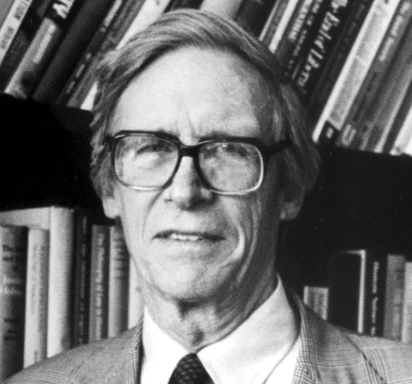
This is a long book, not only in pages.
▼
Source
source
Preface, pg. viii
5 months 2 weeks ago
If a man knows what it is right to do, he does not require a formal reason. And a person that has been thus trained, either possesses these first principles already, or can easily acquire them.

4 months 2 weeks ago
It is the duty of every man, so far as his ability extends, to detect and expose delusion and error.
▼
Source
source
The Theophilanthropist: Containing Critical, Moral, Theological and Literary Essays, in Monthly Numbers, p. 387

3 months 1 week ago
"Neither this world, nor the next, nor happiness are for the being abandoned to doubt." - This point in the Gita is my death sentence.
3 months 1 week ago
Primitive superstition lies just below the surface of even the most tough-minded individuals, and it is precisely those who most fight against it who are the first to succumb to its suggestive effects.
▼
Source
source
p. 25
2 months 2 weeks ago
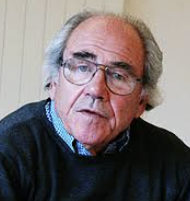
People no longer look at each other, but there are institutes for that. They no longer touch each other, but there is contactotherapy. They no longer walk, but they go jogging, etc. Everywhere one recycles lost faculties, or lost bodies, or lost sociality, or the lost taste for food.
▼
Source
source
"The Precession of Simulacra," p. 13
3 weeks 4 days ago
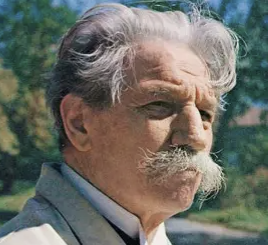
The ethic of Reverence for Life is the ethic of Love widened into universality.
▼
Source
source
Epilogue, p. 235
3 months 6 days ago
The recurrence of relations-not of elements-in different contexts, which constitutes transposition is qualitative and hence directly experienced in perception.
▼
Source
source
p. 219



5 months 1 week ago
It happens that the stage sets collapse. Rising, streetcar, four hours in the office or the factory, meal, streetcar, four hours of work, meal, sleep and Monday Tuesday Wednesday Thursday Friday and Saturday according to the same rhythm this path is easily followed most of the time. But one day the "why" arises and everything begins in that weariness tinged with amazement.

4 months 1 week ago
A critique is not a matter of saying that things are not right as they are. It is a matter of pointing out on what kinds of assumptions, what kinds of familiar, unchallenged, unconsidered modes of thought the practices that we accept rest.
▼
Source
source
"Practicing criticism, or, is it really important to think?", interview by Didier Eribon, May 30-31, 1981, in Politics, Philosophy, Culture, ed. L. Kriztman (1988), p. 155
4 weeks 1 day ago
Who can be forced has not learned how to die.
▼
Source
source
line 426; (Megara). Alternate translation: Who can be compelled does not know how to die.
3 months ago
Impulse, subjectivity and profanation, the old adversaries of materialistic alienation, now succumb to it. ... The representatives of the opposition to the authoritarian schema become witnesses to the authority of commercial success. ... In the service of success they renounce that insubordinate character which was theirs.
▼
Source
source
p. 273
4 months 2 weeks ago
The two parties which divide the State, the party of Conservatism and that of Innovation are very old, and have disputed the possession of the world ever since it was made ... Now one, now the other gets the day, and still the fight renews itself as if for the first time, under new names and hot personalities ... Innovation is the salient energy; Conservatism the pause on the last movement.
▼
Source
source
Via Arthur M. Schlesinger, Jr., The Cycles of American History (Houghton Mifflin, 1986) p. 23

5 months 4 days ago
They hate not to make use of their abilities... they do not necessarily work for their own self-interest.

2 months 3 weeks ago
One of the major problems of our society is that so many people are too intelligent to accept religion, but not intelligent or strong-minded enough to look for acceptable alternatives; in the same way, many people are strong-minded enough not to want to be 'organization men', but incapable of seeing beyond an act of protest. These situations produce a sense of being 'between two stools', lacking real motive; a sense of mental strain is produced that may find its outlet in violence, or in organised anti-social behaviour.
▼
Source
source
p. 224, Crimes of Freedom -- and their cure

4 months 2 weeks ago
The only fence against the world is a thorough knowledge of it, into which a young gentleman should be enter'd by degrees, as he can bear it; and the earlier the better, so he be in safe and skillful hands to guide him.
▼
Source
source
Sec. 94

4 months 2 weeks ago
Human infirmity in moderating and checking the emotions I name bondage: for, when a man is a prey to his emotions, he is not his own master, but lies at the mercy of fortune: so much so, that he is often compelled, while seeing that which is better for him, to follow that which is worse.
▼
Source
source
Part IV, Preface; translation by R. H. M. Elwes

2 months 2 weeks ago
Each visitor performed the ceremony of greeting this old aunt whom not one of them knew, not one of them wanted to know, and not one of them cared about; Anna Pávlovna observed these greetings with mournful and solemn interest and silent approval. The aunt spoke to each of them in the same words, about their health and her own, and the health of Her Majesty, "who, thank God, was better today." And each visitor, though politeness prevented his showing impatience, left the old woman with a sense of relief at having performed a vexatious duty and did not return to her the whole evening.
▼
Source
source
Bk. I, Ch. II
4 months 1 week ago
The disciple must break the glass, or better the mirror, the reflection, his infinite speculation on the master. And start to speak.
▼
Source
source
Cogito and The History of Madness, p.37 (Routledge classics edition)
2 months 3 days ago
It may be that the public mind of India may expand under our system till it has outgrown that system; that by good government we may educate our subjects into a capacity for better government, that, having become instructed in European knowledge, they may, in some future age, demand European institutions. Whether such a day will ever come I know not. But never will I attempt to avert or to retard it. Whenever it comes, it will be the proudest day in English history.
▼
Source
source
Speech in the House of Commons
2 months 3 weeks ago
What can characterize the Outsider is a sense of strangeness, or unreality.
▼
Source
source
Chapter one, The Country of the Blind
5 months 4 days ago
He that in his studies wholly applies himself to labour and exercise, and neglects meditation, loses his time, and he that only applies himself to meditation, and neglects labour and exercise, only wanders and loses himself.


3 months 2 weeks ago
Obstinacy in a bad cause, is but constancy in a good.
▼
Source
source
Section 25

5 months 2 weeks ago
There is a contrast of primary significance between Augustine and Pelagius. The former crushes everything in order to rebuild it again. The other addresses himself to man as he is. The first system, therefore, in respect to Christianity, falls into three stages: creation – the fall and a consequent condition of death and impotence; a new creation - whereby man is placed in a position where he can choose; and then, if he chooses - Christianity. The other system addresses itself to man as he is (Christianity fits into the world). From this is seen the significance of the theory of inspiration for the first system; from this also is seen the relationship between the synergistic and the semipelagian conflict. It is the same question, only that the syngeristic struggle has its presupposition in the new creation of the Augustinian system.

3 months ago
It is precisely those artists and writers who are most inclined to think of their art as the manifestation of their personality who are in fact the most in bondage to public taste.
▼
Source
source
p. 57
2 weeks ago
The 'Diagnosis', or Scheme of the Characters, comes, in the order of philosophy, after the Classification. The characters do not 'make' the classes, they only enable us to 'recognize' them. The Diagnosis is an Artificial Key to a Natural System.

4 months 3 weeks ago
Every man bears the whole stamp of the human condition.
▼
Source
source
Ch. 2

2 weeks ago
The good old Dominion, the blessed mother of us all.
▼
Source
source
"Thoughts on Lotteries", 1826
4 weeks 1 day ago
To no creature besides man has been given wisdom, foresight, industry, and reflection.

4 months 3 weeks ago
I have turned my entire attention to Greek. The first thing I shall do, as soon as the money arrives, is to buy some Greek authors; after that, I shall buy clothes.
▼
Source
source
Letter to Jacob Batt (12 April 1500); Collected Works of Erasmus Vol 1 (1974)

3 months 2 weeks ago
I suddenly dreamt that I picked up the revolver and aimed it straight at my heart - my heart, and not my head; and I had determined beforehand to fire at my head, at my right temple. After aiming at my chest I waited a second or two, and suddenly my candle, my table, and the wall in front of me began moving and heaving. I made haste to pull the trigger.
2 weeks 1 day ago
I am not the light, I am the night; but a flame stabs through my entrails and consumes me. I am the night devoured by light.
3 months 1 week ago
If now I...say "Stealing money is wrong," I produce a sentence which has no factual meaning - that is, expresses no proposition which can be either true or false. It is as if I had written "Stealing money!!" - where the shape and thickness of the exclamation marks show, by a suitable convention, that a special sort of moral disapproval is the feeling which is being expressed.
▼
Source
source
p. 107.

4 months 2 weeks ago
Unjust laws exist: shall we be content to obey them, or shall we endeavor to amend them, and obey them until we have succeeded, or shall we transgress them at once?
CivilSimian.com created by AxiomaticPanic, CivilSimian, Kalokagathia