


6 months 2 days ago
In any country where talent and virtue produce no advancement, money will be the national god. Its inhabitants will either have to possess money or make others believe that they do. Wealth will be the highest virtue, poverty the greatest vice. Those who have money will display it in every imaginable way. If their ostentation does not exceed their fortune, all will be well. But if their ostentation does exceed their fortune they will ruin themselves. In such a country, the greatest fortunes will vanish in the twinkling of an eye. Those who don't have money will ruin themselves with vain efforts to conceal their poverty. That is one kind of affluence: the outward sign of wealth for a small number, the mask of poverty for the majority, and a source of corruption for all.

3 months 3 weeks ago
Because the President has undisputed authority over foreign policy, President Biden... will be able to reinsert the United States into the international system. He will rejoin the World Health Organization, the Paris Climate Accords, he will go to NATO and reaffirm support for... our Asian allies, for Australia, for every other country that has depended on... American power, but... it's going to be extremely difficult to return to the kind of world that we assumed existed before 2016, because America does remain fundamentally divided. That bipartisan support for the liberal international order that we thought was extremely strong is no longer...
▼
Source
source
29:41:00

6 months 3 weeks ago
The perfect disciplinary apparatus would make it possible for a single haze to see everything constantly. A central point would be both the source of light illuminating everything, and a locus of convergence for everything that must be known: a perfect eye that nothing would escape and a centre towards which all gazes would be turned.
▼
Source
source
Part Three, The Means of Correct Training
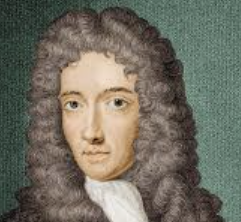
2 months 3 weeks ago
But though much may be said to Excuse the Chymists when they write Darkly, and Ænigmatically, about the Preparation of their Elixir, and Some few other grand Arcana, the divulging of which they may upon Grounds Plausible enough esteem unfit; yet when they pretend to teach the General Principles of Natural Philosophers, this Equivocall Way of Writing is not to be endur'd. For in such Speculative Enquiries, where the naked Knowledge of the Truth is the thing Principally aim'd at, what does he teach me worth thanks that does not, if he can, make his Notion intelligible to me, but by Mystical Termes, and Ambiguous Phrases darkens what he should clear up; and makes me add the Trouble of guessing at the sence of what he Equivocally expresses, to that of examining the Truth of what he seems to deliver.
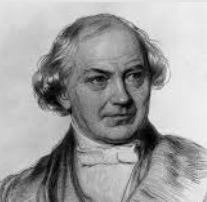
2 months 3 weeks ago
We perceive by 'means' of a medium and 'by means' of impressions on the nerves: but we do not (by our senses,) perceive either the medium or the impressions on the nerves.
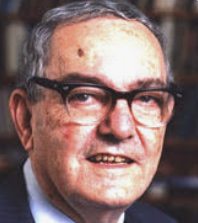
5 months 6 days ago
If there were no limits to human rationality administrative theory would be barren. It would consist of the single precept: Always select that alternative, among those available, which will lead to the most complete achievement of your goals.
▼
Source
source
Simon (1945, p. 240); As cited in:
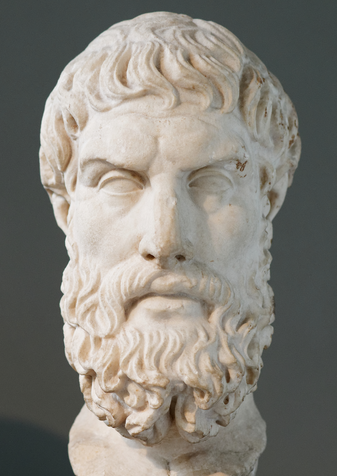
7 months 2 weeks ago
Of our desires some are natural and necessary, others are natural but not necessary; and others are neither natural nor necessary, but are due to groundless opinion.

5 months 2 weeks ago
From whatever side the matter is regarded, it is always found that reason confronts our longing for personal immortality and contradicts it. And the truth is, in all strictness, that reason is the enemy of life.

5 months 4 weeks ago
In this choice of inheritance we have given to our frame of polity the image of a relation in blood, binding up the constitution of our country with our dearest domestic ties, adopting our fundamental laws into the bosom of our family affections, keeping inseparable and cherishing with the warmth of all their combined and mutually reflected charities our state, our hearths, our sepulchres, and our altars.


5 months 1 week ago
The miser deprives himself of his treasure because of his desire for it.
▼
Source
source
p. 260
5 months ago
We often attribute "understanding" and other cognitive predicates by metaphor and analogy to cars, adding machines, and other artifacts, but nothing is proved by such attributions.

6 months 4 weeks ago
You shall find, that there cannot be a greater spur to the attaining what you would have the eldest learn, and know himself, than to set him upon teaching it his younger brothers and sisters.
▼
Source
source
Sec. 119
6 months 3 weeks ago
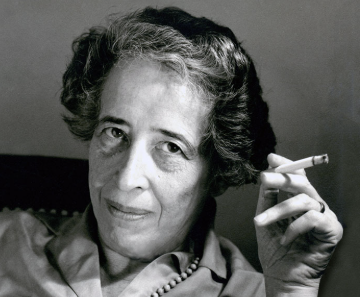
The Nazis were 'convinced that evil-doing in our time has a morbid force of attraction,' Bolshevik assurances inside and outside Russia that they do not recognize ordinary moral standards have become a mainstay of Communist propaganda, and experience has proven time and again that the propaganda value of evil deeds and general contempt for moral standards is independent of mere self-interest, supposedly the most powerful psychological factor in politics.
▼
Source
source
Part 3, Ch. 10
5 months 3 weeks ago
There never comes a point where a theory can be said to be true. The most that one can claim for any theory is that it has shared the successes of all its rivals and that it has passed at least one test which they have failed.
▼
Source
source
Philosophy in the Twentieth Century (1982) p. 133.

4 months 3 weeks ago
To attain this end we must secure a preponderance of virtue over vice and must endeavor to secure that the honest man may, even in this world, receive a lasting reward for his virtue. But in these great endeavors we are gravely hampered by the political institutions of today. What is to be done in these circumstances? To favor revolutions, overthrow everything, repel force by force?... No! We are very far from that. Every violent reform deserves censure, for it quite fails to remedy evil while men remain what they are, and also because wisdom needs no violence.
▼
Source
source
Book V, Ch. 7
3 months 2 weeks ago
Tsze-Kung asked Confucius, saying, "Master, are you a sage?" Confucius answered him: "A sage is what I cannot rise to. I learn without satiety, and teach without being tired." Tsze-Kung said: "You learn without satiety: that shows your wisdom. You teach without being tired: that shows your benevolence. Benevolent and wise:- Master, you are a sage."
▼
Source
source
"Humility", no. 139
3 months 1 week ago
It is not because the truth is too difficult to see that we make mistakes. It may even lie on the surface; but we make mistakes because the easiest and most comfortable course for us is to seek insight where it accords with our emotions - especially selfish ones.
▼
Source
source
Peace and Violence

6 months 4 weeks ago
Most books belong to the house and streets only, and in the fields their leaves feel very thin.
6 months 3 weeks ago
The moment we no longer have a free press, anything can happen. What makes it possible for a totalitarian or any other dictatorship to rule is that people are not informed; how can you have an opinion if you are not informed? If everybody always lies to you, the consequence is not that you believe the lies, but rather that nobody believes anything any longer. This is because lies, by their very nature, have to be changed, and a lying government has constantly to rewrite its own history. On the receiving end you get not only one lie - a lie which you could go on for the rest of your days - but you get a great number of lies, depending on how the political wind blows. And a people that no longer can believe anything cannot make up its mind. It is deprived not only of its capacity to act but also of its capacity to think and to judge. And with such a people you can then do what you please.
▼
Source
source
p. 70


6 months 3 weeks ago
The world is all that is the case.
▼
Source
source
(1) Original German: Die Welt ist alles, was der Fall ist.

5 months 2 days ago
There is one ethical principle, either you are preserving life generally, or you aren't. Preserving life in your ends and your means determines whether you are good or evil.

5 months 1 week ago
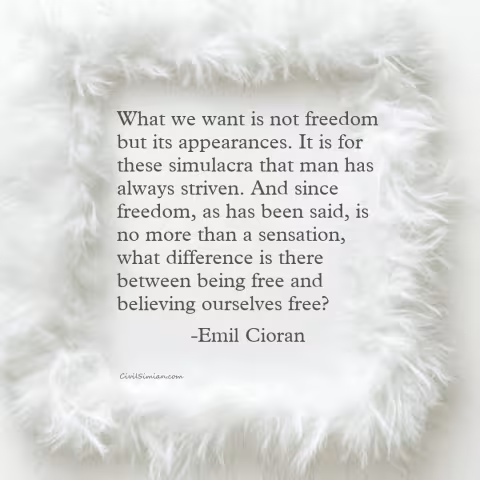
Regardless of the present trend toward the strong-armed man, the totalitarian states, or the dictatorship from the left, my ideas have remained unshaken. In fact, they have been strengthened by my personal experience and the world events through the years. I see no reason to change, as I do not believe that the tendency of dictatorship can ever successfully solve our social problems. As in the past, so I do now insist that freedom is the soul of progress and essential to every phase of life. I consider this as near a law of social evolution as anything we can postulate. My faith is in the individual and in the capacity of free individuals for united endeavor.
6 months 4 weeks ago
The Hindoos are most serenely and thoughtfully religious than the Hebrews. They have perhaps a purer, more independent and impersonal knowledge of God. Their religious books describe the first inquisitive and contemplative access to God; the Hebrew bible a conscientious return, a grosser and more personal repentance. Repentance is not a free and fair highway to God. A wise man will dispense with repentance. It is shocking and passionate. God prefers that you approach him thoughtful, not penitent, though you are chief of sinners. It is only by forgetting yourself that you draw near to him. The calmness and gentleness with which the Hindoo philosophers approach and discourse on forbidden themes is admirable. In 1853.
▼
Source
source
A Tribute to Hinduism, 2008
5 months ago
The simulacrum is never what hides the truth-it is truth that hides the fact that there is none. The simulacrum is true.
▼
Source
source
- Ecclesiastes "The Precession of Simulacra," p. 1

6 months 3 weeks ago
Experience teaches only the teachable...
▼
Source
source
Tragedy and the Whole Truth
3 months 6 days ago
A good traveler is one who does not know where he is going to, and a perfect traveler does not know where he came from.
▼
Source
source
p. 332

5 months 3 weeks ago
Can it really be that for us existence means exile, and nothingness, home?
7 months 2 weeks ago
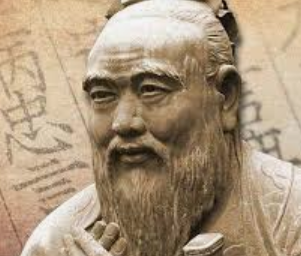
Reviewing what you have learned and learning anew, you are fit to be a teacher.
5 months 4 weeks ago
There is no self-knowledge except historical self-knowledge. No one knows what he is if he doesn't know what his contemporaries are.
▼
Source
source
"Ideas," Lucinde and the Fragments, P. Firchow, trans. (1991), § 139
7 months 4 weeks ago
Now the mass of mankind are plainly... choosing a life like that of brute animals...
2 months 3 weeks ago
Would not all we mean by "communication between mind and mind" be provided for if we suppose that common knowledge comes about, not from our explaining things to one another, but from things explaining themselves in the same terms to us all? Accepting the object as its own interpreter, as its own "medium of communication," do we not begin to understand what is utterly dark on any other view, how it comes to pass that the resulting knowledge is a common possession?

6 months 3 weeks ago
A man is what he wills himself to be.

3 months 3 weeks ago
He whom God has touched will always be a being apart: he is, whatever he may do, a stranger among men; he is marked by a sign.
▼
Source
source
Oeuvres Complètes, vol. 3. L'Avenir de la Science (1890).

6 months 4 weeks ago
Last words are for fools who haven't said enough.
▼
Source
source
Various attributions,

2 months 3 weeks ago
Not to feel exasperated or defeated or despondent because your days aren't packed with wise and moral actions. But to get back up when you fail, to celebrate behaving like a human-however imperfectly-and fully embrace the pursuit you've embarked on.
▼
Source
source
V. 9, trans. Gregory Hays
5 months 1 week ago
Power turns pure being into a having.
7 months 3 weeks ago
It would be better for me that multitudes of men should disagree with me rather than that I, being one, should be out of harmony with myself.
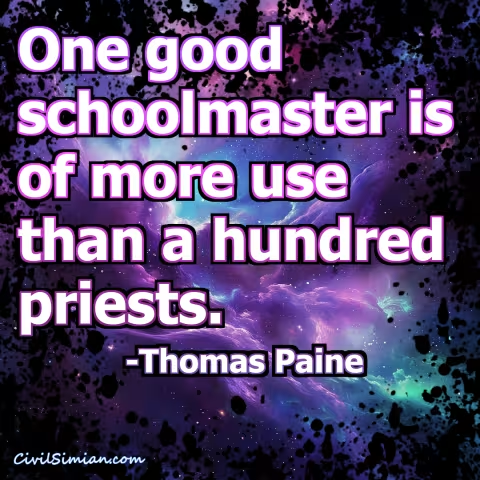
5 months 3 weeks ago
Each of us believes, quite unconsciously of course, that we alone pursue the truth, which the rest are incapable of seeking out and unworthy of attaining. This madness is so deep-rooted and so useful that it is impossible to realize what would become of each of us if it were someday to disappear.

3 months 2 weeks ago
But deepest of all illusory Appearances, for hiding Wonder, as for many other ends, are your two grand fundamental world-enveloping Appearances, SPACE and TIME. These, as spun and woven for us from before Birth itself, to clothe our celestial ME for dwelling here, and yet to blind it, - lie all-embracing, as the universal canvas, or warp and woof, whereby all minor Illusions, in this Phantasm Existence, weave and paint themselves. In vain, while here on Earth, shall you endeavor to strip them off; you can, at best, but rend them asunder for moments, and look through.
▼
Source
source
Bk. III, ch. 8.

6 months 3 weeks ago
Fine manners need the support of fine manners in others, and this is a gift interred only by the self.
▼
Source
source
Behavior
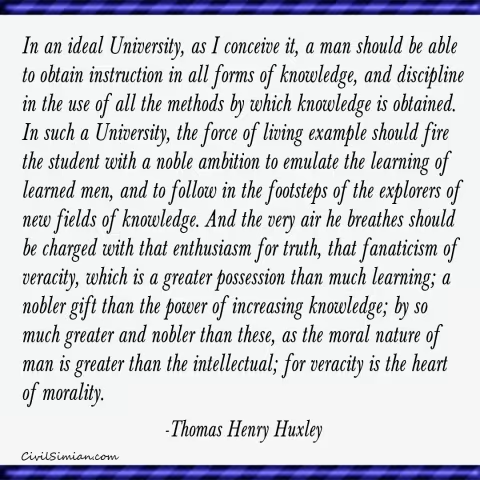
7 months 3 weeks ago
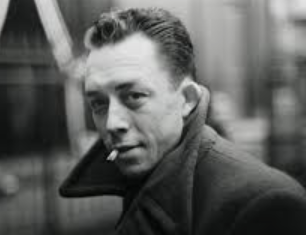
"My field," said Goethe, "is time." That is indeed the absurd speech. What, in fact, is the Absurd Man? He who, without negating it, does nothing for the eternal. Not that nostalgia is foreign to him. But he prefers his courage and his reasoning. The first teaches him to live without appeal and to get along with what he has; the second informs him of his limits. Assured of his temporally limited freedom, of his revolt devoid of future, and of his mortal consciousness, he lives out his adventure within the span of his lifetime.
CivilSimian.com created by AxiomaticPanic, CivilSimian, Kalokagathia