


6 months 3 weeks ago
Boldness formerly was not the character of Atheists as such. ... But of late they are grown active, designing, turbulent, and seditious.
▼
Source
source
"Thoughts on French Affairs" (December 1791), in Three Memorials on French Affairs (1797), p. 53


4 months 2 weeks ago
All that Mankind has done, thought, gained or been: it is lying as in magic preservation in the pages of Books.

7 months 3 weeks ago
A man is what he wills himself to be.

3 months 3 weeks ago
The earth belongs to the living, not to the dead.
▼
Source
source
24 June 1813
6 months 3 days ago
When a book and a head collide and a hollow sound is heard, must it always have come from the book?
▼
Source
source
D 66

6 months 2 weeks ago
The Value or WORTH of a man, is as of all other things, his Price; that is to say, so much as would be given for the use of his Power...
▼
Source
source
The First Part, Chapter 10, p. 42
6 months 2 weeks ago
The anarchists put the thing upside down. They declare that the proletarian revolution must begin by doing away with the political organisation of the state. But after its victory the sole organisation which the proletariat finds already in existence is precisely the state. This state may require very considerable alterations before it can fulfil its new functions. But to destroy it at such a moment would be to destroy the only organism by means of which the victorious proletariat can assert its newly-conquered power, hold down its capitalist adversaries and carry out that economic revolution of society without which the whole victory must end in a new defeat and in a mass slaughter of the workers similar to those after the Paris Commune.
▼
Source
source
Letter to Philipp Van Patten

4 months 4 days ago
I understand the task of sociology to be description and determination of the historical-psychological origin of those forms in which interactions take place between human beings. The totality of these interactions, springing from the most diverse impulses, directed toward the most diverse objects, and aiming at the most diverse ends, constitutes "society."
▼
Source
source
p. 167

6 months 2 weeks ago
Take heed lest any man deceive you: For many shall come in my name, saying, I am Christ; and shall deceive many. And when ye shall hear of wars and rumours of wars, be ye not troubled: for such things must needs be; but the end shall not be yet. For nation shall rise against nation, and kingdom against kingdom: and there shall be earthquakes in divers places, and there shall be famines and troubles: these are the beginnings of sorrows. But take heed to yourselves: for they shall deliver you up to councils; and in the synagogues ye shall be beaten: and ye shall be brought before rulers and kings for my sake, for a testimony against them. And the gospel must first be published among all nations. But when they shall lead you, and deliver you up, take no thought beforehand what ye shall speak, neither do ye premeditate: but whatsoever shall be given you in that hour, that speak ye: for it is not ye that speak, but the Holy Ghost.
▼
Source
source
13:5b-11 (KJV)
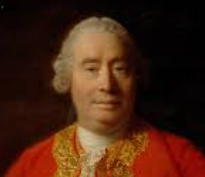
7 months 3 weeks ago
The life of man is of no greater importance to the universe than that of an oyster.
▼
Source
source
On Suicide
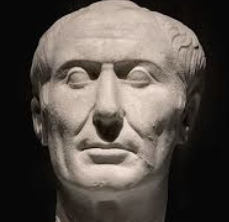
5 months 3 weeks ago
A wise man rules his passions, a fool obeys them.
▼
Source
source
Maxim 49
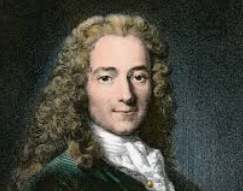
7 months 3 weeks ago
"Optimism," said Cacambo, "What is that?" "Alas!" replied Candide, "It is the obstinacy of maintaining that everything is best when it is worst!
6 months 3 weeks ago
But as to our country and our race, as long as the well compacted structure of our church and state, the sanctuary, the holy of holies of that ancient law, defended by reverence, defended by power, a fortress at once and a temple, shall stand inviolate on the brow of the British Sion-as long as the British Monarchy, not more limited than fenced by the orders of the State, shall, like the proud Keep of Windsor, rising in the majesty of proportion, and girt with the double belt of its kindred and coeval towers, as long as this awful structure shall oversee and guard the subjected land-so long as the mounds and dykes of the low, fat, Bedford level will have nothing to fear from all the pickaxes of all the levellers of France.
▼
Source
source
pp. 52-53

6 months 4 weeks ago
The New Englander is attached to his township because it is strong and independent; he has an interest in it because he shares in its management; he loves it because he has no reason to complain of his lot; he invests his ambition and his future in it; in the restricted sphere within his scope, he learns to rule society; he gets to know those formalities without which freedom can advance only through revolutions, and becoming imbued with their spirit, develops a taste for order, understands the harmony of powers, and in the end accumulates clear, practical ideas about the nature of his duties and the extent of his rights.
▼
Source
source
Chapter V.

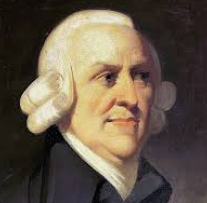
7 months 3 weeks ago
Corn is a necessary, silver is only a superfluity.
▼
Source
source
Chapter XI, Part III, (First Period) p. 223.
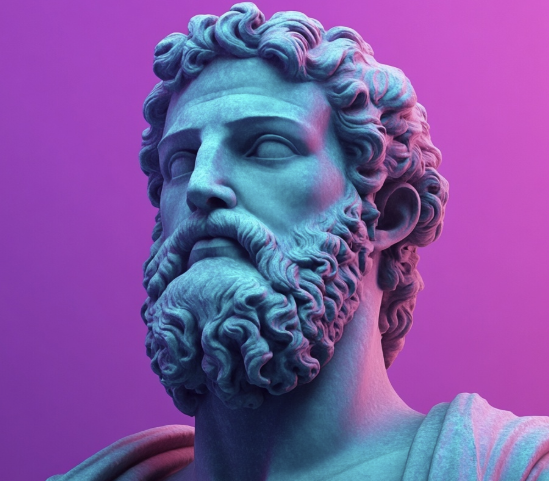
8 months 1 week ago
In each separate thing that you do consider the matters which come first, and those which follow after, and only then approach the thing itself.
▼
Source
source
Book III, ch. 15, 1 (= Enchiridion 29, 1).

7 months 3 weeks ago
I became my own only when I gave myself to Another.
▼
Source
source
Letters of C. S. Lewis (17 July 1953), para. 2, p. 251 - as reported in The Quotable Lewis (1989), p. 334

7 months 3 weeks ago
The measure of a master is his success in bringing all men round to his opinion twenty years later.
▼
Source
source
Culture

6 months 2 weeks ago
We have convictions only if we have studied nothing thoroughly.
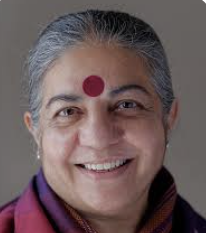
5 months 1 week ago
corporate globalization is really about an aggressive privatization of the water, biodiversity, and food systems of the Earth, when these communities declare sovereignty and act on that sovereignty, they have developed a powerful response to globalization. Living democracy then is the democracy that is custodian of the living wealth on which people depend.
7 months 3 weeks ago
United States! the ages plead, - Present and Past in under-song, - Go put your creed into your deed, Nor speak with double tongue.
▼
Source
source
Ode, st. 5


4 months 2 weeks ago
The second failing of liberalism comes directly out of the fact that it attempts to lower the horizons of politics. Liberal societies do not want to tell you how to live. They do not want to define "the good life" because that is the source of conflict, but as a result liberal societies tend not to satisfy these very deep human cravings for community, because... there's something wrong with the basic liberal premise that we all start... as self-interested individuals. We're not self-interested individuals.
▼
Source
source
15:22
6 months 2 weeks ago
Even more than in a poem, it is the aphorism that the word is god.

7 months ago
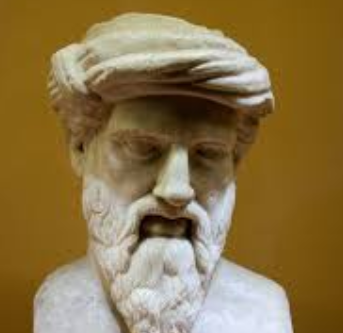
We find that everything that makes up difference and number is pure accident, pure show, pure constitution. Every production, of whatever kind, is an alteration, but the substance remains always the same, because it is only one, one divine immortal being.
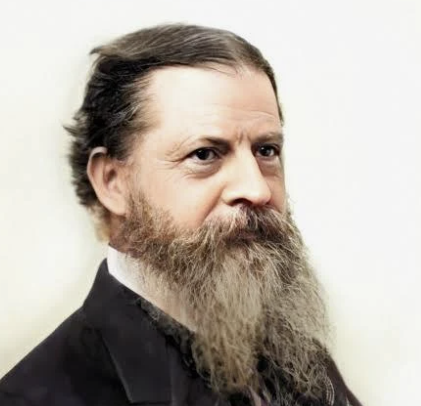
6 months 2 weeks ago
I think that I have succeeded in making it clear that this doctrine gives room for explanations of many facts which without it are absolutely and hopelessly inexplicable; and further that it carries along with it the following doctrines: first, a logical realism of the most pronounced type; second, objective idealism; third, tychism, with its consequent thoroughgoing evolutionism. We also notice that the doctrine presents no hindrences to spiritual influences, such as some philosophies are felt to do.
5 months 6 days ago
The sea does not reward those who are too anxious, too greedy, or too impatient. To dig for treasures shows not only impatience and greed, but lack of faith. Patience, patience, patience, is what the sea teaches. Patience and faith. One should lie empty, open, choiceless as a beach - waiting for a gift from the sea.
7 months 5 days ago
Happy is that City that hath a wise man to govern it.
6 months 2 weeks ago
The surest means of not losing your mind on the spot: remembering that everything is unreal, and will remain so...
7 months 3 weeks ago
"Milton was right," said my Teacher. "The choice of every lost soul can be expressed in the words 'Better to reign in Hell than to serve in Heaven.' There is always something they insist on keeping even at the price of misery."
▼
Source
source
Ch. 9
8 months 3 weeks ago
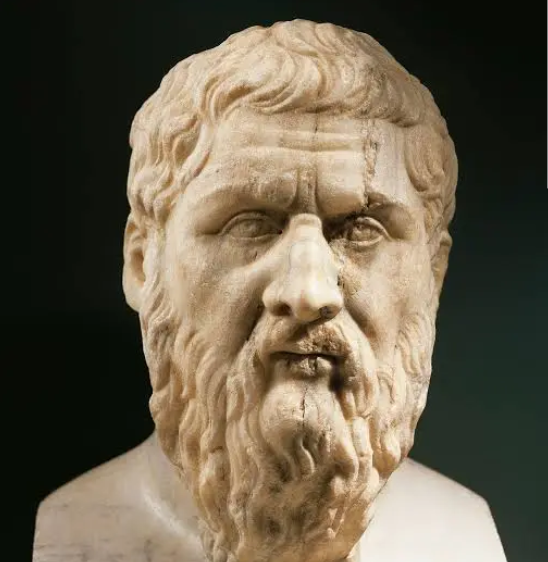
If the very essence of knowledge changes, at the moment of the change to another essence of knowledge there would be no knowledge, and if it is always changing, there will always be no knowledge, and by this reasoning there will be neither anyone to know nor anything to be known. But if there is always that which knows and that which is known if the beautiful, the good, and all the other verities exist I do not see how there is any likeness between these conditions of which I am now speaking and flux or motion.

7 months 3 weeks ago
He that denies any of the doctrines that Christ has delivered, to be true, denies him to be sent from God, and consequently to be the Messiah; and so ceases to be a Christian.
▼
Source
source
§ 232
8 months 2 days ago
Lastly, there are Idols which have immigrated into men's minds from the various dogmas of philosophies, and also from wrong laws of demonstration. These I call Idols of the Theater, because in my judgment all the received systems are but so many stage plays, representing worlds of their own creation after an unreal and scenic fashion.
▼
Source
source
Aphorism 44

7 months 2 weeks ago
You could attach prices to thoughts. Some cost a lot, some a little. And how does one pay for thoughts? The answer, I think, is: with courage.
▼
Source
source
p. 52e

7 months 3 weeks ago
What are the earth and all its interests beside the deep surmise which pierces and scatters them?
3 months 3 weeks ago
Evil does not approach us as pride any more, but on the contrary as slumber, lassitude, concealment of the "I." ... It may make us so quickly contented, that any definitive fire will die down. The venomous, breathtaking frigid mist seems able ... to harden hearts and fill them with envy, obduracy and resentment, with bloody scorn for the divine image and light, with all the causes of the only true original sin, which is not wanting to be like God.
▼
Source
source
p. 62

7 months 3 weeks ago
The church is in its major part an opponent still of progress and improvement in all the ways that diminish suffering in the world, because it has chosen to label as morality a certain narrow set of rules of conduct which have nothing to do with human happiness; and when you say that this or that ought to be done because it would make for human happiness, they think that has nothing to do with the matter at all. "What has human happiness to do with morals? The object of morals is not to make people happy."
▼
Source
source
"How The Churches Have Retarded Progress"

5 months 3 weeks ago
The audience, as ground, shapes and controls the work of art.
▼
Source
source
p. 48
5 months 3 weeks ago
Chinese script is not visual but iconic and tactile. It does not disturb the tribal bonds.
▼
Source
source
(p. 72)
7 months 3 weeks ago
Yes, Lord, you are innocence itself: how could you conceive of Nothingness, you who are plenitude? Your gaze is light and transforms all into light: how could you know the half-light in my heart?
▼
Source
source
Act 3, sc. 6
7 months 3 weeks ago
Every man, as the Stoics used to say, is first and principally recommended to his own care; and every man is certainly, in every respect, fitter and abler to take care of himself than of any other person. Every man feels his own pleasures and his own pains more sensibly than those of other people. The former are the original sensations; the latter the reflected or sympathetic images of those sensations. The former may be said to be the substance; the latter the shadow.
▼
Source
source
Section II, Chap. I.
6 months 3 days ago
If we make a couple of discoveries here and there we need not believe things will go on like this for ever.... Just as we hit water when we dig in the earth, so we discover the incomprehensible sooner or later.
▼
Source
source
F 82

7 months 3 weeks ago
Subject matters in general do not exist. There are no subject matters; no branches of learning-or, rather, of inquiry: there are only problems, and the urge to solve them.
5 months 3 weeks ago
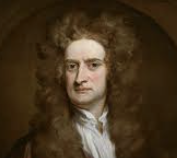
Idolatry is a more dangerous crime because it is apt by the authority of Kings & under very specious pretenses to insinuate it self into mankind. Kings being apt to enjoyn the honour of their dead ancestors: & it seeming very plausible to honour the souls of Heroes & Saints & to believe that they can heare us & help us & are mediators between God & man & reside & act principally in the temples & statues dedicated to their honour & memory? And yet this being against the principal part of religion is in scripture condemned & detested above all other crimes. The sin consists first in omitting the service of the true God.
▼
Source
source
Of Idolatry
6 months 1 week ago
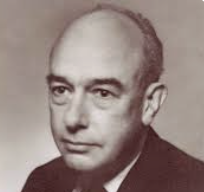
How are we to adjudicate among rival ontologies? Certainly the answer is not provided by the semantical formula "To be is to be the value of a variable"; this formula serves rather, conversely, in testing the conformity of a given remark or doctrine to a prior ontological standard.
▼
Source
source
"On What There Is"
6 months 3 weeks ago
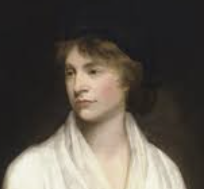
Affection requires a firmer foundation than sympathy, and few people have a principle of action sufficiently stable to produce rectitude of feeling; for in spite of all the arguments I have heard to justify deviations from duty, I am persuaded that even the most spontaneous sensations are more under the direction of principle than weak people are willing to allow.
▼
Source
source
Letter 17
7 months 3 weeks ago
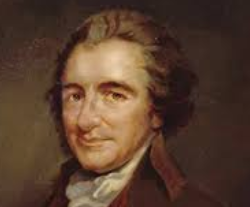
It is error only, and not truth, that shrinks from inquiry.
CivilSimian.com created by AxiomaticPanic, CivilSimian, Kalokagathia