




4 months 4 weeks ago
A little river seems to him, who has never seen a larger river, a mighty stream; and so with other things-a tree, a man-anything appears greatest to him that never knew a greater.
▼
Source
source
Book VI, lines 674-677 (quoted in The Essays of Michel de Montaigne, tr. W. C. Hazlitt)

4 months 1 week ago
The chief pleasure of his life in these days was to go down the road and look through the window in the wall in the hope of seeing the beautiful Island. ... the sight of the Island and the sounds became very rare ... and the yearning for the sight ... became so terrible that John thought he would die if he did not have them again soon. ... it came into his head that he might perhaps get the old feeling-for what, he thought, had the Island ever given him but a feeling?-by imagining. He shut his eyes and set his teeth again and made a picture of the Island in his mind.
▼
Source
source
Pilgrim's Regress 12-13
2 months 2 weeks ago
Challenge, and not desire, lies at the heart of seduction.
▼
Source
source
(p. 57)
3 weeks 4 days ago
A genius doesn't adjust his treatment of a theme to a tyrant's taste.

5 months 2 weeks ago
Socialism itself can hope to exist only for brief periods here and there, and then only through the exercise of the extremest terrorism. For this reason it is secretly preparing itself for rule through fear and is driving the word 'justice' into the heads of the half-educated masses like a nail so as to rob them of their reason... and to create in them a good conscience for the evil game they are to play.
2 months 1 week ago
The first cause cannot have been an intelligence, let alone an intelligence that answers prayers and enjoys being worshiped. Intelligent, creative, complex, statistically improbable things come late into the universe, as the product of evolution or some other process of gradual escalation from simple beginnings. They come late into the universe and therefore cannot be responsible for designing it. "Why There Almost Certainly Is No God", The Huffington Post, 23/10/2006
4 months 1 week ago
The doctrine of the Second Coming teaches us that we do not and cannot know when the world drama will end. The curtain may be rung down at any moment: say, before you have finished reading this paragraph.

2 months ago
Mr. Darwin's hypothesis is not, so far as I am aware, inconsistent with any known biological fact; on the contrary, if admitted, the facts of Development, of Comparative Anatomy, of Geographical Distribution, and of Palaeontology, become connected together, and exhibit a meaning such as they never possessed before; and I, for one, am fully convinced that if not precisely true, that hypothesis is as near an approximation to the truth as, for example, the Copernican hypothesis was to the true theory of the planetary motions.
▼
Source
source
Ch.2, p. 127
1 month 4 days ago
She is a woman now, and not an idle girl, not a domestic ornament or a sexual convenience anymore.
▼
Source
source
On the maturation of women, Ch. 4 : On Old Age

5 months 2 weeks ago
You wanted God's ideas about what was best for you to coincide with your ideas, but you also wanted him to be the almighty Creator of heaven and earth so that he could properly fulfill your wish. And yet, if he were to share your ideas, he would cease to be the almighty Father.

1 month 3 weeks ago
Our bodies are perishable, wealth is not at all permanent and death is always nearby. Therefore we must immediately engage in acts of merit.

3 months 1 week ago
Lord, give me the capacity of never praying, spare me the insanity of all worship, let this temptation of love pass from me which would deliver me forever unto You. Let the void spread between my heart and heaven! I have no desire to people my deserts by Your presence, to tyrannize my nights by Your light, to dissolve my Siberias beneath Your sun.

2 weeks ago
Lay down true principles and adhere to them inflexibly. Do not be frightened into their surrender by the alarms of the timid, or the croakings of wealth against the ascendency of the people.
▼
Source
source
Letter to Samuel Kercheval

4 months 2 weeks ago
The most essential characteristic of scientific technique is that it proceeds from experiment, not from tradition. The experimental habit of mind is a difficult one for most people to maintain; indeed, the science of one generation has already become the tradition of the next...
▼
Source
source
The Scientific Outlook, 1931
4 months 1 week ago
Among these Jews there suddenly turns up a man who goes about talking as if He was God. He claims to forgive sins. He says He has always existed. He says He is coming to judge the world at the end of time. Now let us get this clear. Among Pantheists, like the Indians, anyone might say that he was a part of God, or one with God: there would be nothing very odd about it. But this man, since He was a Jew, could not mean that kind of God. God, in their language, meant the Being outside of the world, who had made it and was infinitely different from anything else. And when you have grasped that, you will see that what this man said was, quite simply, the most shocking thing that has ever been uttered by human lips.
▼
Source
source
Book II, Chapter 3, "The Shocking Alternative"
4 months 1 day ago
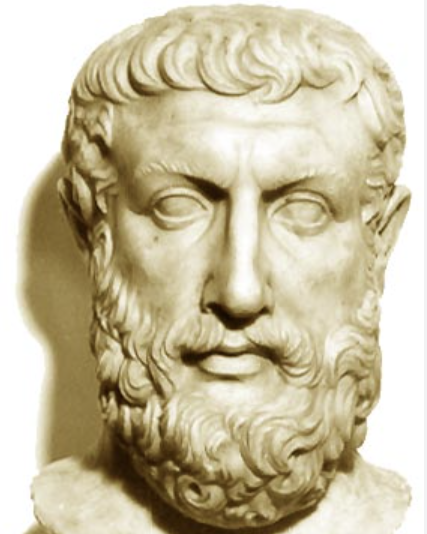
Never will this prevail, that the things that are not are - bar your thought from this road of inquiry.
▼
Source
source
Frag. B 7.1-2, quoted by Plato, Sophist, 237a

3 months 1 day ago
My conduct must be the best proof, the moral proof, of my supreme desire; and if I do not end by convincing myself, within the bounds of the ultimate and irremediable uncertainty of the truth of what I hope for, it is because my conduct is not sufficiently pure. Virtue, therefore, is not based upon dogma, but dogma upon virtue, and it is not faith that creates martyrs but martyrs who create faith. There is no security or repose - so far as security and repose are obtainable in this life, so essentially insecure and unreposeful - save in conduct that is passionately good.
4 months 2 weeks ago
I hate the world and almost all the people in it. I hate the Labour Congress and the journalists who send men to be slaughtered, and the fathers who feel a smug pride when their sons are killed, and even the pacifists who keep saying human nature is essentially good, in spite of all the daily proofs to the contrary. I hate the planet and the human race - I am ashamed to belong to such a species.
▼
Source
source
Letter to Colette, December 28, 1916
3 months 1 week ago
Reality is a creation of our excesses.

4 months 5 days ago
By Thy perfect Intelligence, O MazdaThou didst first create us having bodies and spiritual consciences,And by Thy Thought gave our selves the power of thought, word, and deed.Thus leaving us free to choose our faith at our own will.
▼
Source
source
Ahunuvaiti Gatha; Yasna 31, 11.

4 months 1 week ago
The limits of my language mean the limits of my world. (5.6) Variant translations: The limits of my language stand for the limits of my world. The limits of my language are the limits of my mind. All I know is what I have words for.
▼
Source
source
Original German: Die Grenzen meiner Sprache bedeuten die Grenzen meiner Welt.
3 weeks 4 days ago
It is almost always impossible to evaluate at the time events which you have already experienced, and to understand their meaning with the guidance of their effects. All the more unpredictable and surprising to us will be the course of future events.
▼
Source
source
Autobiographical sketch (1970), at Nobelprize.org

4 months 2 weeks ago
It's a bit embarrassing to have been concerned with the human problem all one's life and find at the end that one has no more to offer by way of advice than 'Try to be a little kinder.'
▼
Source
source
As quoted in Huston Smith, "Aldous Huxley--A Tribute," The Psychedelic Review, (1964) Vol I, No.3, (Aldous Huxley Memorial Issue), p. 264-5

1 week 4 days ago
Do what nature now requires. Set thyself in motion, if it is in thy power, and do not look about thee to see if any one will observe it; nor yet expect Plato's Republic: but be content if the smallest thing goes on well, and consider such an event to be no small matter. Forward, as occasion offers. Never look round to see whether any shall note it.... Be satisfied with success in even the smallest matter, and think that even such a result is no trifle.
▼
Source
source
IX, 29

4 months 2 weeks ago
It is the necessary, though very slow and gradual, consequence of a certain propensity in human nature which has in view no such extensive utility; the propensity to truck, barter, and exchange one thing for another.
▼
Source
source
Chapter II
3 weeks 1 day ago
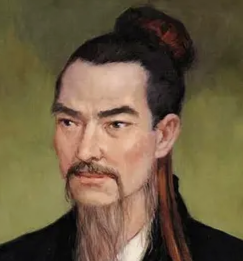
If one does not preserve the learned in a state he will be injuring the state; if one is not zealous (to recommend) the virtuous upon seeing one, he will be neglecting the ruler. Enthusiasm is to be shown only to the virtuous, and plans for the country are only to be shared with the learned. Few are those, who, neglecting the virtuous and slighting the learned, could still maintain the existence of their countries. Book 1; Befriending the Learned Variant translation: To enter upon rulership of a country but not preserve its scholars will result in the downfall of the country. To see the worthy but not hasten to them will make the country's ruler less able to perform his duties. To the unworthy is due no attention. The ignorant should remain without inclusion in the state's affairs. To impede the virtuous and neglect the scholarly and still maintain the survival of the state has yet to be, indeed.

4 months 1 week ago
I construct my memories with my present. I am lost, abandoned in the present. I try in vain to rejoin the past: I cannot escape.

5 months 4 days ago
A happy and eternal being has no trouble himself and brings no trouble upon any other being; hence he is exempt from movements of anger and partiality, for every such movement implies weakness.
4 months 1 week ago
[Mortals] say of some temporal suffering, "No future bliss can make up for it," not knowing Heaven, once attained, will work backwards and turn even that agony into a glory. And of some sinful pleasure they say "Let me have but this and I'll take the consequences": little dreaming how damnation will spread back and back into their past and contaminate the pleasure of the sin. Both processes begin even before death.
▼
Source
source
Ch. 9

5 months 1 week ago
Everything considered, a determined soul will always manage.

1 month 5 days ago
In all European countries, especially in England, one class of Captains and commanders of men, recognizable as the beginning of a new real and not imaginary "Aristocracy," has already in some measure developed itself: the Captains of Industry;-happily the class who above all, or at least first of all, are wanted in this time. In the doing of material work, we have already men among us that can command bodies of men. And surely, on the other hand, there is no lack of men needing to be commanded: the sad class of brother-men whom we had to describe as "Hodge's emancipated horses," reduced to roving famine,-this too has in all countries developed itself; and, in fatal geometrical progression, is ever more developing itself, with a rapidity which alarms every one. On this ground, if not on all manner of other grounds, it may be truly said, the "Organization of Labor" (not organizable by the mad methods tried hitherto) is the universal vital Problem of the world.

3 months 3 weeks ago
It is better to suffer, than to do, wrong.
3 months 1 week ago
What is that one crucifixion compared to the daily kind any insomniac endures?
4 months 4 weeks ago
But there is nothing sweeter than to dwell in towers that rise On high, serene and fortified with teachings of the wise, From which you may peer down upon the others as they stray This way and that, seeking the path of life, losing their way: The skirmishing of wits, the scramble for renown, the fight, Each striving harder than the next, and struggling day and night, To climb atop a heap of riches and lay claim to might.
▼
Source
source
Book II, lines 7-13 (tr. Stallings)

3 months 1 week ago
Our mass media have little difficulty in selling particular interests as those of all sensible men. The political needs of society become individual needs and aspirations, their satisfaction promotes business and the commonweal, and the whole appeals to be the very embodiment of Reason.
▼
Source
source
p. xli

1 month 1 week ago
The groups are not unified under any single authority but rather relate to each other in a network structure. Social forums, affinity groups, and other forms of democratic decision-making are the basis of the movements, and they manage to act together based on what they have in common. ... These globalization protest movements are obviously limited in many regards. First of all, although their vision and desire is global in scope, they have thus far only involved significant numbers in North America and Europe. Second, so long, as they remain merely protests movements, traveling from one summit meeting to the next, they will be incapable of becoming a foundational struggle and of articulating an alternative to social relations. These limitations may only be temporary obstacles, and the movements may discover ways to overcome them.
▼
Source
source
86-87

3 months 2 weeks ago
Dreams, as we all know, are very queer things: some parts are presented with appalling vividness, with details worked up with the elaborate finish of jewellery, while others one gallops through, as it were, without noticing them at all, as, for instance, through space and time. Dreams seem to be spurred on not by reason but by desire, not by the head but by the heart, and yet what complicated tricks my reason has played sometimes in dreams, what utterly incomprehensible things happen to it!
4 months 2 weeks ago
In history, we are concerned with what has been and what is; in philosophy, however, we are concerned not with what belongs exclusively to the past or to the future, but with that which is, both now and eternally - in short, with reason.
▼
Source
source
As translated by H. B. Nisbet, 1975
4 months 2 weeks ago
Fear is in almost all cases a wretched instrument of government, and ought in particular never to be employed against any order of men who have the smallest pretensions to independency.
▼
Source
source
Chapter I, Part III, p. 862.
5 months 1 week ago
The most elementary form of rebellion, paradoxically, expresses an aspiration for order.

4 months 2 weeks ago
They reckon ill who leave me out; When me they fly, I am the wings; I am the doubter and the doubt; And I the hymn the Brahmin sings.
▼
Source
source
Brahma, st. 3

5 months 1 week ago
Nonsense. You are a military man and should know better. If there is one science into which man has probed continuously and successfully, it is that of military technology. No potential weapon would remain unrealized for ten thousand years.
2 months 3 weeks ago
Only the person who has faith in himself is able to be faithful to others.
▼
Source
source
Ch. 4
1 week 4 days ago
The only thing that isn't worthless: to live this life out truthfully and rightly. And be patient with those who don't.
▼
Source
source
(Hays translation) VI, 47
3 months 1 week ago
In the human reality, all existence that spends itself in procuring the prerequisites of existence is thus an "untrue" and unfree existence. Obviously this reflects the not at all ontological condition of a society based on the proposition that freedom is incompatible with the activity of procuring the necessities of life, that this activity is the "natural" function of a specific class, and that cognition of the truth and true existence imply freedom from the entire dimension of such activity. ... Society still is organized in such a way that procuring the necessities of life constitutes the full-time and life-long occupation of specific social classes, which are therefore unfree and prevented from a human existence. In this sense, the classical proposition according to which truth is incompatible with enslavement by socially necessary labor is still valid.
▼
Source
source
pp. 127-128
1 month 3 weeks ago
Like literature, philosophy is not distinguished from other subjects by a specific approach to a subject-matter independent of it. Chemistry deals with chemicals, biology with life and astronomy with very large, very distant objects. Philosophy can boast no such definite subject-matter.
▼
Source
source
Chapter 4, Philosophy As Writing: The Case Of Hegel, p. 69

3 months 2 weeks ago
I have come across men of letters who have written history without taking part in public affairs, and politicians who have concerned themselves with producing events without thinking about them. I have observed that the first are always inclined to find general causes whereas the second, living in the midst of disconnected daily facts, are prone to imagine that everything is attributable to particular incidents, and that the wires they pull are the same as those that move the world. It is to be presumed that both are equally deceived.
▼
Source
source
Recollections of Alexis de Tocqueville, p. 80

3 months 2 weeks ago
I could never divide myself from any man upon the difference of an opinion, or be angry with his judgement for not agreeing with me in that, from which perhaps within a few days I should dissent myself.
▼
Source
source
Section 6
1 week 4 days ago
The universe is flux, life is opinion. The universe is (constant) change, life is (mere) presumption.
▼
Source
source
(Analogous translation) The universe is transformation: life is opinion. (Translation by George Long)
CivilSimian.com created by AxiomaticPanic, CivilSimian, Kalokagathia