

5 months 1 day ago
I am convinced we do not only love ourselves in others but hate ourselves in others too.
▼
Source
source
F 54
6 months 3 weeks ago
My father's moral inculcations were at all times mainly those of the "Socratici viri;" justice, temperance (to which he gave a very extended application), veracity, perseverance, readiness to encounter pain and especially labour; regard for the public good; estimation of persons according to their merits, and of things according to their intrinsic usefulness; a life of exertion in contradiction to one of self-indulgent sloth. These and other moralities he conveyed in brief sentences, uttered as occasion arose, of grave exhortation, or stern reprobation and contempt.But though direct moral teaching does much, indirect does more; and the effect my father produced on my character, did not depend solely on what he said or did with that direct object, but also, and still more, on what manner of man he was.
▼
Source
source
(p. 47)

5 months 2 weeks ago
He that dippeth his hand with me in the dish, the same shall betray me. The Son of man goeth as it is written of him: but woe unto that man by whom the Son of man is betrayed! it had been good for that man if he had not been born.
▼
Source
source
26:23-24 (KJV)

6 months 3 weeks ago
Poetry teaches the enormous force of a few words, and, in proportion to the inspiration, checks loquacity.
▼
Source
source
Parnassus (1874) Preface

6 months 3 weeks ago
Because people have no thoughts to deal in, they deal cards, and try and win one another's money. Idiots!


7 months ago
The hair is the finest ornament women have. . . . I like women to let their hair fall down their back, it is a most agreeable sight.
▼
Source
source
-- Table Talk, quoted in Luther On "Woman"
2 months 3 weeks ago
How can you reach the womb of the Abyss to make it fruitful? This cannot be expressed, cannot be narrowed into words, cannot be subjected to laws; every man is completely free and has his own special liberation. No form of instruction exists, no Savior exists to open up the road. No road exists to be opened.
5 months 2 weeks ago
Thou shalt do no murder, Thou shalt not commit adultery, Thou shalt not steal, Thou shalt not bear false witness, Honour thy father and thy mother: and, Thou shalt love thy neighbour as thyself.
▼
Source
source
19:18-19 (KJV)

4 months 2 weeks ago
Liberty is not the same thing as equality, and that those who call themselves liberals are far more interested in equalizing than in liberating their fellows.
▼
Source
source
The Limits of Liberty, The American Spectator
7 months ago
The Apostle Paul wants us to work with our hands in order to share with the needy (Ephesians 5:28). Notice that he could have said that we should work to support ourselves. But Paul says that we work to give to those in need. This is why caring for our body is also a Christian work. If the body is healthy and fit, we are able to work and save money that can be used to help those in need.
▼
Source
source
p. 80
6 months 3 weeks ago
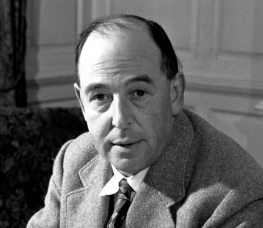
It is arrogance in us to call frankness, fairness and chivalry "masculine" when we see them in a woman; it is arrogance in them, to describe a man's sensitiveness or tact or tenderness as "feminine".

6 months 3 weeks ago
We used to think that Hitler was wicked when he wanted to kill all the Jews, but what Kennedy and Macmillan and others both in the East and in the West pursue policies which will probably lead to killing not only all the Jews but all the rest of us too. They are much more wicked than Hitler and this idea of weapons of mass extermination is utterly and absolutely horrible and it is a thing which no man with one spark of humanity can tolerate and I will not pretend to obey a government which is organising the massacre of the whole of mankind. I will do anything I can to oppose such Governments in any non-violent way that seems likely to be fruitful, and I should exhort all of you to feel the same way. We cannot obey these murderers. They are wicked and abominable. They are the wickedest people that ever lived in the history of man and it is our duty to do what we can.
▼
Source
source
On Civil Disobedience, April 15th, 1961

7 months 1 day ago
Finally, every man will become dear and pleasing to every other man; all will be beloved by all! and, what is still more desirable, beloved also by Christ; to become acceptable to whom is the highest felicity of human nature.
6 months 3 days ago
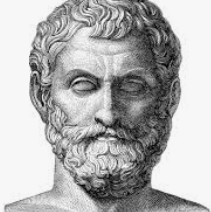
Time is the wisest of all things that are; for it brings everything to light.
▼
Source
source
As quoted in Diogenes Laërtius, The Lives and Opinions of Eminent Philosophers, I, 35
3 months 3 days ago
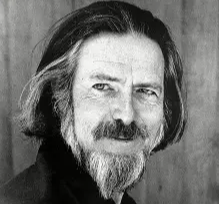
Just as no thing or organism exists on its own, it does not act on its own. Furthermore, every organism is a process: thus the organism is not other than its actions. To put it clumsily: it is what it does. More precisely, the organism, including its behavior, is a process which is to be understood only in relation to the larger and longer process of its environment. For what we mean by "understanding" or "comprehension" is seeing how parts fit into a whole, and then realizing that they don't compose the whole, as one assembles a jigsaw puzzle, but that the whole is a pattern, a complex wiggliness, which has no separate parts. Parts are fictions of language, of the calculus of looking at the world through a net which seems to chop it up into bits. Parts exist only for purposes of figuring and describing, and as we figure the world out we become confused if we do not remember this all the time.
▼
Source
source
p. 73
5 months 1 week ago
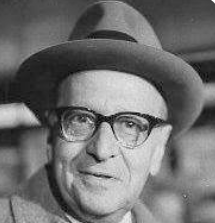
If by enlightenment and intellectual progress we mean the freeing of man from superstitious belief in evil forces, in demons and fairies, in blind fate-in short, emancipation of fear-then denunciation of what is currently called reason is the greatest service reason can render.
5 months 2 weeks ago
O my Father, if this cup may not pass away from me, except I drink it, thy will be done.
▼
Source
source
26:42 (KJV)
7 months 3 weeks ago
Spontaneous love can reach the point of despair, shows that it is in despair, that even when it is happy it loves with the power of despair.
4 months 2 weeks ago
The literate man is a sucker for propaganda...You cannot propagandize a native. You can sell him rum and trinkets, but you cannot sell him ideas.
3 months 2 weeks ago
When young, one is confident to be able to build palaces for mankind, but when the time comes one has one's hands full just to be able to remove their trash.
▼
Source
source
Letter to Johann Kaspar Lavatar

6 months 4 weeks ago
How many things served us yesterday for articles of faith, which today are fables for us?
▼
Source
source
Ch. 27. Of Friendship
7 months 1 week ago
The way which the superior man pursues, reaches wide and far, and yet is secret. Common men and women, however ignorant, may intermeddle with the knowledge of it; yet in its utmost reaches, there is that which even the sage does not know. Common men and women, however much below the ordinary standard of character, can carry it into practice; yet in its utmost reaches, there is that which even the sage is not able to carry into practice. Great as heaven and earth are, men still find some things in them with which to be dissatisfied. Thus it is that, were the superior man to speak of his way in all its greatness, nothing in the world would be found able to embrace it, and were he to speak of it in its minuteness, nothing in the world would be found able to split it.

6 months 4 weeks ago
Fear of evil is greater than the evil itself.
▼
Source
source
Act III, scene xi
5 months 2 weeks ago
The evil of marriage, as is it practiced in the European countries, extends further than we have yet described. The method is for a thoughtless and romantic youth of each sex, to come together, to see each other, for a few times, and under circumstances full of delusion and then to vow eternal attachment. What is the consequence of this? In almost every instance they find themselves deceived. They are reduced to make the best of an irretrievable mistake. They are led to conceive it their wiser policy, to shut their eyes upon realities, happy, if by any perversion of intellect, they can persuade themselves that they were right in their first crude opinion of each other. Thus the institution of marriage is made a system of fraud; and men who carefully mislead their judgement in the daily affair of their life, must be expected to have a crippled judgement in every other concern.
5 months 1 week ago
It appears that liberty is bound up with imperfection, with a right to imperfection. Socialism leads to the same type of authoritarian state as Theocracy. ... One must choose: either Socialism or liberty of spirit, the liberty of man's conscience. ... Socialism uses a "sacred" authority and establishes a "sacred" society in which there is no place for the "lay," for the free, for choice, for the unrestrained activity of human forces.
▼
Source
source
pp. 188-189
4 months 3 weeks ago
No feats of heroism are needed to achieve the greatest and most important changes in the existence of humanity; neither the armament of millions of soldiers, nor the construction of new roads and machines, nor the arrangement of exhibitions, nor the organization of workmen's unions, nor revolutions, nor barricades, nor explosions, nor the perfection of aerial navigation; but a change in public opinion. And to accomplish this change no exertions of the mind are needed, nor the refutation of anything in existence, nor the invention of any extraordinary novelty; it is only needful that we should not succumb to the erroneous, already defunct, public opinion of the past, which governments have induced artificially; it is only needful that each individual should say what he really feels or thinks, or at least that he should not say what he does not think.
▼
Source
source
Ch. 17
4 months 3 weeks ago
Take provocation, for instance, which is the opposite and the caricature of seduction. It says: "I know that you want to be seduced, and I will seduce you." Nothing could be worse than betraying this secret rule. Nothing could be less seductive than a provocative smile or inciteful behaviour, since both presuppose that one cannot be seduced naturally and that one needs to be blackmailed into it, or through a declaration of intent: "Let me seduce you"
▼
Source
source
(p. 67)
4 months 3 weeks ago
One can imagine a computer simulation of the action of peptides in the hypothalamus that is accurate down to the last synapse. But equally one can imagine a computer simulation of the oxidation of hydrocarbons in a car engine or the action of digestive processes in a stomach when it is digesting pizza. And the simulation is no more the real thing in the case of the brain than it is in the case of the car or the stomach. Barring miracles, you could not run your car by doing a computer simulation of the oxidation of gasoline, and you could not digest pizza by running the program that simulates such digestion. It seems obvious that a simulation of cognition will similarly not produce the effects of the neurobiology of cognition.
▼
Source
source
"Is the Brain's Mind a Computer Program?", Scientific American (January 1990).
3 months 1 week ago
There is no means of avoiding the final collapse of a boom brought about by credit expansion. The alternative is only whether the crisis should come sooner as the result of voluntary abandonment of further credit expansion, or later as a final and total catastrophe of the currency system involved.
▼
Source
source
Chapter XX: Interest, Credit Expansion, The Trade Cycle, § 8 : The Monetary or Circulation Theory of the Trade Cycle
5 months 2 weeks ago
No psychic value can disappear without being replaced by another of equivalent intensity.
▼
Source
source
p. 209
5 months 2 weeks ago
The class of the wholly propertyless, who are obliged to sell their labor to the bourgeoisie in order to get, in exchange, the means of subsistence for their support. This is called the class of proletarians, or the proletariat.
5 months 3 weeks ago
All persons possessing any portion of power ought to be strongly and awfully impressed with an idea that they act in trust and that they are to account for their conduct in that trust to the one great Master, Author, and Founder of society.
5 months 3 weeks ago
All those instances to be found in history, whether real or fabulous, of a doubtful public spirit, at which morality is perplexed, reason is staggered, and from which affrighted Nature recoils, are their chosen and almost sole examples for the instruction of their youth.
▼
Source
source
No. 1, volume v, p. 286

7 months 4 days ago
I make no doubt... that these rules are simple, artless, and natural.
6 months 3 weeks ago
Every man is a divinity in disguise, a god playing the fool. It seems as if heaven had sent its insane angels into our world as to an asylum. And here they will break out into their native music, and utter at intervals the words they have heard in heaven; then the mad fit returns, and they mope and wallow like dogs!
▼
Source
source
p. 165
6 months 1 week ago
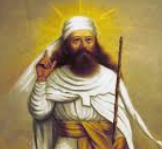
A righteous government is of all the most to be wished for,Bearing of blessing and good fortune in the highest.Guided by the law of Truth, supported by dedication and zeal,It blossoms into the Best of Order, a Kingdom of Heaven!To effect this I shall work now and ever more.
▼
Source
source
Vohu-Khshathra Gatha; Yasna 51, 1.

6 months 3 weeks ago
It was in the reign of Charles II that they obtained the noble distinction of being exempted from giving their testimony on oath in a court of justice, and being believed on their bare affirmation. On this occasion the chancellor, who was a man of wit, spoke to them as follows: "Friends, Jupiter one day ordered that all the beasts of burden should repair to be shod. The asses represented that their laws would not allow them to submit to that operation. 'Very well,' said Jupiter; 'then you shall not be shod; but the first false step you make, you may depend upon being severely drubbed.'"
5 months 2 weeks ago
I am the way and the truth and the life. No one comes to the Father except through me.
▼
Source
source
14:06

2 months 3 weeks ago
He who made us would have been a pitiful bungler, if he had made the rules of our moral conduct a matter of science. For one man of science, there are thousands who are not. What would have become of them? Man was destined for society. His morality, therefore, was to be formed to this object. He was endowed with a sense of right and wrong, merely relative to this.
4 months 3 weeks ago
I cannot recall a time when American education was not in a "crisis." We have lived through Sputnik (when we were "falling behind the Russians"), through the era of "Johnny can't read," and through the upheavals of the Sixties. Now a good many books are telling us that the university is going to hell in several different directions at once. I believe that, at least in part, the crisis rhetoric has a structural explanation: since we do not have a national consensus on what success in higher education would consist of, no matter what happens, some sizable part of the population is going to regard the situation as a disaster. As with taxation and relations between the sexes, higher education is essentially and continuously contested territory. Given the history of that crisis rhetoric, one's natural response to the current cries of desperation might reasonably be one of boredom.
5 months 2 weeks ago
What man shall there be among you, that shall have one sheep, and if it fall into a pit on the sabbath day, will he not lay hold on it, and lift it out? How much then is a man better than a sheep? Wherefore it is lawful to do well on the sabbath days.
▼
Source
source
12:11-12 (KJV) Said to the Pharisees.
6 months 3 weeks ago
Shallow men believe in luck, believe in circumstances...Strong men believe in cause and effect.
▼
Source
source
Worship
6 months 3 weeks ago
The world is sacred because it gives an inkling of a meaning that escapes us.
▼
Source
source
p. 280
4 months 2 weeks ago
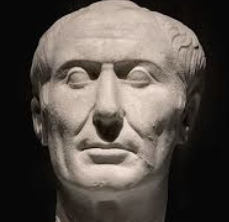
A noble spirit finds a cure for injustice in forgetting it.
▼
Source
source
Maxim 441
4 months 1 week ago
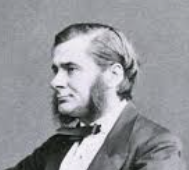
Within the last fifty years, the extraordinary growth of every department of physical science has spread among us mental food of so nutritious and stimulating a character that a new ecdysis seems imminent.
▼
Source
source
Ch.2, p. 73
5 months 2 weeks ago
Heaven and earth shall pass away, but my words shall not pass away.
▼
Source
source
Mark 13:31, KJV

3 months 1 week ago
If they be inhabited, what a scope for misery and folly; if they be un-inhabited, what a waste of space.
▼
Source
source
On other stars Attributed by John Burroughs on the first page of his 1920 book Accepting The Universe
3 months 2 weeks ago
If the gist of the controversy were to be expressed in a single sentence, one might say that the mechanists represented the opposition of the natural sciences to philosophic interference, while the dialecticians stood for the supremacy of philosophy over the sciences and thus reflected the characteristic tendency of Soviet ideological development. The mechanists' outlook might be called negative, while the dialecticians ascribed immense importance to philosophy and regarded themselves as specialists. The mechanists, however, had a much better idea of what science was about. The dialecticians were ignoramuses in this sphere and confined themselves to general formulas about the philosophical need to "generalize" and unify the sciences; on the other hand, they knew more than the mechanists about the history of philosophy. (Eventually the party condemned both camps, and created a dialectical synthesis of both forms of ignorance.)
▼
Source
source
(pg. 64)
CivilSimian.com created by AxiomaticPanic, CivilSimian, Kalokagathia